

Greek Chicken Skewers for Camping
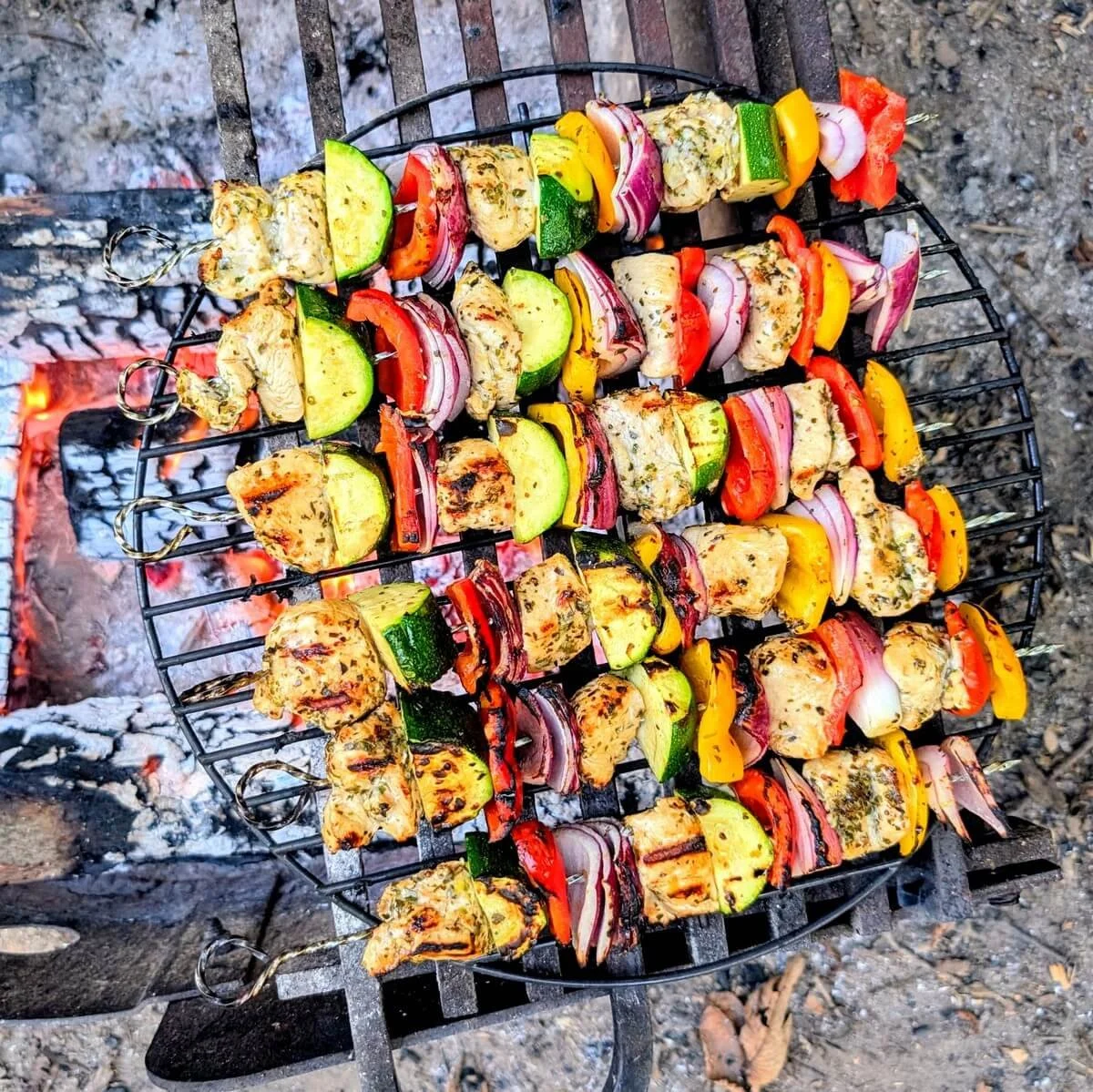
These chicken skewers are built for camping—marinated ahead, packed strategically, and grilled over high campfire heat for juicy, evenly cooked results.
or read on for step-by-step instructions with photos
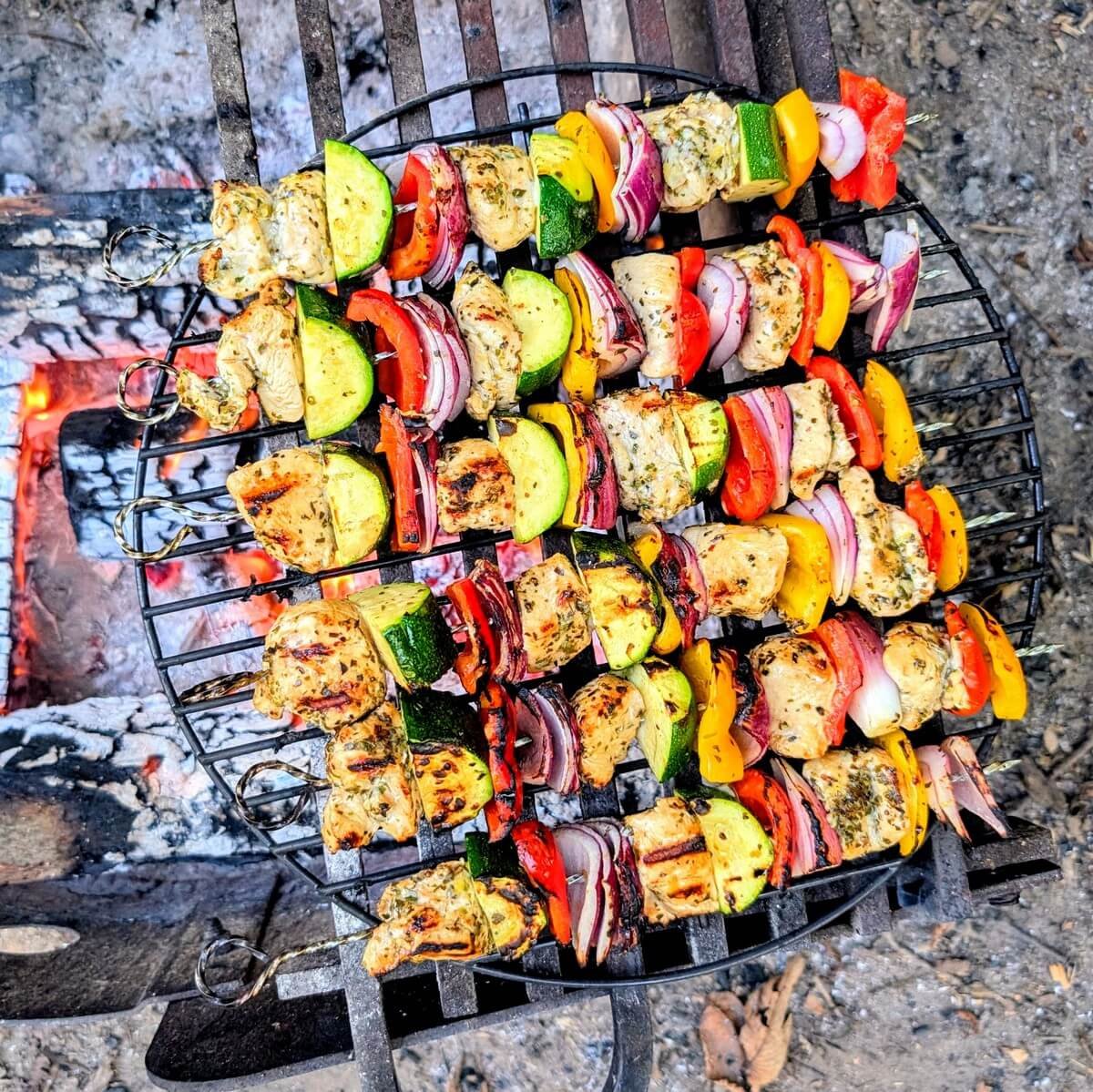
Campfire Chicken Skewers Designed for High-Heat Grilling
These chicken skewers are packed with flavor from the very start. A zesty Greek-style marinade of lemon, red wine vinegar, garlic, and oregano soaks into every piece before the fire is even lit. Marinating ahead of time not only seasons the meat all the way through, but it also means less raw prep at camp and more time enjoying the outdoors.
Wood fire is what truly elevates them. As a professionally trained chef and avid camper, I’ve learned that a properly developed fire creates a depth of smoke and caramelization you simply can’t recreate on a standard grill. When the heat is steady, and the skewers are cut and assembled evenly, that smoky intensity becomes an advantage—turning everyday chicken and vegetables into something genuinely special.
What Makes This Camping Chicken Skewer Recipe Work
Make-ahead by design: The chicken is marinated before you leave home, so camp cooking stays quick and streamlined.
Sized for even cooking: Uniform 1½-inch pieces and sturdy vegetables ensure everything finishes at the same time over high heat.
Built for controlled live-fire heat: Fully burned-down logs create strong radiant heat that caramelizes the exterior while keeping the center juicy.
Next, I’ll walk you through this camping chicken skewer recipe step-by-step, so you can cook over that campfire with confidence.
Let’s get marinating!
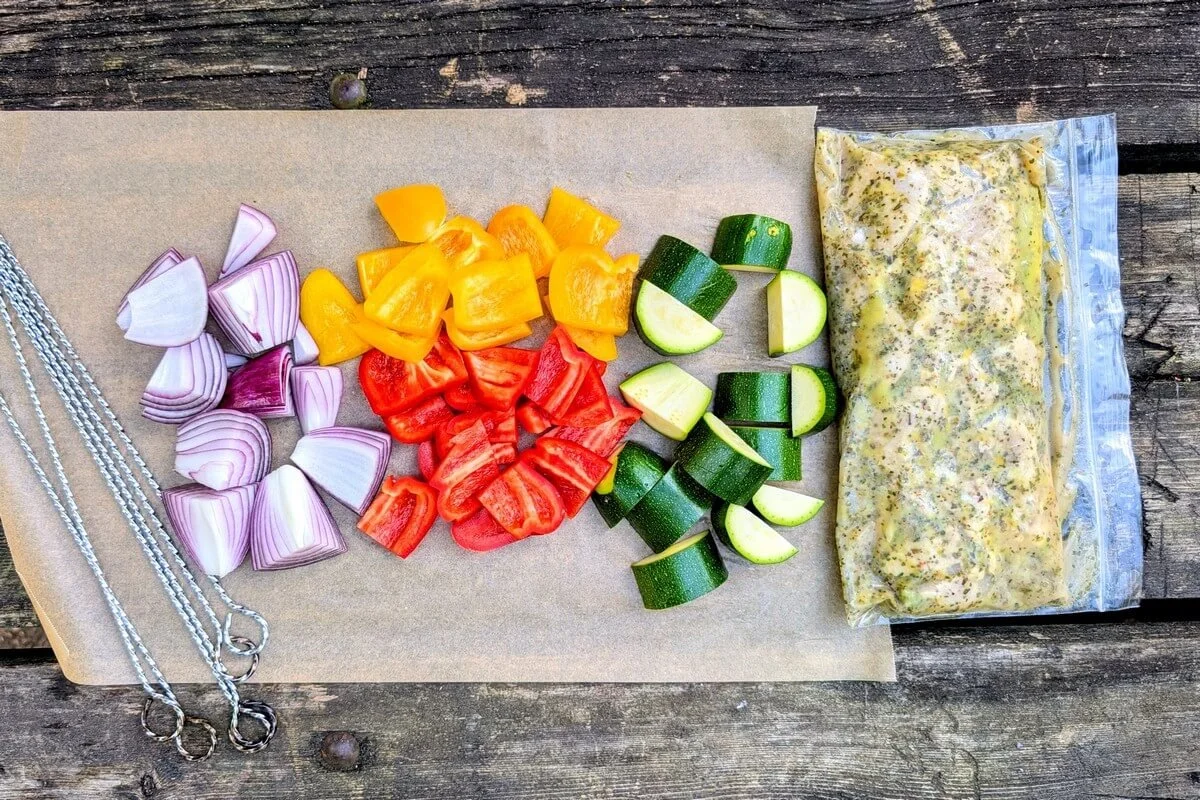
What You’ll Need
Camping Chicken Skewer Ingredients
2 boneless, skinless chicken breasts, cut into 1½-inch chunks
1 bell pepper, cut into 1½-inch squares
1 red onion, cut into 1½-inch pieces
2 zucchinis, cut into 1-inch thick semi-circles
For the Greek souvlaki-style marinade:
2 lemons, zested and juiced
2 tablespoons red wine vinegar
1/4 cup olive oil
2 tablespoons dried oregano
4 cloves garlic, grated
2 teaspoons salt
1/2 teaspoon black pepper
For serving (optional):
1 lemon, halved (for grilling)
1 cup tzatziki
Equipment for Grilling Chicken Skewers
6 stainless steel skewers (or wooden skewers soaked in water for 30 minutes)
Grill grate (for campfire) or BBQ grill
Large zip-top bag
Knife & cutting board
Parchment paper or aluminum foil (for clean prep and serving)
Tongs
Basting brush
Makes: 6 skewers (serves 2 generously)
Prep: 30 min + up to 24 hours marinating
Cook: 10 min
How to Make Campfire Chicken Skewers
Step-by-Step with Photos
Step 1: Marinate the chicken ahead for camping
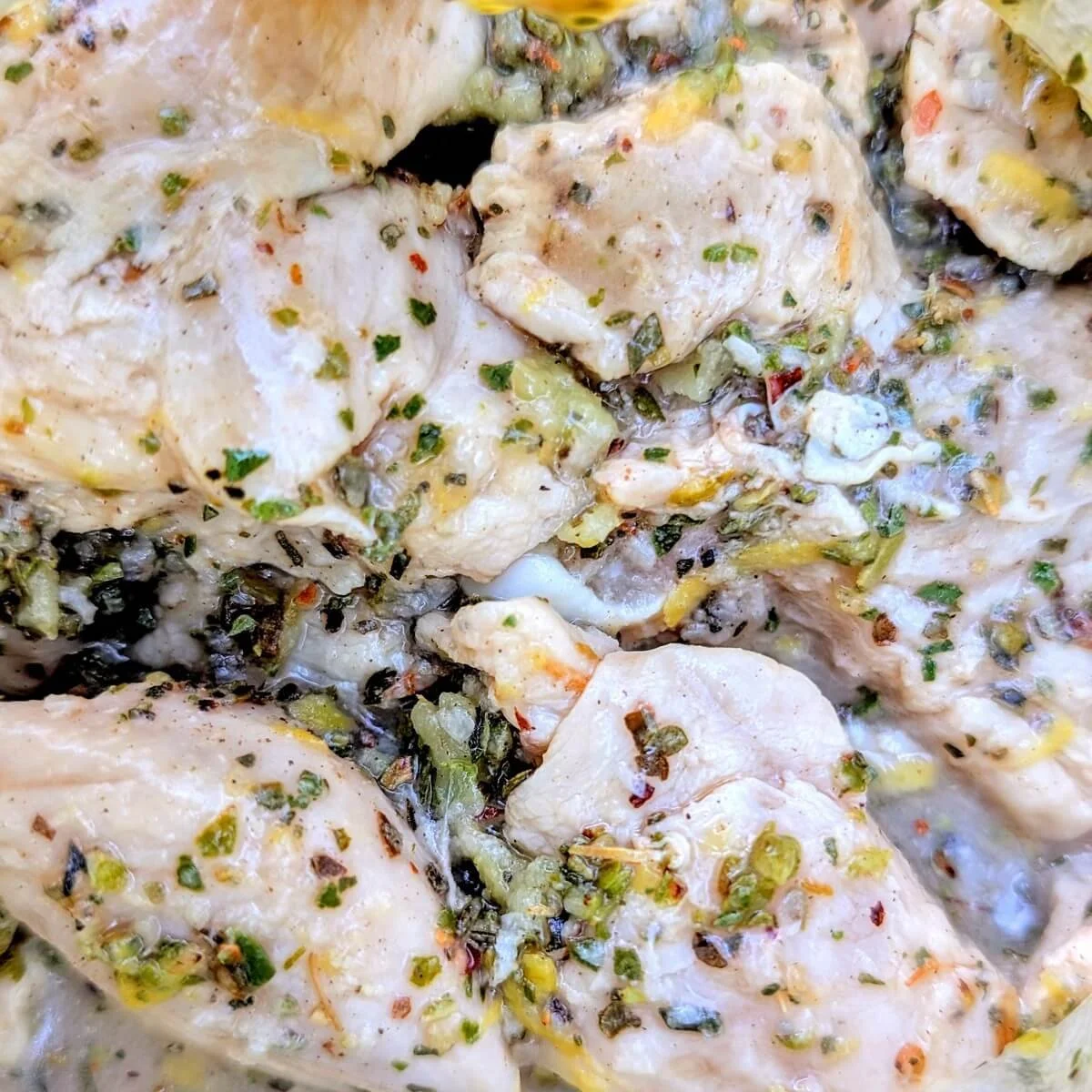
At home, combine the Greek marinade ingredients in a large zip-top bag: lemon zest and juice, red wine vinegar, olive oil, oregano, garlic, salt, and black pepper. Seal and massage gently to mix.
Add the 1½-inch chicken chunks, press out excess air, seal tightly, and massage again so everything is evenly coated.
Marinate for at least 2 hours or up to 24 hours.
Keep refrigerated until packing your cooler. Before heading out, place the sealed bag directly against an ice pack to keep it properly chilled.
💡 Marinating Tip: Because this marinade contains acid, more than 24 hours can make the chicken overly soft. For longer trips, freeze the marinated chicken and use it as an ice pack on day one—it will thaw safely and be ready to cook by day two or three.
Step 2: Build a hot campfire and let it burn down
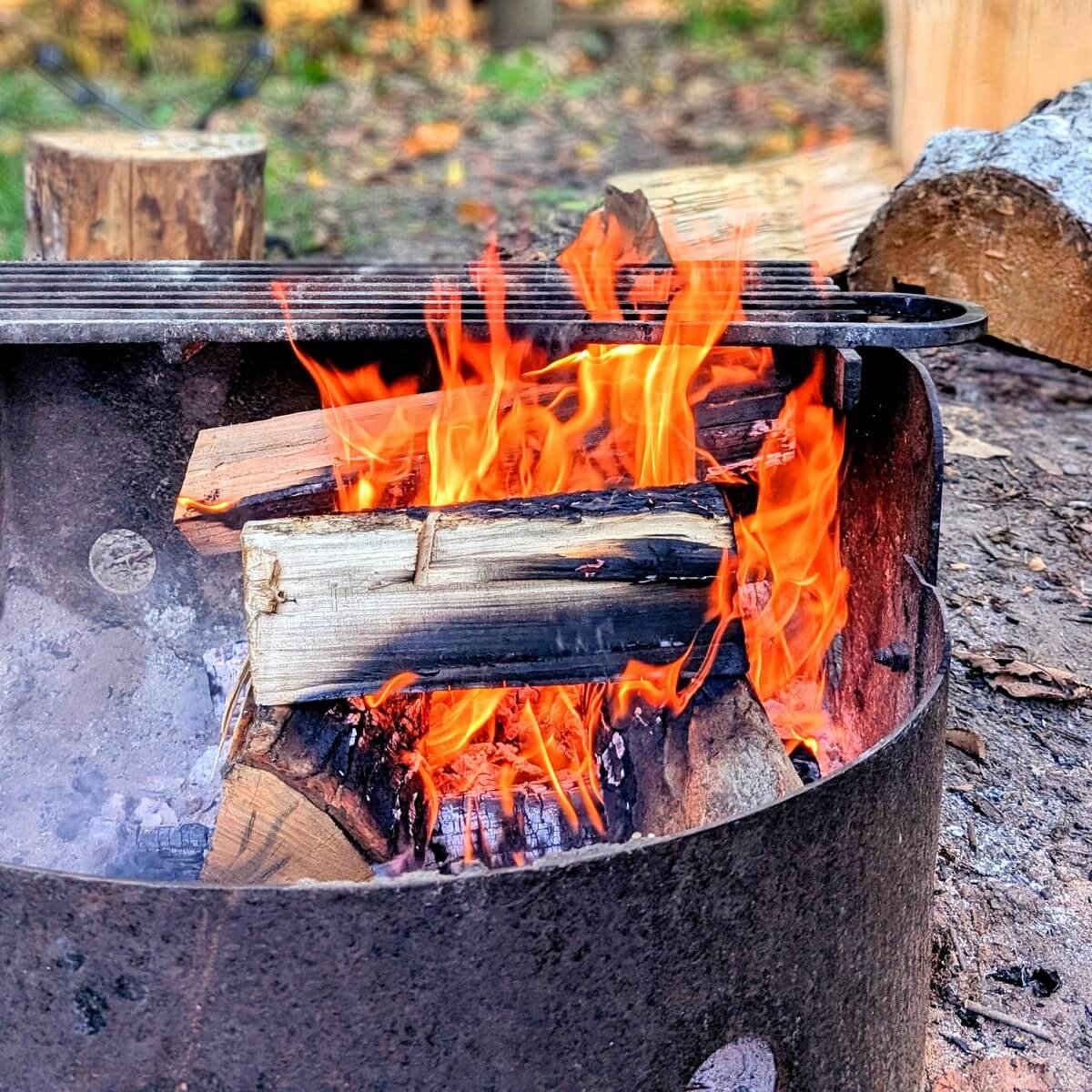
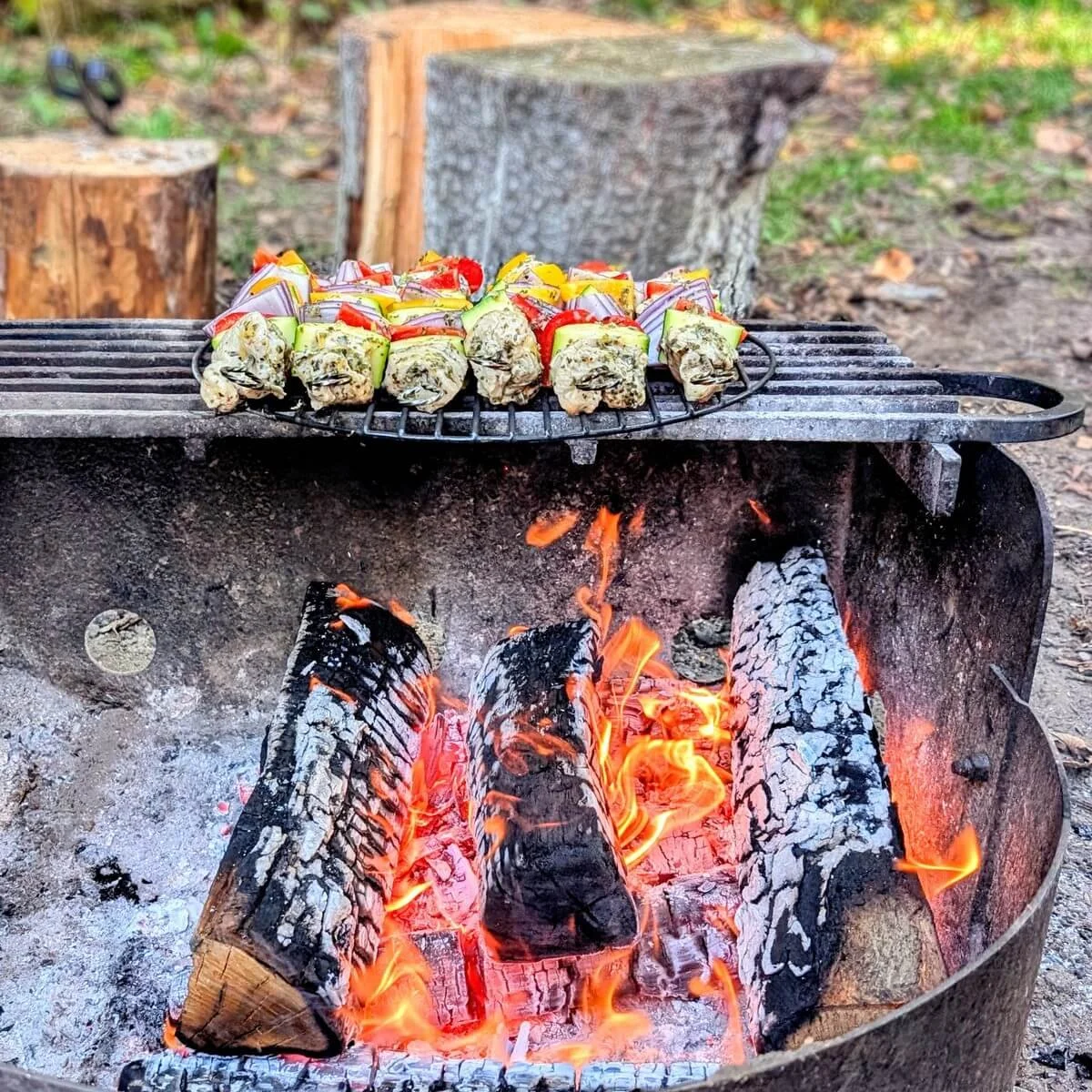
At camp, light your fire at least 45 minutes before cooking. Let the logs burn until blackened on all sides but still intact, producing steady heat with minimal smoke.
In most campsite fire pits, the grate sits high above the fire, so you need strong, active heat—not just a shallow bed of coals.
While the fire develops, assemble the skewers.
Step 3: Prep the vegetables and assemble the skewers
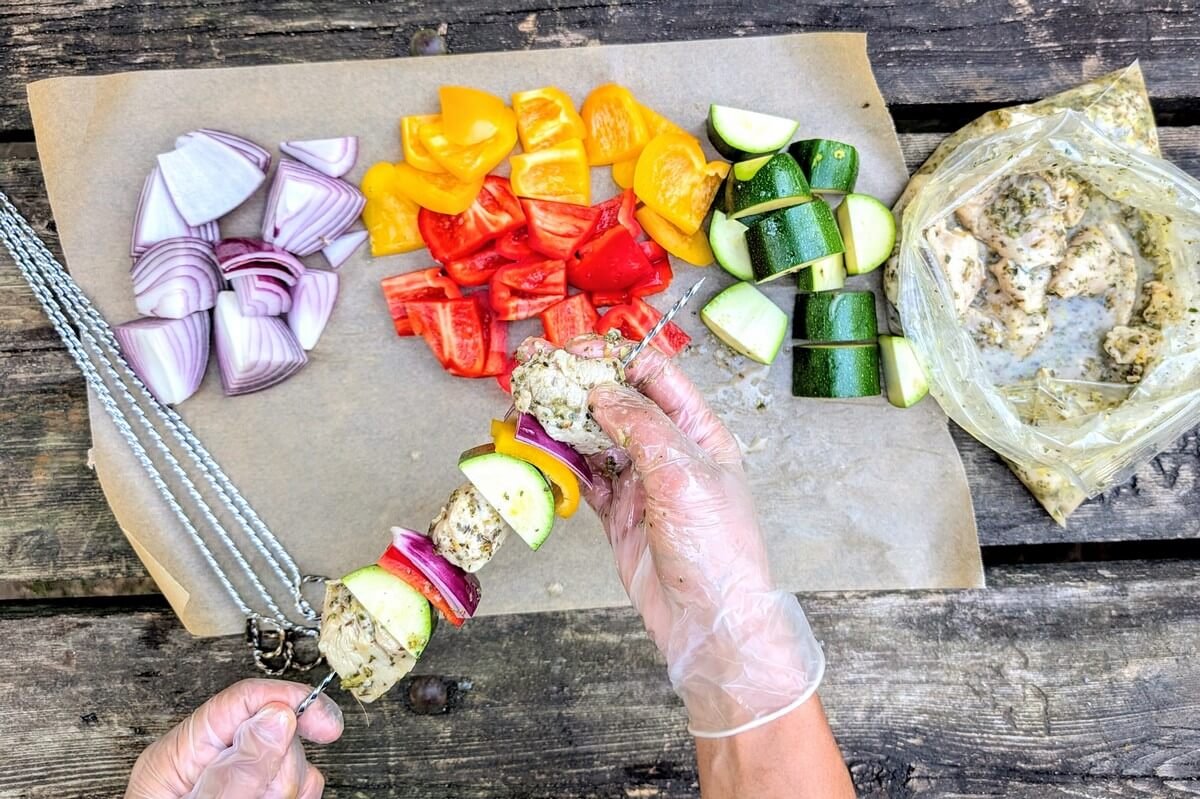
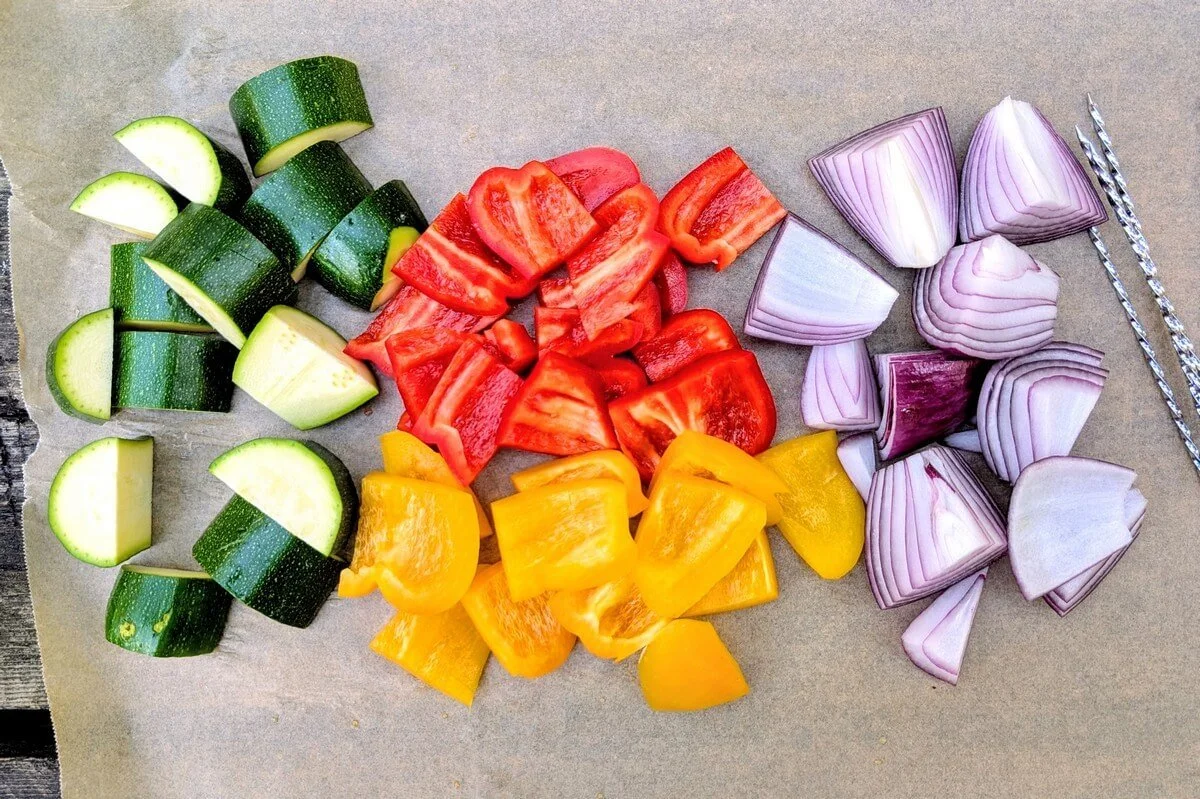
Cut the bell pepper and onion into 1½-inch pieces and slice the zucchini into 1-inch thick semi-circles. Similar sizing ensures everything cooks evenly.
Lay parchment paper on your camp table to create a clean work surface. Group the vegetables, open the chicken bag, and keep skewers within reach.
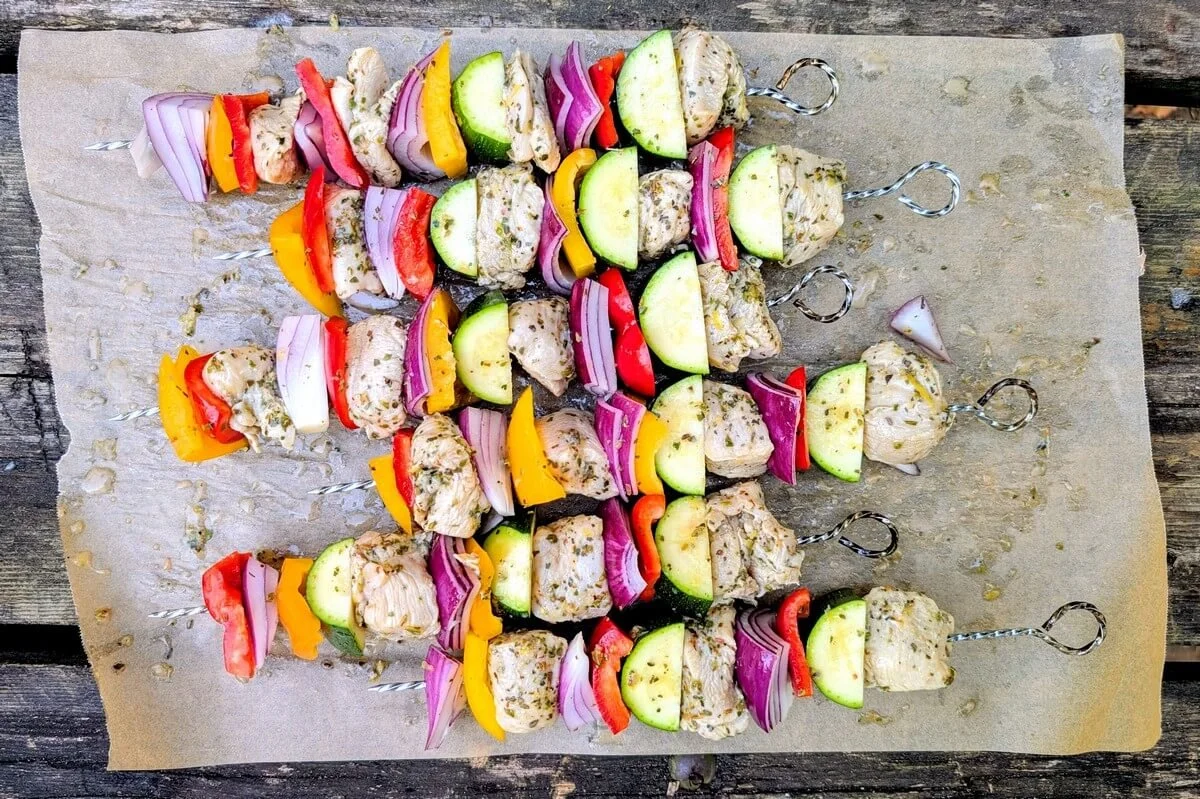
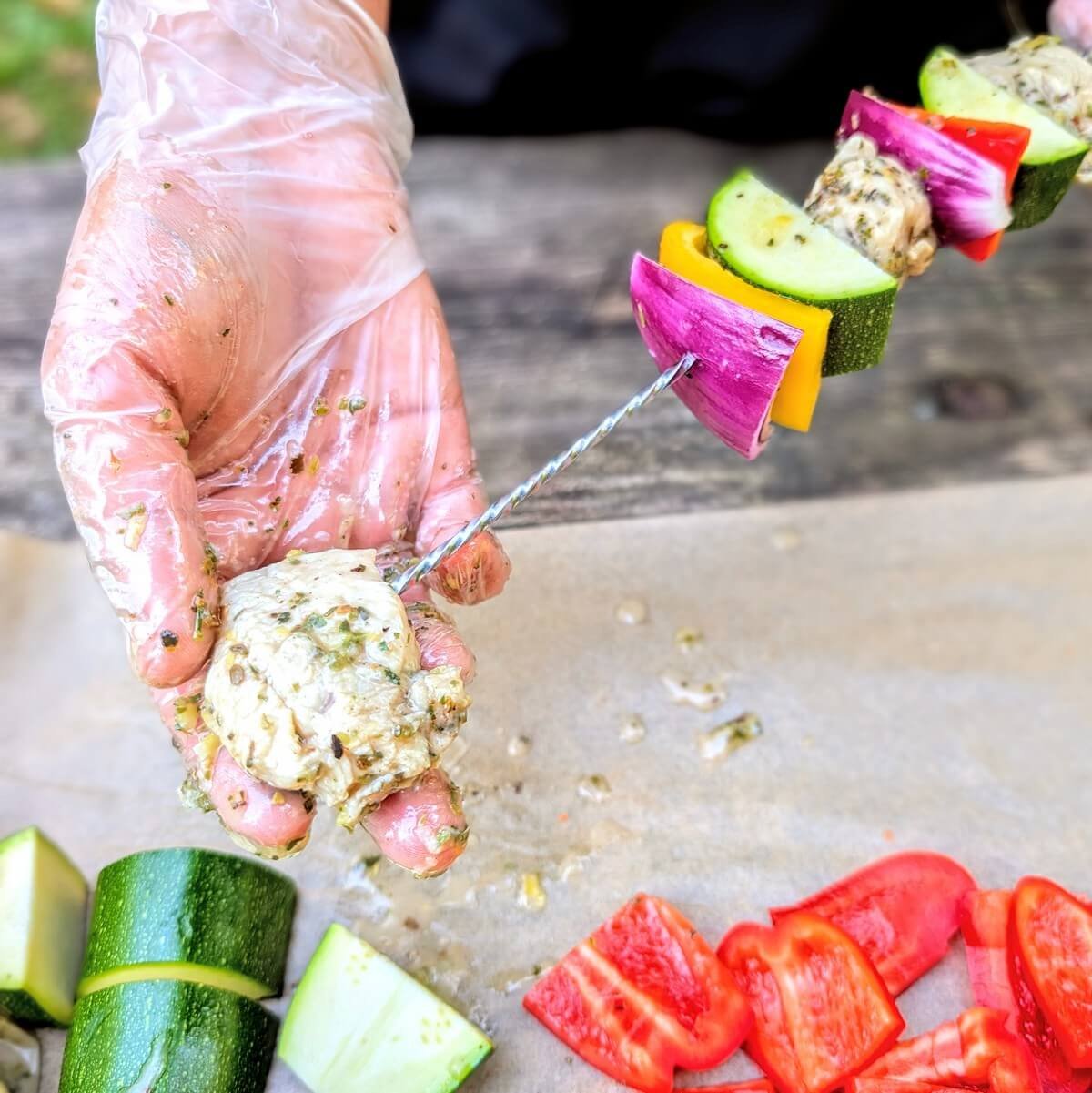
Thread chicken and vegetables onto the skewers, alternating pieces and arranging them snugly so they touch but aren’t tightly compressed. This helps protect the chicken from drying out over high heat.
Let the assembled skewers rest on the parchment until the fire is ready. Reserve leftover marinade for basting.
💡 Camping Tip: Wear disposable gloves when handling raw chicken at camp to make cleanup easier when water is limited.
Step 4: Preheat your grill grate and cook over high heat
Once the logs are fully blackened and sitting at least 1 foot below the fire pit rack, preheat your grill grate over the fire for about 5 minutes.
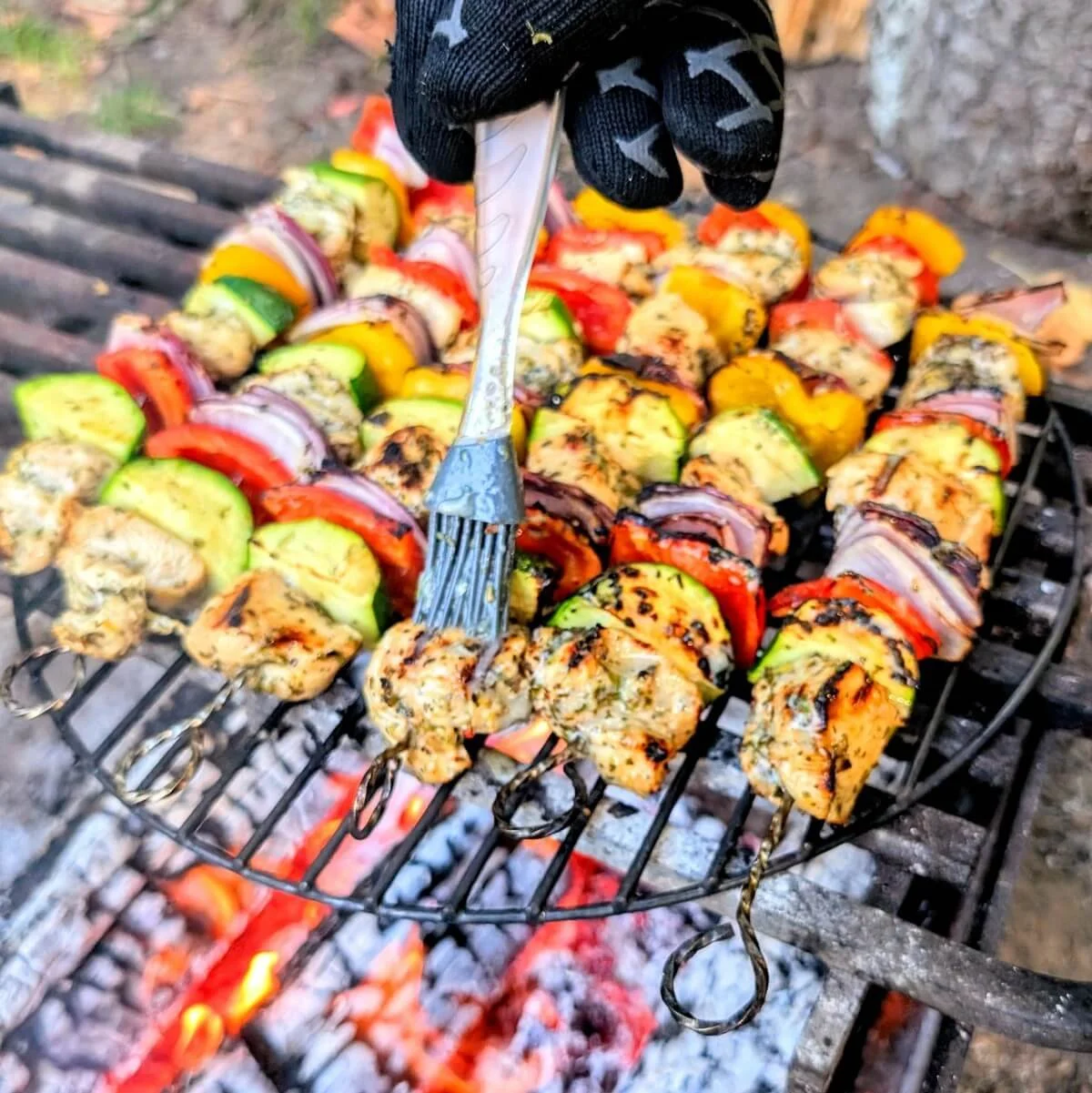
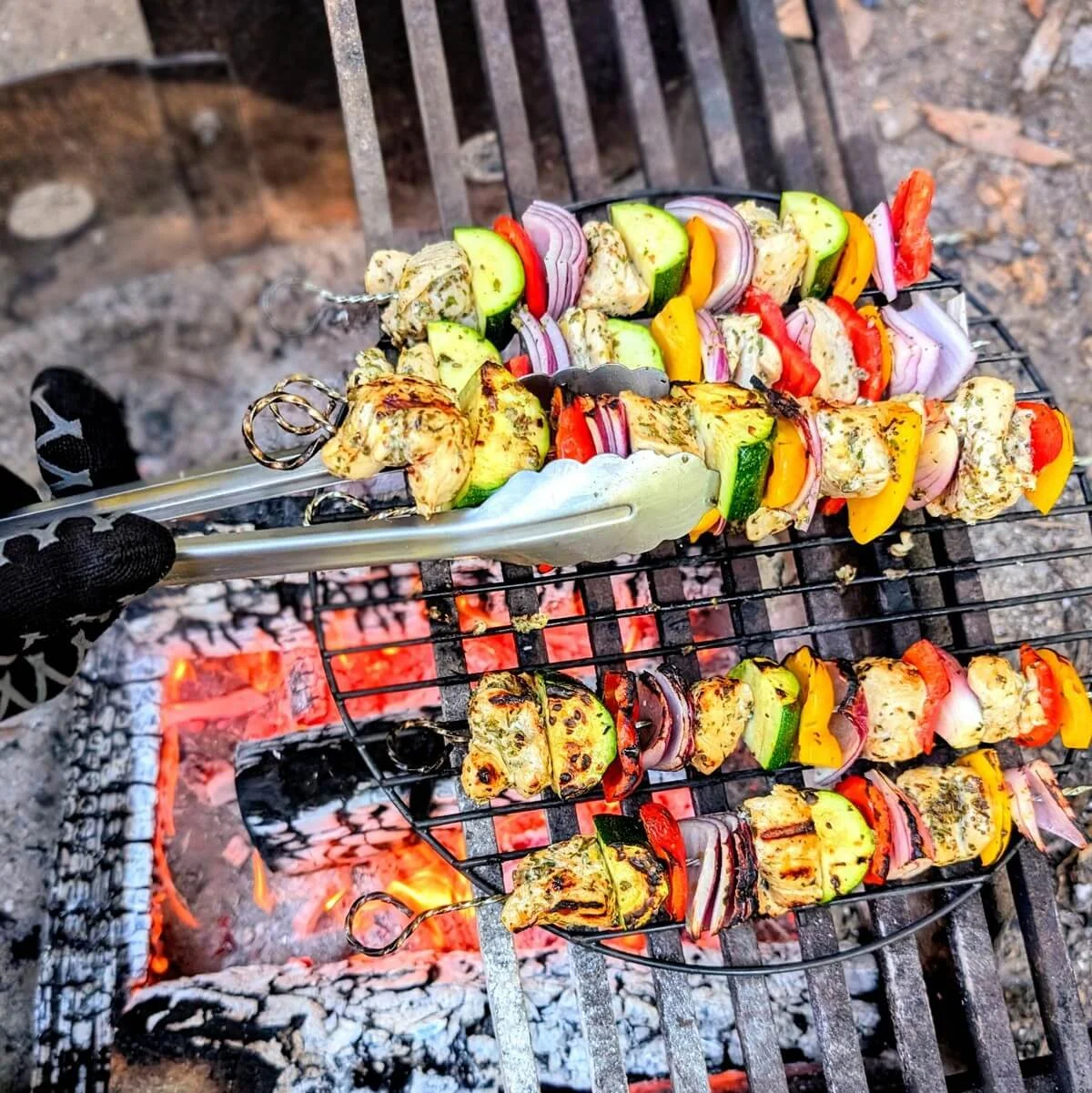
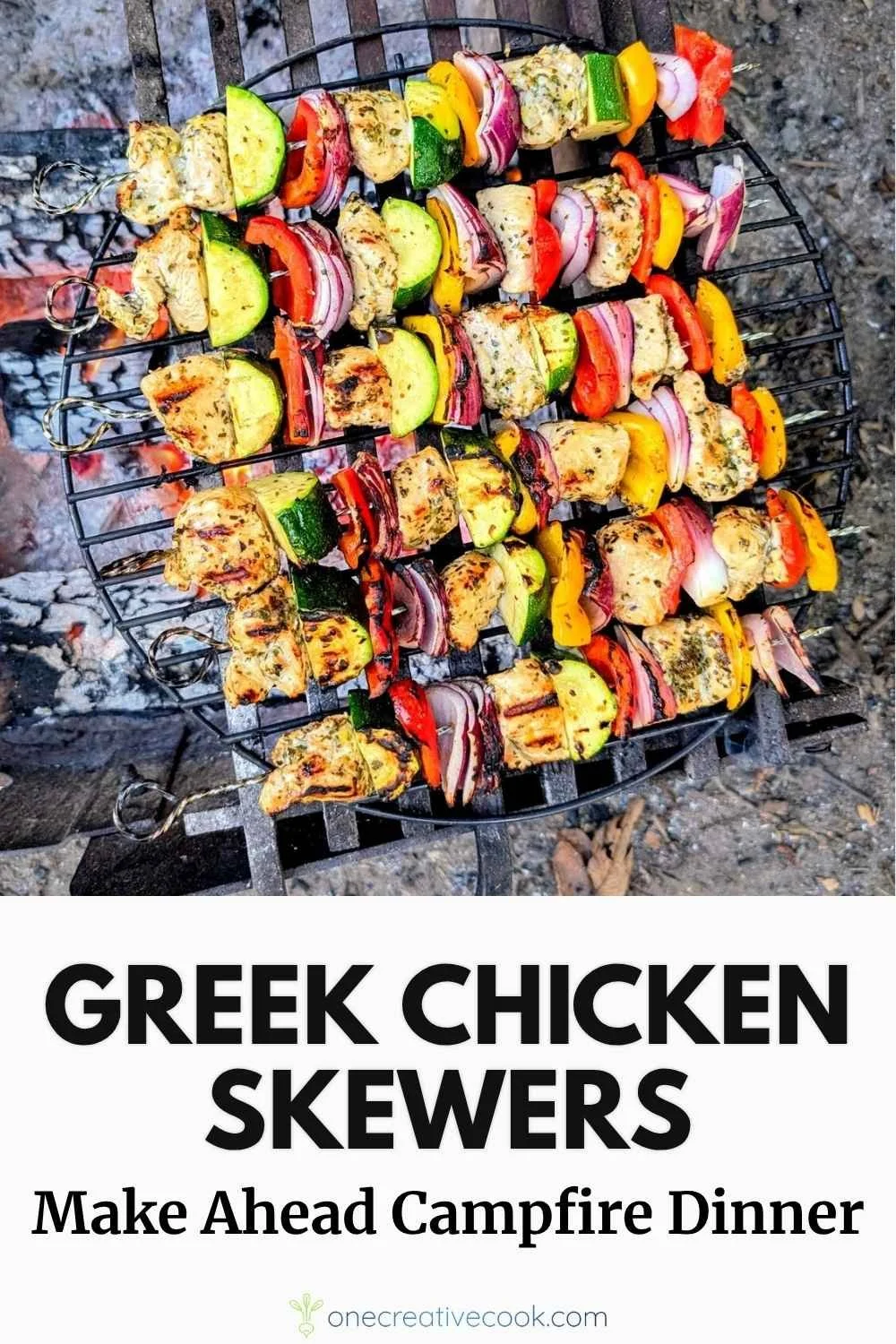
Set the skewers over the hottest part of the fire. Grill for 10–15 minutes total, turning every couple of minutes for even browning.
Campfires create hot spots, so shift the skewers around as they cook to give each one time over strong heat without lingering too long in one place.
During the final minutes, brush with the reserved marinade. Since it touched raw chicken, let it cook fully before serving.
The skewers are done when they are nicely browned, with light char marks, and no visible pink in the center. If using a thermometer, the thickest piece should read 165°F.
Remove immediately once cooked through to prevent drying out.
Step 5: Rest the skewers and serve
Transfer the hot skewers to a fresh sheet of parchment paper on your camp table and let rest for at least 5 minutes so the juices redistribute.
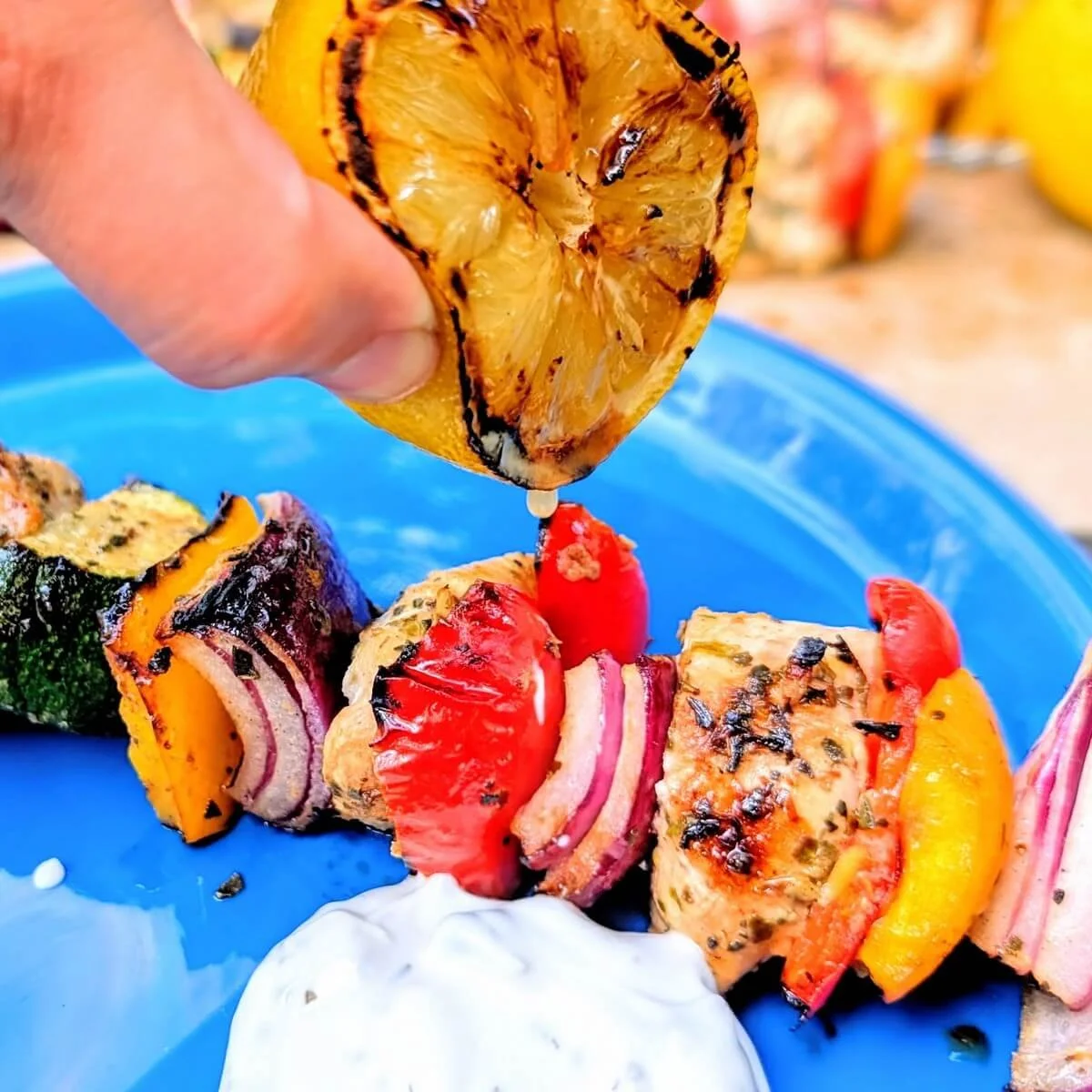
While they rest, grill the lemon halves cut-side down until lightly charred and softened.
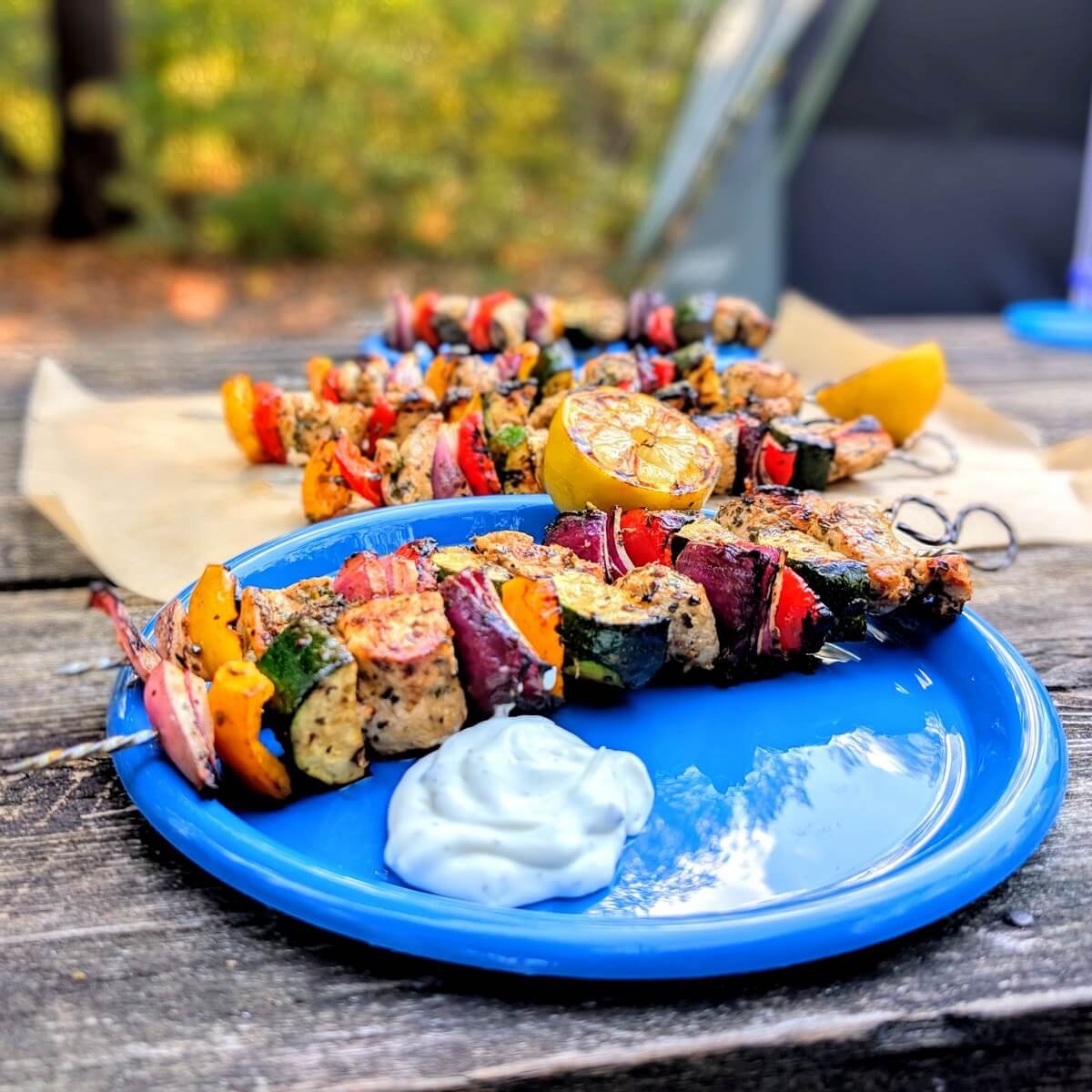
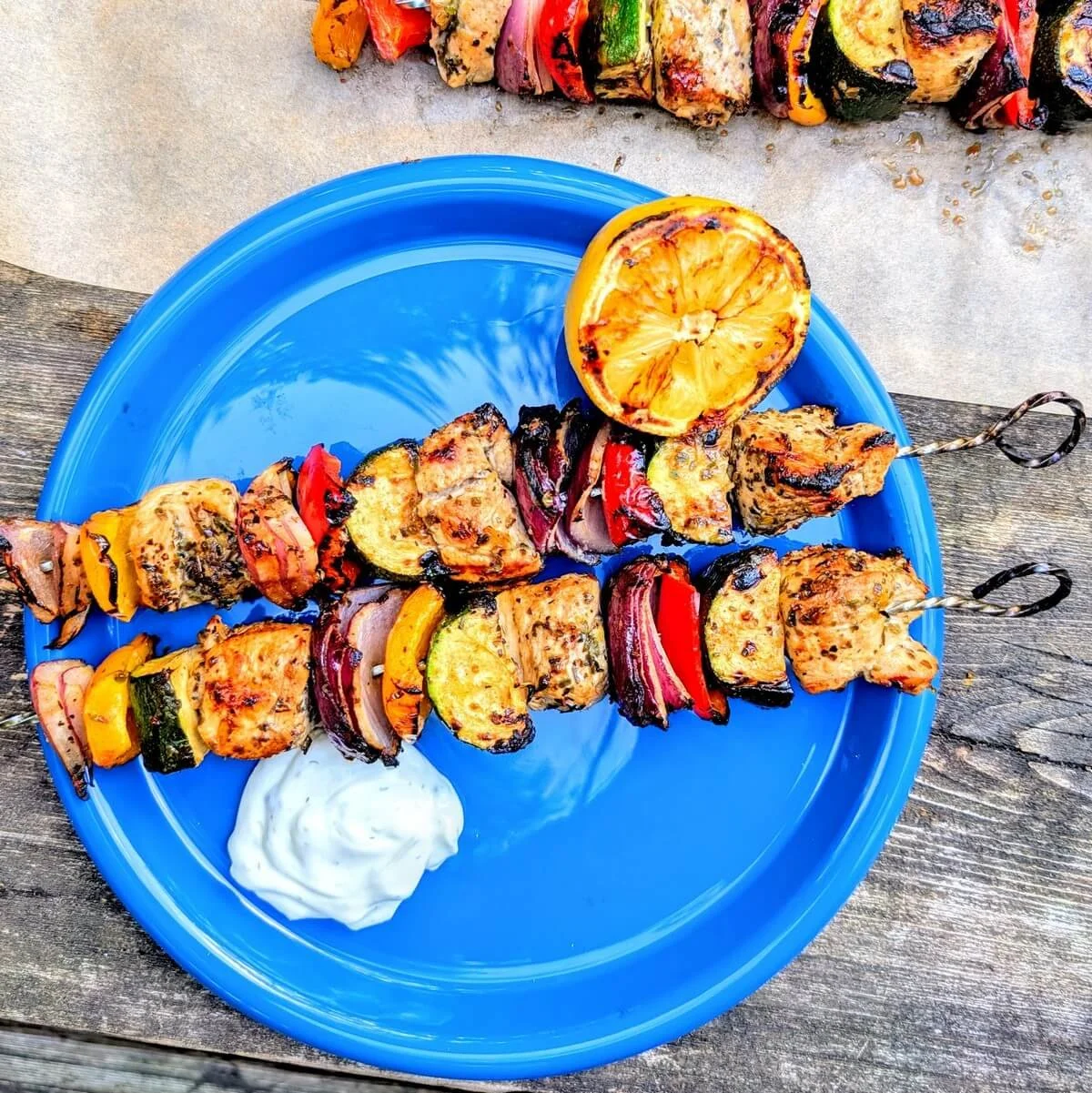
Squeeze the warm lemon over the skewers and serve with tzatziki.
How to Prep and Pack Chicken Skewers for Camping the Smart Way
Smart camp cooking starts before you leave home. Marinating the chicken up to 24 hours in advance not only builds flavor, but it also keeps camp prep to straightforward assembly—not trimming, seasoning, or managing cross-contamination on a cutting board.
How you prep the vegetables depends on your cooler space. If you have room, you can marinate the chicken, cut the vegetables, assemble the skewers, and store everything ready to grill for the least amount of work at camp. After 24 hours in the cooler, though, vegetables begin to release moisture and soften, so they’re best cooked within a day.
Keeping components separate gives you the most flexibility on longer trips. Store the marinated chicken in one bag and the cut vegetables in another to preserve texture while still reducing prep at camp. For multi-day camping, freeze the marinated chicken so it doubles as an ice pack and thaws naturally by day two or three, then cut the vegetables at camp to save cooler space.
🧊 Want the best tips to keep food cold and safe in the cooler? Don’t miss my full guide on how to pack a cooler for camping—smart storage ideas to keep everything fresh and organized for days.
How to Cook Chicken Skewers Over a Campfire (Without Drying Them Out)
Start with a fully developed fire. Let it burn for at least 45 minutes, until the logs are blackened and the thick, dark smoke has faded to light or nearly clear. That fully charred stage creates the steady radiant heat needed for proper browning.
Build the right structure for steady, even heat. A stacked log-cabin style fire creates a flatter, more controlled heat surface than a teepee, which concentrates heat in one spot. The grill grate should sit about one foot above well-burned logs so the heat reaches the food efficiently.
Cook hot and move often. Small pieces of chicken need aggressive heat so they brown quickly rather than steam and dry out. Rotate frequently so each skewer spends time over the strongest heat without lingering too long. If they aren’t picking up color within 30 to 60 seconds per side, add another log and let it burn down before continuing.
Bring your own cooking surface. Built-in campsite fire pit racks are often dirty and rusty, so use your own grill grate or basket over the fire pit. If there’s no built-in rack, a portable fire-safe grill grate with legs or a tripod system is essential for safe contact and even caramelization over open fire.
🔥 For a full breakdown on building and managing live-fire heat, see my complete guide on how to cook over a campfire.
The Best Vegetables for Chicken Skewers (and How to Cut Them for Even Grilling)
Choose vegetables that can handle high heat and stay put on a skewer. Peppers, onions, and zucchini cook at about the same pace as cubed chicken when cut thick.
Some vegetables need their own skewers. Tomatoes and mushrooms release a lot of moisture and can steam the chicken instead of browning it. Hard vegetables like potatoes, sweet potatoes, carrots, or broccoli need par-cooking first or they won’t finish in time, so cook them separately for better timing control.
Cut size is what keeps everything cooking evenly. Zucchini should be sliced into 1-inch thick rounds or semi-circles so it doesn’t turn mushy over high heat. For peppers and onions, cut large 1½-inch pieces, keeping two or three onion layers together so they’re similar in thickness to the peppers.
Keep everything chunky and evenly sized. Larger pieces hold their structure, caramelize at the edges, and stay tender in the center. As long as the vegetables are close in size to the chicken, they can cook together on the same skewer without issue.
Camping Chicken Skewers Ingredient & Equipment Variations
Chicken breasts: Boneless skinless chicken thighs are an easy swap and are more forgiving over high heat, thanks to their higher fat content, making them less likely to dry out if slightly overcooked. You can also use pork loin or lamb leg—just adjust the cook time based on thickness and your preferred doneness.
Vegetables: Swap bell peppers with poblano for a little heat, red onion with yellow or white onion, and zucchini with yellow summer squash. Choose sturdy vegetables that can handle high heat for the best texture.
Stainless steel skewers: Wooden skewers work if soaked for at least 30 minutes, though they may char over open flame and need closer attention during grilling.
Campfire setup: A charcoal grill works well if live fire isn’t an option and offers more consistent heat. Build a generous bed of hot coals so you still get proper browning and caramelization.
🍳 Want to know all the campfire gear I actually use? From my heat-proof gloves and sturdy tongs to the small tools that make cooking over a live fire easier, you’ll find everything in my list of favorite campfire cooking tools.
How to Store Leftover Chicken Skewers
Fridge: Store cooked skewers in an airtight container or zip-top bag in the refrigerator for up to 3 days. Remove them from the skewers first to save space and stack more easily.
Cooler Storage: Keep cooked skewers in a sealed container or bag near ice packs and use within 1 to 2 days. As with fridge storage, removing them from the skewers helps everything fit better.
To Reheat: Warm gently over a grill or in a skillet over medium heat just until heated through. If using a microwave, heat in short bursts with a splash of water to create steam and prevent drying out.
Freezer: Freeze cooked chicken (off the skewers) in a freezer-safe container or bag for up to 3 months. Thaw overnight in the fridge before reheating.
Make Ahead: Marinate the chicken in a sealed zip-top bag in the refrigerator for up to 24 hours. If prepping further in advance, freeze the marinated chicken and use within 3 months for best quality.
What to Serve with Chicken Skewers at Camp
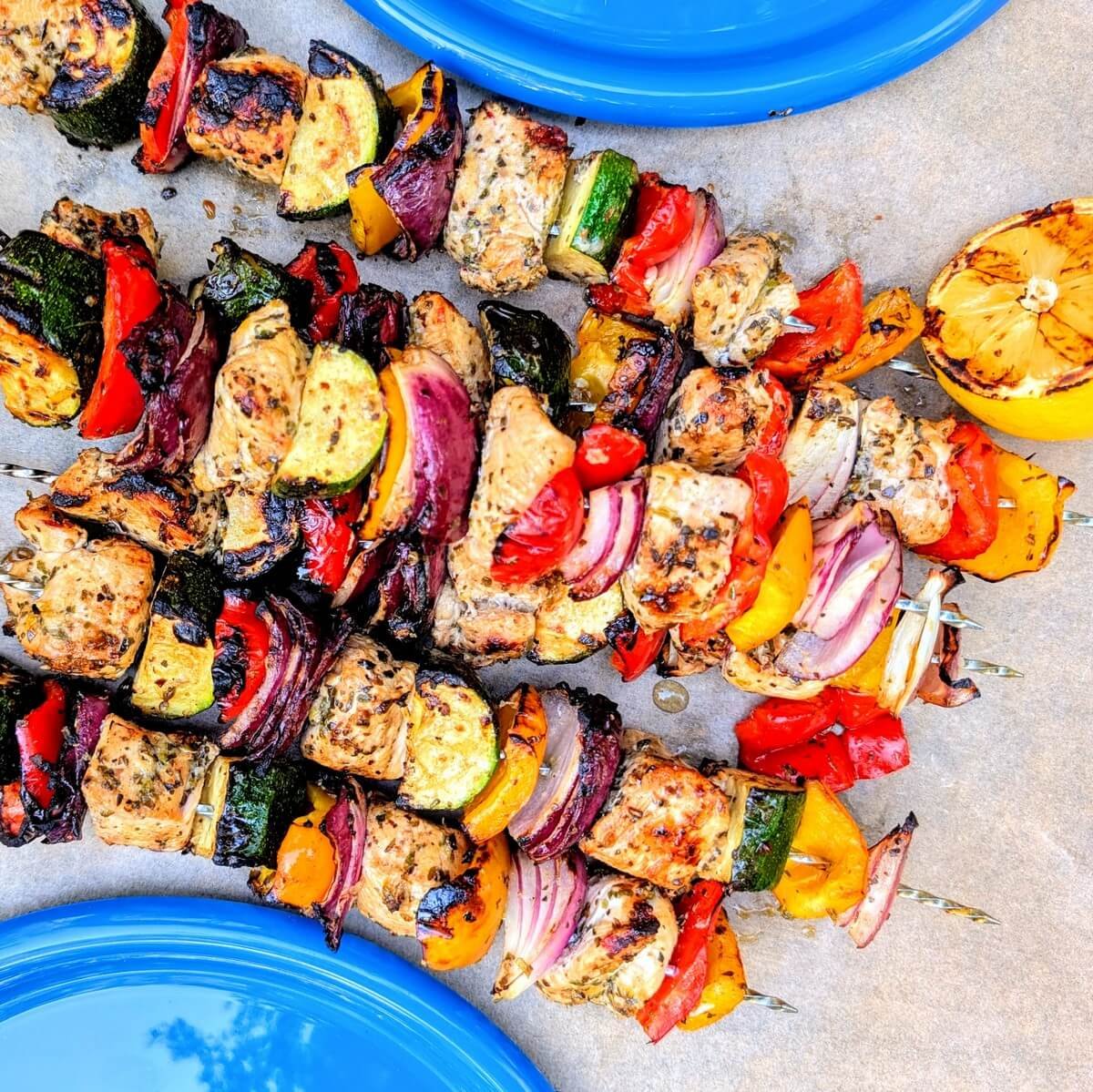
Warm flatbread or pita: Tuck the grilled chicken and vegetables into soft pita with tzatziki and a squeeze of charred lemon for an easy handheld camp dinner.
Simple grain bowls: Serve over rice, orzo, or couscous to turn the skewers into a more filling meal.
Fresh salad: Pair with a quick chopped salad of tomato, cucumber, and herbs dressed with olive oil and lemon to keep things light and balanced. We actually love the leftovers cold over salad the next day for an easy lunch.
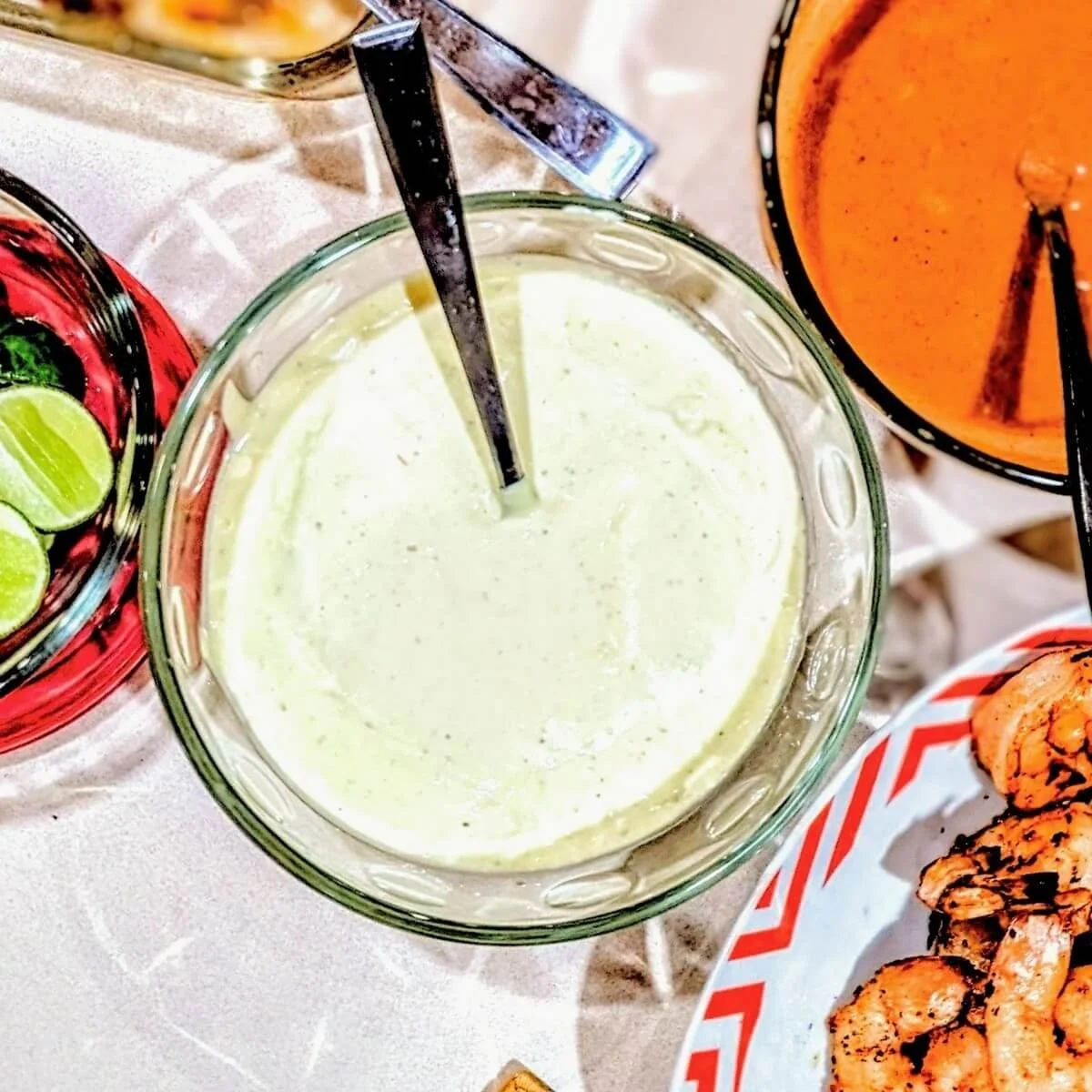
Extra sauces for layering flavor: Tzatziki keeps things classic, but for a slight twist, my Iraqi jajik (yogurt sauce with cucumber, mint, and garlic) is incredible with grilled meats. Tahini sauce adds toasty richness, and zhoug brings fresh herbs and heat if you want something a little more punchy.
Camping Chicken Skewer FAQs
How long can you marinate chicken for skewers before they get mushy?
Chicken can be marinated for up to 24 hours before skewering without any texture issues. After that, the lemon juice and vinegar begin to break down the proteins, which can make the chicken overly soft.
If you won’t be cooking them within 24 hours, you can always freeze the marinated chicken and let it thaw gradually in the cooler. It will be ready to cook by day two or three of your trip.
Can you cook camping chicken skewers without a grill grate?
Not directly over the flames—you’ll need some kind of stable cooking surface to grill chicken skewers at camp. If your campsite doesn’t have a usable grate, bring a portable grill grate with legs or a tripod setup so the skewers sit safely above the fire.
Technically, you could use long camp forks and cook them one at a time, but that’s more of a fun activity than a practical way to feed everyone.
Should you cook meat and vegetables together on skewers?
Yes, you can cook meat and vegetables together on skewers if they’re cut to similar sizes. When everything is thick and evenly sized, they’ll finish cooking at about the same time.
If you’re using delicate or slow-cooking vegetables, cook them on separate skewers for better control.
Can you assemble chicken skewers the night before camping?
Yes, you can assemble chicken skewers the night before camping if you have cooler space. Store them tightly sealed and cook them within 24 hours so the vegetables don’t release too much moisture.
For longer trips, I prefer storing the chicken and vegetables separately and assembling at camp.
Enjoy These Easy, Make-Ahead Camping Chicken Skewers!
Cooking over a real fire just makes everything taste better. A simple marinade takes these chicken skewers from good to flavor-packed, and that extra ten minutes of prep at home is more than worth it once you’re relaxing at camp.
Whether they’re all gone on night one or you enjoy the leftovers cold the next day with a little salad and tzatziki, they’re the kind of meal that earns a permanent spot in your campfire rotation.
Pin This Campfire Chicken Skewer Recipe for Later!
Greek Chicken Skewers for Camping Recipe
These Greek chicken and vegetable skewers are built for campfire cooking with chef tips for juicy, evenly cooked kabobs every time.
Makes: 6 skewers (serves 2 generously)
Prep: 30 min + up to 24 hours marinating
Cook: 10 min
Dietary Notes: Gluten-free, Dairy-free, Egg-free, Low-carb, High-protein
Campfire Chicken Skewer Ingredients
2 boneless, skinless chicken breasts, cut into 1½-inch chunks
1 bell pepper, cut into 1½-inch squares
1 red onion, cut into 1½-inch pieces
2 zucchinis, cut into 1-inch thick semi-circles
For the Greek souvlaki-style marinade:
2 lemons, zested and juiced
2 tablespoons red wine vinegar
1/4 cup olive oil
2 tablespoons dried oregano
4 cloves garlic, grated
2 teaspoons salt
1/2 teaspoon black pepper
For serving (optional):
1 lemon, halved (for grilling)
1 cup tzatziki
Quick Instructions to Make Camping Chicken Skewers
Marinate the chicken. At home, combine the Greek marinade ingredients in a zip-top bag. Add 1½-inch chicken chunks, seal, massage to coat, and marinate 2–24 hours in the refrigerator. Before leaving, pack the sealed bag in your cooler directly beside ice packs.
Build a hot fire. At camp, light your fire at least 45 minutes before cooking. Let the logs burn until fully blackened but still intact, creating strong, steady heat about 1 foot below the fire pit rack.
Assemble the skewers. Cut peppers and onions into 1½-inch pieces, and zucchini into 1-inch thick semi-circles, keeping everything even. Use parchment paper or foil as a clean work surface, then thread chicken and vegetables snugly onto skewers so pieces touch but aren’t tightly compressed. Reserve leftover chicken marinade for basting.
Grill over high heat. Preheat a grill grate over the fire for 5 minutes, then cook skewers over direct high heat for 10–15 minutes, turning every couple of minutes and rotating through hot spots. Brush with the reserved marinade during the final minutes and cook until well browned and the chicken is firm with no visible pink inside (165°F if using a thermometer). Since the marinade touched raw chicken, let it cook fully on the grill before serving.
Rest and serve. Transfer skewers to fresh parchment paper on your camp table and let rest at least 5 minutes before serving. Grill lemon halves cut-side down until lightly charred, squeeze over the skewers, and serve with tzatziki.
Top Tips for the Best Chicken Skewers for Camping
Prep strategically: Marinate up to 24 hours—any longer and the lemon and vinegar can make the chicken too soft. For longer trips, freeze the marinated chicken, so it doubles as an ice pack and thaws in time for day two or three.
Keep it clean at camp: Use disposable gloves to make threading raw chicken easier and cleanup faster when water is limited.
Cook over real heat: Wait until the logs are fully blackened and radiating steady heat before grilling so the skewers brown quickly instead of steaming.
Did you try these campfire chicken and veggie skewers?
I’d love to hear how they turned out—or how you made them your own. Leave a comment below or tag me on Instagram @onecreativecook so I can see your creation!
More Campfire Cooking Recipes You’ll Love
Crispy grilled campfire potato wedges: Golden, fluffy on the inside, and crisp on the outside, these are the perfect hearty side to serve with skewers or any fire-grilled main.
Bacon fat brussels sprouts: Cooked in a skillet over live fire with onions and mushrooms, these sprouts are deeply caramelized and packed with rich, savory flavor.
Grilled flank steak with garlic, herbs & butter: A high-heat, quick-cooking steak recipe that shows how powerful seasoning and proper fire management can be.
Spicy fire grilled jerk chicken: Loved the marinade strategy in these skewers? This bold, smoky jerk chicken takes it even further.
10 no foil camping recipes: Planning a full weekend menu? Browse my favorite gourmet campfire meals—easy, flavor-packed, and all cooked without foil.








Make a flaky pumpkin pie crust with just 3 ingredients, using the same cold-butter and blind-baking techniques I learned in restaurants. Then add my classic spiced pumpkin filling to make the whole pie from scratch.