Foolproof Immersion Blender Hollandaise Sauce
Make homemade hollandaise in just 5 minutes using an immersion blender. This chef-tested method skips the double boiler without sacrificing a silky, stable sauce.
or read on for step-by-step instructions with photos
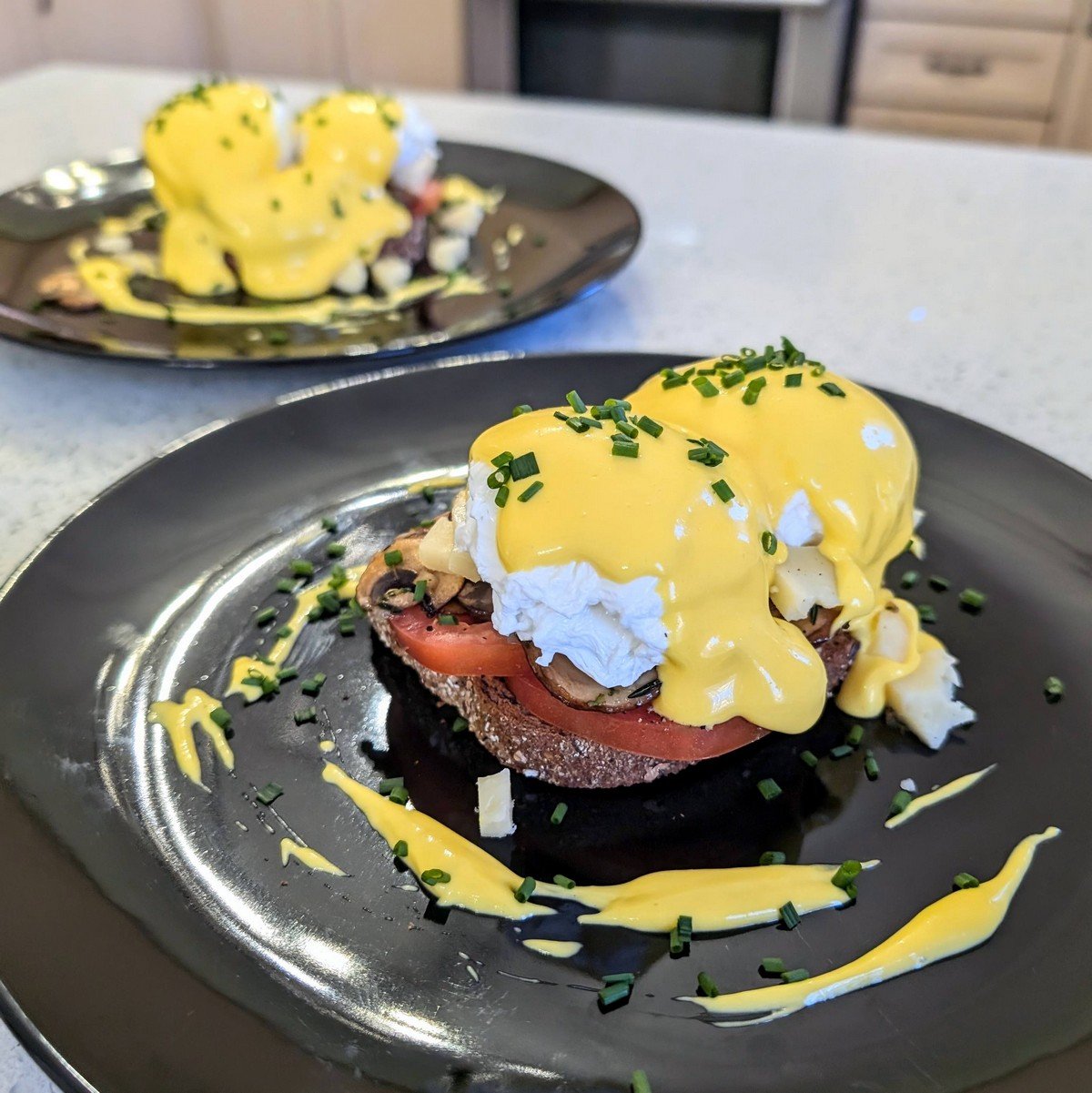
A Faster Way to Make Hollandaise at Home
Hollandaise is one of the five French mother sauces: an emulsion of egg yolks, butter, and acid, traditionally whisked over a double boiler.
It's rich, silky, and delicious over eggs Benedict, asparagus, steak, or fish—but the traditional method can be intimidating for home cooks.
As a pro chef who's made hollandaise for countless brunch services, this is the method I use at home when I want a small batch that's fast, smooth, and reliable.
Hot melted butter and the immersion blender work together to create a silky, stable emulsion—without clarified butter or a double boiler.
How This Blender Hollandaise Recipe Works
Hot melted butter: Heat the butter in the microwave and skip the clarifying step to keep the method simple.
Immersion blender vortex: A hand blender creates a strong vortex that gradually pulls the butter into the yolks, helping the sauce emulsify quickly and reliably.
No double boiler: Hot butter gently warms and thickens the yolks while blending, so you don’t have to whisk over a pot of simmering water.
Lemon juice and water: These replace the traditional wine reduction, balance the richness, and help keep the emulsion fluid and stable.
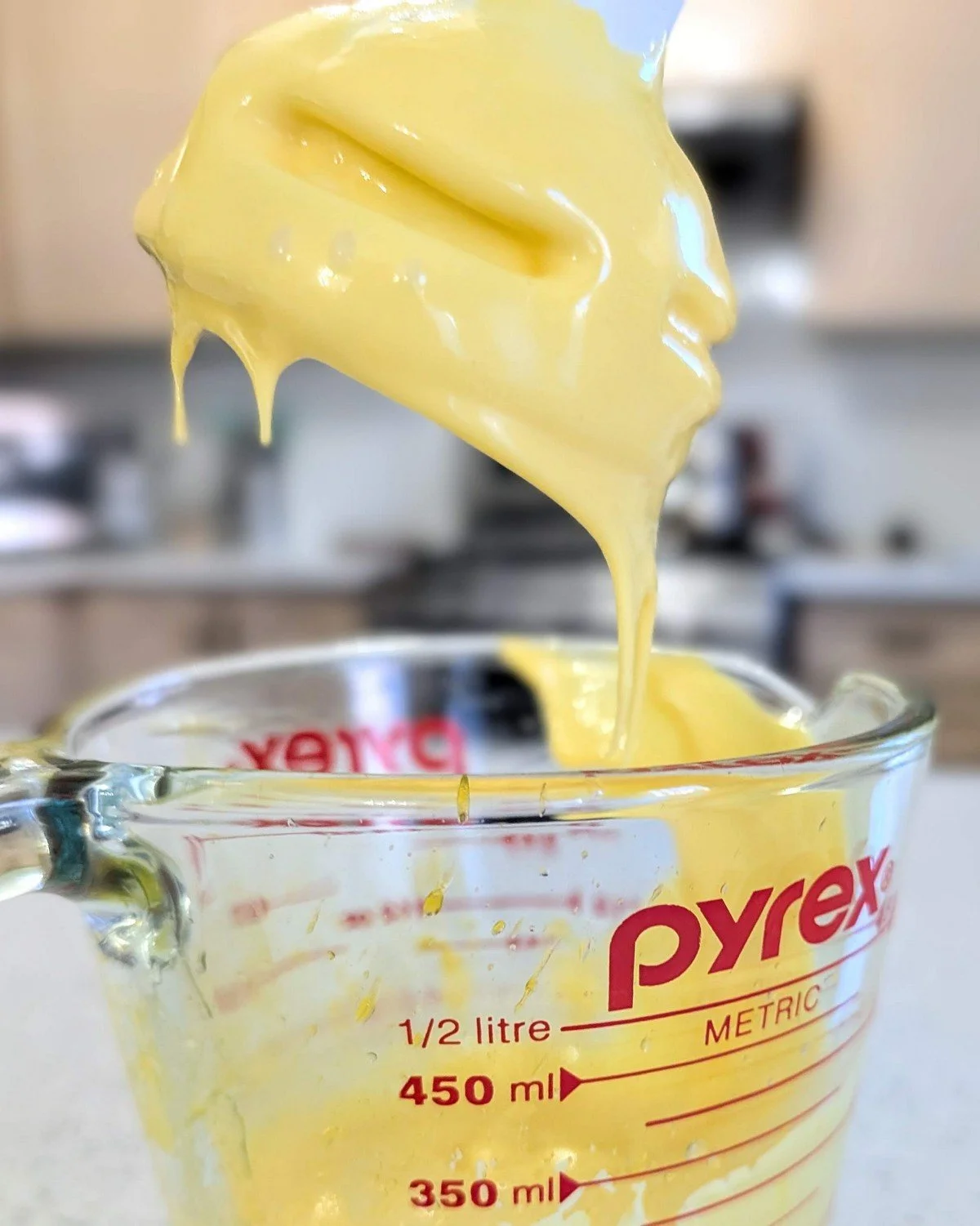
What You’ll Need
Hollandaise Sauce Ingredients
2 large egg yolks
1 teaspoon water
1 teaspoon lemon juice
1 stick (½ cup) salted butter (or unsalted butter + 1 pinch of salt)
Equipment for Making Hollandaise Sauce
Immersion blender & narrow blending container
Measuring cup with a spout (or something similar for easy pouring)
Microwave
Makes: 2 servings (⅔ cup) Prep: 5 min
How to Make Hollandaise Sauce with an Immersion Blender
Step 1: Prep the egg yolks
Separate the egg yolks from the whites and place them in the narrow blending container of your immersion blender or a 2-cup measuring cup. Add the lemon juice, water, and a pinch of salt if you’re using unsalted butter.


Step 2: Melt and heat the butter
Cube the butter and place it in a microwave-safe container, ideally one with a spout like a glass measuring cup for easy pouring.
Microwave on high for 30 seconds, then in 10-second bursts until fully melted, foamy, and hot. Keep the bursts short, since butter can foam and spatter in the microwave.
The butter should be hot enough that you can hold your finger in it for a couple of seconds before it becomes uncomfortable, but not so hot that you have to pull your finger away immediately.
This step is crucial: the butter must be hot enough to help the sauce emulsify and gently thicken the yolks, but not so hot that it curdles them.
Alternative: Melt the butter in a saucepan over medium heat until fully melted and foamy, then use the same finger test if you don’t have a thermometer.


Step 3: Blend the hollandaise sauce with an immersion blender
Place the immersion blender into the narrow blending container, submerging it all the way to the bottom. Start by blending the yolks, then slowly drizzle in the hot butter while blending continuously.
It should take about 1 minute to incorporate all the butter. Once blended, taste the sauce and adjust the seasoning with additional salt or lemon juice.
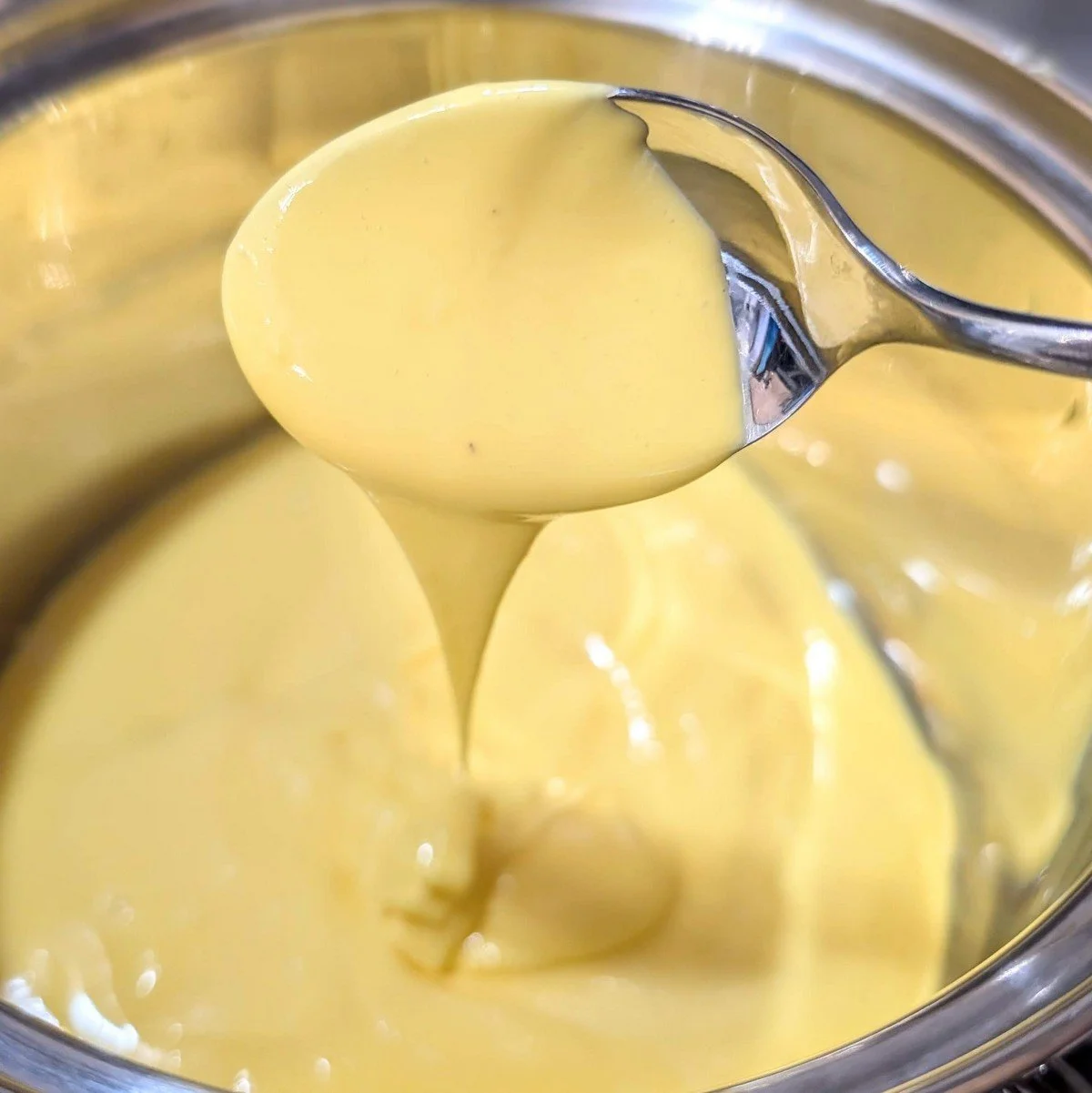
Check the consistency: the sauce should coat the back of a spoon or spatula, and if you swipe your finger across it, the line should hold (see pic below). If it’s too thick for your liking, thin it out with a little water, 1 teaspoon at a time.


Step 4: Serve the hollandaise warm
If you’re not serving the sauce right away, transfer it to a container with a lid and keep it in a warm spot for up to 2 hours.
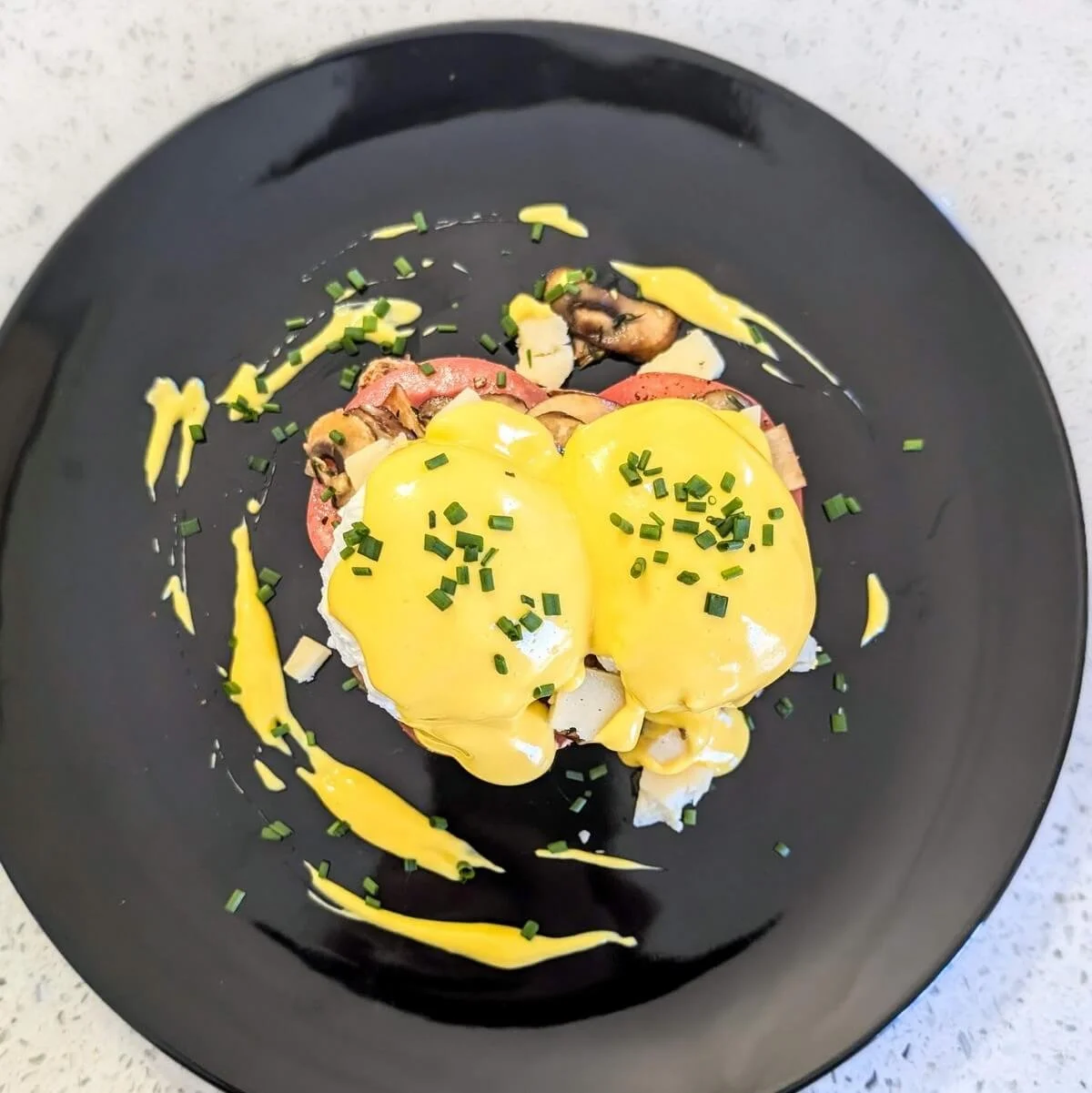
For Eggs Benedict, I like to transfer the hollandaise to a lidded saucepan and leave it on the stove, off the heat, while I poach eggs and prep everything else. When ready, spoon the sauce over your poached eggs.
If you have leftovers, refrigerate them in an airtight container for up to 3 days. For reheating tips, see the storage instructions below.


Troubleshooting Hollandaise Sauce
Sauce is too runny
Cause: The butter wasn't hot enough, it was added too quickly, or the emulsion didn't fully form.
How to fix it:
Continue blending for another 15–30 seconds.
If the sauce is still runny, gently warm it over very low heat while stirring constantly until it thickens.
If needed, whisk in a little more hot melted butter.
Sauce split or looks oily
Cause: The butter was added too quickly, the emulsion became unbalanced, or the sauce became too thick.
How to fix it:
Start by blending in 1 teaspoon of warm water or lemon juice.
If the sauce doesn't come back together, make a fresh base by blending 1 egg yolk with ½ teaspoon each of water and lemon juice. Slowly blend the broken hollandaise into the new base until smooth.
If it becomes too thick while blending, add a little water as needed.
Sauce curdled
Cause: The butter was too hot and partially cooked the egg yolks.
How to fix it:
Once the yolks have curdled, the sauce will have a grainy texture. You can try straining it through a fine-mesh sieve to remove as much of the cooked egg as possible, although it may not restore the silky texture completely.
Next time, use the finger test from Step 2 before adding the butter.
Sauce is too thick
Cause: The sauce cooled while waiting to serve, or the emulsion contains more butter than the yolks can comfortably hold.
How to fix it:
Blend or whisk in warm water, 1 teaspoon at a time, until the sauce reaches your preferred consistency.
If the sauce cooled, gently reheat it over low heat while stirring constantly and keep it in a warm spot until serving, such as on an unused burner or in a turned-off oven.
Sauce tastes too rich
Cause: Hollandaise is naturally rich because it's mostly butter and egg yolks.
How to fix it:
Add a little more lemon juice to brighten the flavor and balance the richness.
Stir in a pinch of cayenne pepper or Dijon mustard for a boost of flavor.
How to Store and Reheat Leftover Hollandaise Sauce
Fridge: Store leftover hollandaise in an airtight container in the fridge for up to 3 days.
Reheating: Hollandaise is really at its best when it's freshly made. You can gently reheat leftovers over very low heat or in short microwave bursts, but don't be surprised if the sauce splits or isn't quite as silky as it was the first time around.
Can you freeze it? I don't recommend it. Hollandaise is a delicate emulsion, and freezing usually causes it to break. Even after reheating, it rarely comes back to the same smooth, creamy texture.
Ways to Use Hollandaise
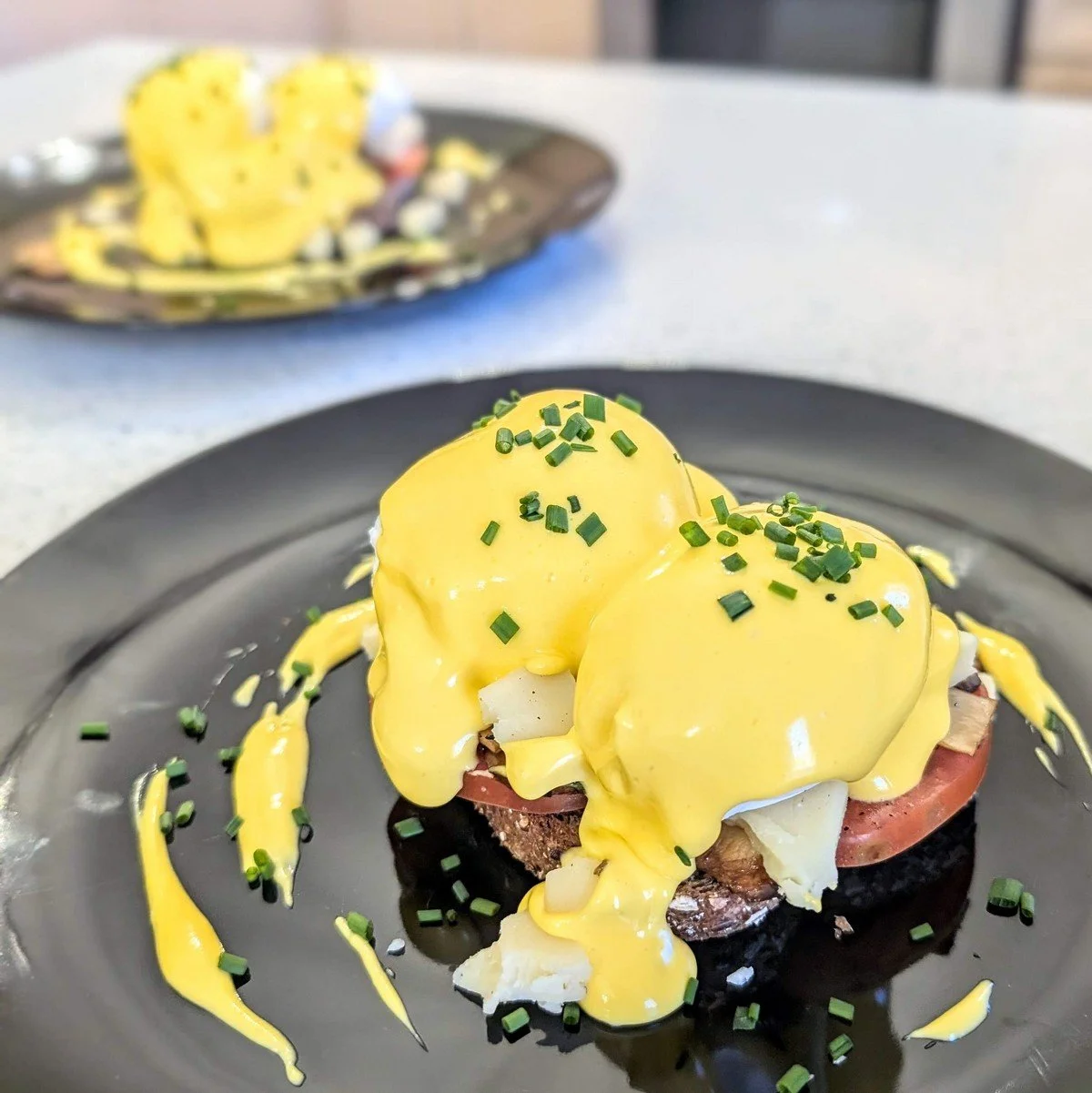
Eggs Benedict: The classic. Hollandaise is also delicious on breakfast hash, breakfast poutine, or simply spooned over poached or soft-boiled eggs with toast.
Vegetables: Drizzle it over steamed or roasted asparagus, green beans, broccoli, cauliflower, Brussels sprouts, or roasted potatoes.
Steak and seafood: Serve it with steak, salmon, shrimp, or scallops. Or turn it into Béarnaise for an even more classic pairing.
Don't waste the leftovers: Cold hollandaise makes a surprisingly good sandwich spread, especially on an English muffin. You can also loosen it with a splash of warm pasta water and toss it with pasta, bacon, and Parmesan for an easy carbonara-inspired meal.

Hollandaise Substitutions
Wine reduction: Want a more traditional hollandaise? Simmer equal parts white wine and white wine vinegar with a handful of chopped shallots and a few crushed peppercorns until reduced by half. Strain it and use 2 teaspoons in place of the lemon juice and water.
Lemon juice: Lime juice works well for a different citrus flavor. You can also use white wine vinegar or apple cider vinegar, but they're more acidic, so start with half the amount and make up the difference with water.
Butter: Brown butter adds a richer, nuttier flavor and works as a direct substitute.
Flavorings: Try a pinch of cayenne, a few dashes of hot sauce, a spoonful of Dijon mustard, or fresh herbs like chives, tarragon, or dill.
No immersion blender? A regular blender or food processor works too. Blend the yolks first, then slowly drizzle in the hot butter. If the sauce gets too thick to keep blending smoothly, add a splash of water.
Classic Hollandaise Derivative Sauces
Once you've mastered hollandaise, it's easy to turn it into some of the classic French derivative sauces.
Béarnaise: Replace the lemon juice and water with a white wine reduction and finish with fresh tarragon. Perfect with steak or seafood.
Maltaise: Swap the lemon juice for fresh orange juice and finish with orange zest. Blood oranges are traditional when they're in season.
Mousseline: Fold 2–3 tablespoons of whipped cream into the hollandaise just before serving for a lighter, airy sauce.
Immersion Blender Hollandaise Sauce FAQs
Can I make hollandaise ahead of time?
Yes, but it's best served fresh. If you need to make it ahead, you can prepare it up to 2 hours in advance and keep it covered in a warm spot until you're ready to serve. For longer storage, refrigerate any leftovers and follow the reheating tips above.
Can I double this recipe?
Yes. Just keep in mind that a larger batch of egg yolks cools the hot butter more quickly, so the sauce may not thicken as easily.
If it turns out a little thin, gently warm it over very low heat or over a double boiler, stirring constantly with a spatula and scraping the bottom of the pan until it thickens.
Why do some hollandaise recipes use clarified butter?
Clarified butter is the traditional choice because the milk solids and water have been removed, which can make the emulsion a little more stable, especially for larger batches.
For this small-batch immersion blender method, though, hot melted whole butter works perfectly and keeps the recipe much simpler without sacrificing flavor.
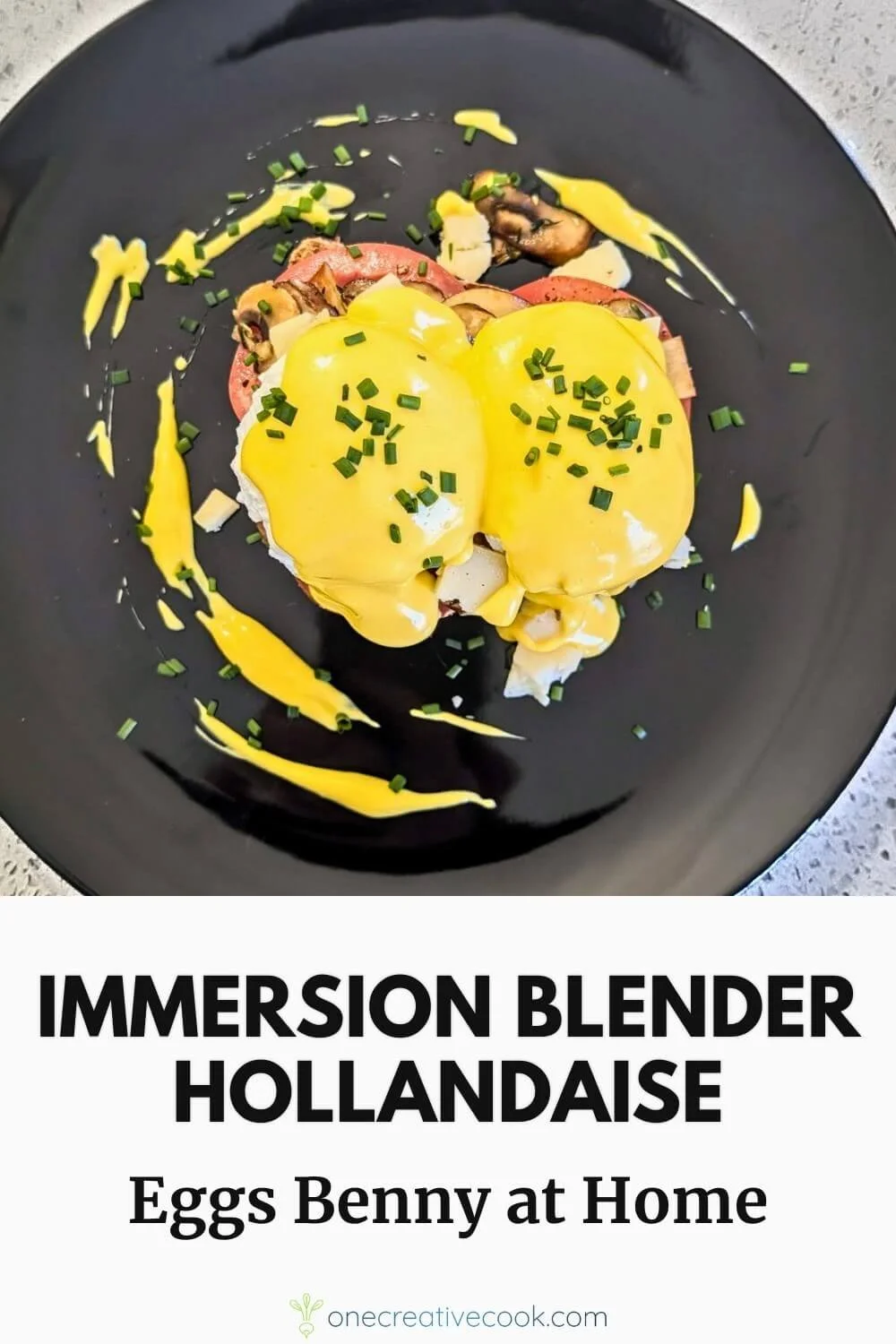
Pin This Hollandaise Sauce Recipe for Later
Easy Immersion Blender Hollandaise Sauce Recipe
Make homemade hollandaise in just 5 minutes with an immersion blender. This chef-tested method delivers a silky, stable emulsion every time.
Makes: 2 servings (⅔ cup) Prep: 5 min
Dietary Notes: Gluten-free, Vegetarian, Low-carb
Hollandaise Sauce Ingredients
2 large egg yolks
1 teaspoon water
1 teaspoon lemon juice
1 stick (½ cup) salted butter (or unsalted butter + 1 pinch of salt)
Quick Blender Hollandaise Instructions
Prep yolks. Separate two egg yolks into a narrow blending container or 2-cup measuring cup. Add water, lemon juice, and a pinch of salt if using unsalted butter.
Heat butter. Cut butter into cubes and melt in a microwave-safe cup with a spout. Heat for 30 seconds, then in 10-second bursts until fully melted, foamy, and hot. The butter should feel hot but not scalding. You should be able to hold your finger in it for 1–2 seconds before it becomes uncomfortable.
Blend. Place the immersion blender all the way to the bottom of the container. Start blending, then slowly pour in the hot butter in a steady stream. The sauce should thicken and come together in about 1 minute.
Serve. Taste and adjust with more salt or lemon juice if needed. If the sauce is too thick, stir in warm water, 1 teaspoon at a time. Serve immediately, or transfer to a heatproof container with a lid and keep in a warm spot for up to 2 hours.
Helpful Tips for Hollandaise Sauce
How to store: Refrigerate in an airtight container for up to 3 days. Reheat gently over very low heat or in short microwave bursts (note: leftovers may split or lose some silkiness).
Easy flavor tweaks: Brighten it with extra lemon juice, or add a pinch of cayenne, Dijon mustard, or fresh herbs like tarragon.
Too thick or too thin? If the sauce is too thick, blend in 1 teaspoon of warm water at a time. If it starts to split, a little warm water or lemon juice can often bring it back together. If it's too thin, keep blending or gently warm it over low heat while stirring constantly.
Need more help? See the full troubleshooting guide above.
More Classic Sauce Recipes
Creamy béchamel sauce: One of the five French mother sauces, made with roux and milk. Perfect for mac and cheese, lasagna, Mornay sauce, and more.
Mornay sauce: A classic French cheese sauce made from béchamel. Adding the milk gradually and the cheese off the heat keeps it smooth and creamy.
Chicken velouté sauce: A lighter French mother sauce made with blond roux and chicken stock. Perfect as a base for creamy sauces, gravies, and soups.
Classic espagnole sauce: A robust brown sauce made from browned mirepoix, tomato paste, and homemade beef stock—an essential base for demi-glace and hearty meat dishes.
San Marzano tomato sauce: A rich, slow-simmered Italian-style tomato sauce with just a handful of ingredients and deep, savory flavor.
Did you try this immersion blender hollandaise sauce?
I'd love to hear how it turned out! Leave a comment below if you have a question or run into a problem—I'm always happy to help you troubleshoot.