

Classic Béchamel Sauce
Learn how to make béchamel, a classic French mother sauce, from scratch—with the perfect roux ratio, silky texture, and expert tips for lasagna, pasta, and more.
or read on for step-by-step instructions with photos
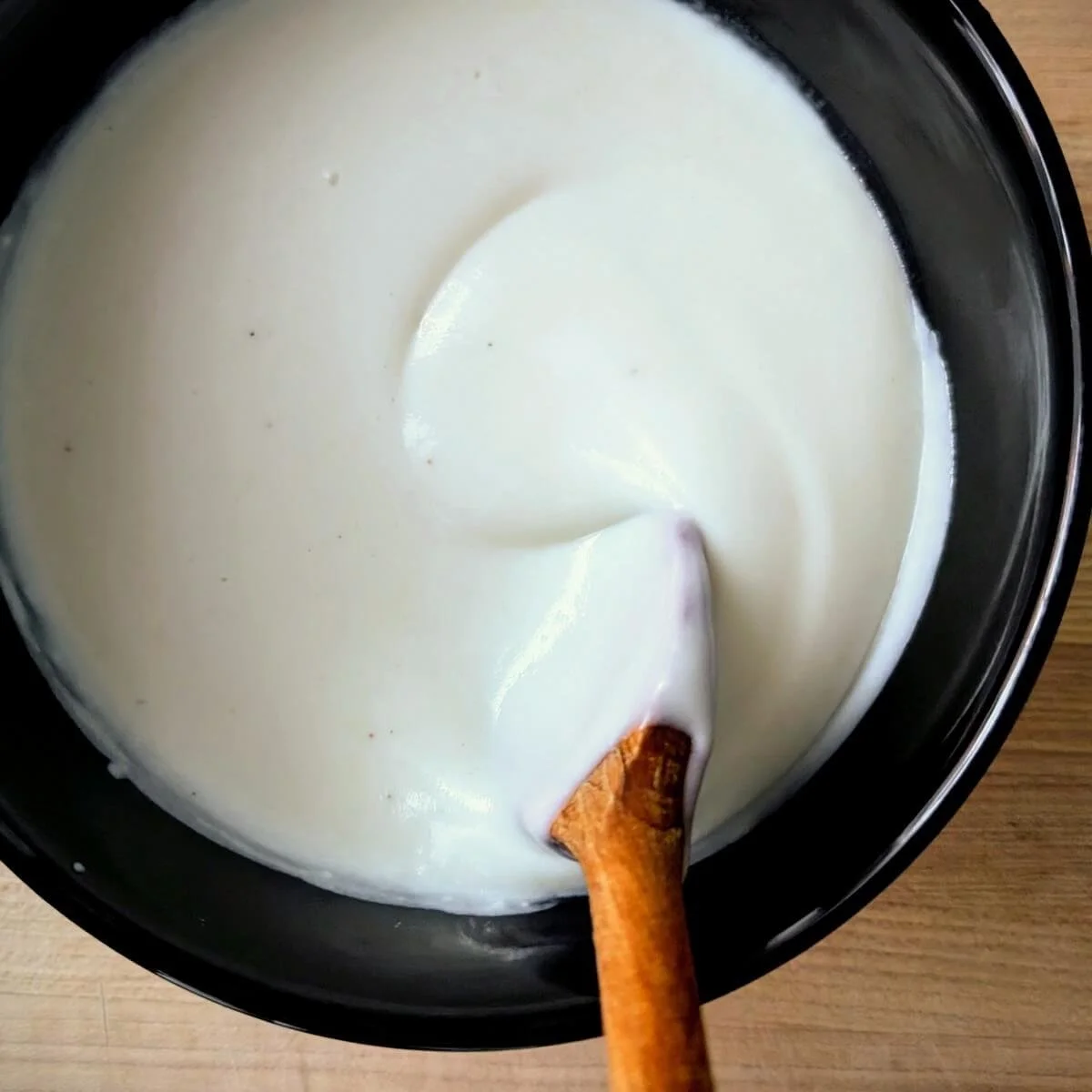
What is Traditional Béchamel Sauce?
Béchamel is one of the 5 French mother sauces—a creamy white sauce made by whisking warm milk into a roux of butter and flour. It’s made with simple ingredients, but when done right, it becomes the base for everything from croque monsieur to moussaka, gratins, and mac and cheese.
You might also hear it called “white sauce” or “besciamella”—especially in Italian cooking. Whether you’re layering it into a meat lasagna or using it to add body to soups and casseroles, béchamel is a fundamental sauce every home cook should know.
Perfect béchamel comes down to three things: the right roux ratio, milk temperature, and steady stirring. If your sauce has ever turned out lumpy, bland, or too thick, I’ll show you exactly how to fix that—with chef-tested tips and step-by-step photos to guide you.
Why You’ll Love This Béchamel Sauce Recipe
Infused milk for flavor: Instead of plain milk, we’ll gently steep it with bay leaf, garlic, and nutmeg for added complexity.
Ideal for lasagna: This béchamel is thick enough to layer but still silky, perfect for pairing with meat sauce and pasta.
Flexible base for derivatives: With a few tweaks, this turns into classic sauces like Mornay, Soubise, and more (see substitutions).
Pro tips from a chef: I’ve made béchamel countless times in restaurant kitchens and at home. You’ll get all my best tricks for silky, lump-free results every time.
Ready to make béchamel from scratch? Let’s get stirring!
What You’ll Need to Make This Béchamel Sauce
Béchamel Sauce Ingredients
1 quart (1 liter) whole milk
¼ cup butter, salted or unsalted
¼ cup all-purpose flour
¼ teaspoon ground nutmeg
2 bay leaves
1 clove garlic, smashed
salt, to taste
Equipment to Make Béchamel Sauce
3 saucepans (one to steep the milk, one to strain it into, one for the roux and sauce)
Strainer
Spatula, whisk, and ladle
Parchment paper or plastic wrap
Makes: 1 quart (1 liter)
Prep: 5 min Cook: 30 min
How to Make Béchamel Sauce
Step 1: Steep the milk for béchamel
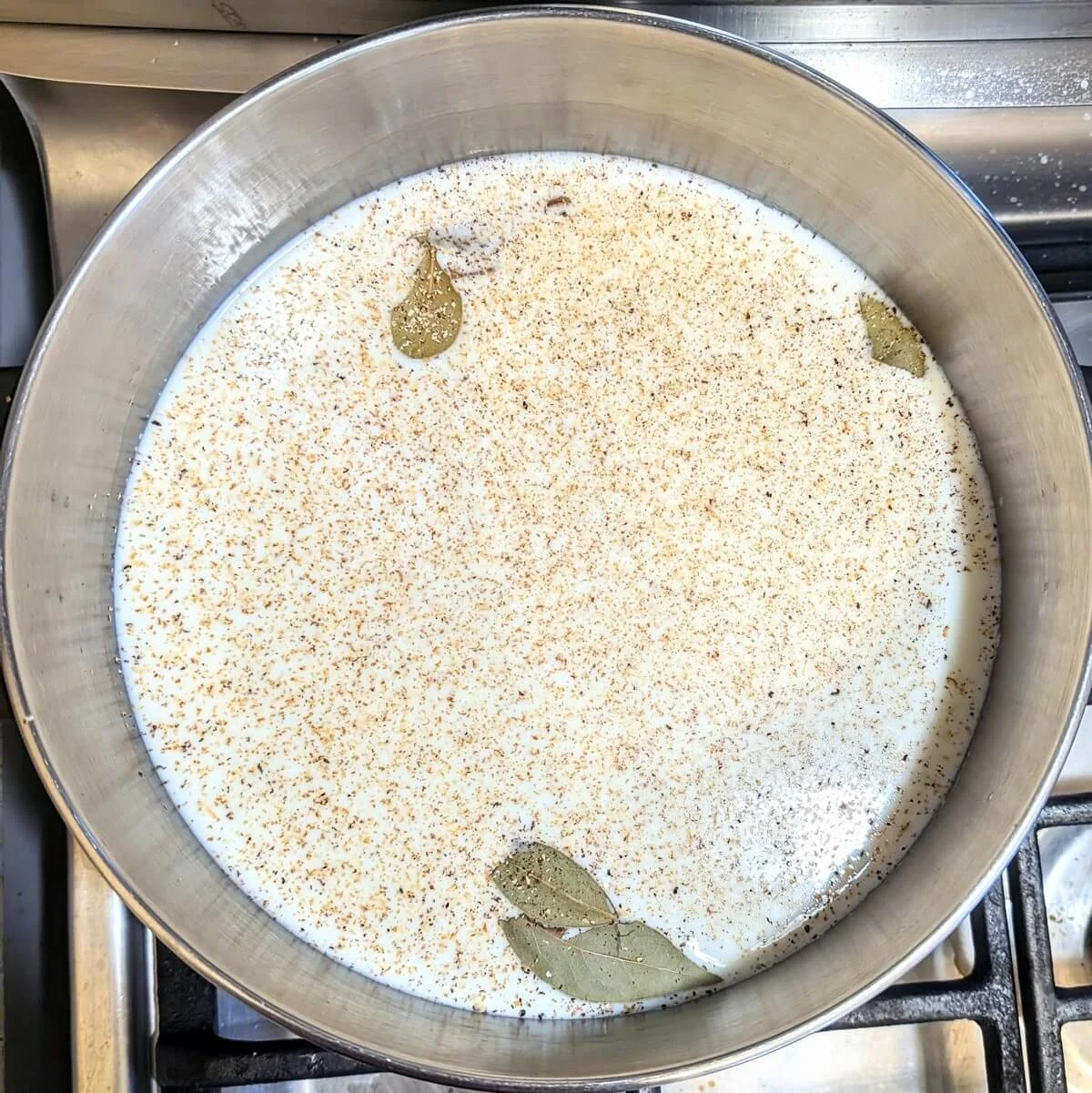
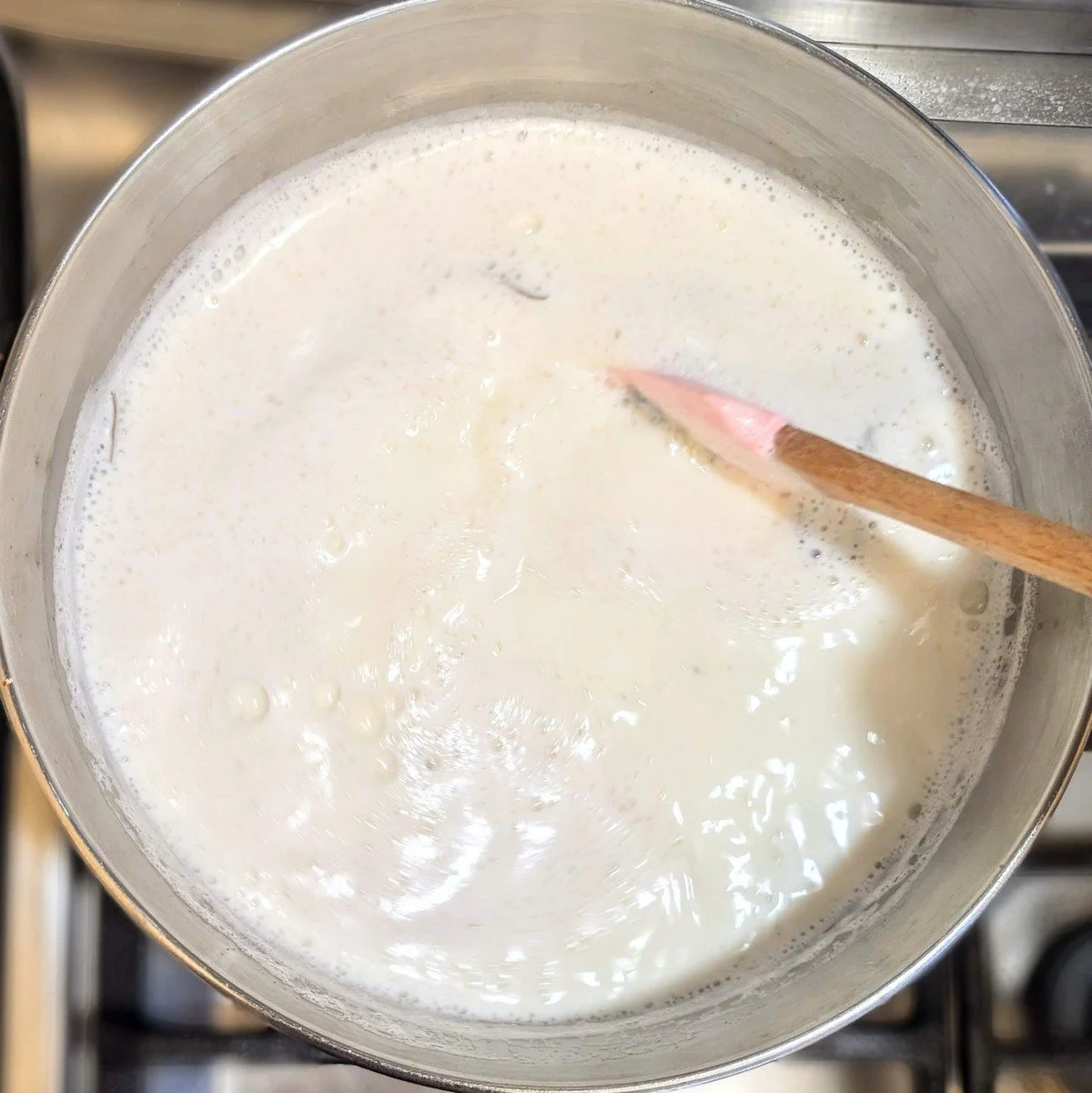
In a medium saucepan, combine the milk, nutmeg, bay leaves, and garlic clove. Place it over medium heat and gently warm to infuse the milk, stirring occasionally with a spatula to prevent sticking or burning.
Heat until the milk begins to foam on top, about 10 minutes. Once foamy, remove it from the heat, cover it with a lid, and let it steep while you prepare the roux.
Step 2: Make the white roux
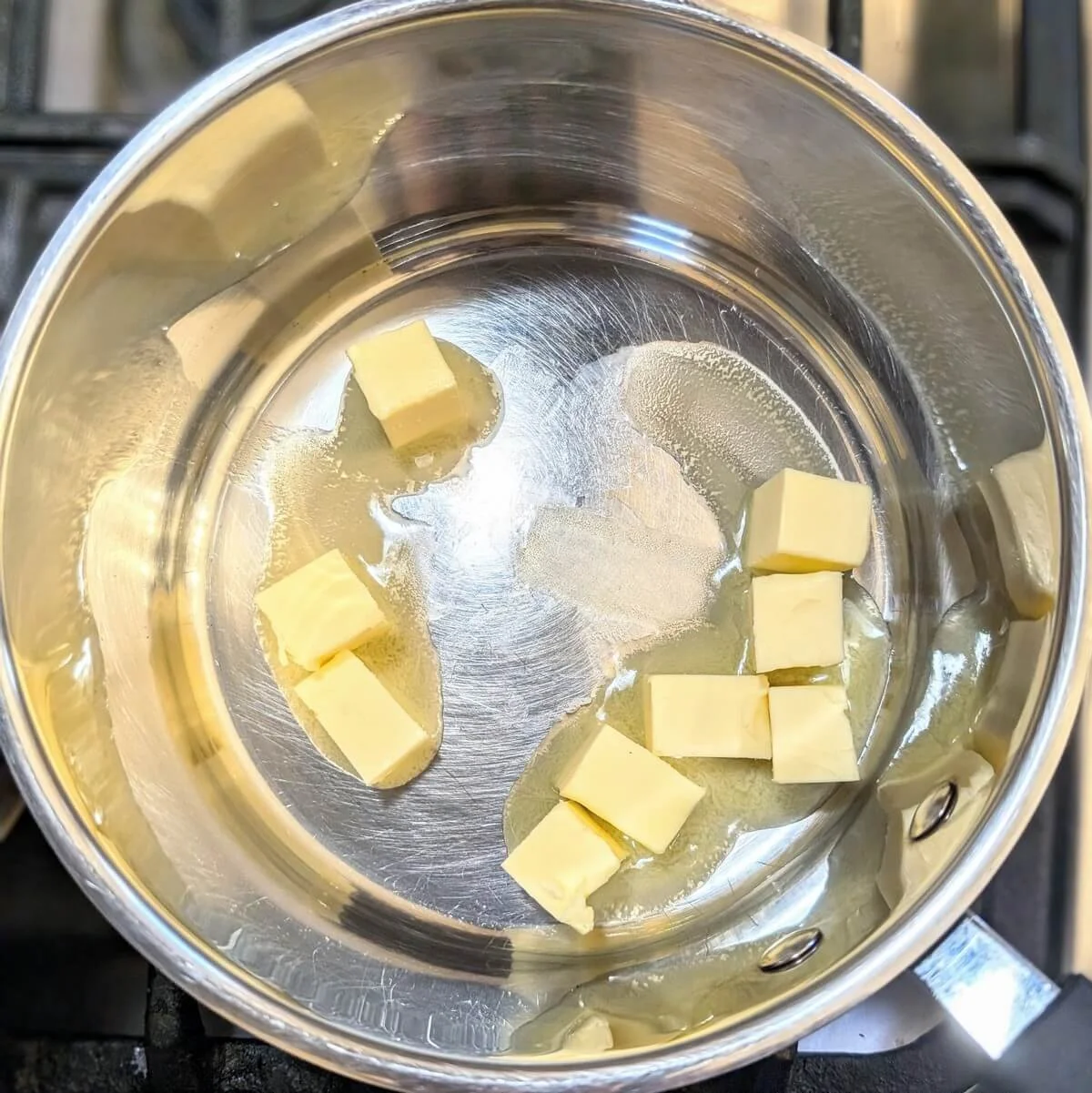
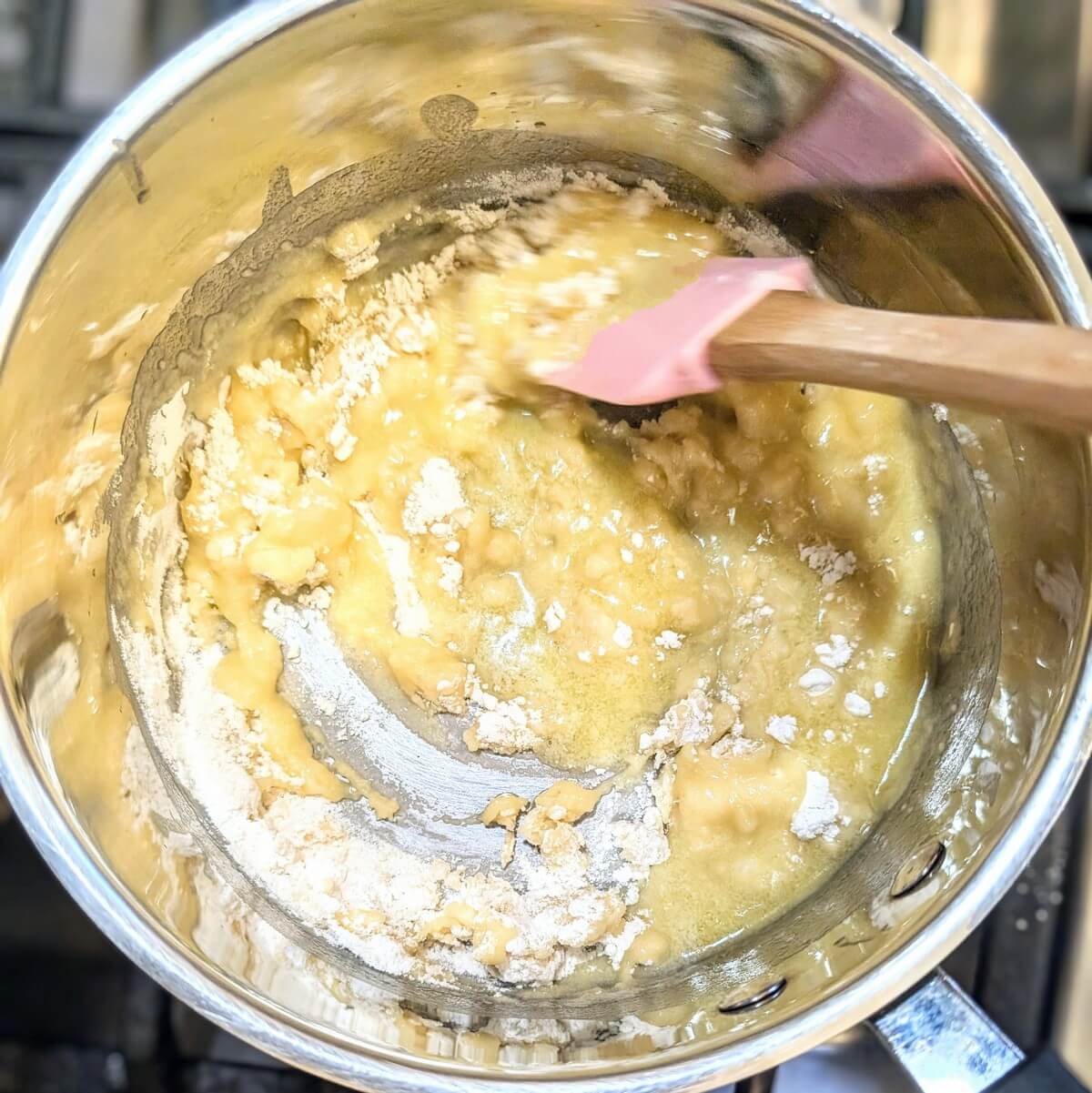
In another medium saucepan, melt the butter over medium heat. Once melted, add the flour and stir with a spatula to form a smooth paste.
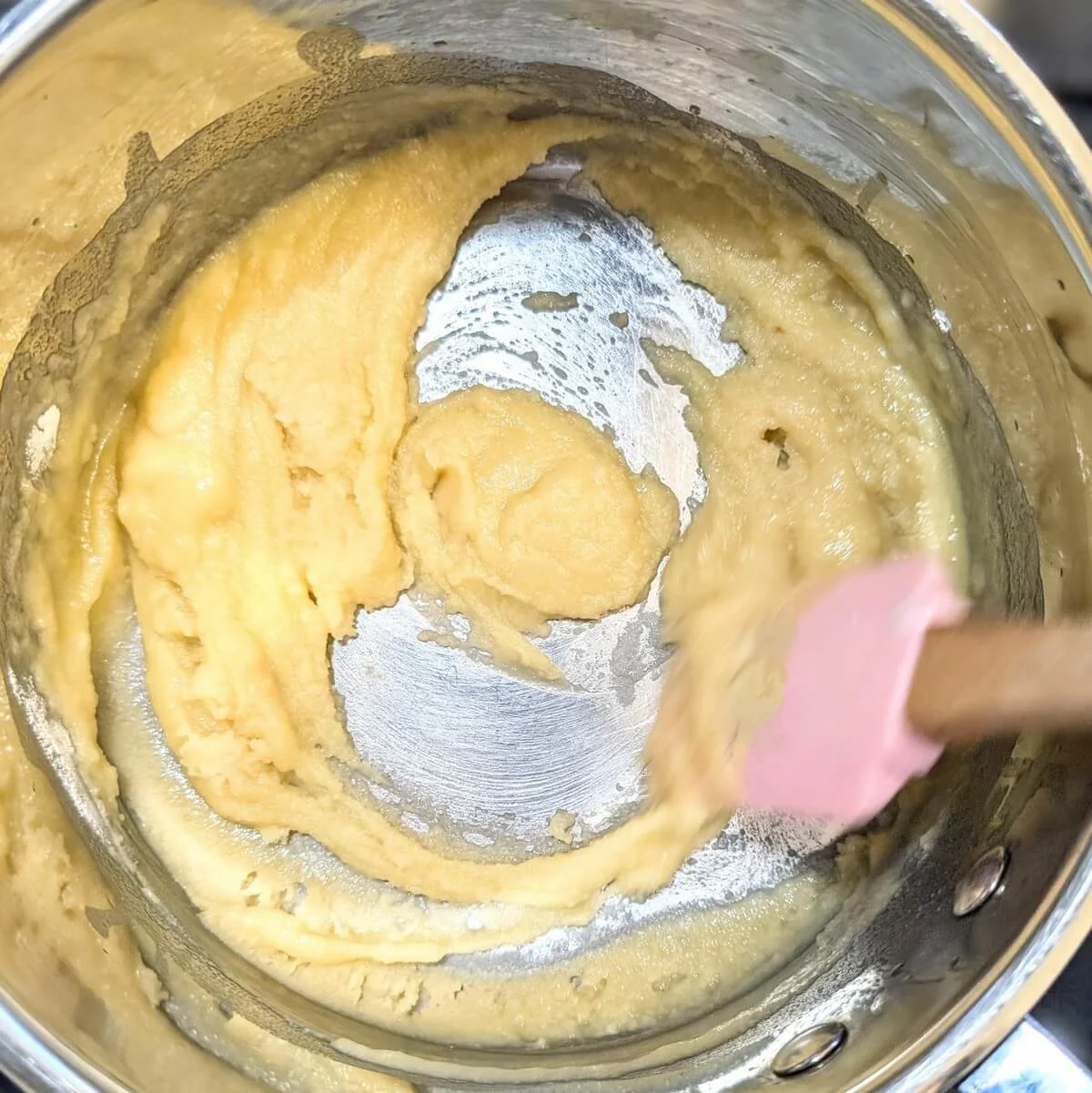
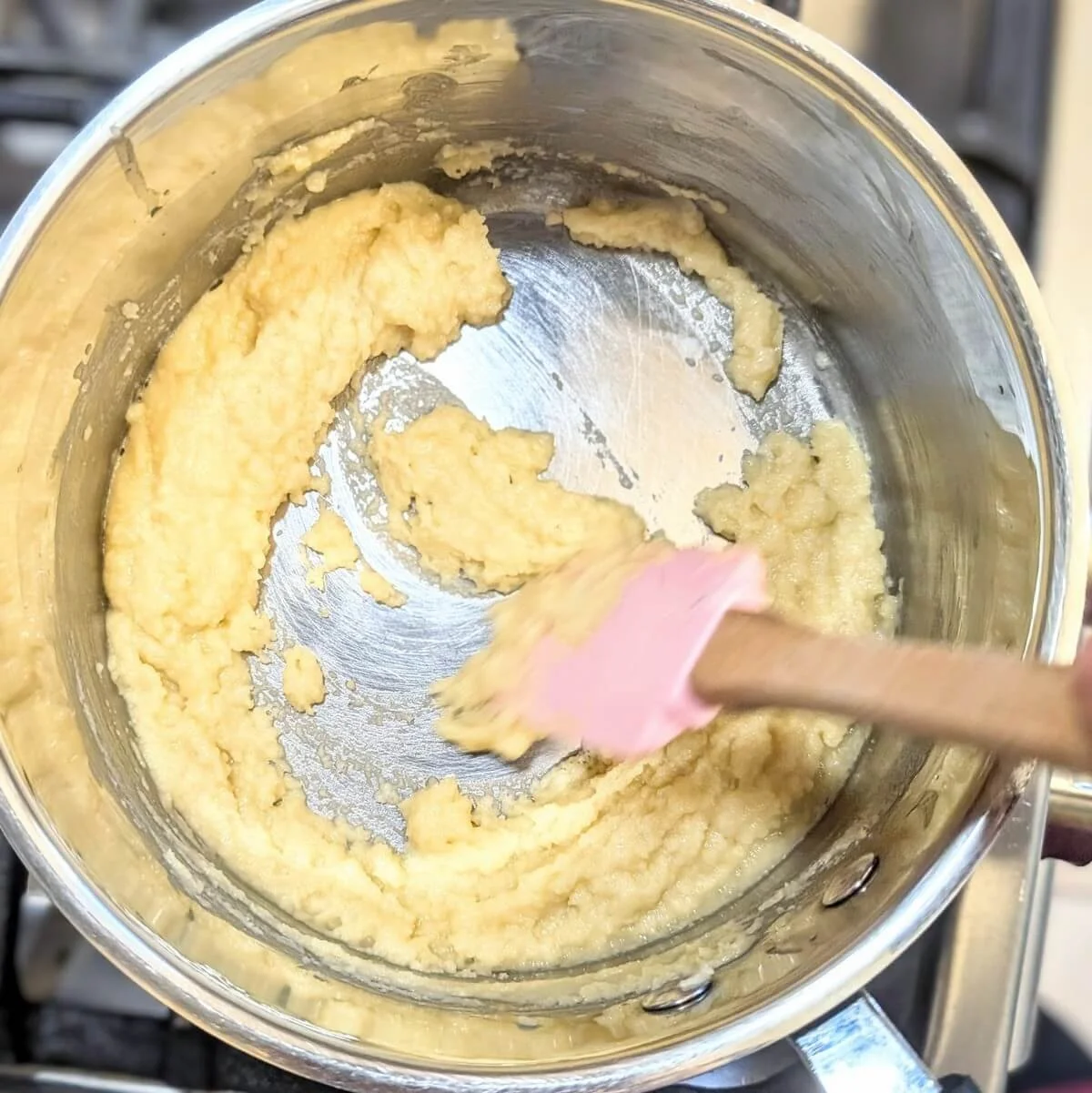
The roux will start to foam as it cooks. Continue stirring constantly and cook until it smells slightly nutty but hasn’t browned, about 2–3 minutes.
The roux should stay pale to keep the bechamel sauce light in flavor and color.
Step 3: Slowly add the milk to the roux
Strain the steeped milk into a clean saucepan to remove the bay leaves and garlic.
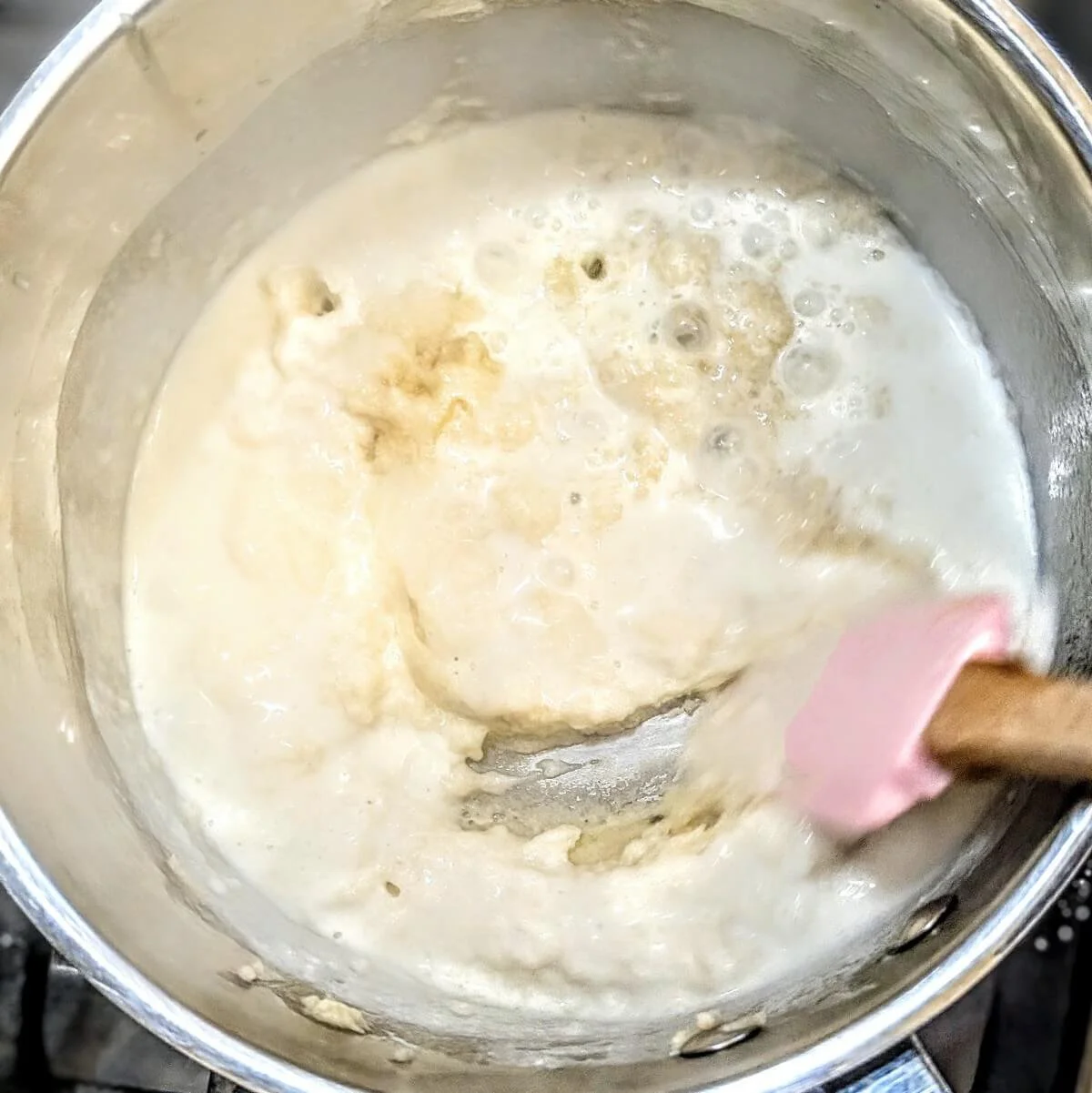
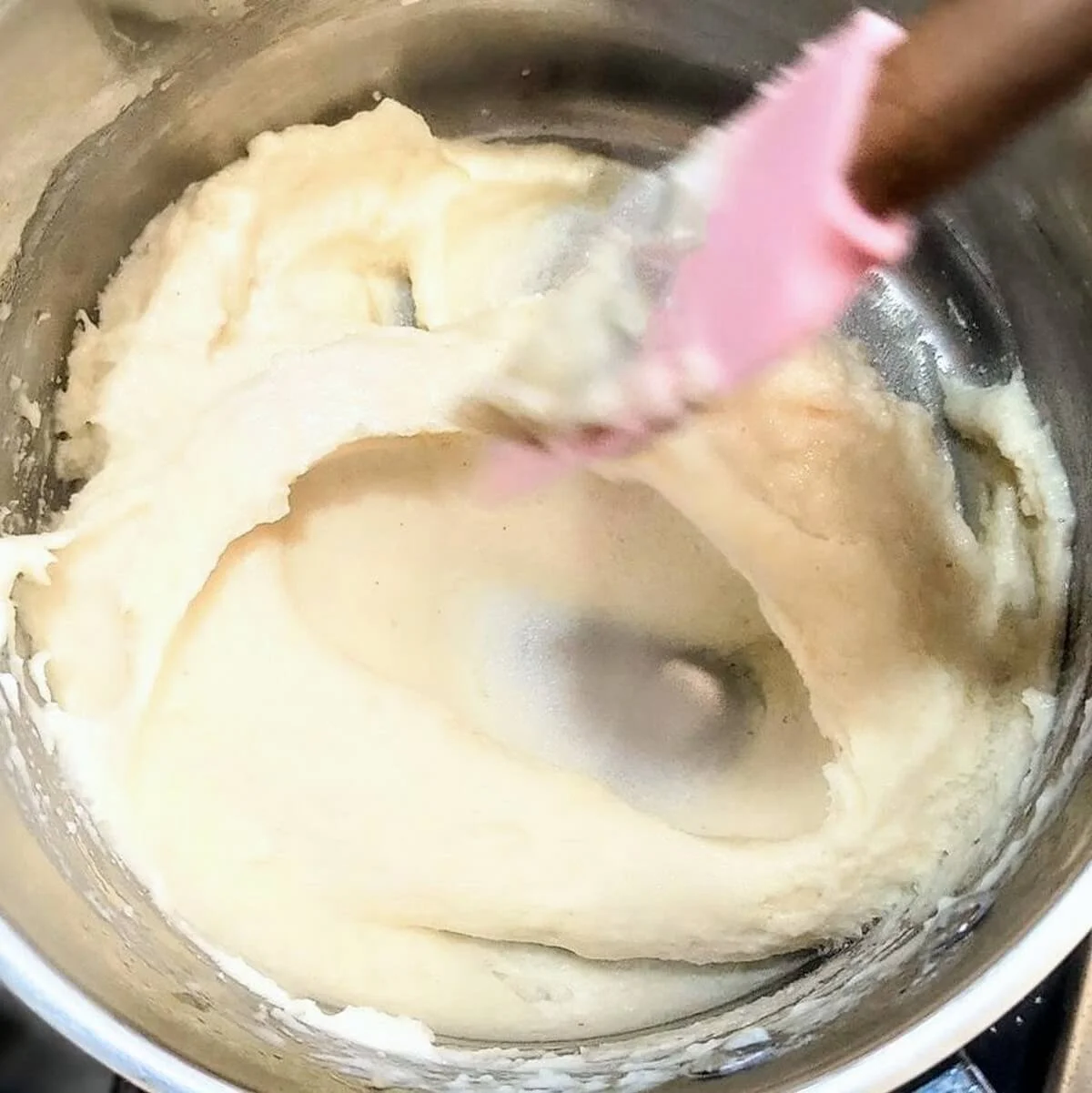
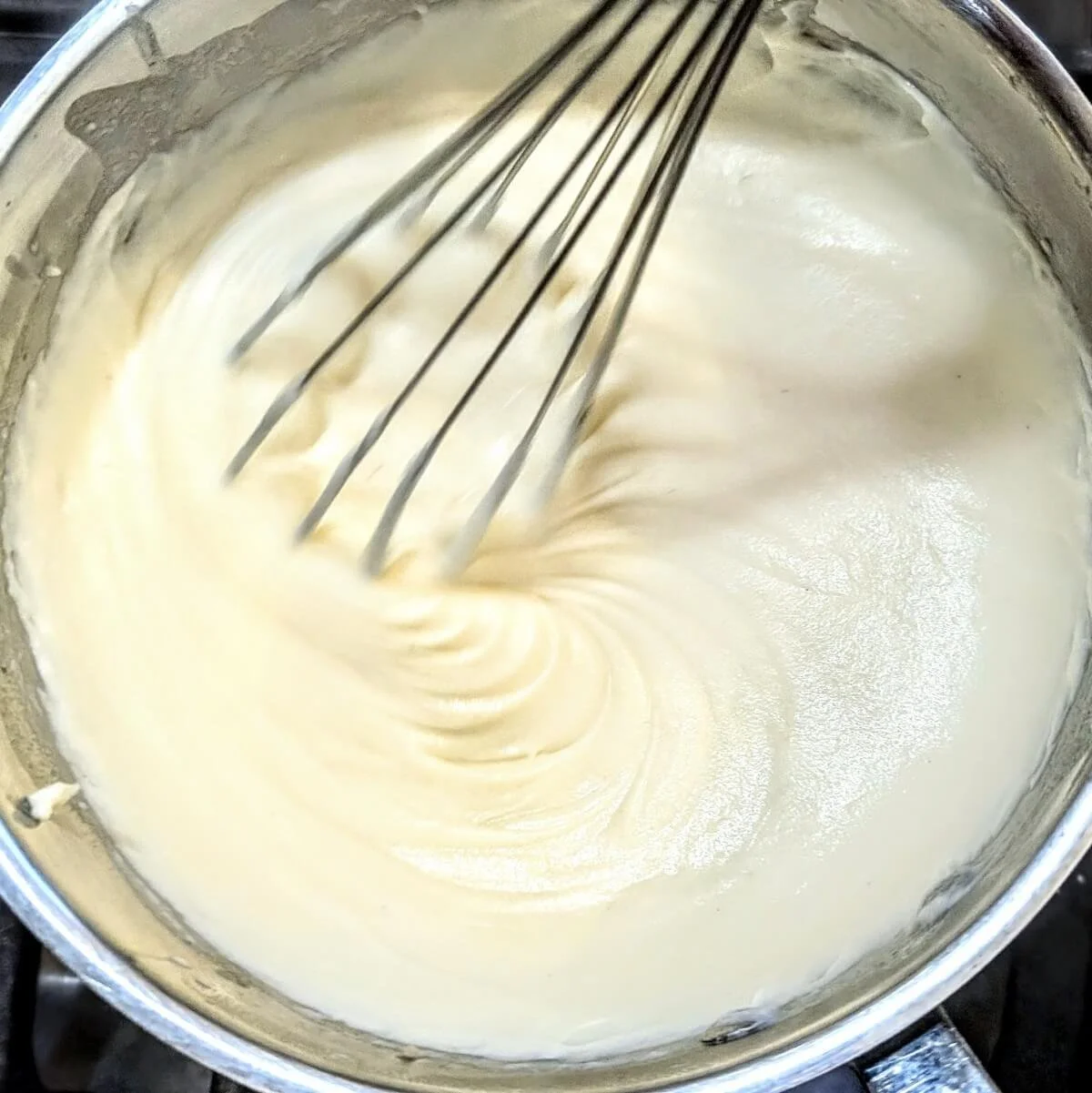
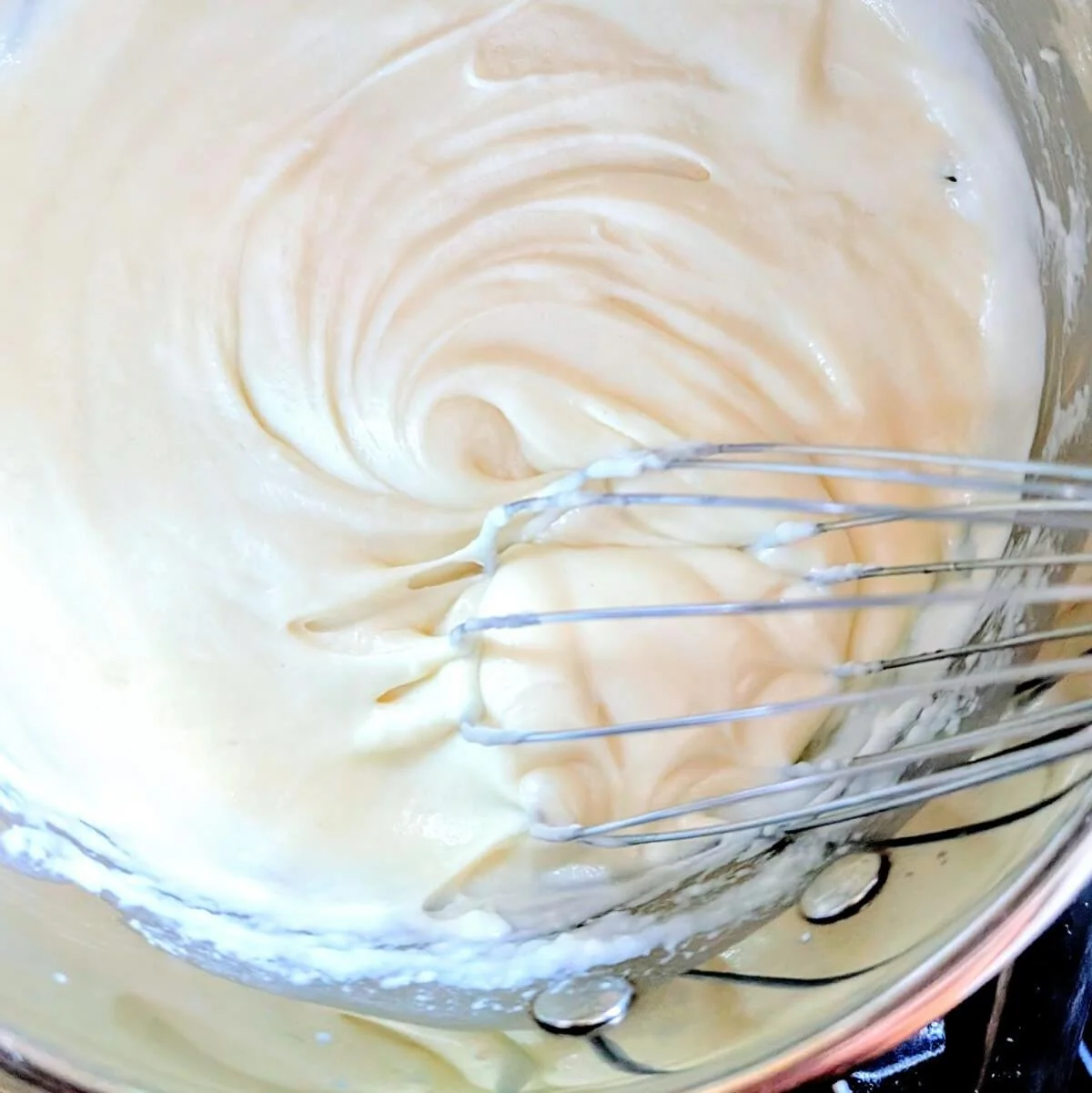
Place the roux over medium-high heat. Begin adding the milk gradually, one ladle at a time, stirring constantly. Use a spatula at first while the mixture is thick—it gives you more control. Once the sauce starts to loosen, switch to a whisk for a smoother finish.
Let the mixture thicken and come to a gentle simmer before adding the next ladle of milk. This helps prevent lumps and builds a silky texture. Scrape the bottom and sides of the pan with a spatula regularly to keep the sauce from sticking to the pot.
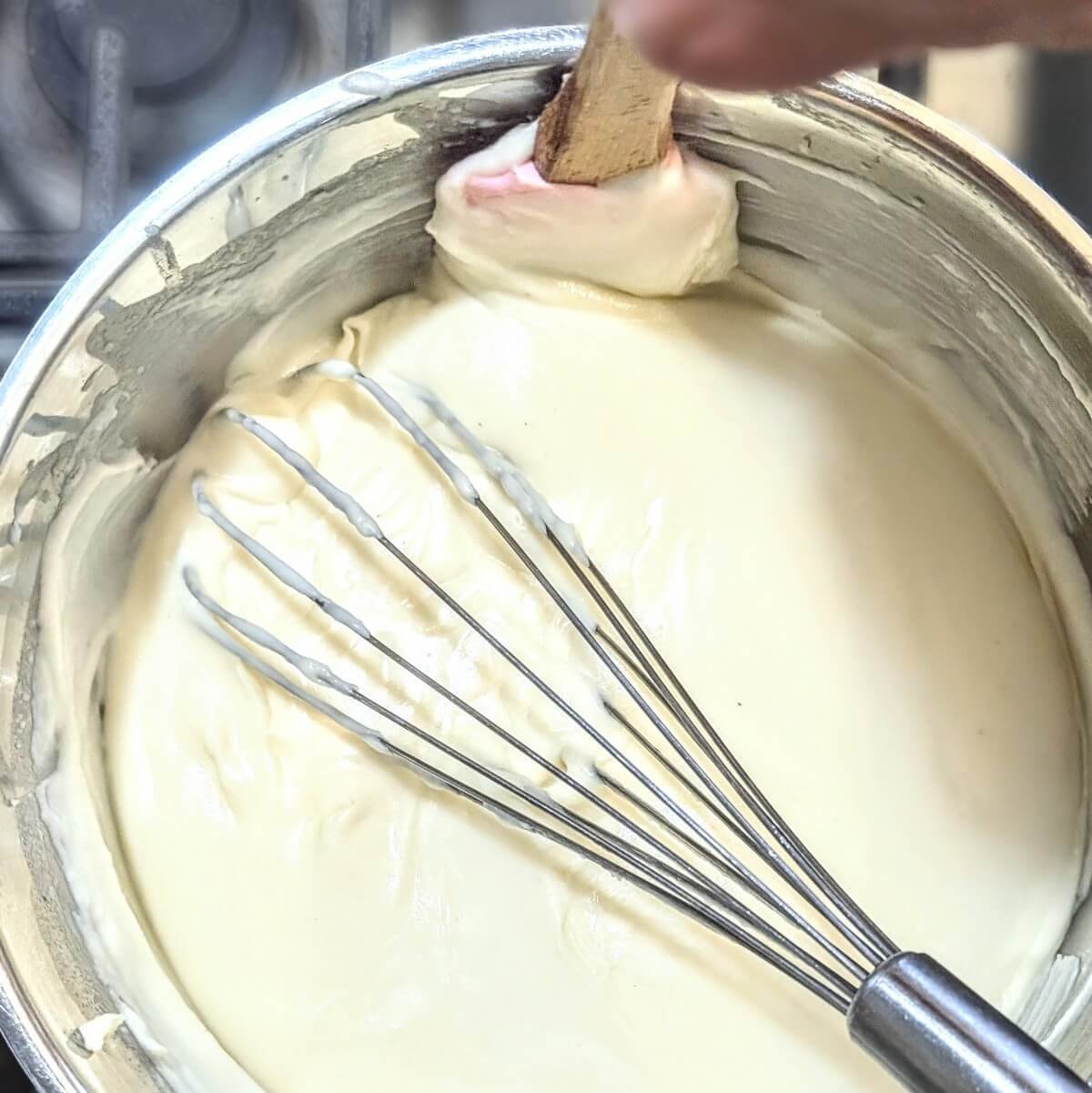
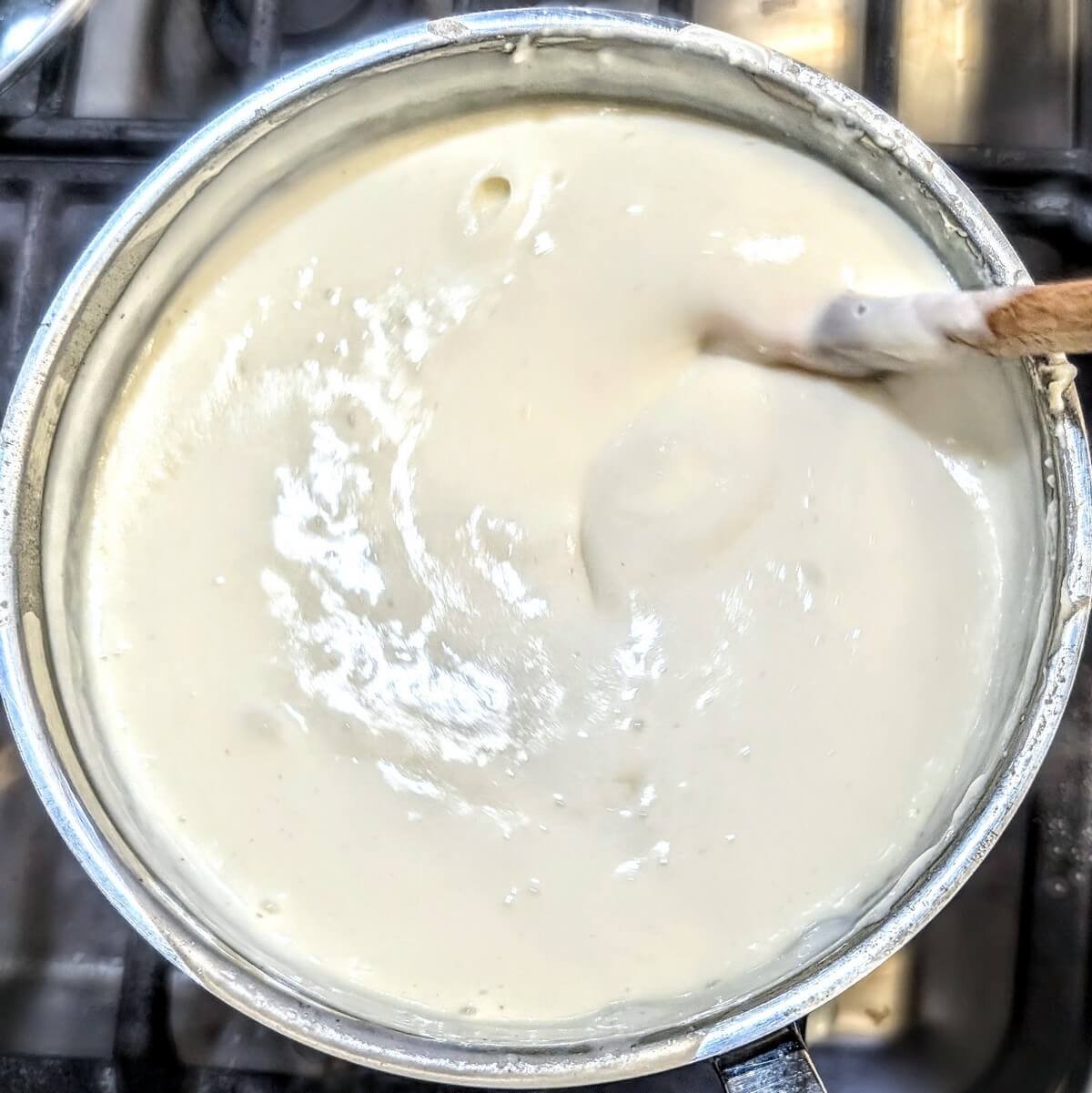
Once all the milk is incorporated, bring the sauce to a simmer and let it cook for 5 minutes, stirring often.
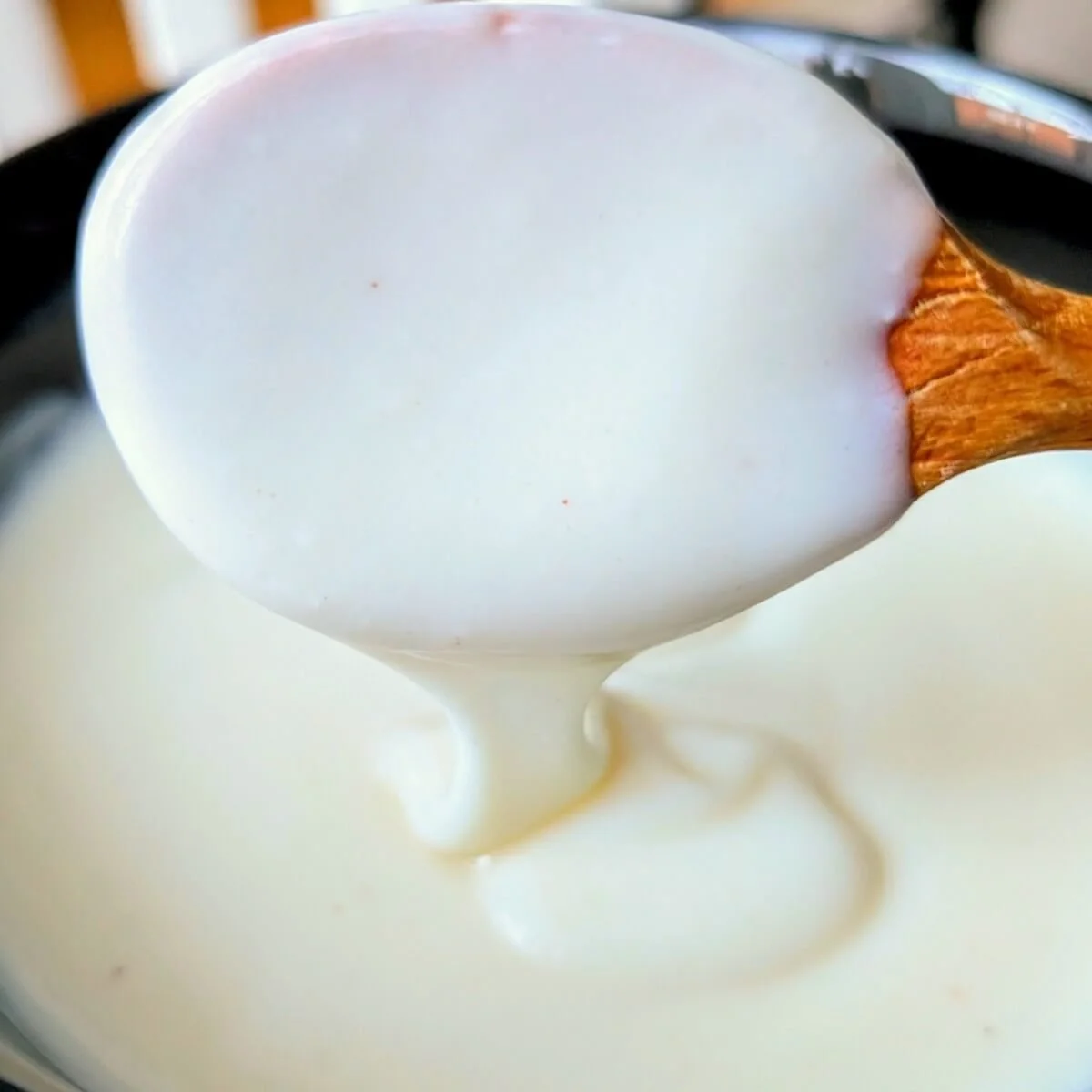
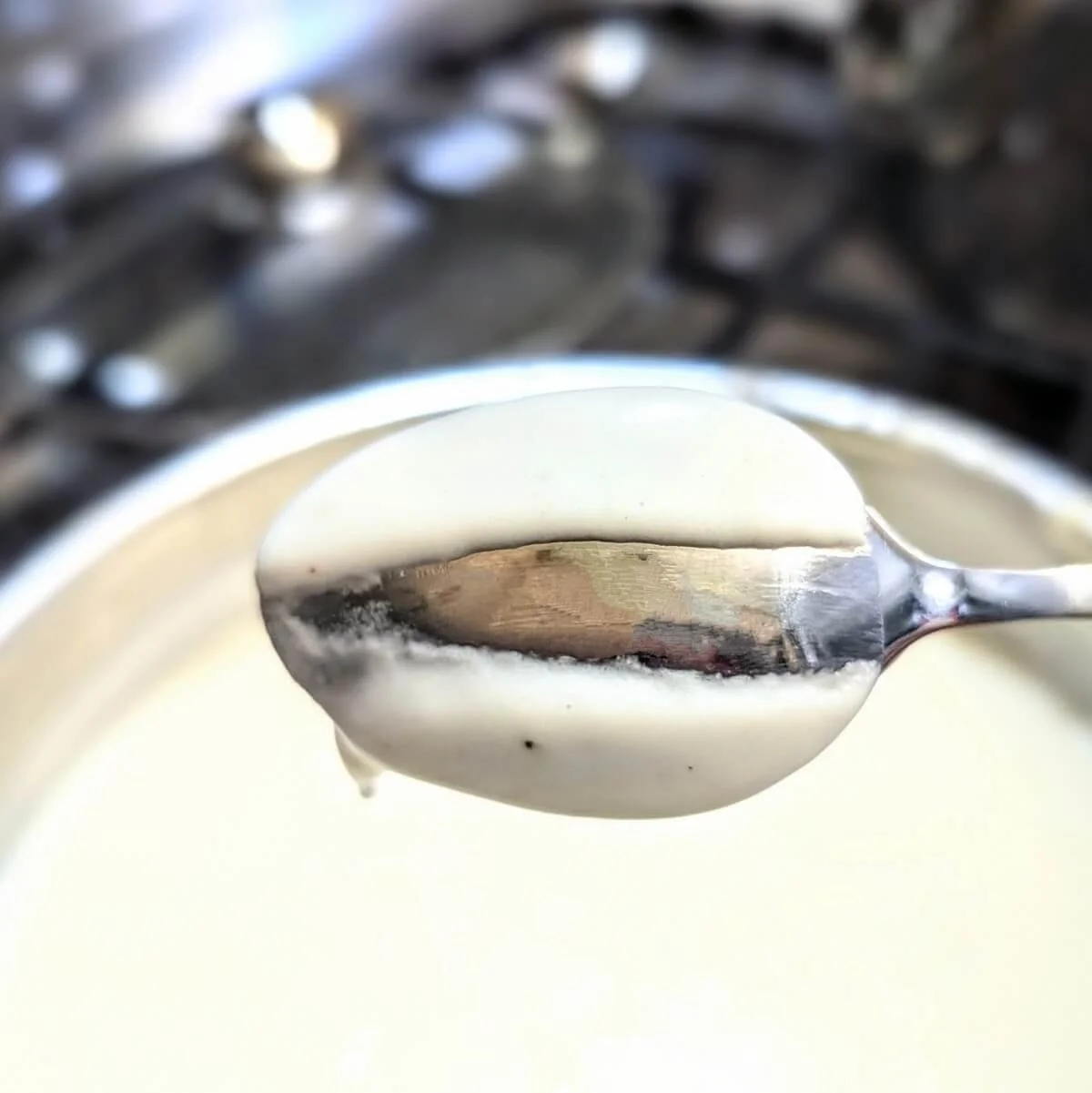
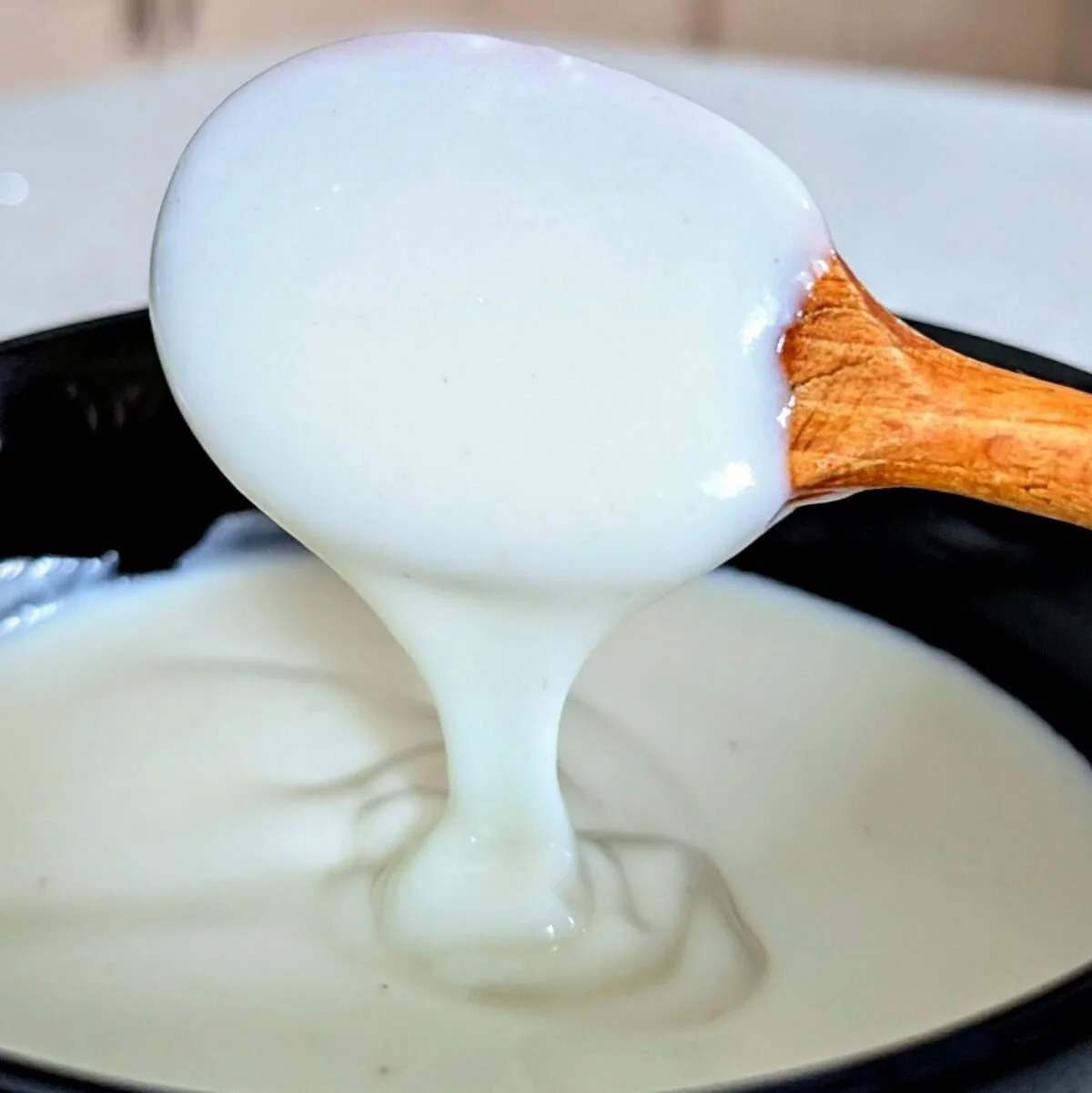
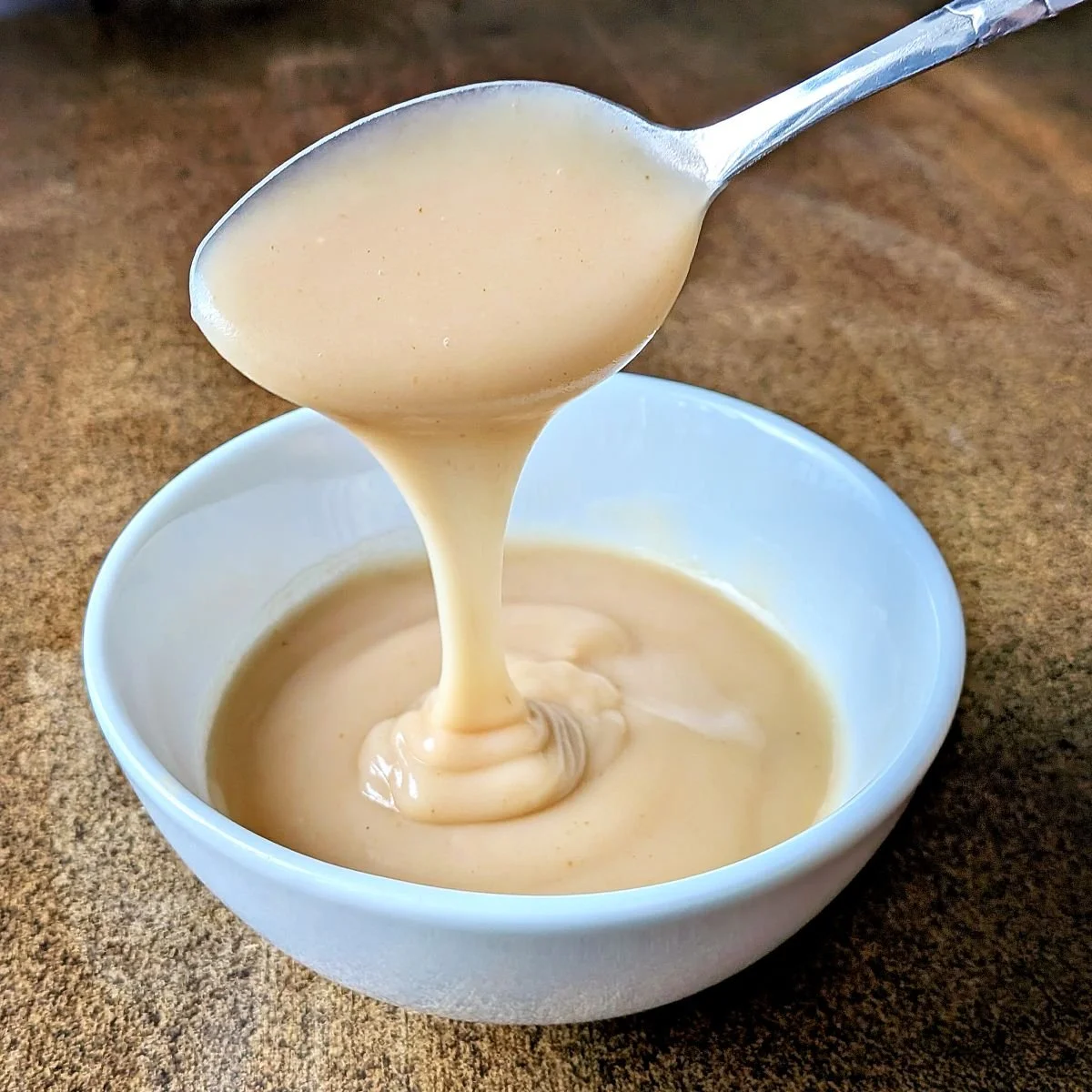
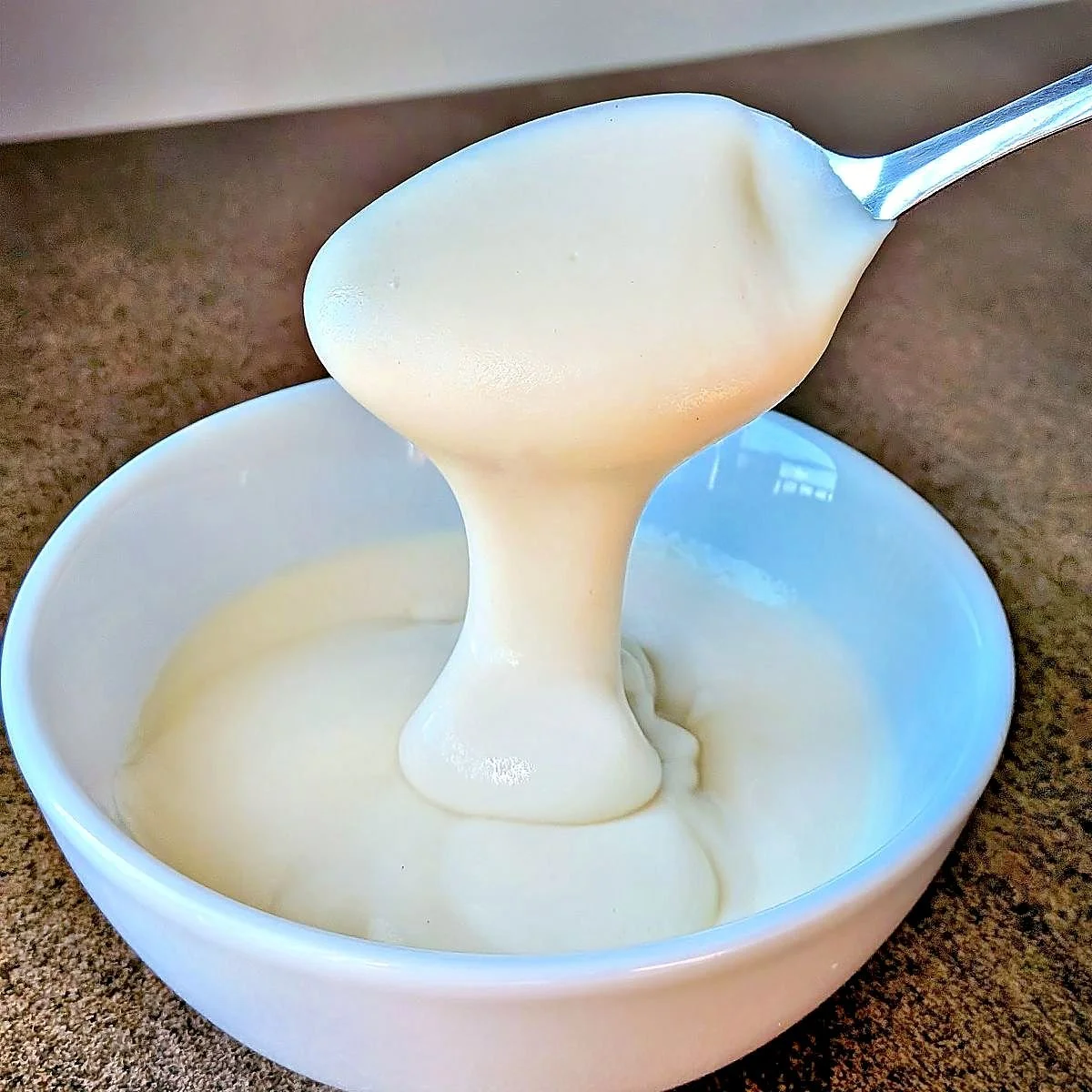
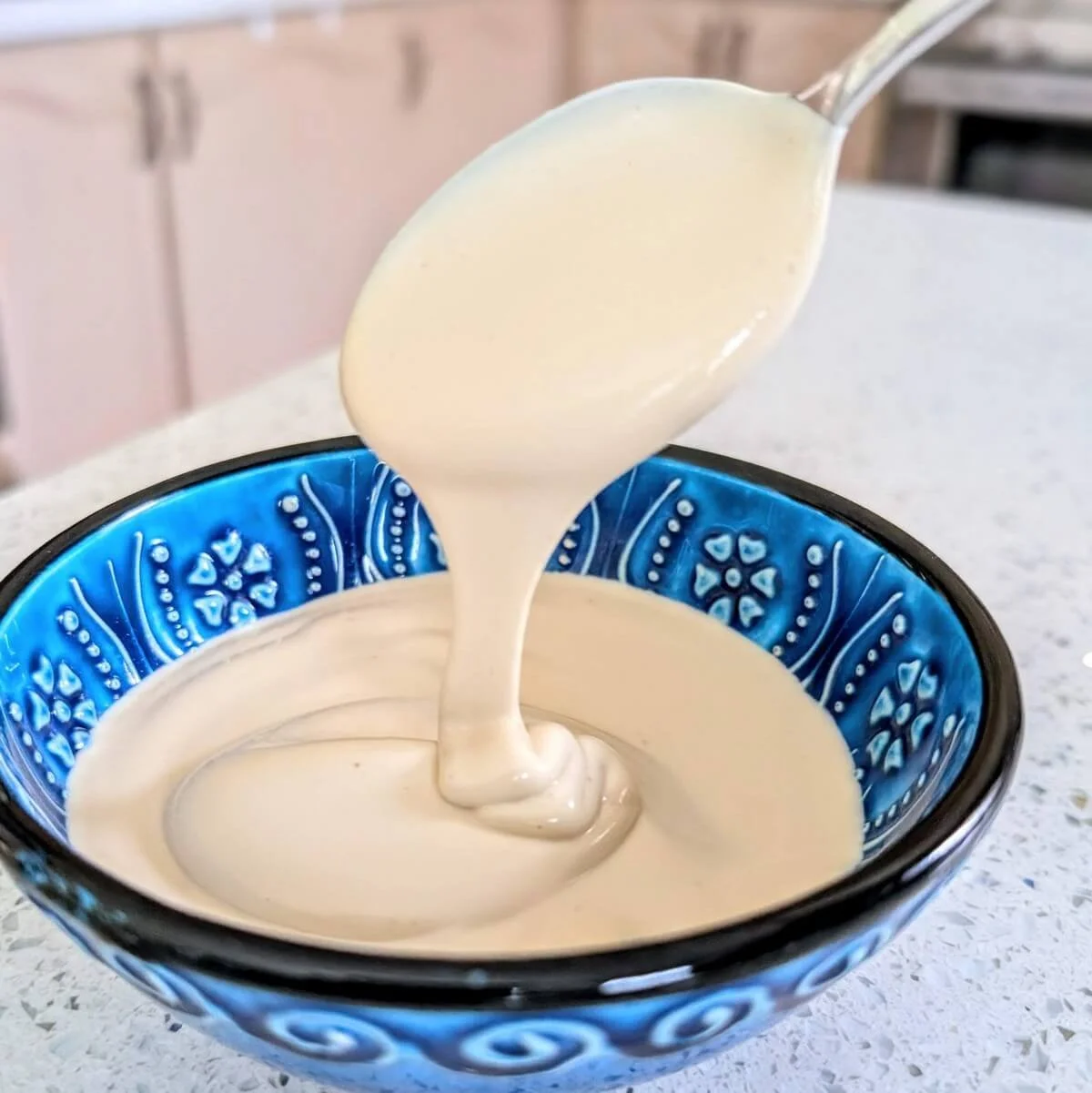
You’ll know it’s ready when the sauce coats the back of a spoon. Draw a line through it with your finger—if the line holds, the texture is just right.
Too thick? Whisk in a splash of milk or water.
Too thin? Simmer a bit longer, stirring to avoid scorching.
💡 Pro Tip: If a few lumps form, don’t worry—you can strain the finished sauce through a fine-mesh sieve for a perfectly smooth béchamel.
Step 4: Season the béchamel and cover
Season the sauce with salt, tasting as you go, and adjusting the seasoning. Classically, white pepper can be added as well, though I usually skip it. Just avoid black pepper if you want to keep your sauce looking white and creamy.
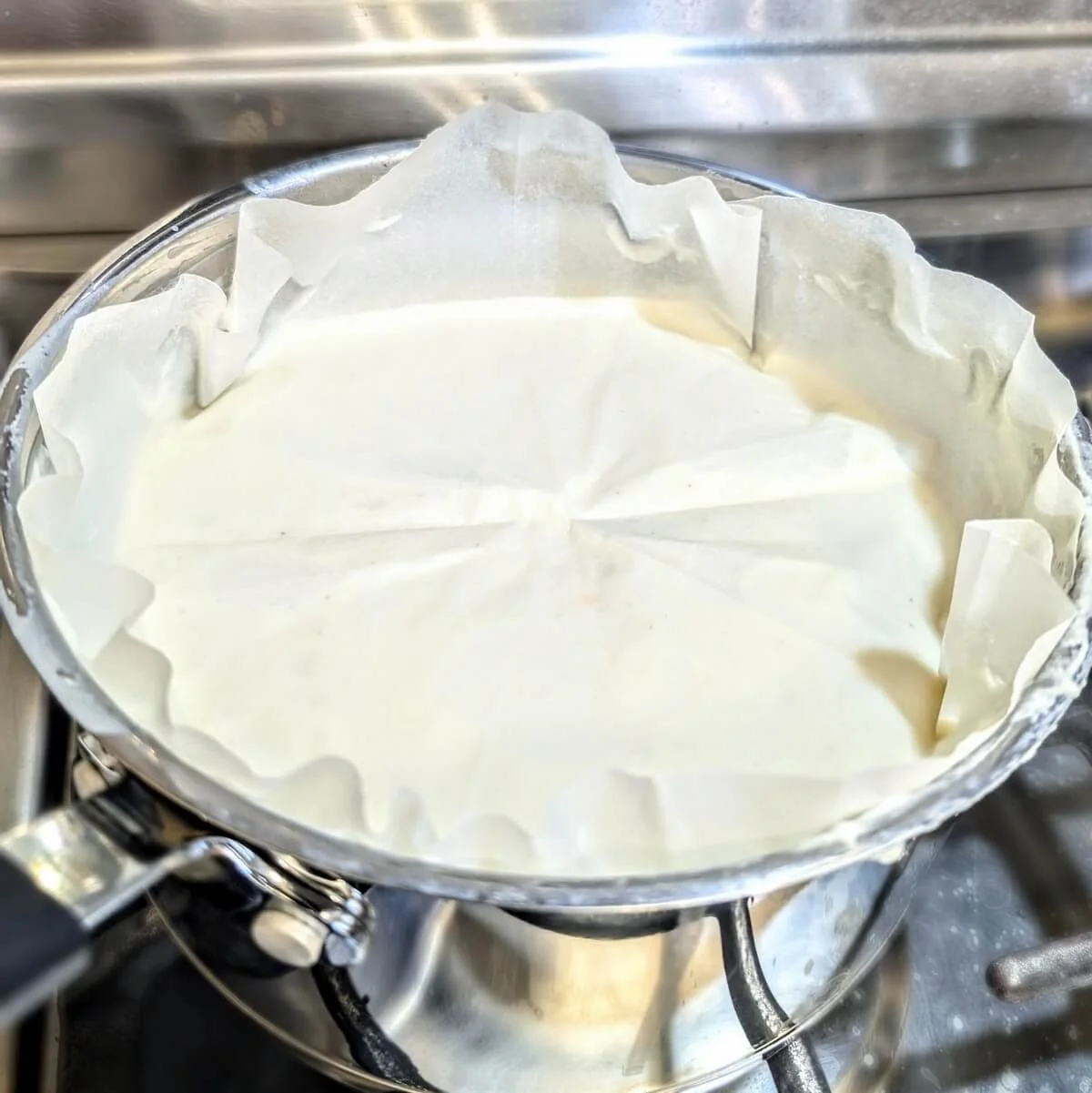
Your béchamel is now ready. If you’re not using it right away, press a piece of parchment paper or plastic wrap directly onto its surface to prevent a skin from forming.
My Tips For the Best Béchamel Sauce
Steep milk longer for more flavor: Let the milk infuse with aromatics for up to a day in advance. After it foams, cool it with the aromatics still in, then strain and gently reheat before using.
Add milk gradually and whisk constantly: Whisking as you go is the key to a silky sauce. Start with a spatula when it’s thick, then switch to a whisk as it loosens. Scrape the bottom and sides as you go to avoid burning.
Use cream for extra richness: Swap some or all of the milk for cream to make a decadent béchamel for baked pasta or white sauces.
Prevent skin from forming: Always press parchment or plastic wrap directly onto the surface of the sauce while it cools.
How to Store and Reheat Béchamel Sauce
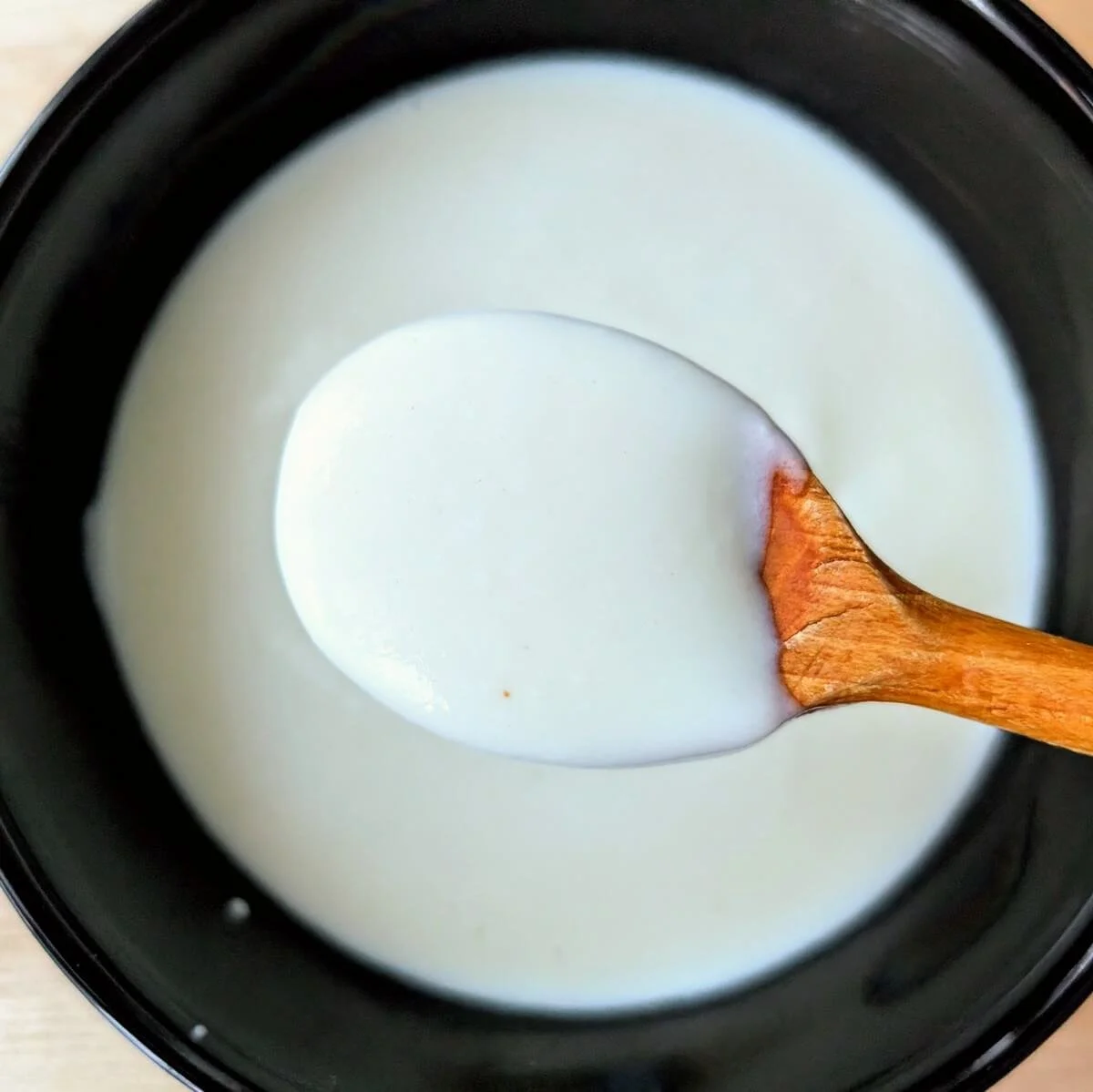
Fridge: Let the béchamel sauce cool completely, then transfer it to airtight containers. Store in the refrigerator for up to 5 days. To prevent a skin from forming, press a piece of plastic wrap or parchment paper directly onto the surface while it cools.
To Reheat: Warm the sauce gently in a saucepan over low heat, whisking constantly to restore its smooth texture. You can also microwave it in 30-second bursts, whisking in between. If the sauce has thickened in the fridge, whisk in a splash of milk to loosen it.
Freezer: Béchamel sauce freezes well! Transfer the cooled sauce to freezer-safe containers and freeze for up to 3 months. Leave some space at the top for expansion.
To Thaw: Defrost the béchamel overnight in the fridge. Reheat gently on the stovetop or in the microwave. It may look split or grainy at first—just whisk vigorously as it heats, and it will smooth out again.
How to Use Béchamel Sauce
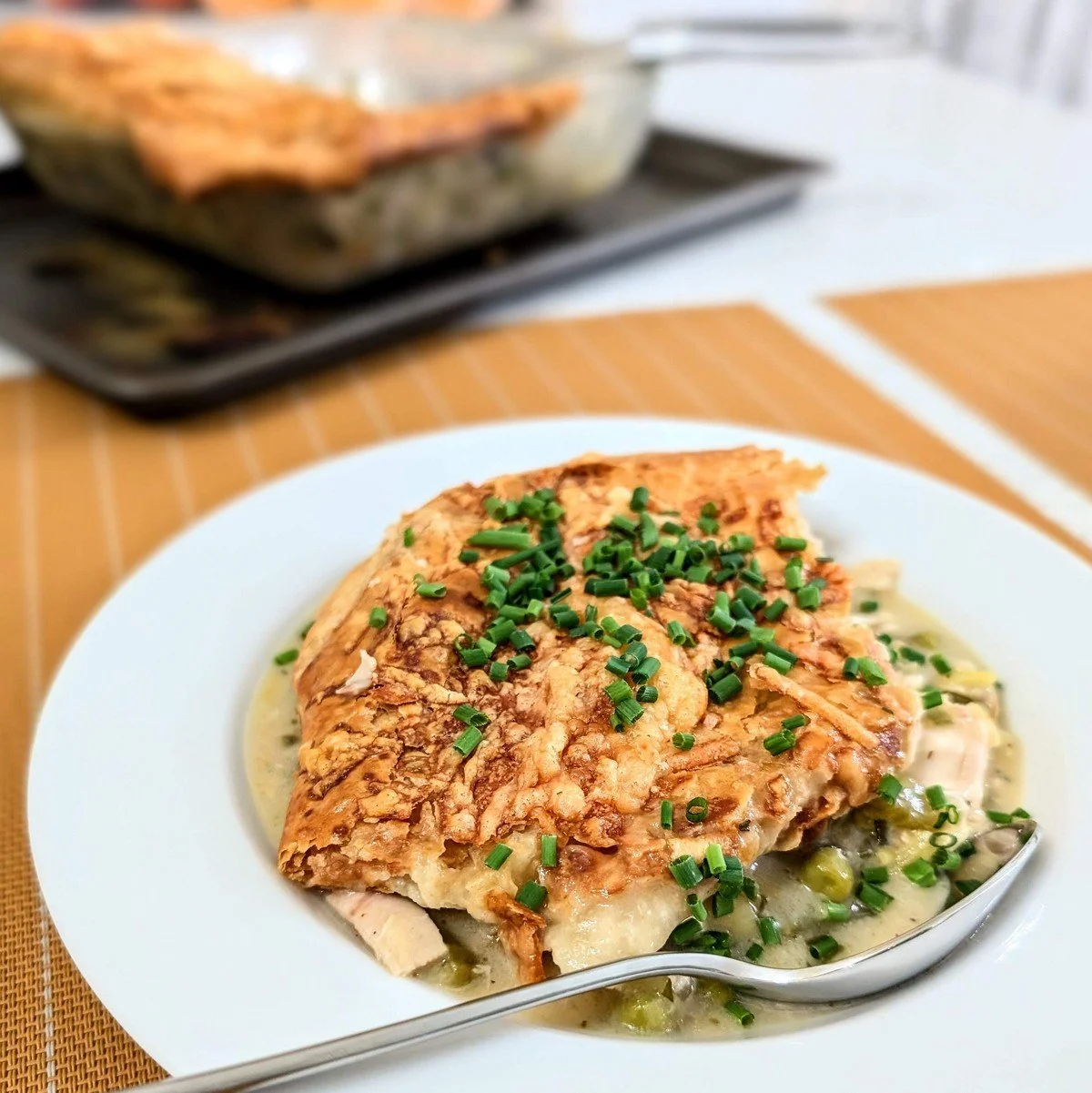
Casseroles: Add creaminess to dishes like chicken pot pie, baked ziti, tuna noodle, or chicken and broccoli casserole.
For a Mediterranean twist, use béchamel in Greek moussaka, a layered casserole of spiced meat and eggplant, topped with a thick layer of sauce. For a firm topping, use 3 tablespoons each of flour and butter per cup of milk.
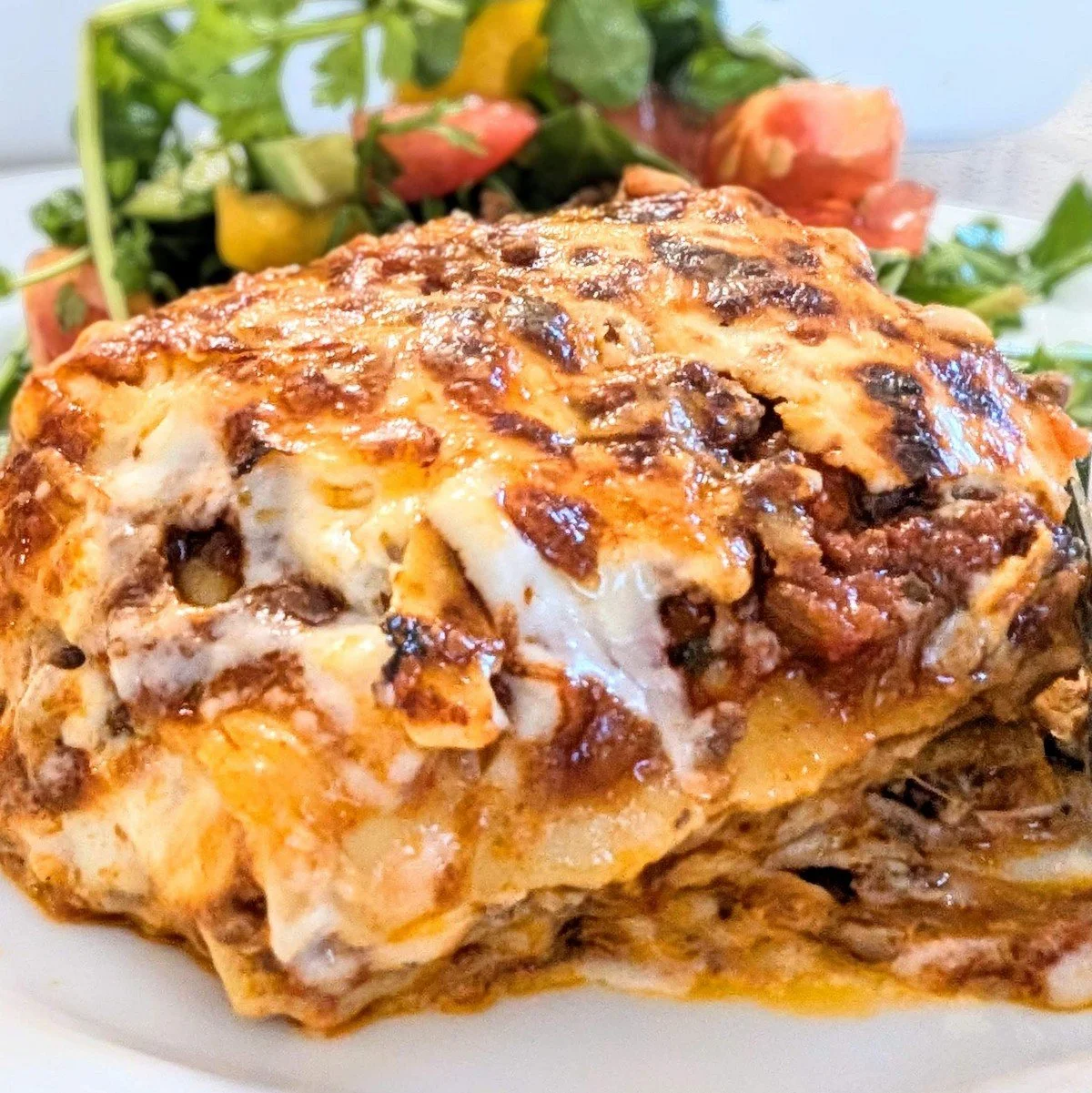
Classic Italian-style lasagna: Swap out the ricotta for béchamel (also called besciamella in Italian) for smoother layers and richer flavor. Try it in my classic meat lasagna recipe for the ultimate Italian-American comfort food.
Gratins: Use béchamel as the base for scalloped potatoes, cauliflower gratin, or other vegetable gratins. It binds the layers together beautifully.
Pasta & Mac and Cheese: Stir béchamel into pasta for creamy comfort dishes like mushroom ravioli, shrimp alfredo, or chicken pesto fettuccine. Or turn it into a Mornay sauce by melting in cheese—ideal for baked mac and cheese.
As a Sauce: Pour béchamel over roasted veggies like broccoli, Brussels sprouts, or green beans. It’s also delicious spooned over baked fish, roasted chicken, turkey, or pan-seared scallops.
Croque Monsieur: This French café classic layers ham and Gruyère between toasted bread, finished with a generous pour of béchamel and broiled until golden and bubbly. Add a fried egg on top and it becomes a Croque Madame 🍳😊
Soups & Stews: Use béchamel as the creamy base for broccoli cheddar, clam chowder, cream of mushroom, or potato-leek soup.
White Pizza: Swap out tomato sauce for béchamel to make a white pizza base. Great with toppings like prosciutto, burrata, spinach, artichoke or mushrooms.
Nachos: Melt in sharp cheddar, a splash of vinegar, and a pinch of cayenne to turn béchamel into a creamy nacho cheese sauce—perfect for game-day platters or dipping.
Béchamel Sauce Ingredient Substitutions
Milk: For extra richness, use heavy cream instead of milk. For a dairy-free béchamel, swap in unsweetened oat milk or soy milk. Just note: plant-based milks will slightly alter the flavor.
Butter: Substitute olive oil or vegan butter to make a dairy-free roux.
Flour: Use gluten-free all-purpose flour to make a gluten-free béchamel.
Nutmeg: No nutmeg? Try a pinch of allspice or 1 clove for warm depth—or omit it for a more neutral white sauce.
Infused Milk Options: Switch up the aromatics—try steeping the milk with thyme, shallots, or rosemary for a unique twist.
Béchamel Derivative Sauces
Mornay Sauce: Add grated cheese like Gruyère, sharp cheddar, mozzarella, or parmesan. Use it in mac and cheese, baked pasta, or vegetable gratins.
Soubise Sauce: Stir in puréed sautéed onions for a sweet, mellow onion sauce—great with chicken, pork, or vegetables.
Nantua Sauce: Enrich with crayfish butter and cream for a seafood béchamel, traditionally paired with poached fish or shellfish.
Raifort Sauce: Add white wine and grated horseradish for a sharp, tangy variation that’s ideal with roast beef or sausages.
Bechamel Sauce FAQs
What is the flour-to-butter ratio for béchamel sauce?
The classic béchamel ratio is 1 tablespoon of flour to 1 tablespoon of butter per 1 cup of milk. This creates a medium-thick white sauce that works for most recipes, such as creamy soups or sauces.
How much flour and butter do I need for 1 liter of milk?
To make 1 liter (or 1 quart) of béchamel sauce, use ¼ cup butter and ¼ cup flour—about 4 tablespoons of each.
What’s the best béchamel ratio for different recipes?
Everyday use: Stick with 1 tablespoon flour + 1 tablespoon butter per cup of milk for a versatile base.
Baked pastas or gratins: Use 2 tablespoons each of butter and flour per cup of milk. This is the "goldilocks" ratio—thick enough to fully coat every surface but silky enough to get into every bite.
Moussaka or croque monsieur: Use 3 tablespoons each of flour and butter per cup of milk for a thick, structured sauce.
Why do you add nutmeg to béchamel sauce?
Nutmeg adds subtle warmth and depth to béchamel sauce. It’s a classic French and Italian touch that enhances the creamy milk and butter flavor without overpowering it.
What is béchamel sauce with cheese called?
That’s Mornay sauce—béchamel with cheese added, such as Gruyère, cheddar, parmesan, or mozzarella. Great for mac and cheese, gratins, and croque monsieur.
How do you get rid of lumps in béchamel sauce?
To get rid of lumps in béchamel sauce, strain it through a fine mesh sieve. To avoid lumps next time, whisk constantly as you gradually add warm milk to your roux.
How to fix béchamel sauce that’s too thick?
Just whisk in a splash of warm milk or water to loosen a béchamel sauce that’s too thick. Repeat until it reaches the texture you want.
How to fix béchamel sauce that’s too thin?
Simmer it longer to reduce and thicken a béchamel sauce that’s too thin. Or for a quicker fix, whisk in a cornstarch slurry (1 tbsp cornstarch + 1 tbsp water), repeating as necessary, until it thickens. You can also cook a small batch of roux and whisk your thin sauce into it to thicken your sauce.
Can béchamel sauce be made ahead or frozen?
Yes! Store béchamel in the fridge for up to 5 days or freeze for up to 3 months. To reheat, thaw overnight in the fridge and warm gently on the stovetop or in the microwave. If it looks split or grainy, whisk vigorously as it heats to bring it back to a smooth consistency.
What are the 5 French mother sauces?
The five mother sauces of classical French cuisine are:
Béchamel: Milk + white roux
Velouté: Light stock + blond roux
Espagnole: Brown stock + brown roux
Hollandaise: Egg yolks + clarified butter
Tomato: Classic tomato-based sauce
👉 Learn more about each one in my complete guide to Escoffier’s five mother sauces!
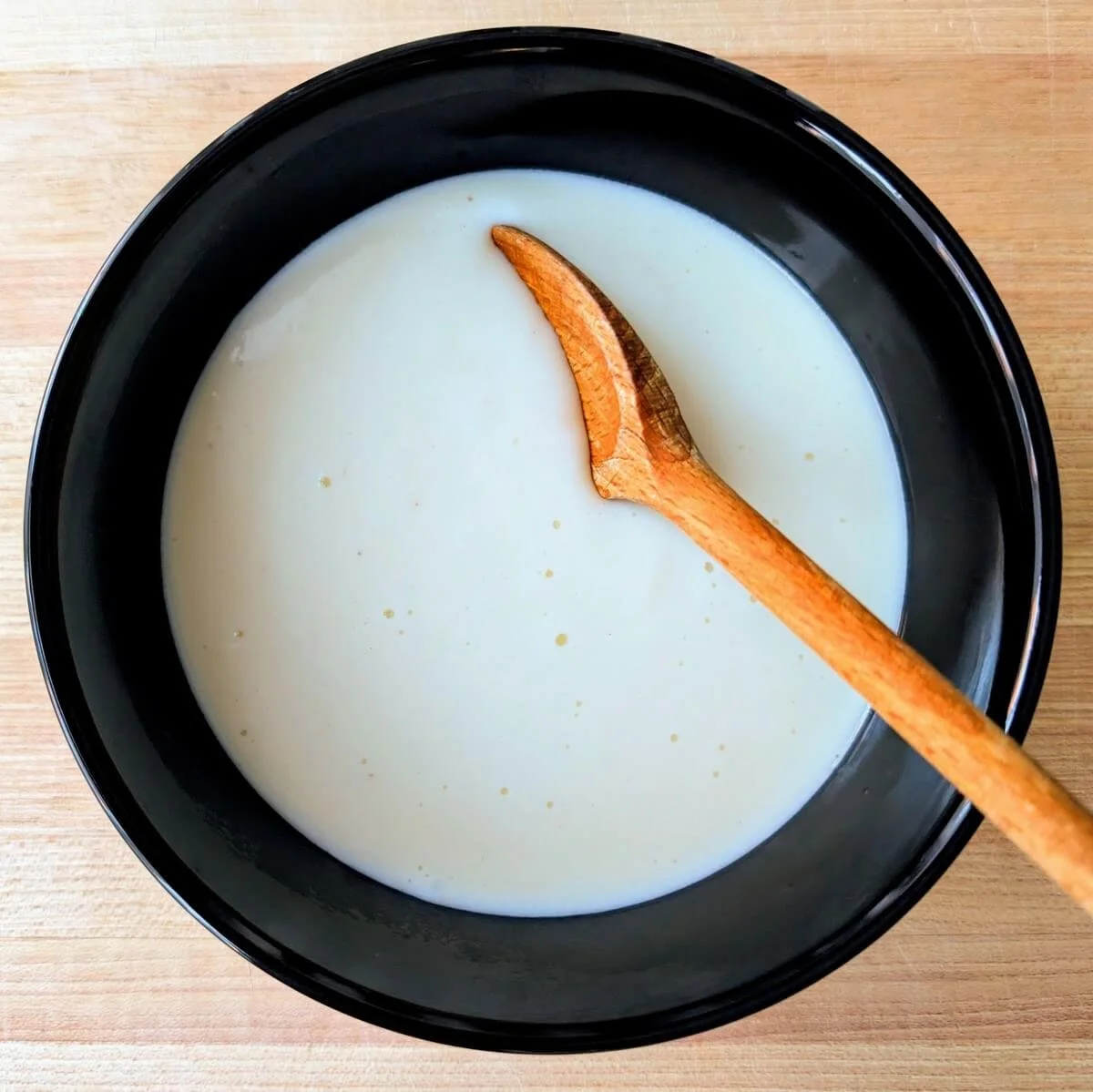
That’s it—enjoy your homemade béchamel sauce!
Whenever I make a batch of béchamel, I’m reminded of how versatile it is. Recently, I used it in both a meat lasagna and a chicken-broccoli bake, and my family loved them so much they kept asking for the secret—which really was just a well-made, classic white sauce. It's honestly that simple.
Mastering these foundational sauces is one of the easiest ways to elevate your cooking. In my 15 years in professional kitchens, we made endless batches of Mornay sauce for mac and cheese, and guests always assumed it was complicated. Once you understand the béchamel ratio and technique, you’ll feel confident adapting it for any recipe.
No matter how you use your béchamel sauce, you’ll love having this versatile classic in your repertoire. And if you’re ready to explore more French mother sauces, be sure to check out my chicken velouté, classic Espagnole, and quick hollandaise—they’re just as approachable and just as foundational.
Pin This Béchamel Sauce Recipe for Later!
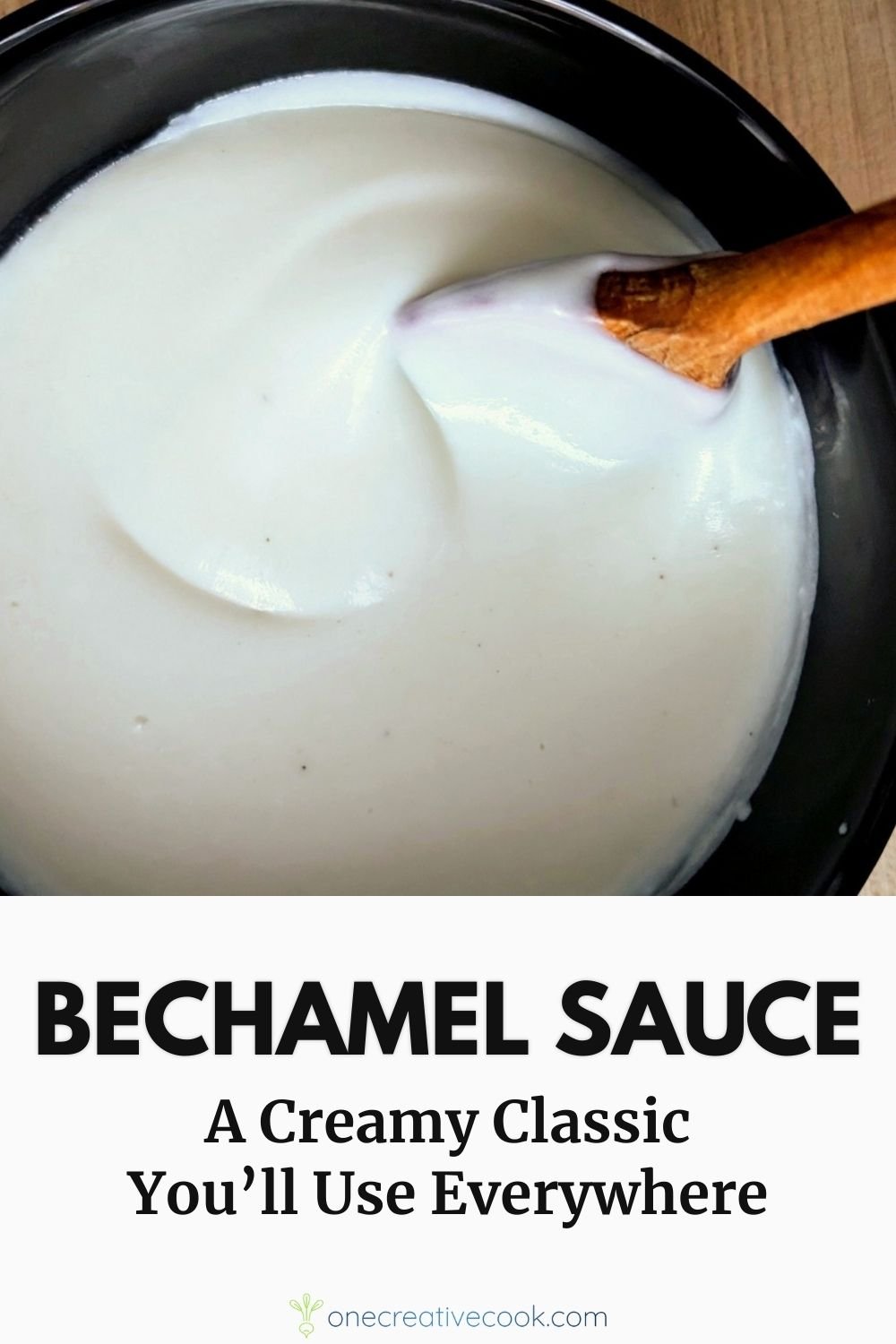
Easy Béchamel Sauce Recipe
Learn to make classic béchamel sauce from scratch—a creamy French white sauce for lasagna, mac and cheese, and more.
Makes: 1 quart (1 liter)
Prep: 5 min Cook: 30 min
Dietary Notes: Egg-free, Vegetarian, Low-carb
Béchamel Sauce Ingredients
1 quart (1 liter) whole milk
¼ cup butter, salted or unsalted
¼ cup all-purpose flour
¼ teaspoon ground nutmeg
2 bay leaves
1 clove garlic, smashed
salt, to taste
How to Make Béchamel Sauce
Steep milk. Combine the milk, nutmeg, bay leaves, and garlic in a saucepan. Heat over medium heat, stirring occasionally, until the milk foams on top, about 10 minutes. Remove from heat, cover, and let steep while you prepare the roux.
Make roux. In another saucepan, melt the butter over medium heat. Stir in the flour to form a smooth paste and cook, stirring constantly, until it smells slightly nutty but remains pale, 2–3 minutes.
Incorporate milk. Strain the steeped milk to remove aromatics. Place the roux over medium-high heat and add the milk gradually, one ladle at a time, stirring constantly. Start with a spatula while the mixture is thick, then switch to a whisk as it loosens. Let each addition thicken and begin to bubble before adding more. Once all the milk is added, reduce to a simmer and cook for 5 minutes, stirring frequently, until smooth and able to coat the back of a spoon.
Season and use. Season with salt to taste. Use white pepper if you want to keep the sauce perfectly white. Use immediately, or press plastic wrap or parchment directly onto the surface to prevent a skin from forming. Cool completely before storing.
Top Tips for the Best Béchamel Sauce
How to store: Béchamel keeps 5 days in the fridge or 3 months in the freezer. Press plastic wrap or parchment directly onto the surface while cooling to prevent a skin from forming.
Steep milk for more flavor: Infuse the milk with aromatics for up to a day ahead. Cool with the aromatics still in, then strain and gently reheat before using.
Add milk gradually: Add the milk a ladle at a time, stirring constantly. Start with a spatula while thick, then switch to a whisk as it loosens for the smoothest texture.
For more, see my tips, serving suggestions, substitutions, how to store, and FAQs!
Have you tried this easy white sauce recipe?
Tell me how you used your sauce in the comments, and feel free to ask any questions! If you share your recipe, tag @onecreativecook on Instagram—I’d love to see your creations.
More Sauce Recipes You’ll Love
Classic San Marzano tomato sauce: A slow-simmered Italian tomato sauce made with simple ingredients and deep, rich flavor—perfect for pasta, pizza, or meat dishes.
Hearty all-beef meat sauce: A robust, slow-cooked beef ragu perfect for spooning over pasta, layering into baked dishes, or freezing for weeknight meals.
Easy blender hollandaise sauce: A silky, restaurant-quality hollandaise that comes together quickly and pairs beautifully with eggs, vegetables, or fish.
Chicken velouté sauce: A light, versatile French mother sauce made from stock and roux—a go-to base for creamy soups and pan sauces.
Traditional espagnole sauce: A rich, deeply flavored French brown sauce, essential for demi-glace and hearty meat dishes.








Learn how to make beef Wellington with crisp puff pastry and medium-rare beef, using the same techniques I mastered in professional kitchens.