

Iraqi Lamb and Eggplant Stew (Margat Baytinjan)
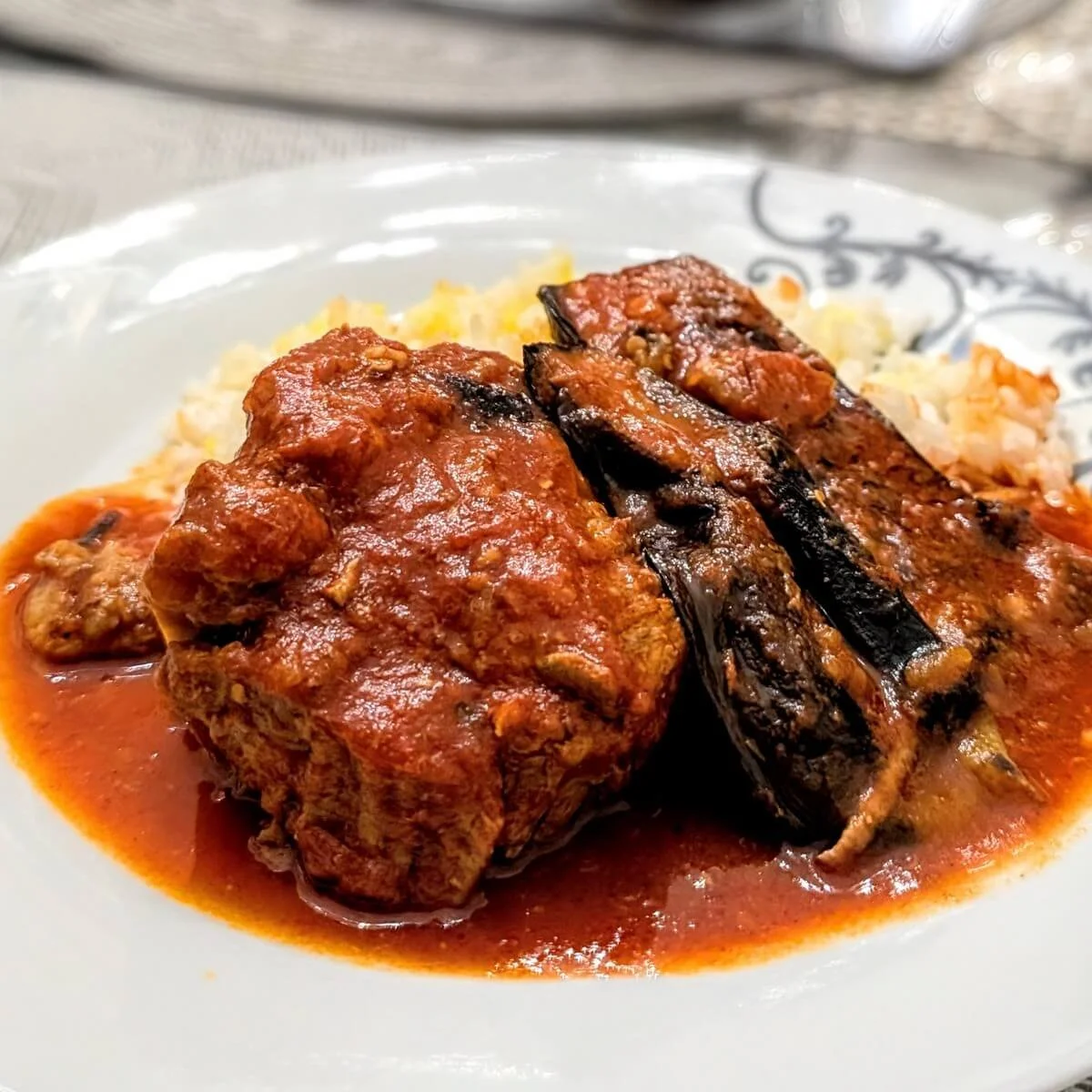
This authentic Iraqi eggplant stew braises tender lamb with smoky eggplant in a deeply savory tomato sauce.
or read on for step-by-step instructions with photos
What Is Margat Baytinjan (Iraqi Eggplant Stew)?
Margat Baytinjan is a traditional Iraqi eggplant stew with a rich tomato base, deeply browned eggplant, and tender braised meat like lamb or beef. “Marga” simply means stew in Iraq, and it’s one of the country’s most beloved everyday comfort dishes. While it can include a variety of vegetables, it’s built around just a few simple ingredients and minimal spices.
This is the first recipe on One Creative Cook that I’ve documented entirely with my mom. We cooked it side by side in her home kitchen, so I could capture every detail exactly as she makes it. From choosing the best eggplants at the market to tasting and adjusting the sauce together at the stove, we worked through it carefully to preserve the authentic flavor I grew up with.
From Iraq to Canada, this stew has been a constant in our kitchen and a bridge between our generations. As an Iraqi-born, professionally trained chef, I’ve realized that her home-cooked foundations mirror many techniques I practiced for 15 years in restaurant kitchens. Braising the lamb first and giving the eggplant a proper sear builds deep flavor without relying on a long list of ingredients.
What Makes This Iraqi Eggplant Stew Recipe Special
Simple braising technique: The lamb is simmered until tender, then lightly seared before the sauce is built, creating deeper flavor and a melt-in-your-mouth texture.
Low-oil eggplant searing method: A simple brining and covered searing technique keeps the eggplant tender and deeply browned without soaking up excess oil.
Minimal spices, maximum flavor: Fresh ginger gently balances the lamb’s natural richness, while turmeric and mild curry powder support the other ingredients without overpowering them.
Next, I’ll walk you through this Margat Baytinjan recipe step-by-step, so you can build those deep layers of flavor with confidence.
Let’s get simmering!
What You’ll Need
Ingredients for Iraqi Lamb and Eggplant Stew
16 lamb t-bone chops (about 2 kilograms total)
water, enough to cover lamb halfway for braising
1 inch fresh ginger, sliced into 4–5 thick pieces
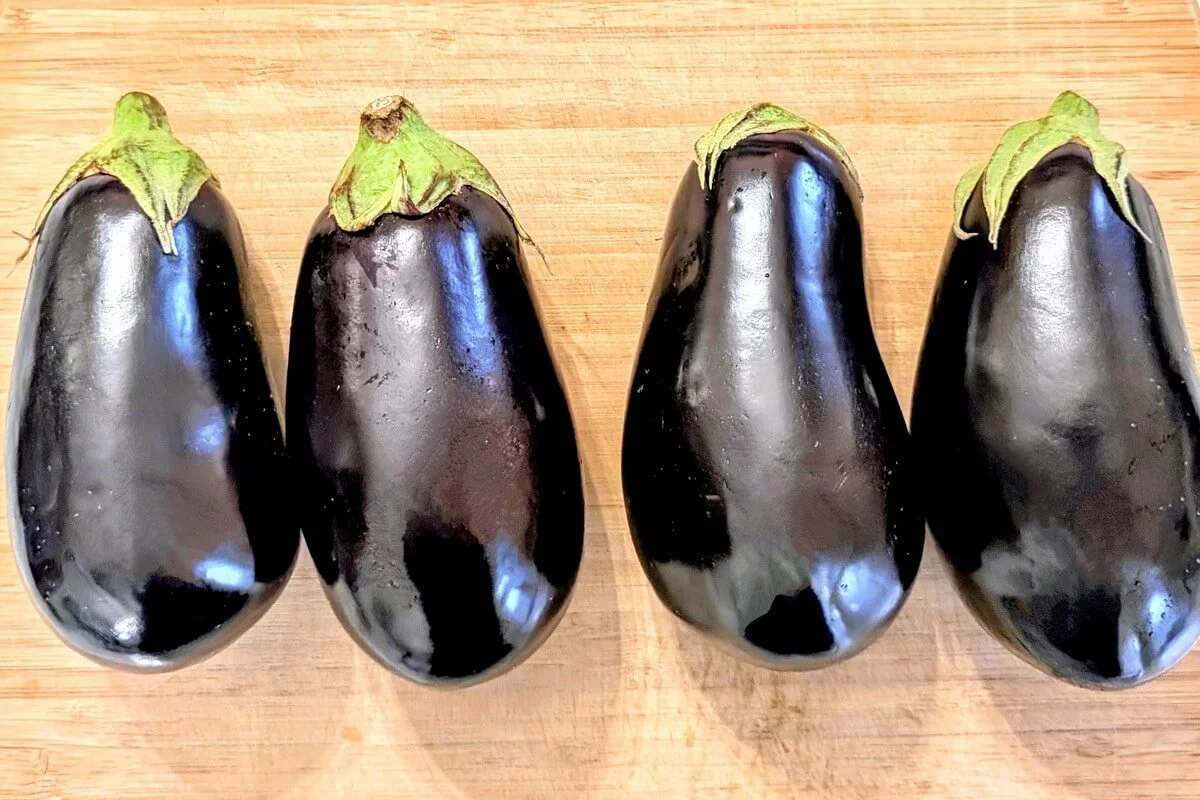
8 small Italian eggplants
3 tablespoons salt, for brining eggplant
1 teaspoon turmeric
½ teaspoon mild curry powder
1 medium onion, finely chopped
2½ cups canned crushed tomatoes
5 tablespoons tomato paste
6 cups water, for building the sauce
½ cup lemon juice, plus more to taste
olive oil, as needed for searing
salt, to taste
Equipment for Making Eggplant Stew
Large heavy-bottomed pot with lid
Large non-stick skillet with lid
Knife and cutting board
Large mixing bowl or container, for soaking eggplant
Vegetable peeler or paring knife
Tongs or fork, for flipping eggplant
Large spoon, for skimming
Makes: 8 servings
Prep: 30 min Cook: 2 hours
How to Make Iraqi Lamb and Eggplant Stew
Step-by-Step with Photos
Step 1: Prep and brine the eggplant
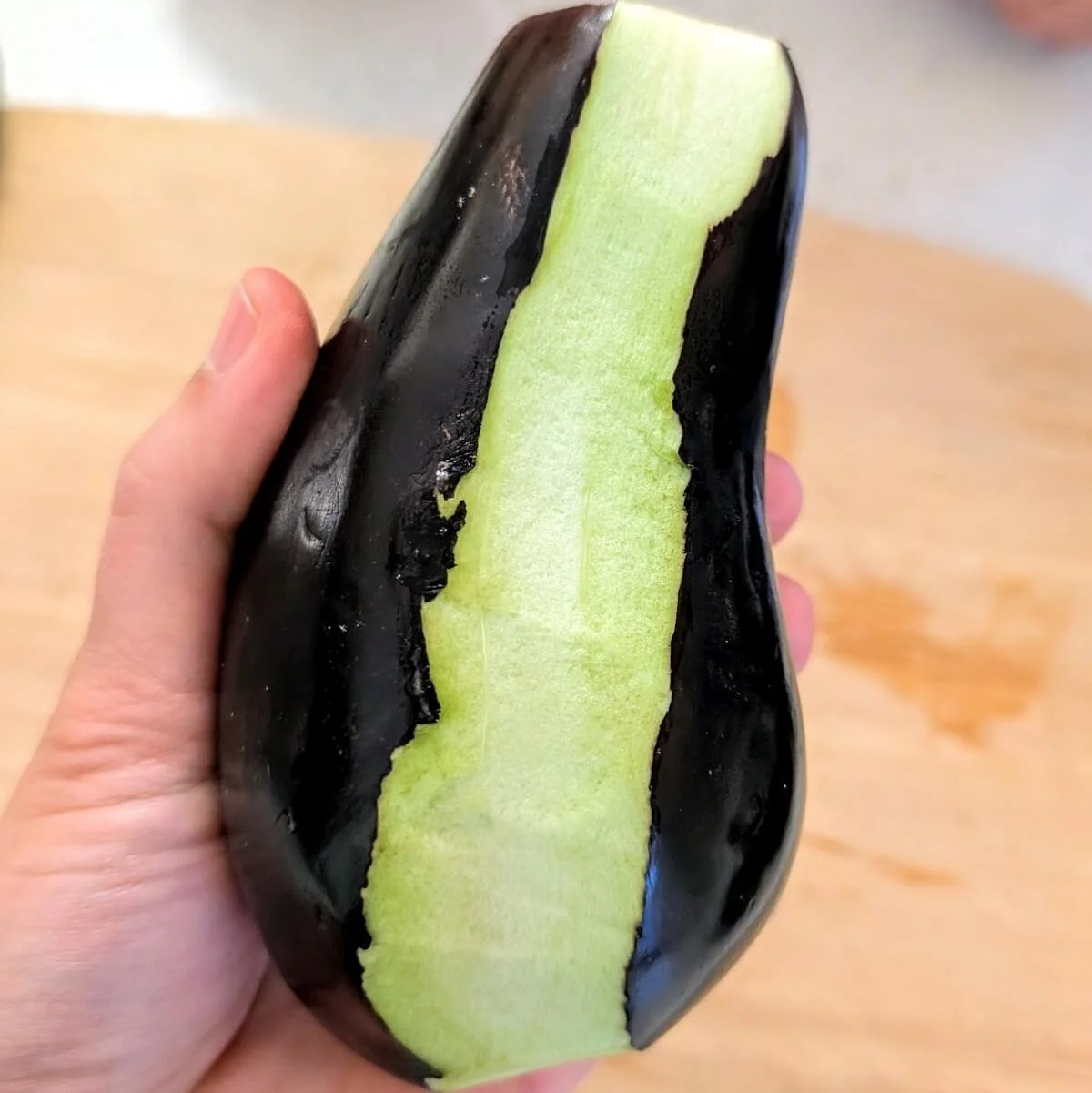
Remove the tops from each eggplant. Peel one vertical strip of skin all the way down and back up the other side, leaving the rest of the skin intact to create a striped pattern. This balances the skin-to-flesh ratio, helping control bitterness and texture.
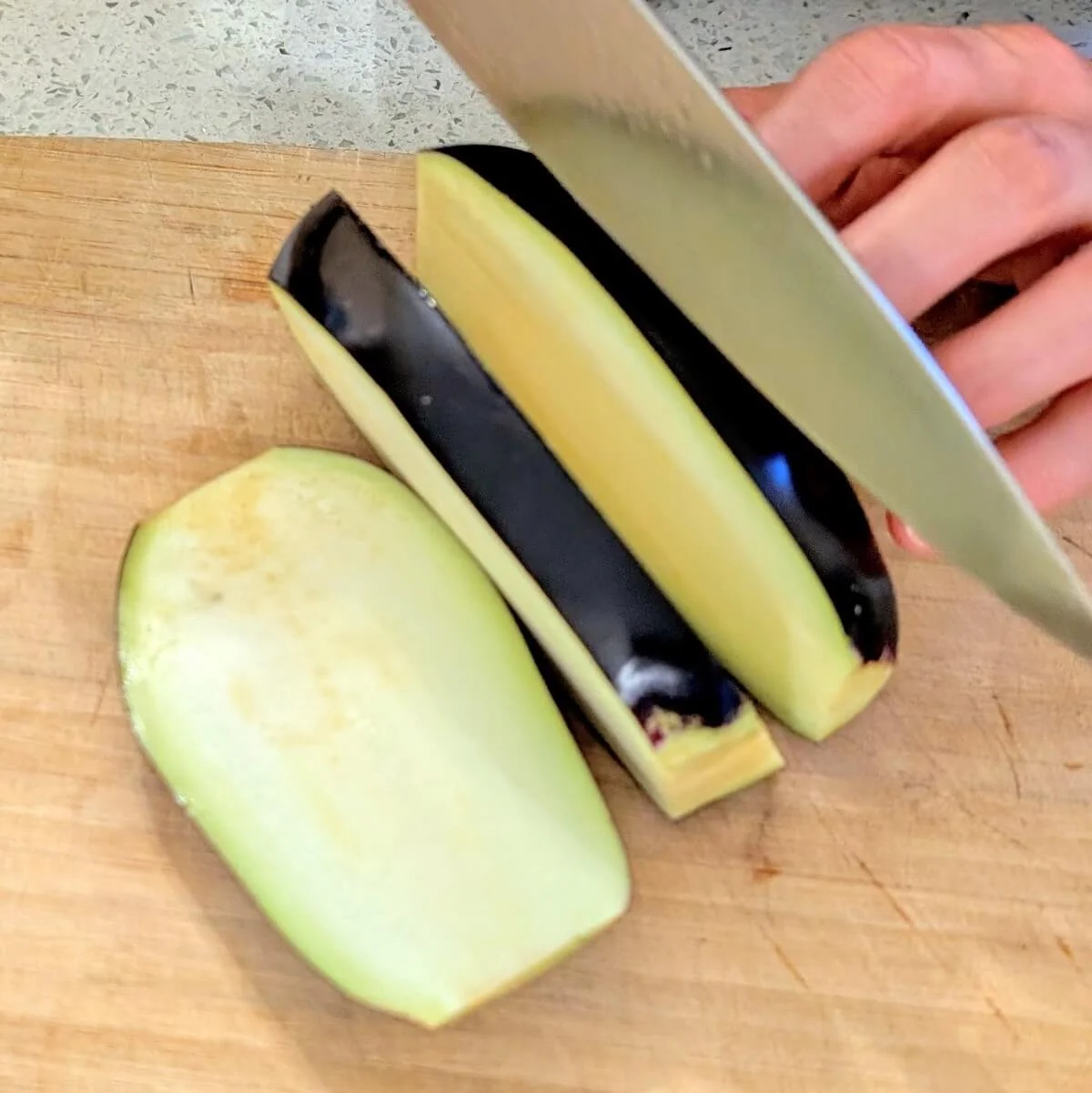
Cut the eggplant lengthwise into thick 1-centimeter slices.
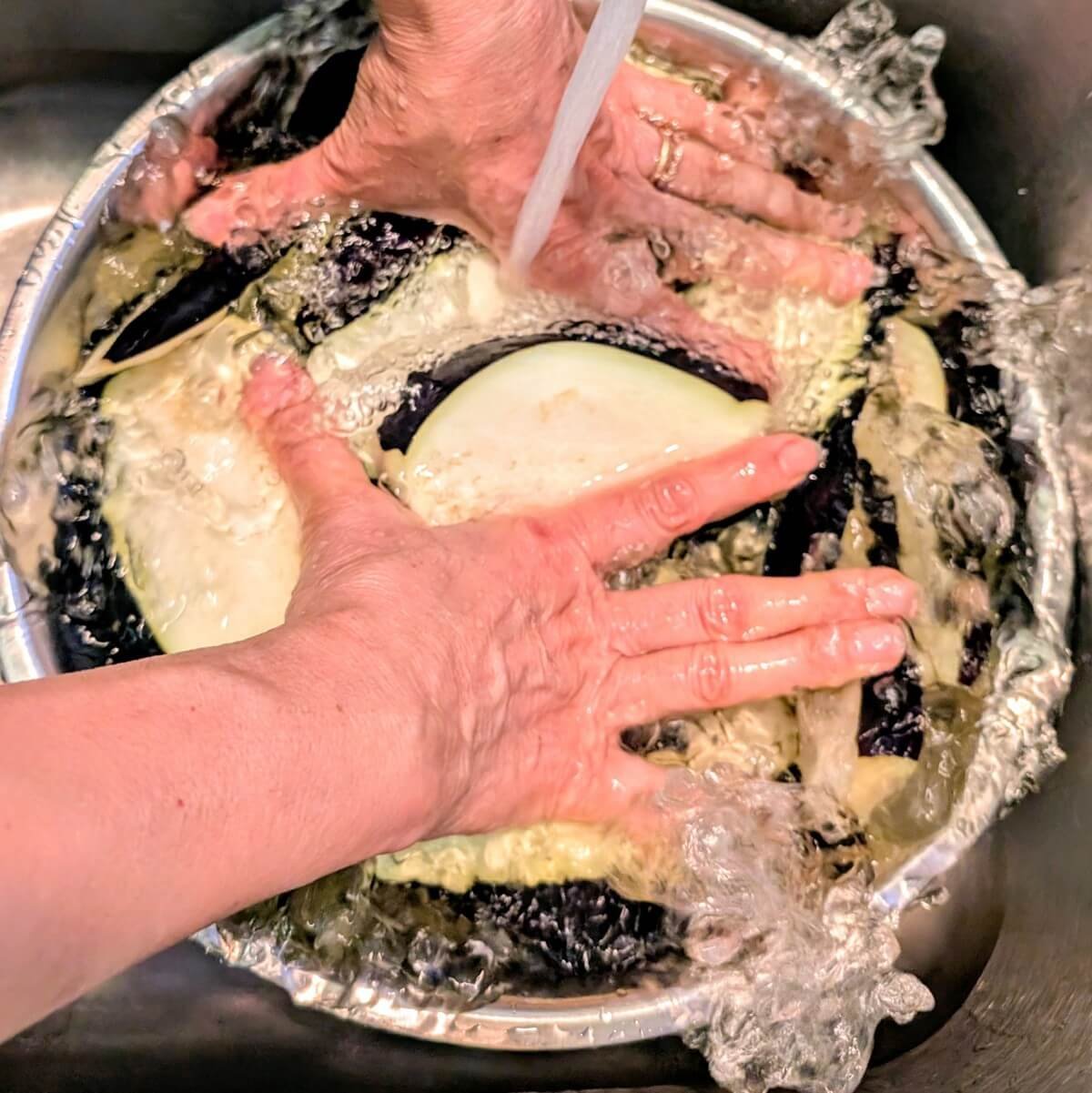
Place the slices in a large bowl and rinse under cold running water. Drain, then cover completely with fresh water.
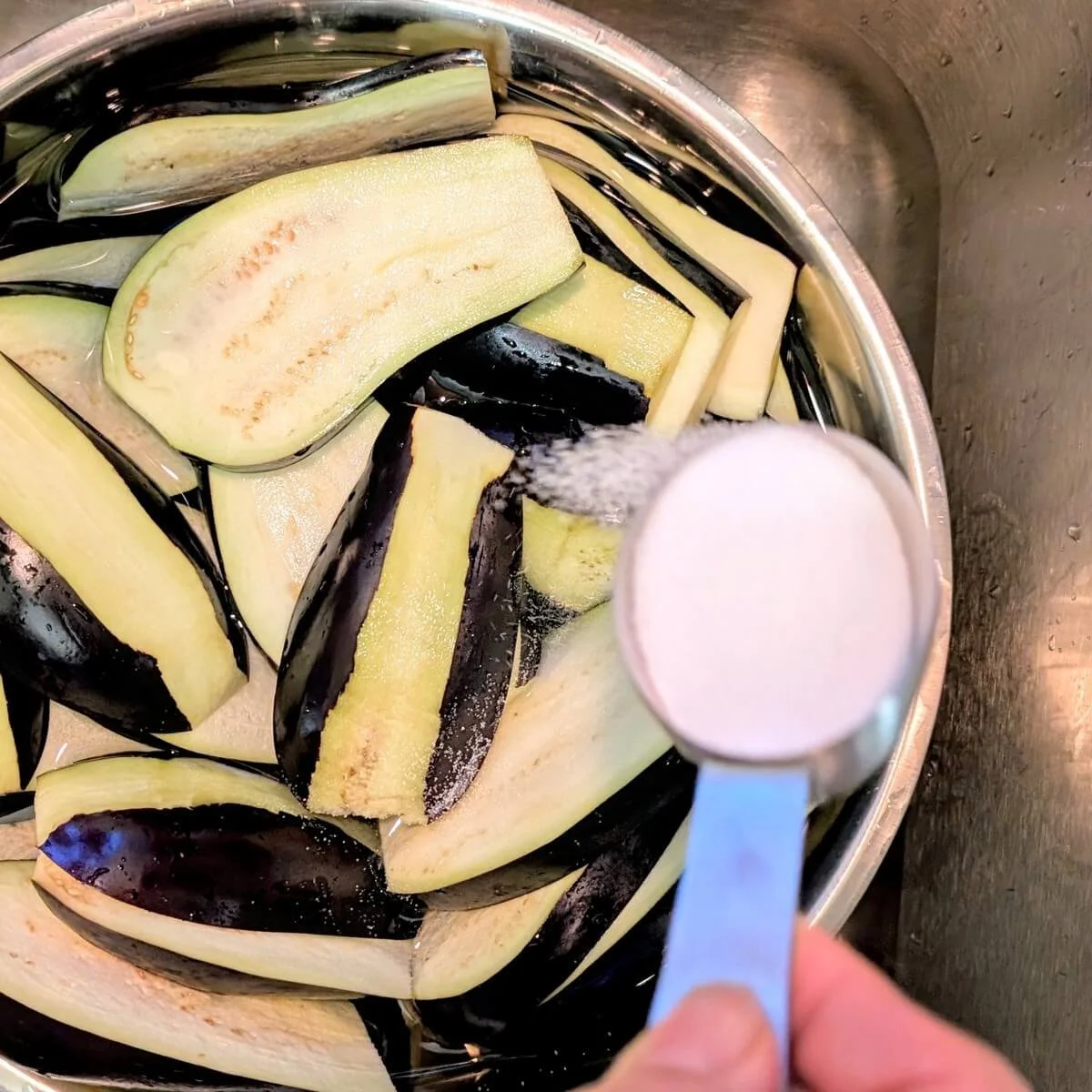
Add about 3 tablespoons of salt so the water tastes noticeably salty. Press the eggplant down into the water and keep it submerged with a plate. Let it soak while you begin cooking the lamb.
Eggplant Tip: Brining the eggplant helps draw out bitterness, improve its texture, and reduce how much oil it absorbs during searing.
Step 2: Braise the lamb
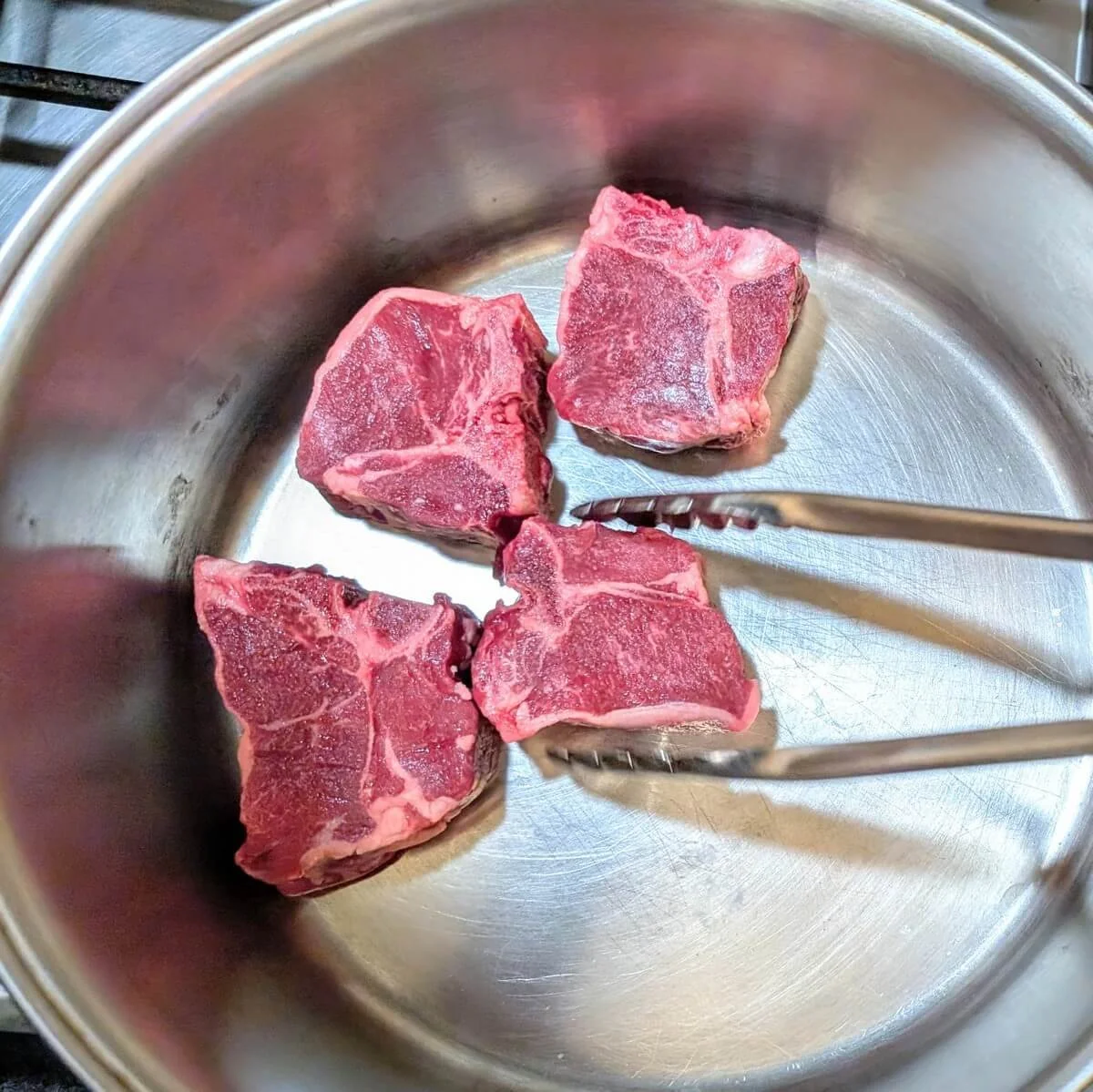
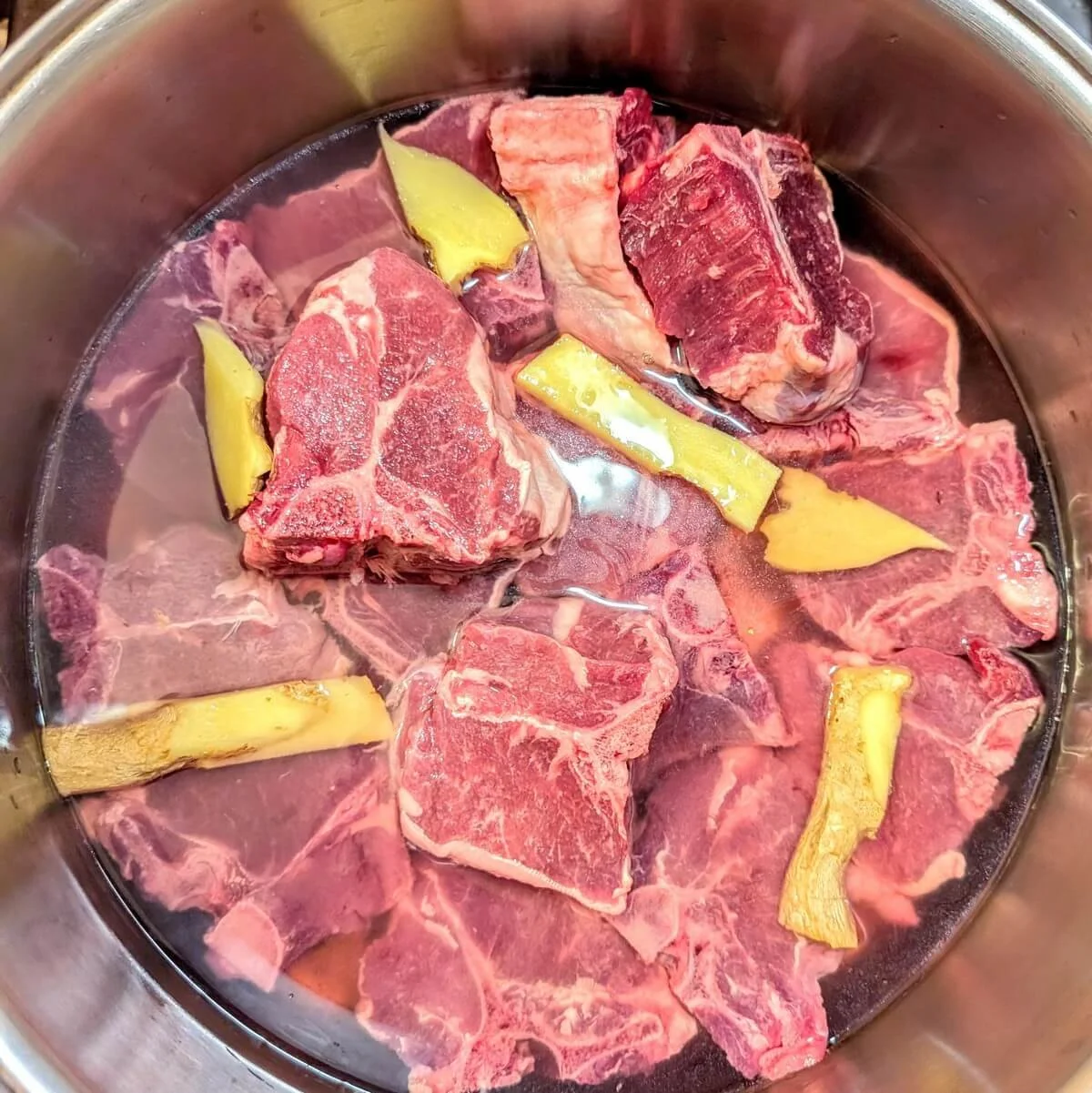
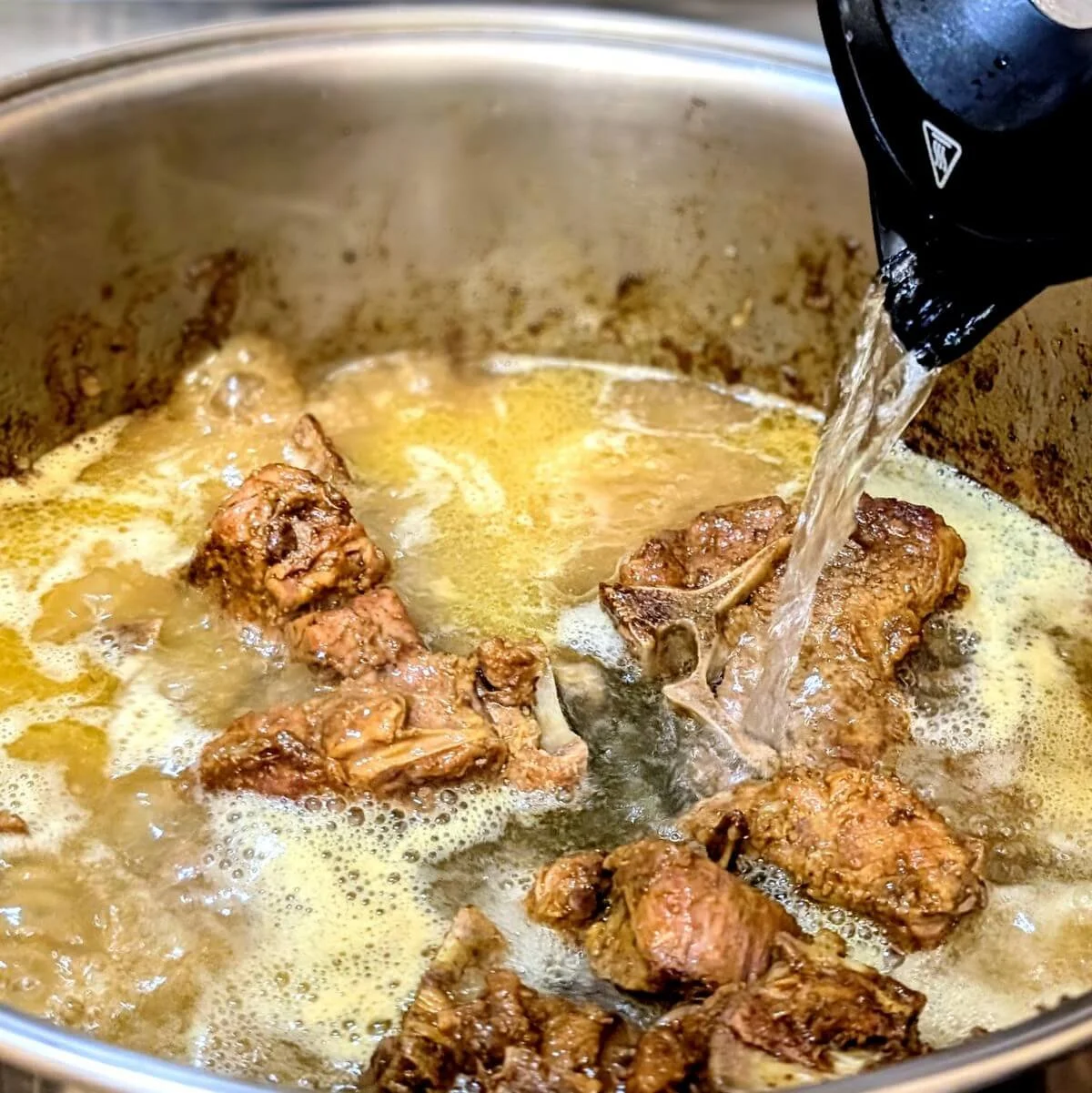
Pat the lamb dry and place in a heavy-bottomed pot, layering if needed. Add enough water to cover halfway, then add the sliced ginger pieces, counting how many you add so you can remove them later.
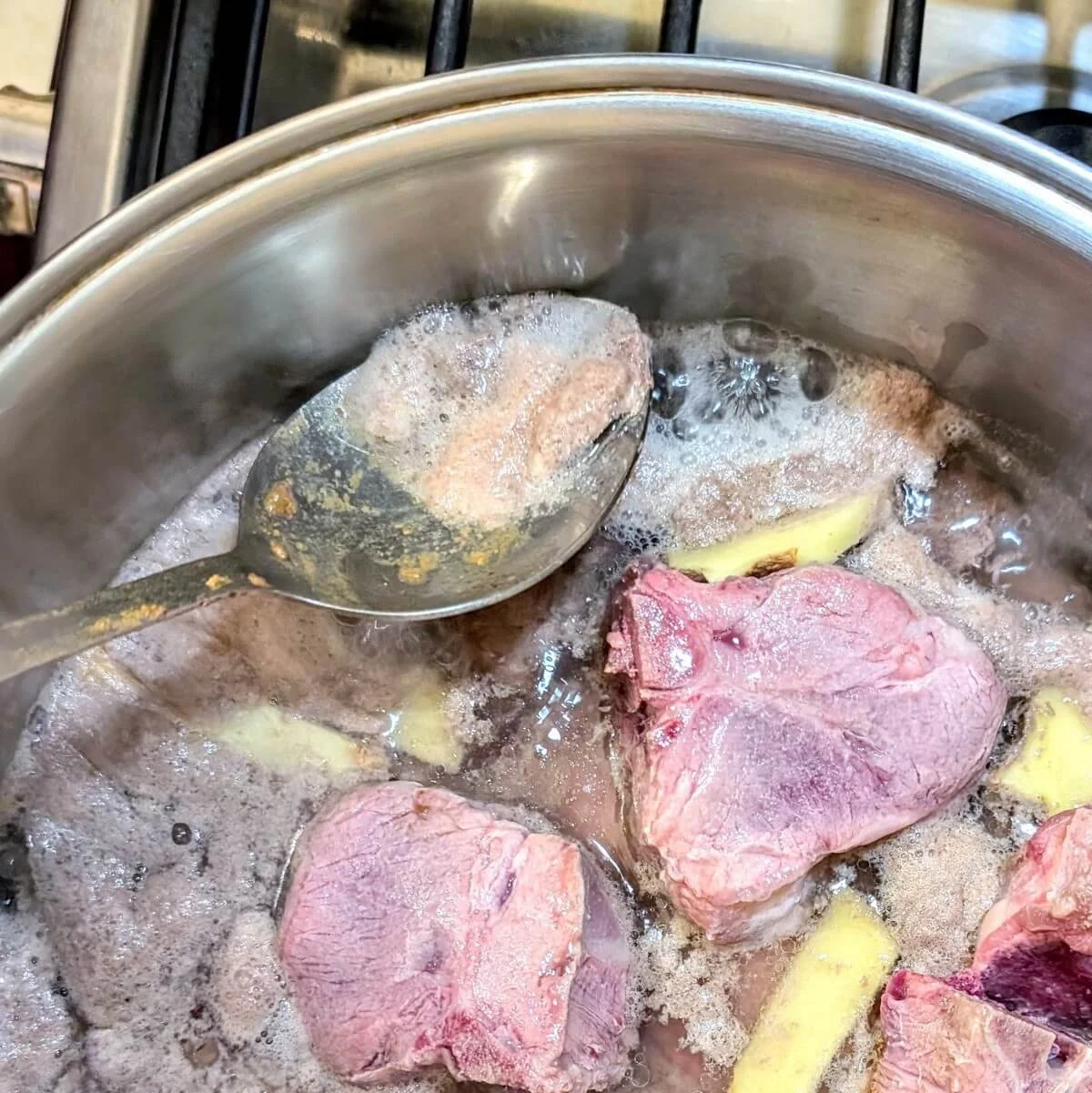
Cover the pot and bring it to a boil over high heat. Once boiling, remove the lid, reduce the heat to a gentle simmer, and skim off any foam that rises to the surface. Continue simmering until the foam subsides and the broth looks clearer.
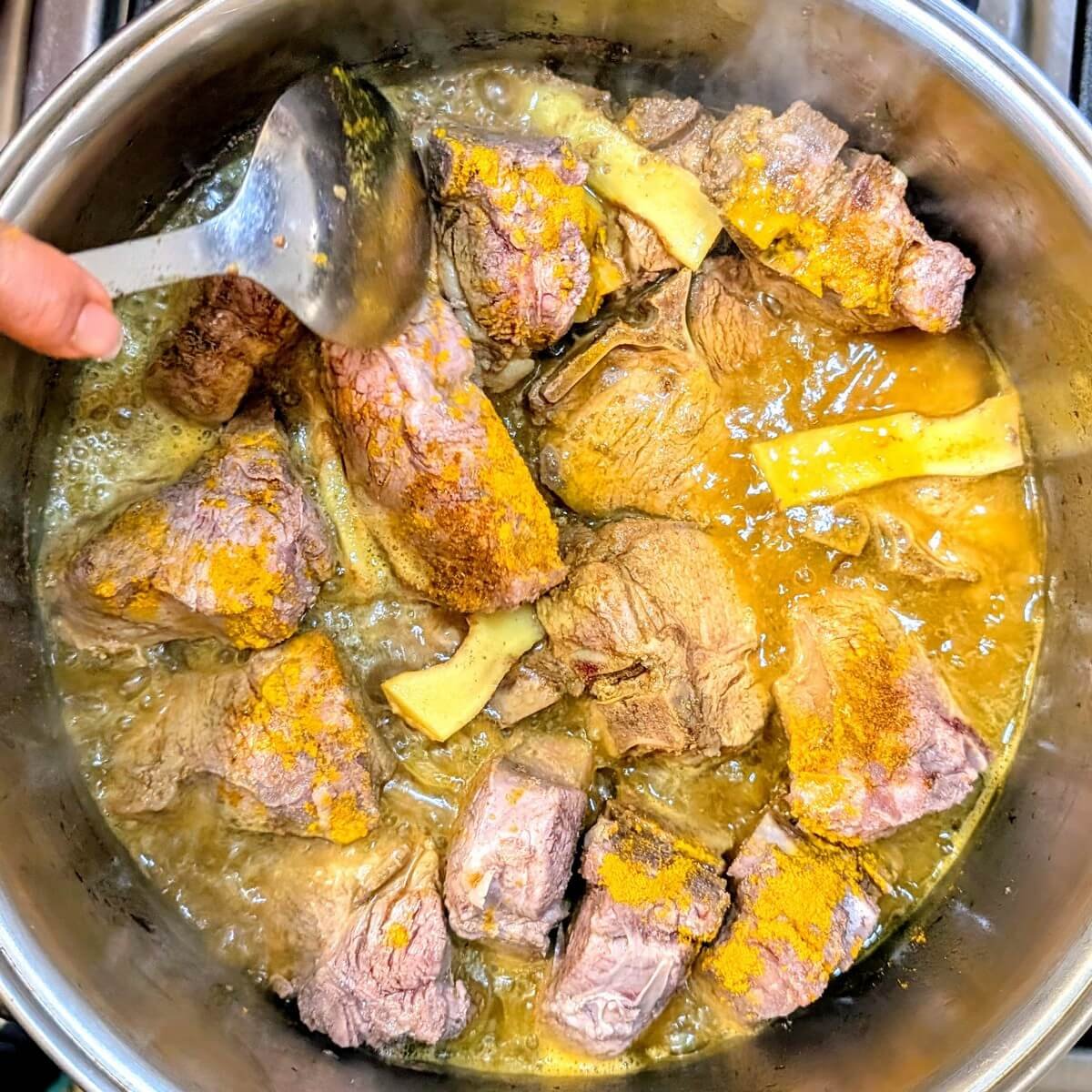
Stir in the turmeric and mild curry powder. Cover the pot again, leaving the lid slightly ajar so some steam can escape. Let the lamb simmer until tender, about 1 hour.
Check occasionally to make sure there is still some liquid in the pot. If it reduces too much before the lamb is tender, add a little more water as needed.
Step 3: Sear the eggplant
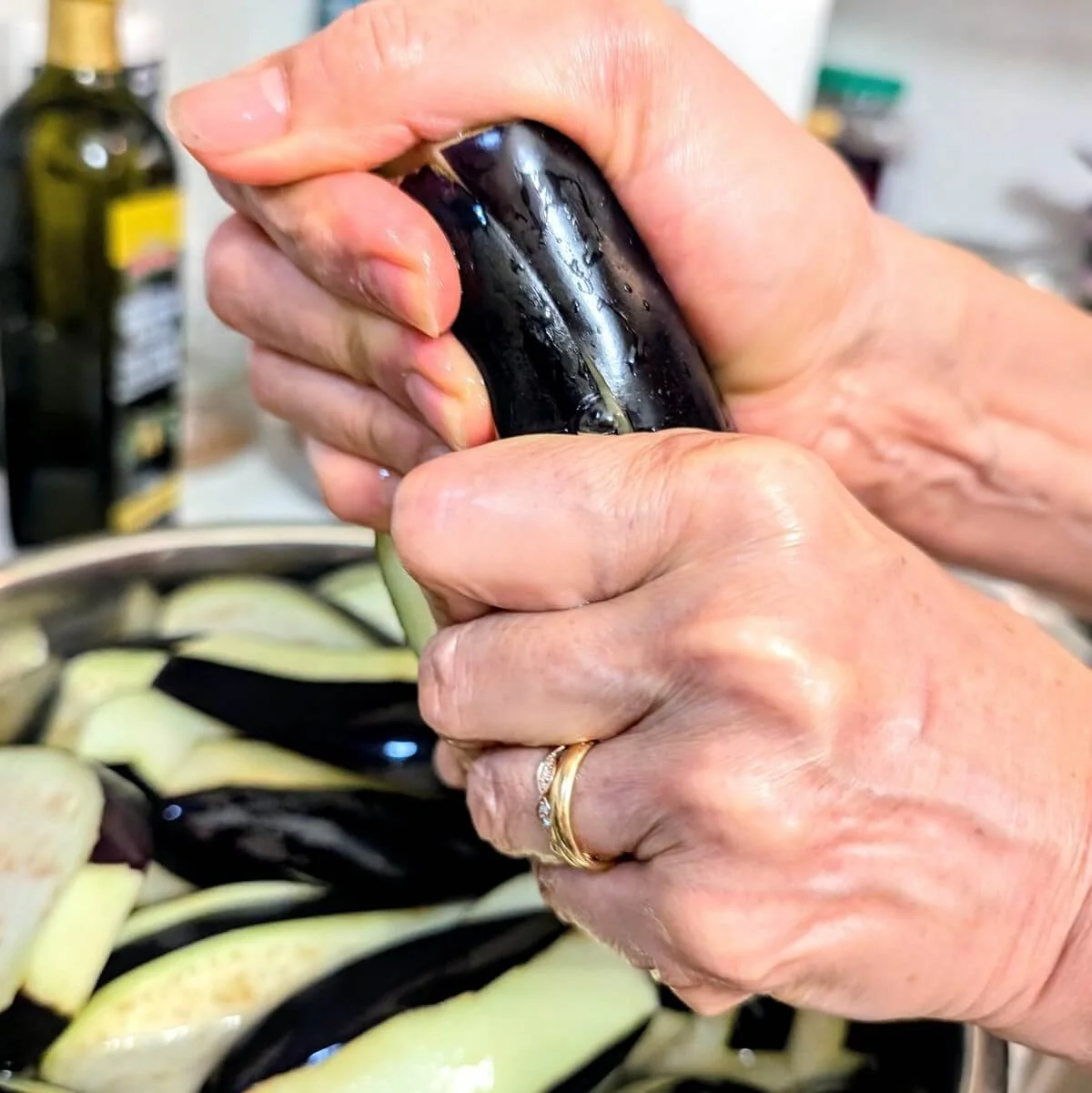
While the lamb cooks, sear the eggplant. Remove the eggplant slices from the brine and gently squeeze each piece to release some of the excess water. You don’t need to wring them out completely, just press lightly to remove surface moisture.
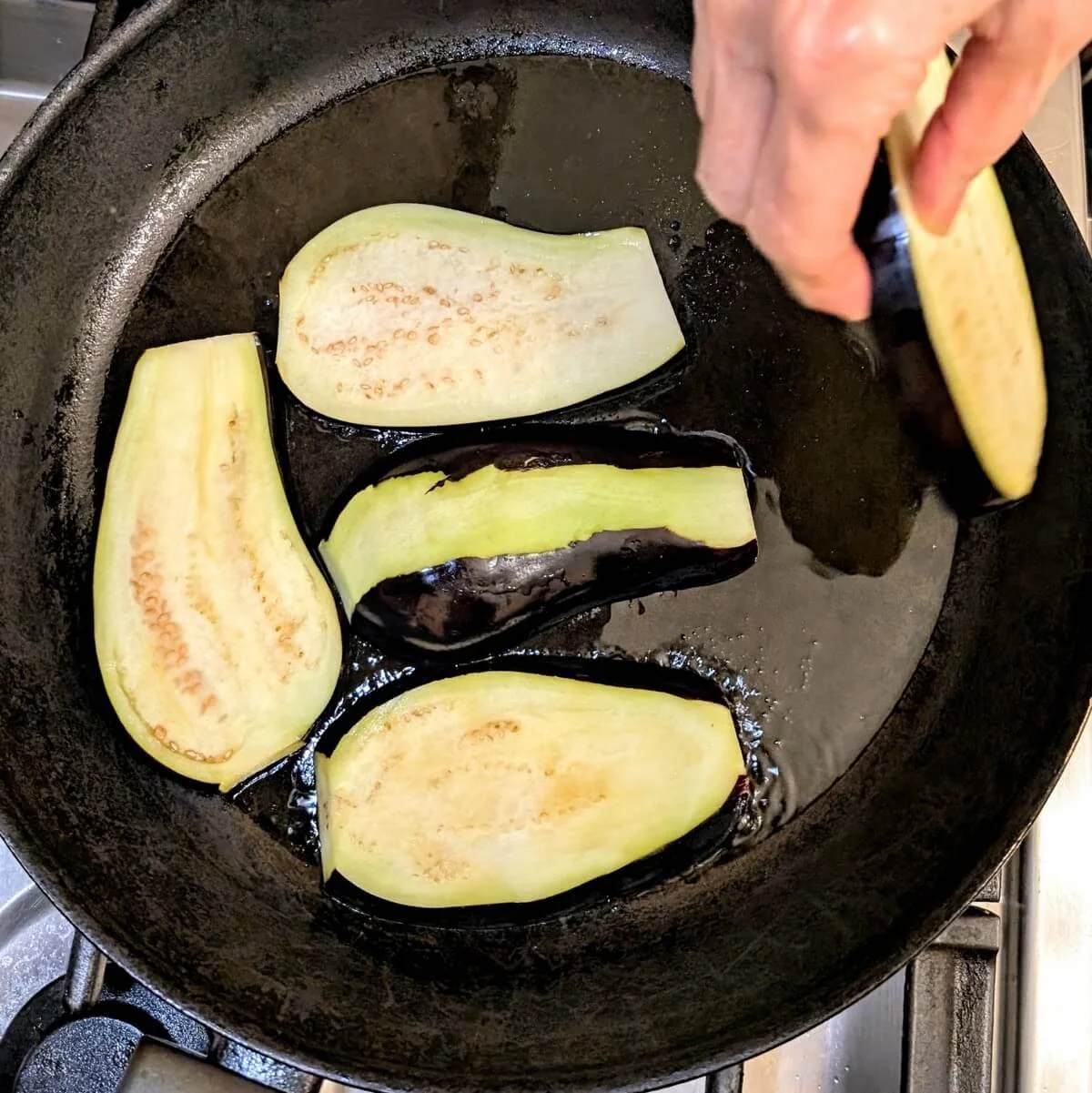
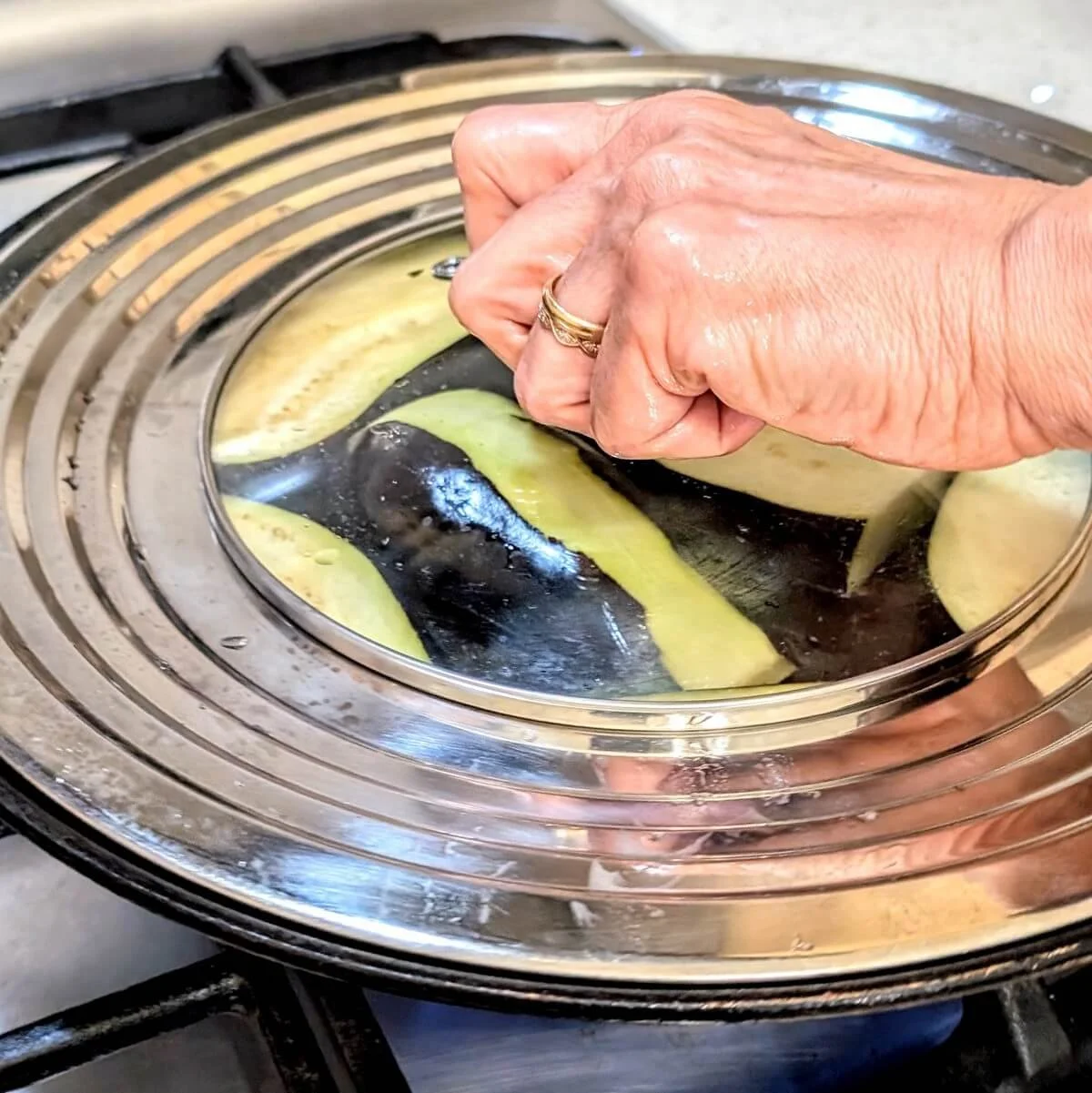
Heat a large non-stick skillet over medium-high heat and add enough olive oil to lightly coat the bottom, about 1 tablespoon per batch. Once the oil is hot, carefully add the eggplant slices in a single layer.
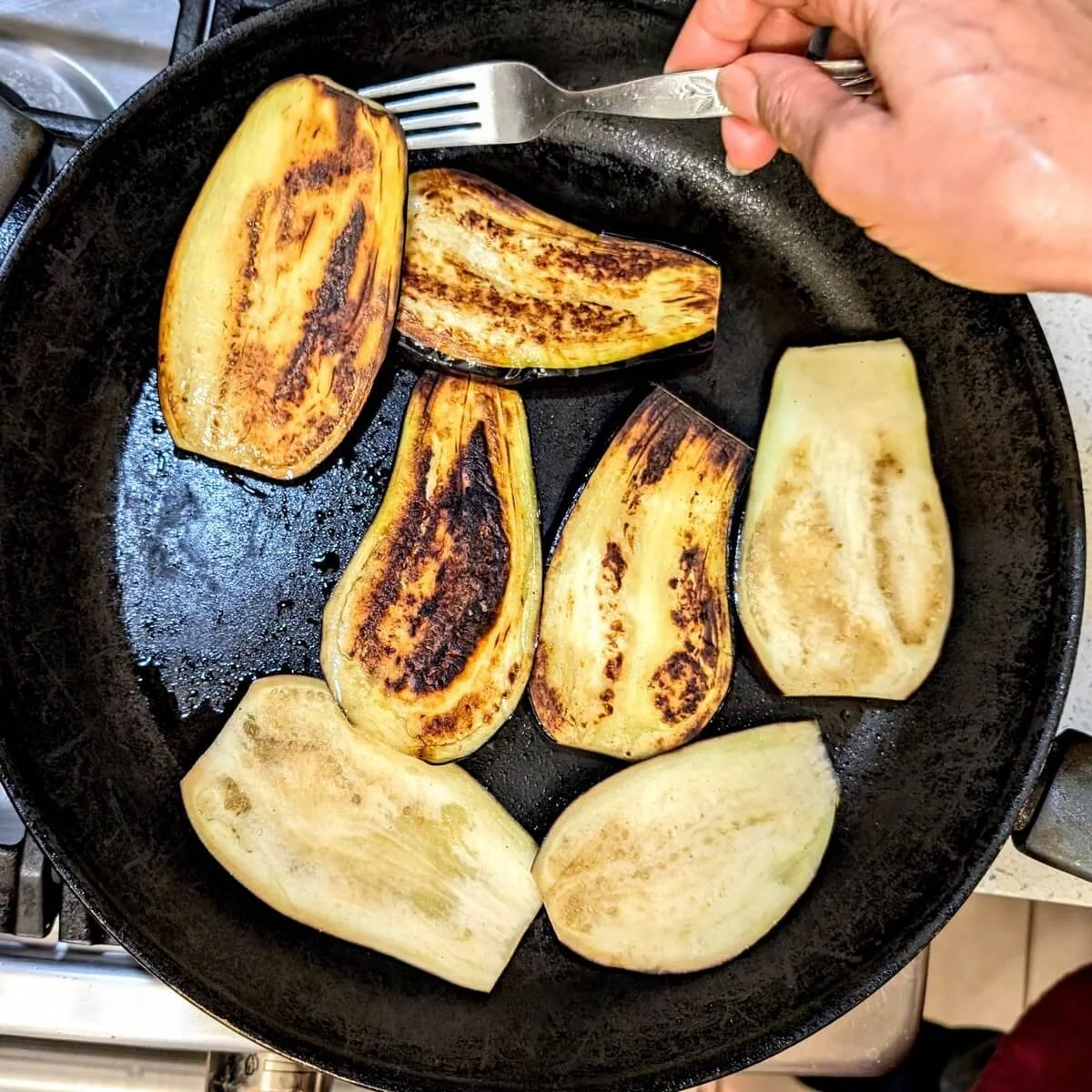
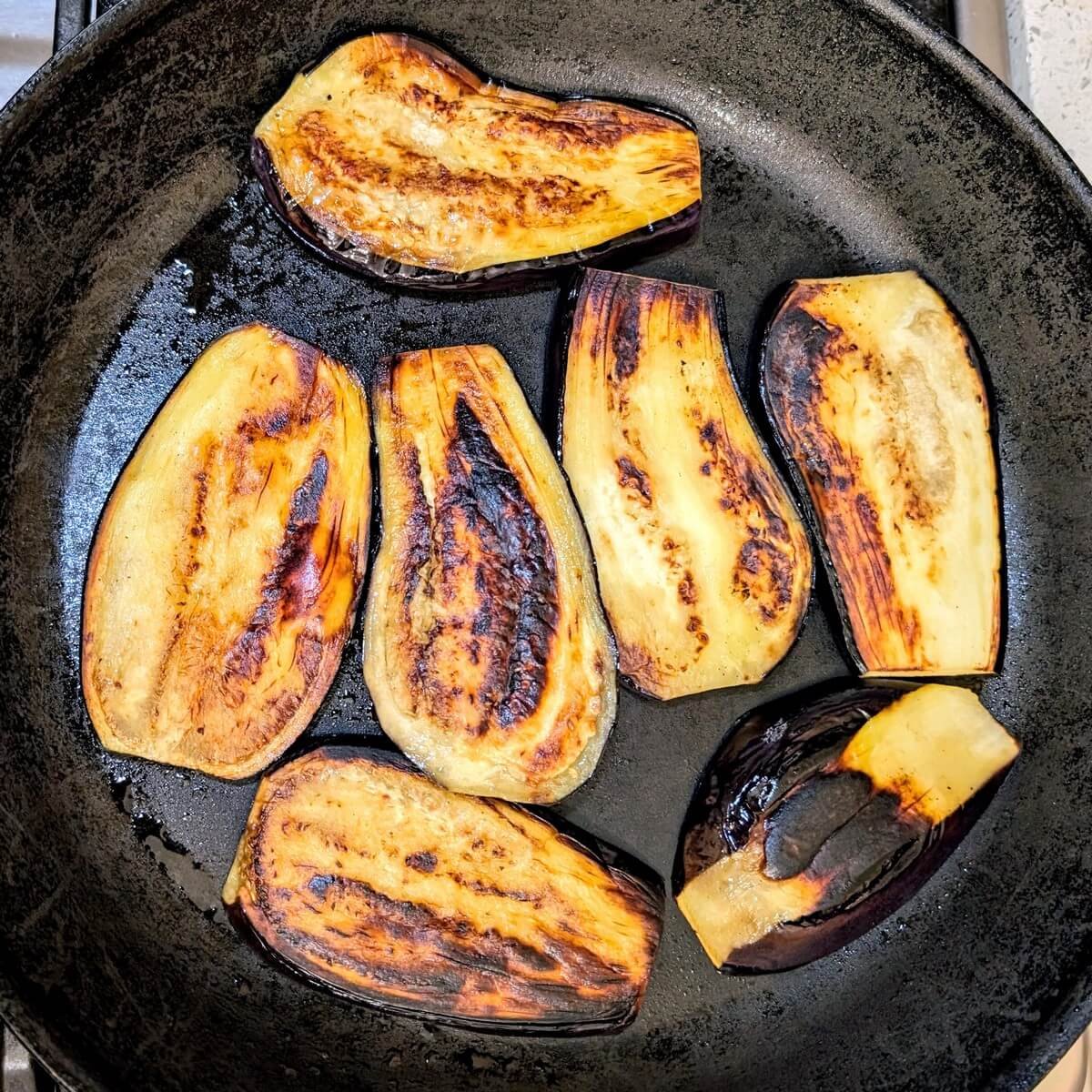
Cover the skillet and let the eggplant sear for about 4 minutes. Remove the lid to check the underside, then flip using tongs or a fork. Cover again and cook until the second side is deeply browned.
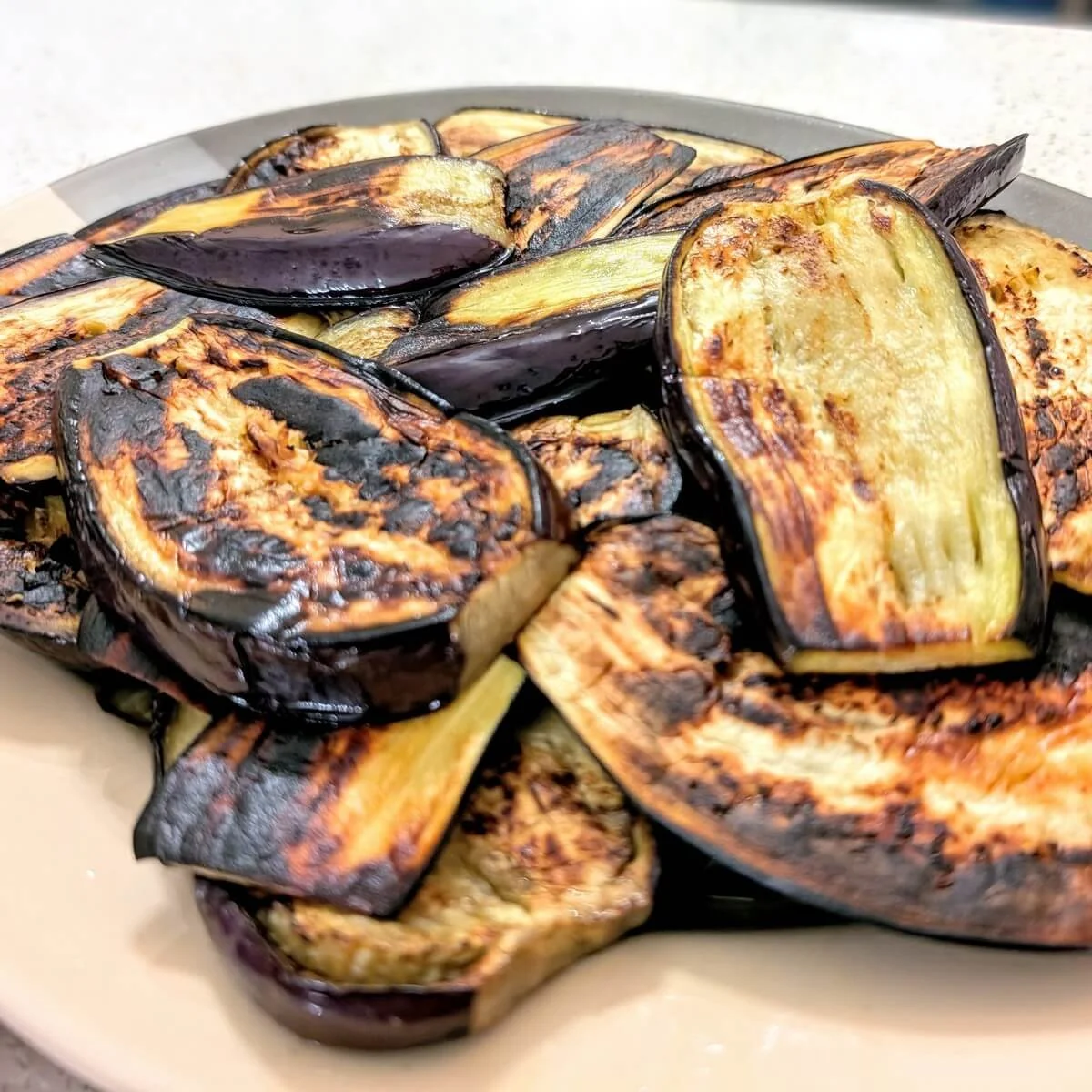
Transfer the browned eggplant to a plate and repeat with the remaining slices, adding more oil as needed for each batch.
Step 4: Reduce the liquid and brown the lamb
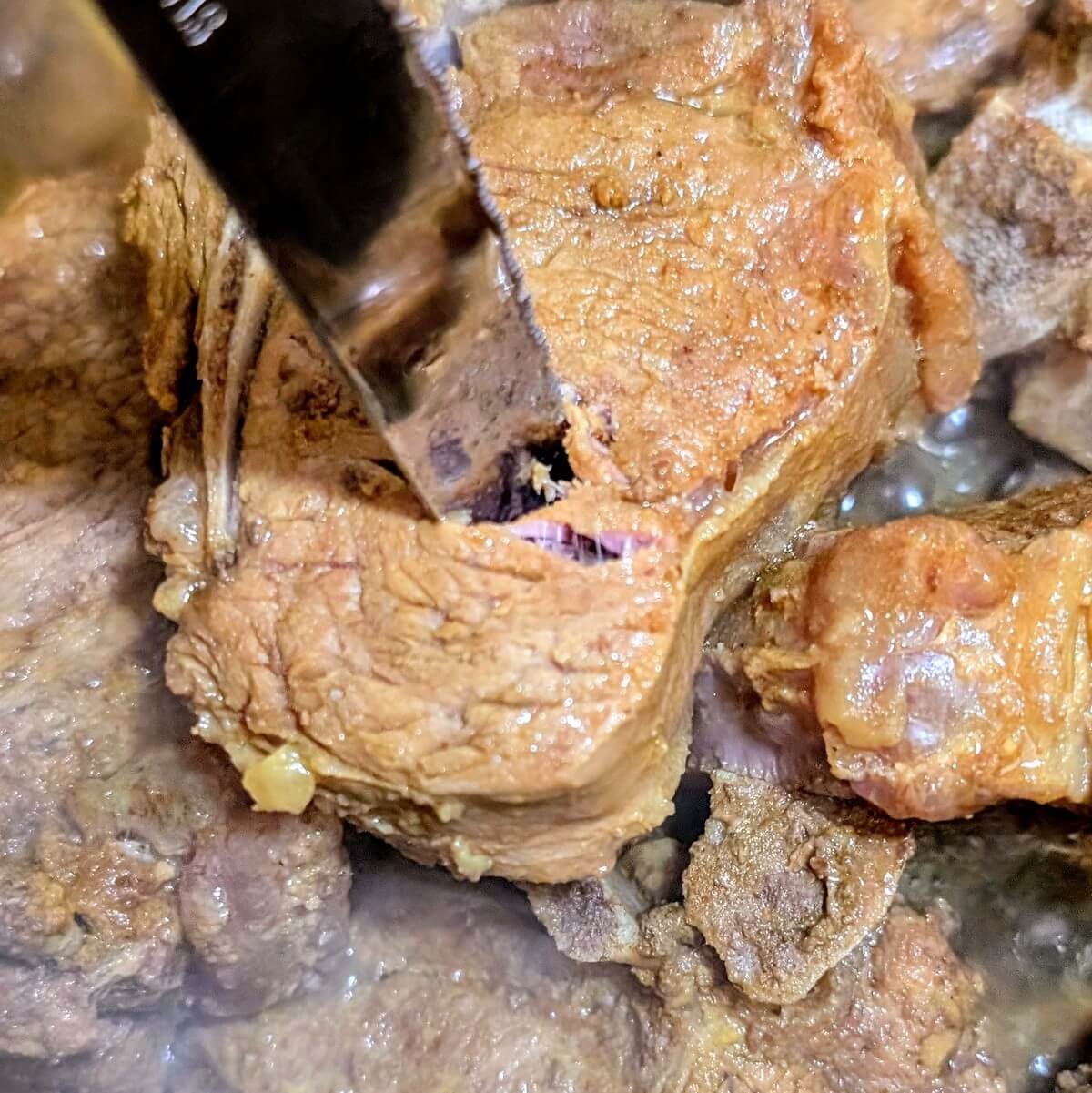
After about 1 hour, check if the lamb is tender. Insert a knife into a piece and twist. It should turn easily. If there’s still some resistance, let it cook a little longer, adding extra water if needed.
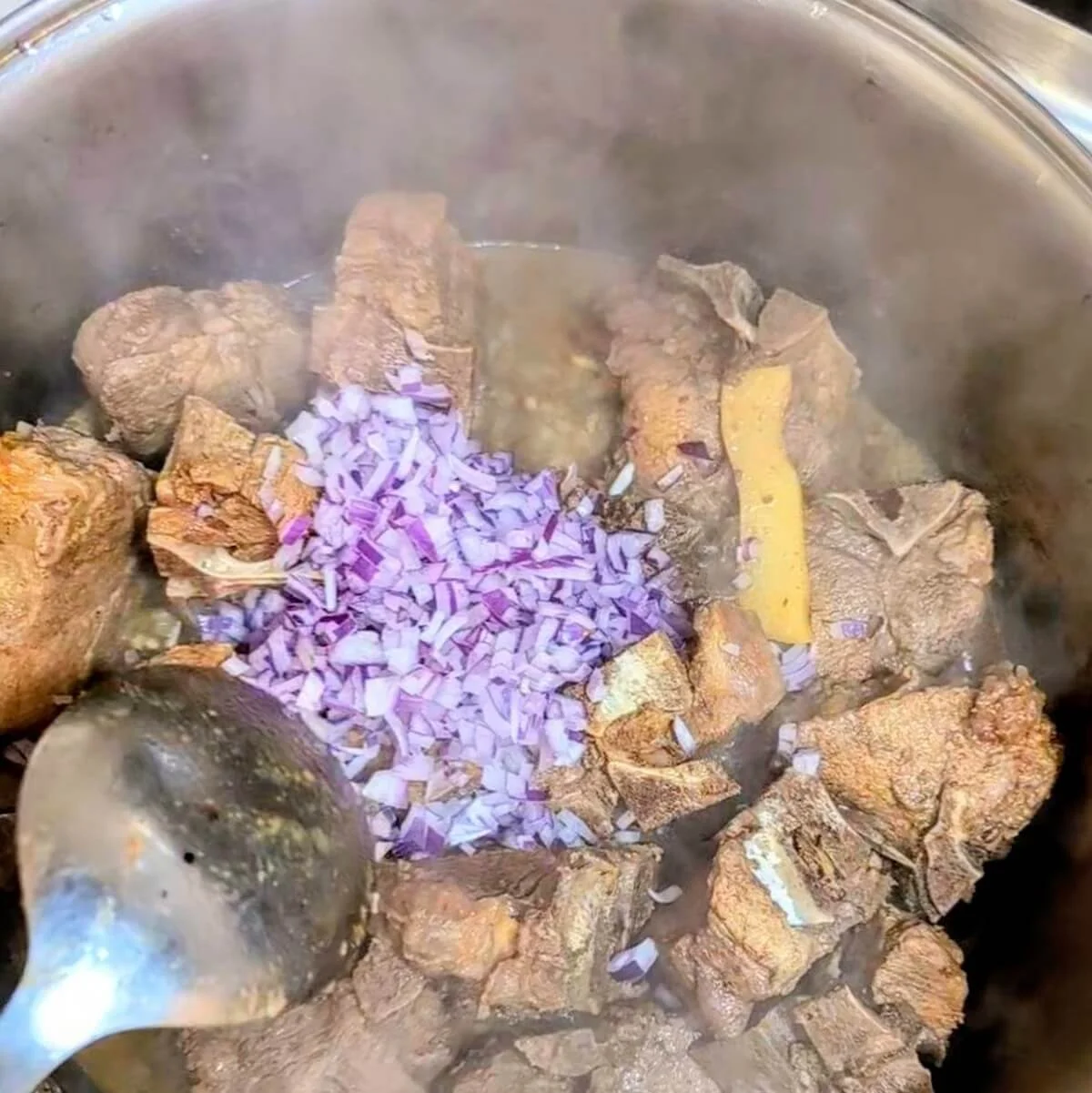
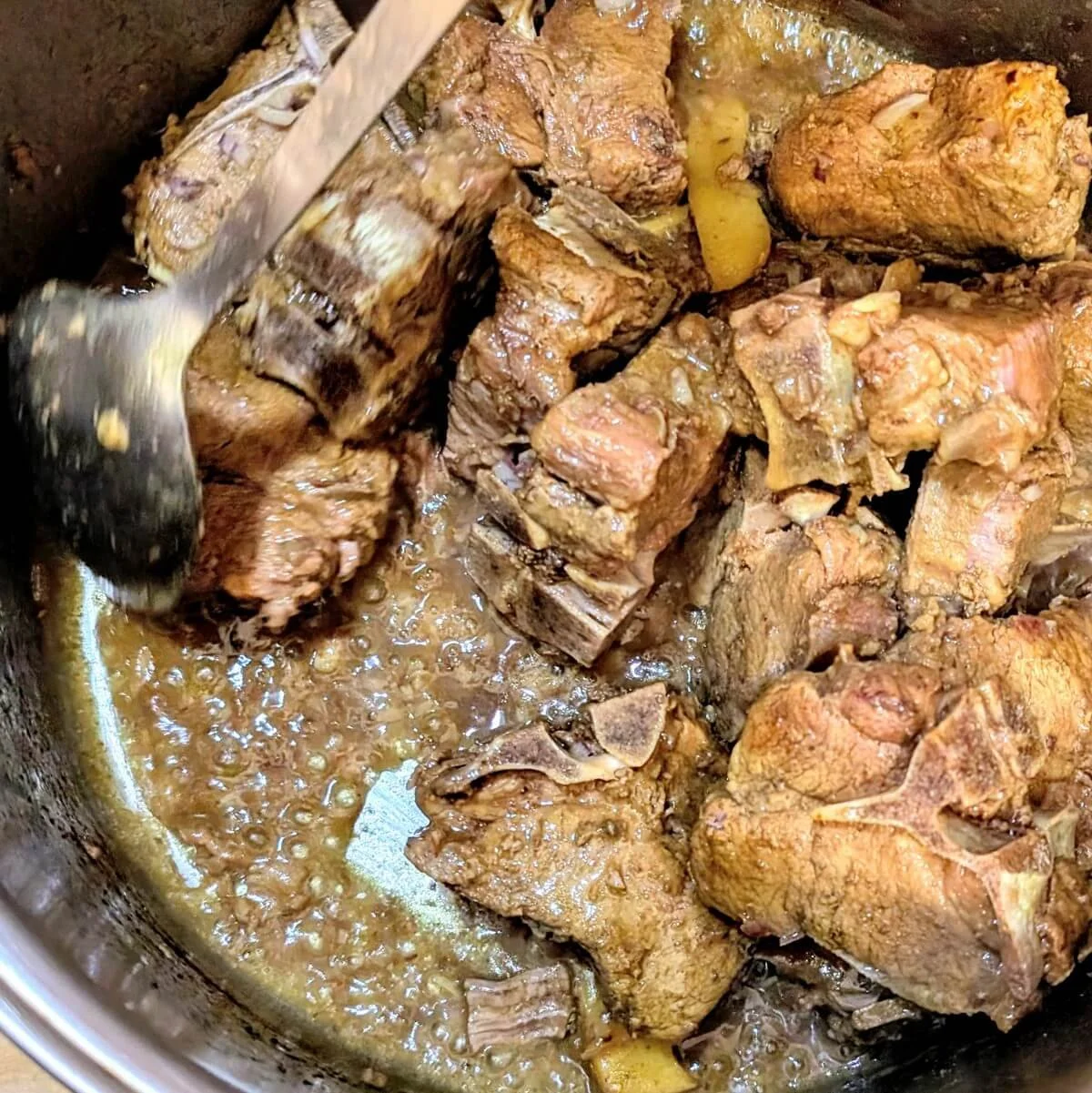
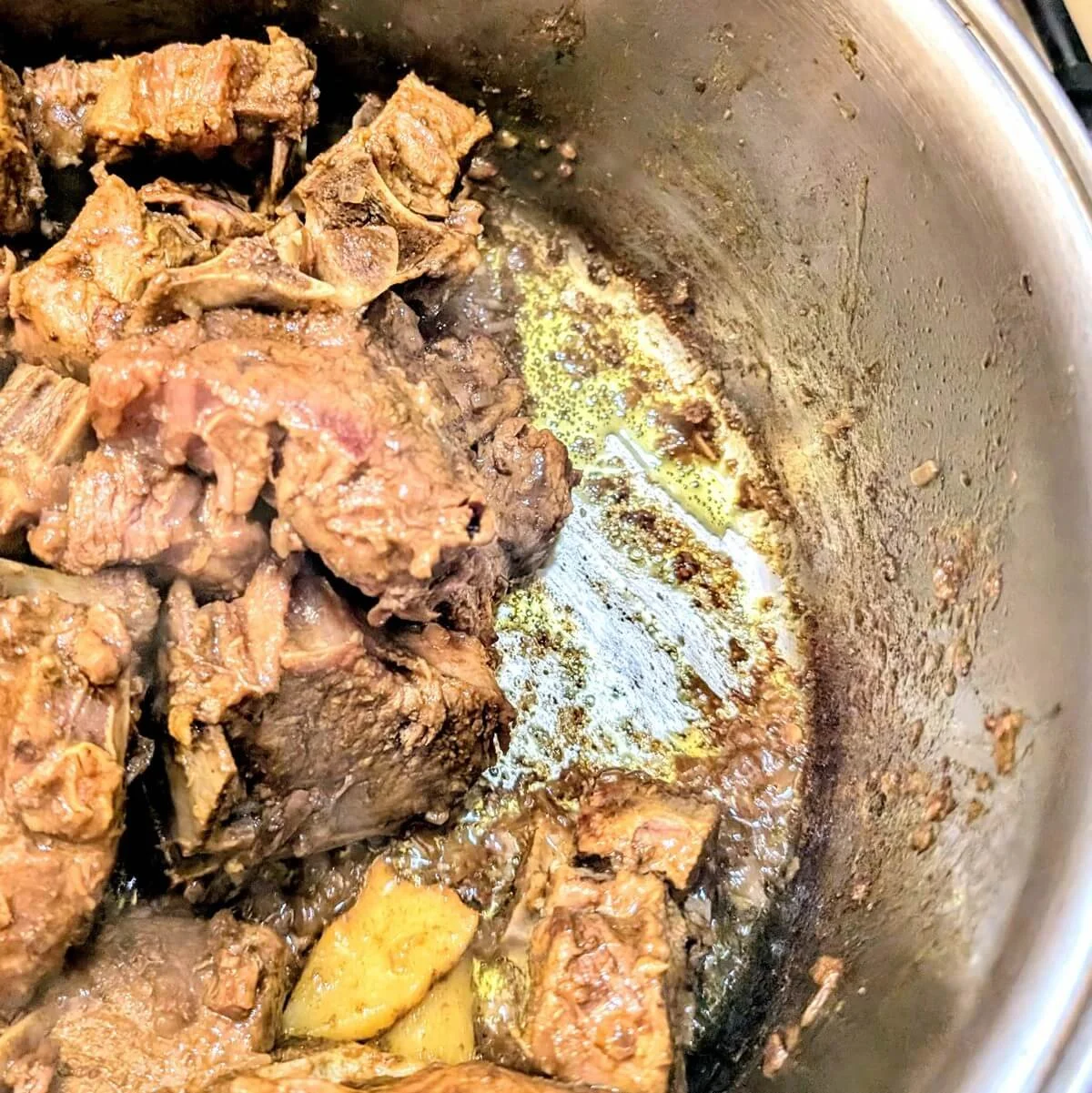
Once the lamb is tender, remove the lid and stir in the chopped onion. Let the remaining liquid cook down until it is fully reduced and the rendered fat is visible at the bottom of the pot. Stir only as needed to prevent sticking.
Let the lamb brown lightly in that residual fat, developing light caramelization on at least one side. You don’t need to brown every surface—just enough to build flavor.
Remove the ginger slices before building the sauce.
Step 5: Build the sauce and layer in the eggplant
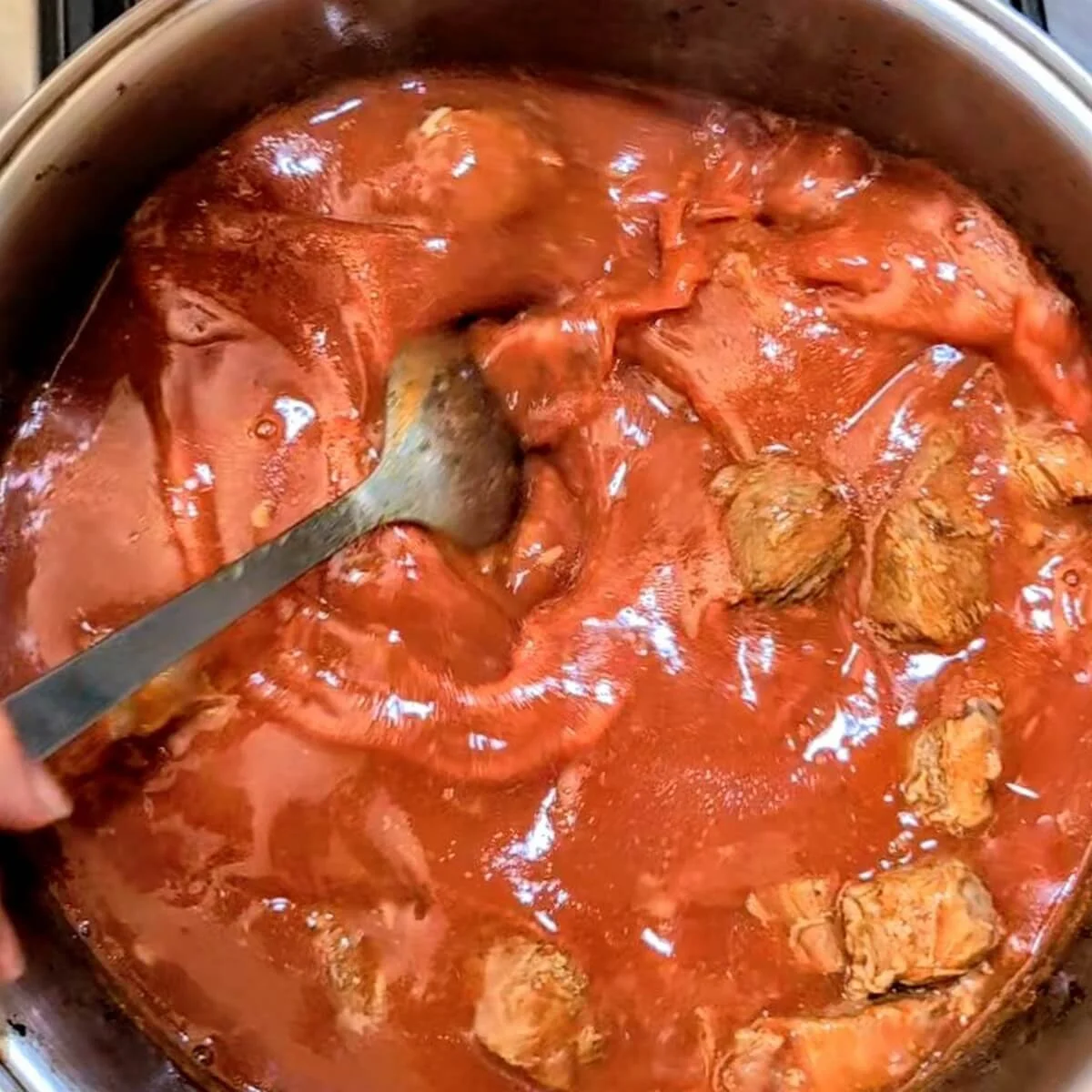
Add the 6 cups of water, crushed tomatoes, and tomato paste to the pot. Add a generous pinch of salt and the lemon juice, then stir gently to combine.
Cover and bring to a boil over high heat. Once boiling, remove the lid and reduce to a steady simmer. Let the sauce cook for about 10 minutes, until it thickens slightly.
Taste the sauce and adjust with more salt or lemon juice if needed. Once the eggplant goes in, you won’t be able to stir again, so make sure the seasoning is right at this stage.
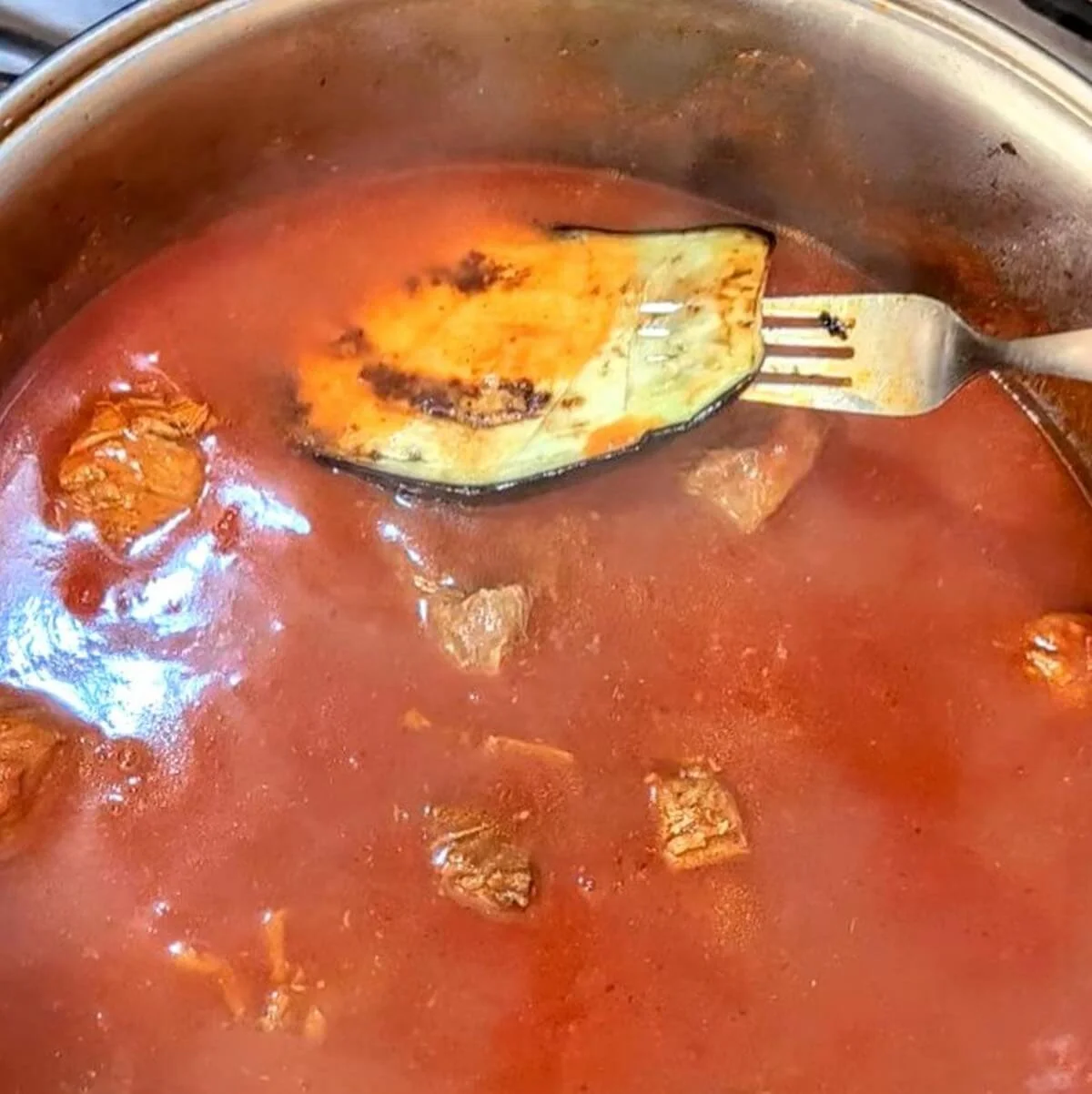
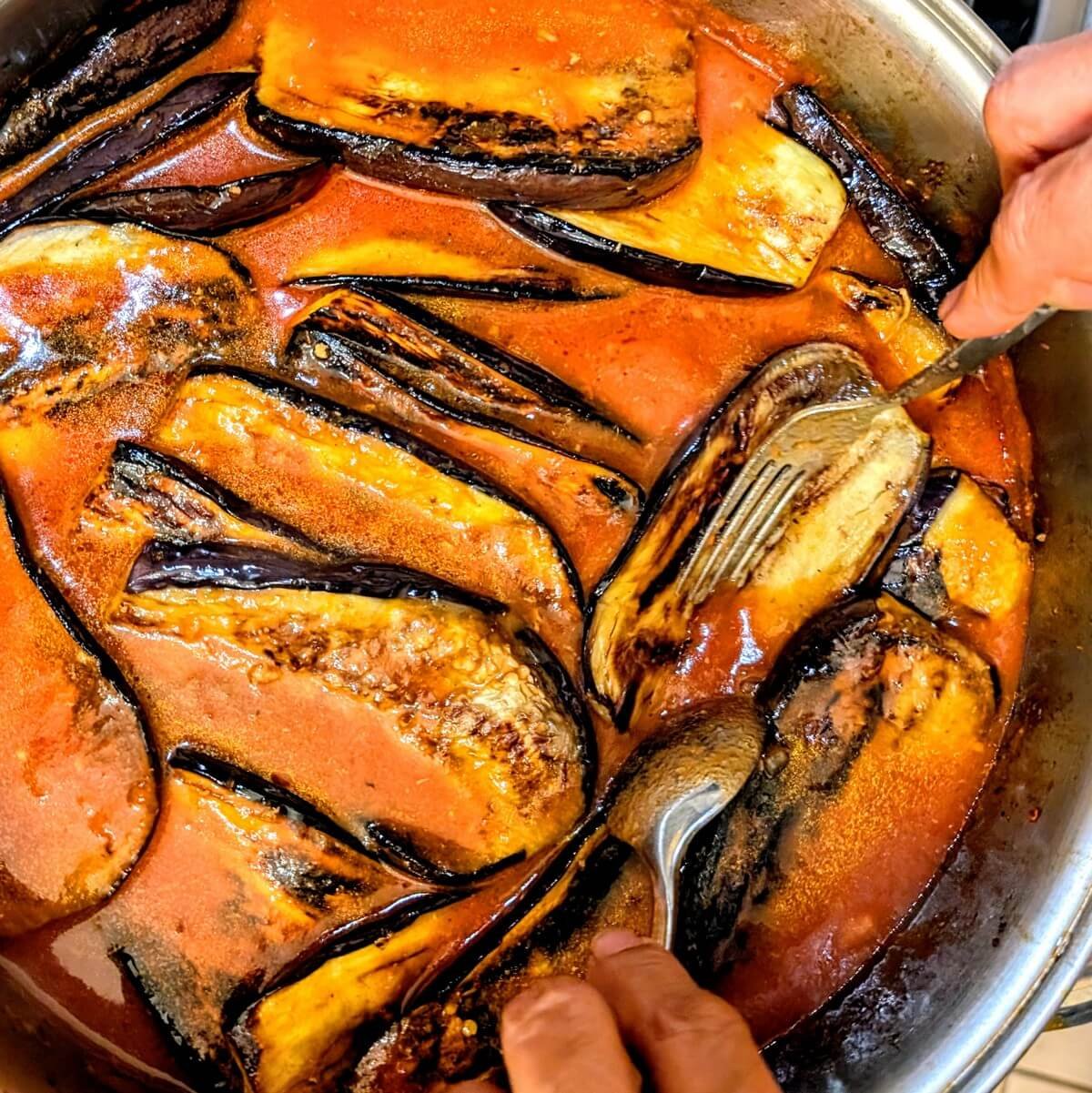
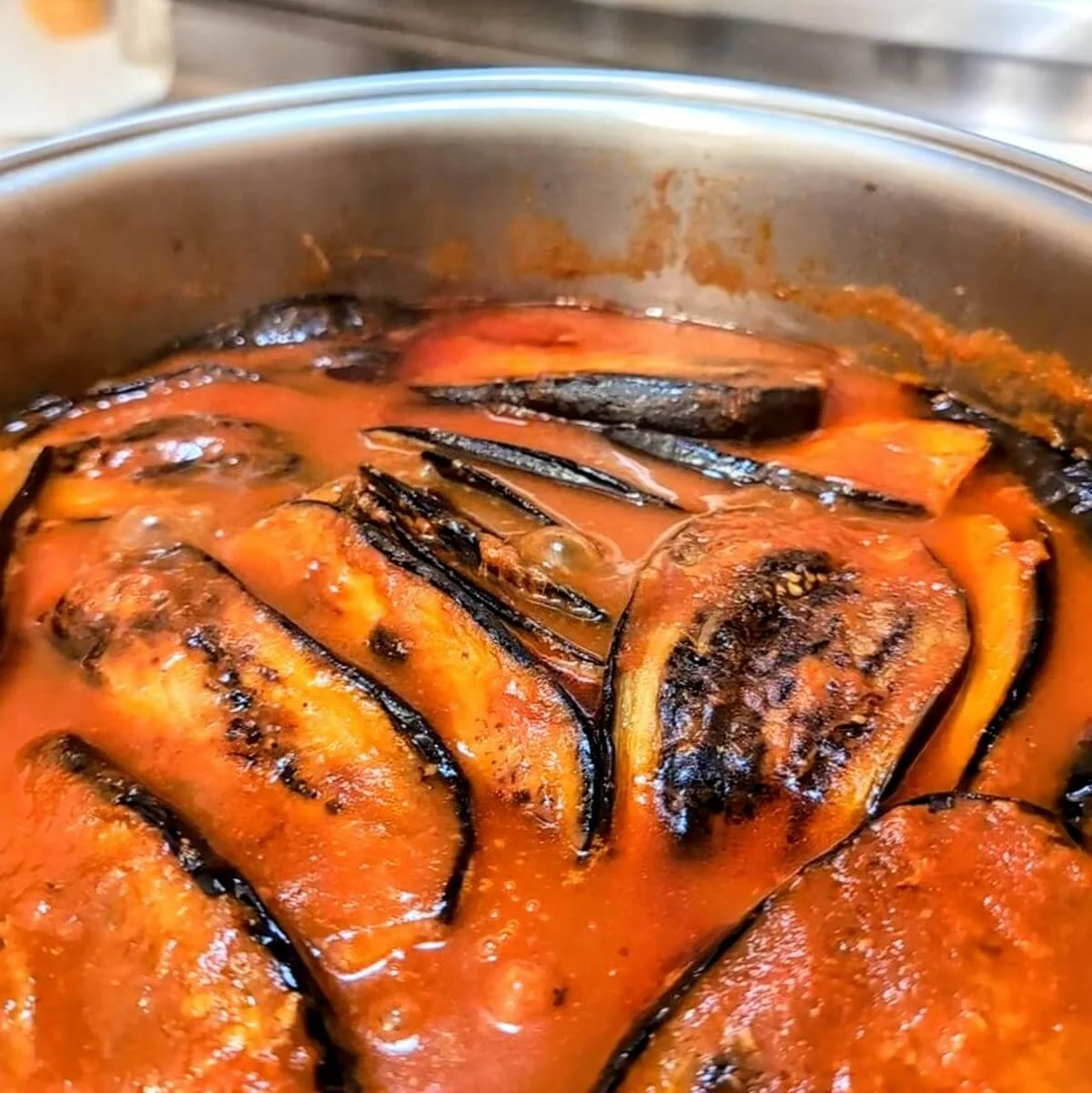
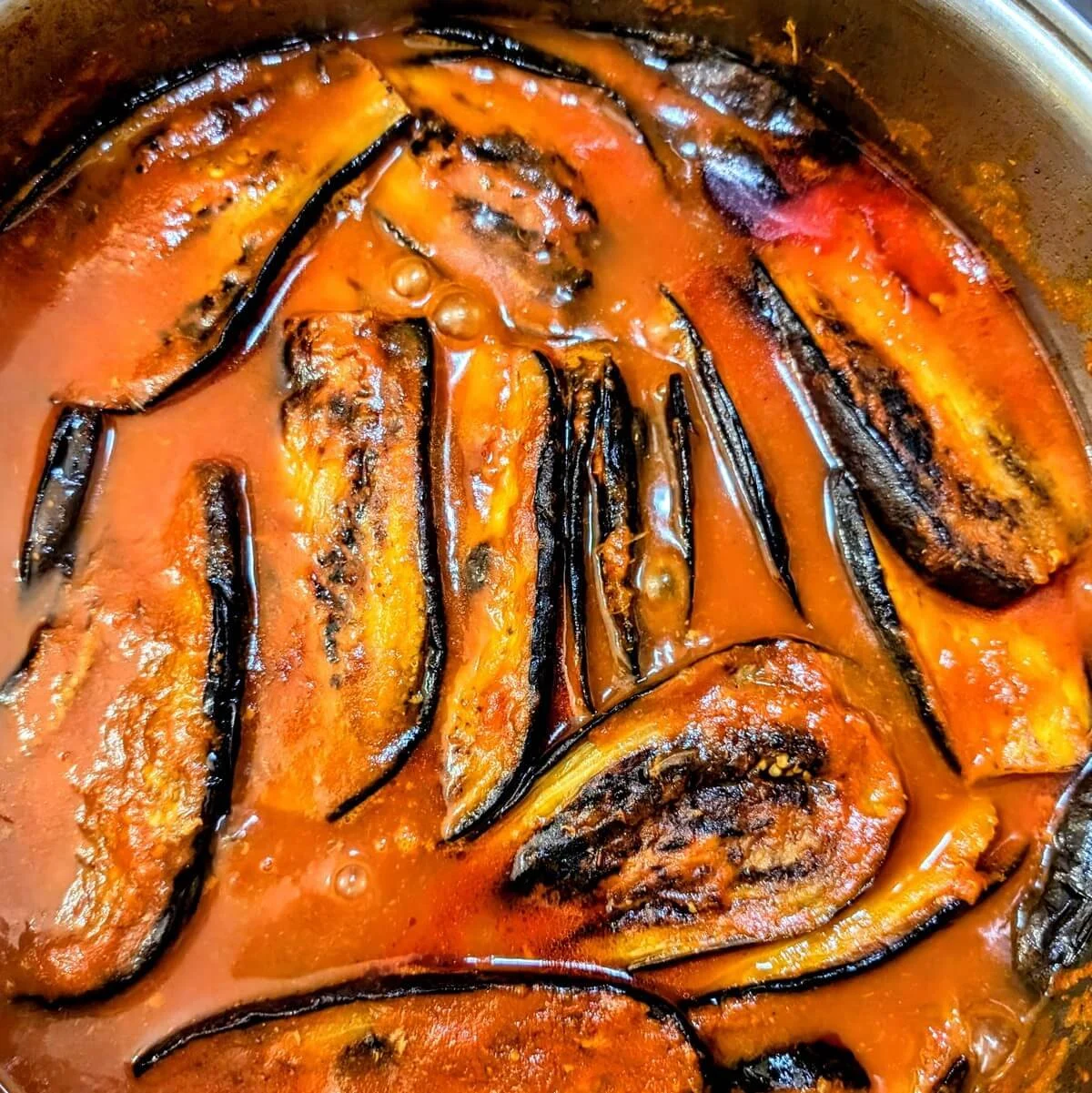
Begin layering the seared eggplant slices into the pot, placing them one at a time and overlapping as needed. Make sure each slice is dipped into the sauce so it’s well-coated. Pour in any eggplant juices left on the plate.
Once all the eggplant is in, bring the stew back to a gentle boil.
Step 6: Finish the stew and let it rest
Once the stew comes back to a gentle boil, reduce the heat to medium-low. Cover the pot, leaving the lid slightly ajar, and let it simmer for about 15 minutes so the eggplant can absorb the sauce.
After 15 minutes, turn off the heat and let the stew rest for at least a few minutes before serving. This short rest allows the flavors to meld.
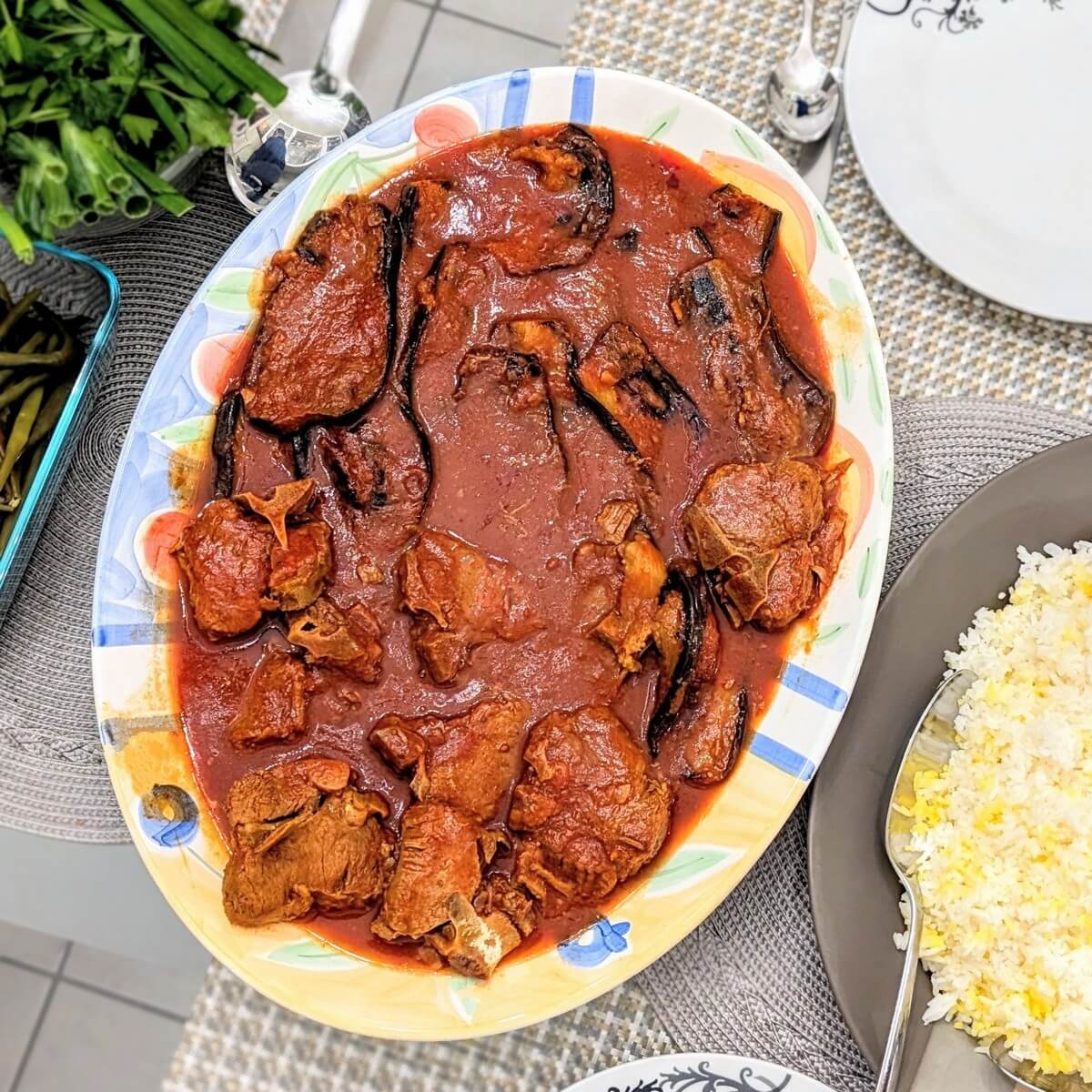
Serve with white basmati rice to soak up all that rich, saucy goodness.
How to Choose the Best Eggplant for This Iraqi Eggplant Stew
Look for firmness, especially near the stem. The eggplant should be smooth and glossy and feel firm and heavy for its size, with no soft or spongy spots. If it feels slightly hollow or squishy near the stem, or looks dull and wrinkled, it’s likely overripe and may turn mushy or taste bitter once cooked.
Choose small to medium Italian eggplants. They’re the closest in size and texture to the eggplants commonly used in Iraq. Larger ones tend to have thicker skin and more developed seeds, which can introduce bitterness and a coarser texture to the sauce.
Skip very long or thin varieties like Chinese eggplant. They’re more delicate and cook much faster, which can cause them to become too soft in a layered stew like this. This dish relies on slices that hold their shape after searing and simmering.
Why Brining Eggplant Matters
Brining seasons the eggplant from the inside out. As the slices soak, salted water moves into the eggplant’s sponge-like structure. This lightly seasons it all the way through and helps mellow any bitterness.
Water inside the eggplant helps it stay firm. When those airy pockets are filled, the eggplant holds its structure during cooking and becomes tender without turning mushy or falling apart in the stew.
Less oil gets absorbed during searing. The water inside the eggplant blocks oil from rushing in. A light squeeze removes just enough surface moisture so the eggplant can caramelize without turning into an oil sponge.

Shopping for small Italian eggplants with my mom before making our traditional Margat Baytinjan (eggplant stew)
Iraqi Eggplant Stew Substitutions
Meat: Beef chunks are a common substitution for lamb in this stew. Choose chuck or brisket for a richer result, or eye of round if you prefer a leaner cut. Cook it gently and give it enough time to become fully tender.
Eggplant: Large globe eggplants work in a pinch if small Italian ones aren’t available. Cut them into rounds if the eggplant is very long, and increase the brining time slightly to help reduce any bitterness.
Fresh ginger: You can omit the ginger for a more traditional flavor, though it helps balance the lamb’s natural richness.
How to Store and Reheat Iraqi Eggplant Stew
Fridge: Store cooled stew in an airtight container in the refrigerator for up to 5 days.
To Reheat: Reheat gently on the stovetop over medium-low heat until warmed through, adding a splash of water if the sauce has thickened. You can also microwave individual portions.
Make-ahead: This is the ultimate make-ahead meal because the flavors deepen overnight. To prevent the eggplant from falling apart, avoid transferring the stew and refrigerate it directly in the cooking pot instead. When you're ready to eat, simply reheat the pot gently for a delicious, convenient family dinner.
What to Serve with This Iraqi Eggplant Stew
Grains: White basmati rice is the traditional pairing, but grains like bulgur, couscous, or even wild rice also work well.
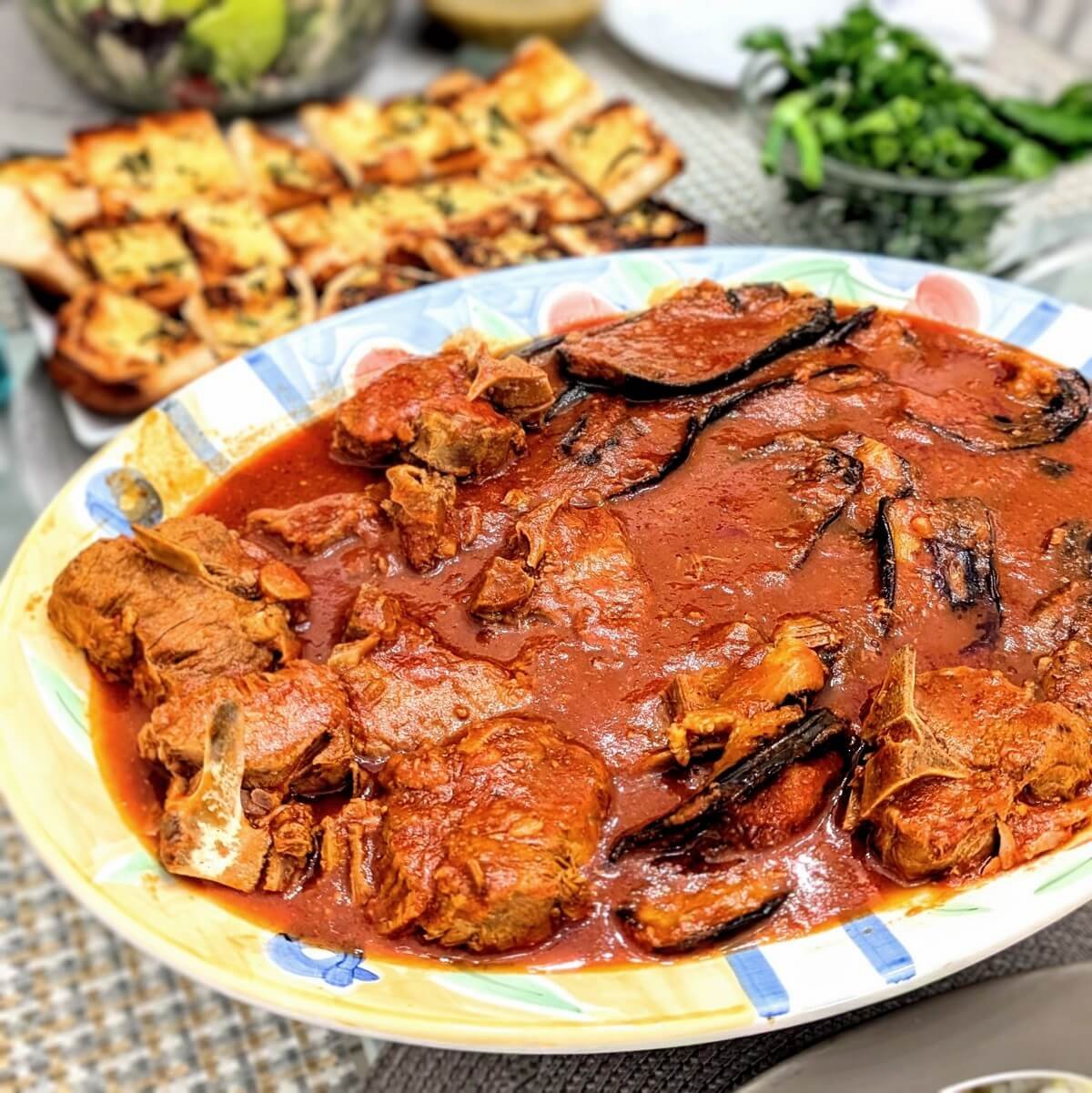
Bread: Any soft flatbread works for mopping up the sauce. We actually served ours with garlic bread, not traditional, but it paired beautifully with the rich tomato sauce.
Fresh herbs and onions: Traditionally, fresh herbs like parsley and mint, or raw green onions, are served on the side to add brightness and contrast. Take bites in between spoonfuls of stew and rice to cut through the richness.
Fresh salads: A classic Arabic chopped salad, simple green salad, or sliced tomatoes and cucumbers dressed with olive oil and lemon keep the meal fresh and balanced.
Plain yogurt: A spoonful of cool yogurt on the side adds creaminess and balances the lamb’s savory depth.
Iraqi Eggplant Stew FAQs
Do you have to fry eggplant before adding it to Iraqi eggplant stew?
Yes, you need to fry the eggplant before adding it to Iraqi eggplant stew for the best flavor and texture. The searing step creates browning, which adds depth and helps the slices hold their shape in the sauce.
How do you fry eggplant without it absorbing too much oil?
To fry eggplant without soaking up too much oil, brine it in salted water first to fill its sponge-like structure. Searing in a covered non-stick skillet then traps steam to soften the flesh evenly while the underside browns. This method uses significantly less oil without the risk of the eggplant drying out or sticking.
Why does eggplant stew sometimes taste bitter?
Eggplant stew can taste bitter if very mature eggplants are used, if too much skin is left on, or if the slices are burnt during searing.
Choosing smaller eggplants, peeling a strip of skin, and brining before cooking helps prevent bitterness and keeps the flavor balanced.
Can you use beef instead of lamb in Iraqi eggplant stew?
Yes, you can use beef instead of lamb in Iraqi eggplant stew. Choose a braising cut like chuck or brisket for a richer result, or eye of round if you prefer something leaner. Cook it gently and give it enough time to become fully tender.
Why add ginger when braising the lamb for this eggplant stew?
Adding ginger when braising the lamb helps balance the meat’s natural richness so it doesn’t overwhelm the stew. It doesn’t make the dish taste like ginger, but it subtly rounds out the sauce.
While not always traditional, it’s a small addition I learned from my mom to create a cleaner, more balanced flavor. She even uses it when braising beef for other Iraqi stews.
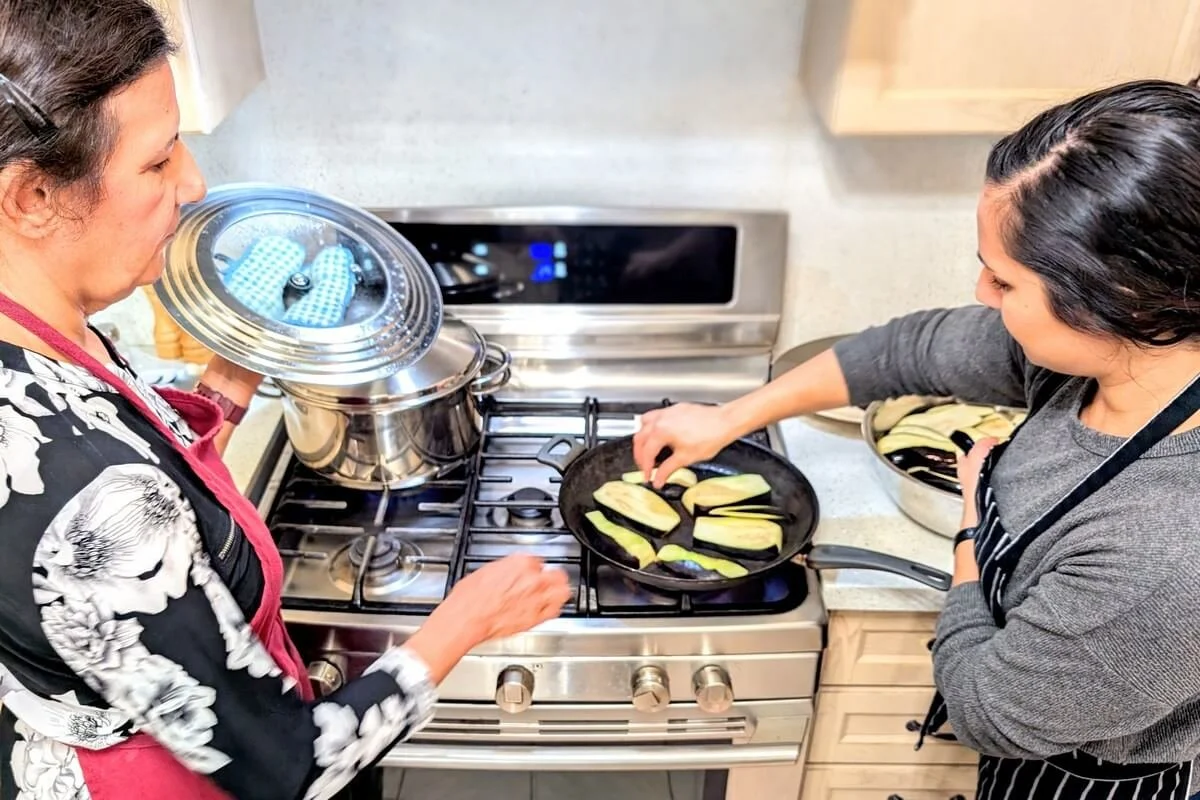
Learning the eggplant technique from the best teacher—my mom—guiding me through searing for Margat Baytinjan.
My Favorite Marga
Whenever I go back home, this is the stew I always ask my mom to make. It’s the marga I grew up eating, and she still makes it exactly this way. The flavor is so familiar I can almost taste it just by looking at these photos.
Long before I trained in professional kitchens, I was learning techniques through dishes like this. Later, after studying classical French cooking, I realized the foundation was the same: build flavor in stages, add aromatics at the right moment, balance salt and acidity, and let the stew rest so everything comes together.
If you take your time with it, this Iraqi eggplant stew will reward you. Whether these flavors are familiar or completely new, it’s the kind of dish that makes you slow down and go back for another spoonful.
Pin This Iraqi Eggplant Stew Recipe for Later!
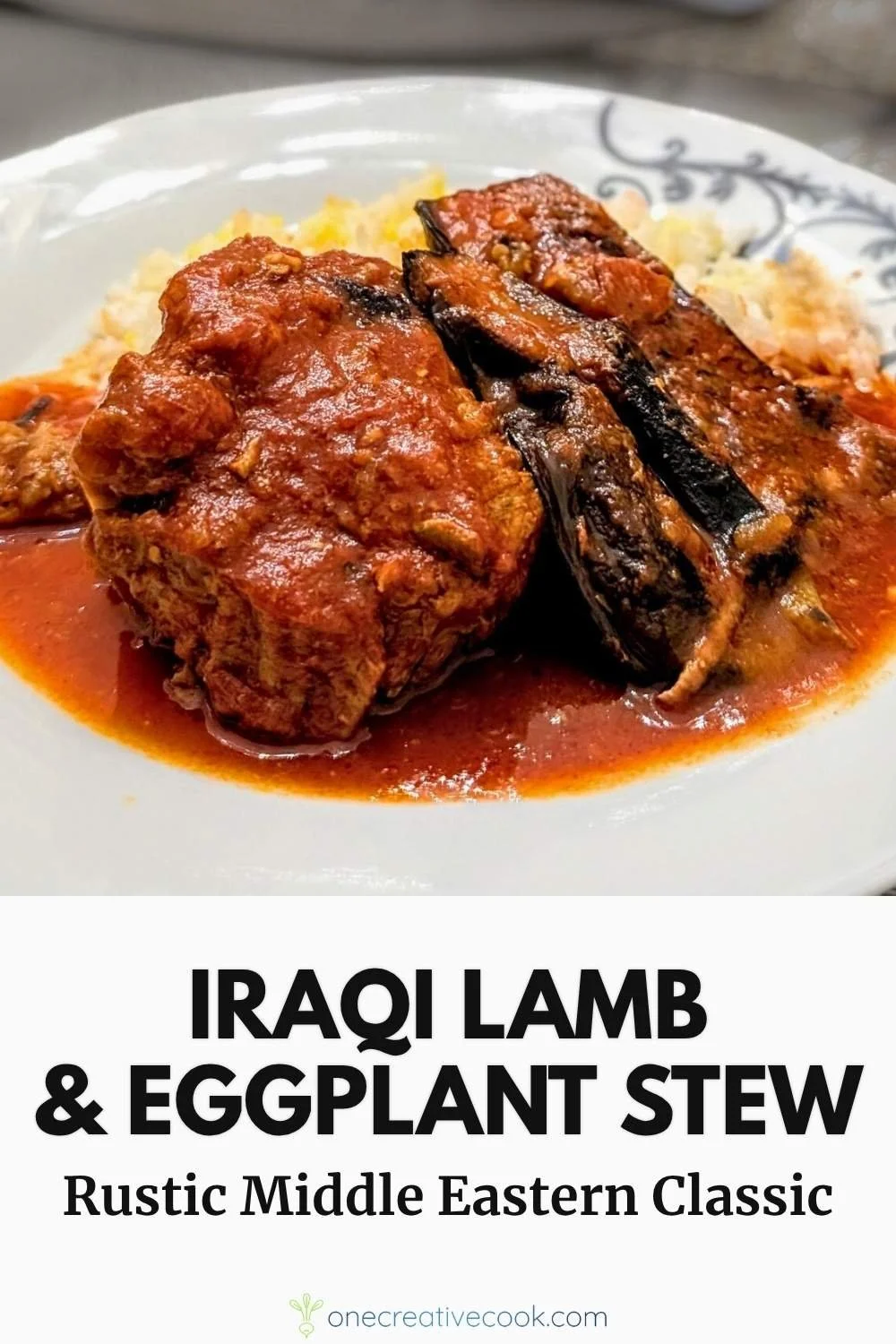
Iraqi Lamb and Eggplant Stew Recipe
An authentic Iraqi eggplant stew with fall-apart tender lamb, deeply browned eggplant, and rich tomato sauce.
Makes: 8 servings
Prep: 30 min Cook: 2 hours
Dietary Notes: Gluten-free, Dairy-free, Egg-free, Low-carb, High-protein
Iraqi Lamb and Eggplant Stew Ingredients
16 lamb t-bone chops (about 2 kilograms total)
water, enough to cover lamb halfway for braising
1 inch fresh ginger, sliced into 4–5 thick pieces
8 small Italian eggplants
3 tablespoons salt, for brining eggplant
1 teaspoon turmeric
½ teaspoon mild curry powder
1 medium onion, finely chopped
2½ cups canned crushed tomatoes
5 tablespoons tomato paste
6 cups water, for building the sauce
½ cup lemon juice, plus more to taste
olive oil, as needed for searing
salt, to taste
Quick Instructions for This Iraqi Eggplant Stew
Prep and brine the eggplant. Remove the tops and peel one vertical strip of skin from each eggplant, leaving a striped pattern. Cut lengthwise into thick 1-centimeter slices. Rinse under cold water, then cover with fresh water and 3 tablespoons salt so the water tastes noticeably salty. Press the slices down and keep submerged with a plate. Soak while you begin the lamb.
Braise the lamb. Pat the lamb dry and place in a heavy pot, layering if needed. Add enough water to cover halfway and the sliced ginger. Bring to a boil, skim the foam, then add turmeric and mild curry powder. Cover slightly ajar and simmer about 1 hour, until tender, adding more water if needed to prevent drying out.
Sear the eggplant. Remove slices from the brine and gently squeeze to remove surface moisture. Place a non-stick skillet over medium-high heat with about 1 tablespoon olive oil per batch. Add eggplant in a single layer, cover, and sear about 4 minutes per side until deeply browned. Transfer to a plate and repeat.
Reduce and brown the lamb. Check tenderness by twisting a knife into a piece; it should turn easily. Add chopped onion and cook until all liquid evaporates and the rendered fat is visible at the bottom. Lightly brown lamb in the residual fat. Remove all ginger slices before proceeding.
Build the sauce and layer the eggplant. Add 6 cups water, crushed tomatoes, tomato paste, salt, and lemon juice. Bring to a boil, then simmer about 10 minutes until slightly thickened. Adjust seasoning with salt and lemon juice to taste. Layer in eggplant, dipping each piece into the sauce. Do not stir once layered. Add any juices from the plate and return to a gentle boil.
Finish and rest. Reduce to medium-low, cover slightly ajar, and simmer 15 minutes so the eggplant absorbs the sauce. Turn off heat and let rest for 5–10 minutes before serving with white basmati rice.
Top Tips for the Best Iraqi Eggplant Stew
Storage: This stew keeps well in the fridge for up to 5 days and tastes even better the next day as the flavors deepen.
Choose firm eggplant: Small to medium Italian eggplants that feel heavy and firm near the stem will hold their shape better in the stew. Plus, they have thinner skin and fewer seeds for a smoother, less bitter result.
Why brining matters: Salted water seasons the eggplant from within, keeps it firm, and reduces how much oil it absorbs during searing.
Count your ginger: Keep track of how many slices you add at the start so you can easily remove them all before building the sauce.
Did you try this Iraqi eggplant stew with lamb?
I’d love to hear how it turned out. Leave a comment below or tag me on Instagram @onecreativecook if you share your version!
More Authentic Iraqi Recipes You’ll Love
Iraqi chicken soup: A deeply comforting, minimal-prep soup built on simple ingredients and layered flavor.
Arabic chopped salad: Fresh, bright, and lemony, this classic side balances rich stews perfectly.
Iraqi grilled fish: Basket-grilled cod topped with onions, tomatoes, and tangy tamarind sauce.
Jajik (yogurt and cucumber sauce): Cool, creamy, and refreshing, this Iraqi yogurt sauce with cucumber and mint pairs perfectly with grilled meats and rice.
Tabbouleh salad: My mom’s herb-forward version of this classic, packed with parsley, lemon, and just a touch of bulgur.
👉 Looking for more dishes like this? Check out all the Middle Eastern recipes I cook on repeat—the same authentic dishes I grew up with and still make all the time.







These chef-tested gingerbread cookies are warmly spiced, chewy in the middle, and crisp around the edges, with homemade royal icing for holiday decorating.