

Rustic Turkey Cacciatore
This authentic turkey cacciatore simmers in a rich Italian tomato sauce with red wine, olives, peppers, and herbs until the turkey is fall-apart tender.
or read on for step-by-step instructions with photos
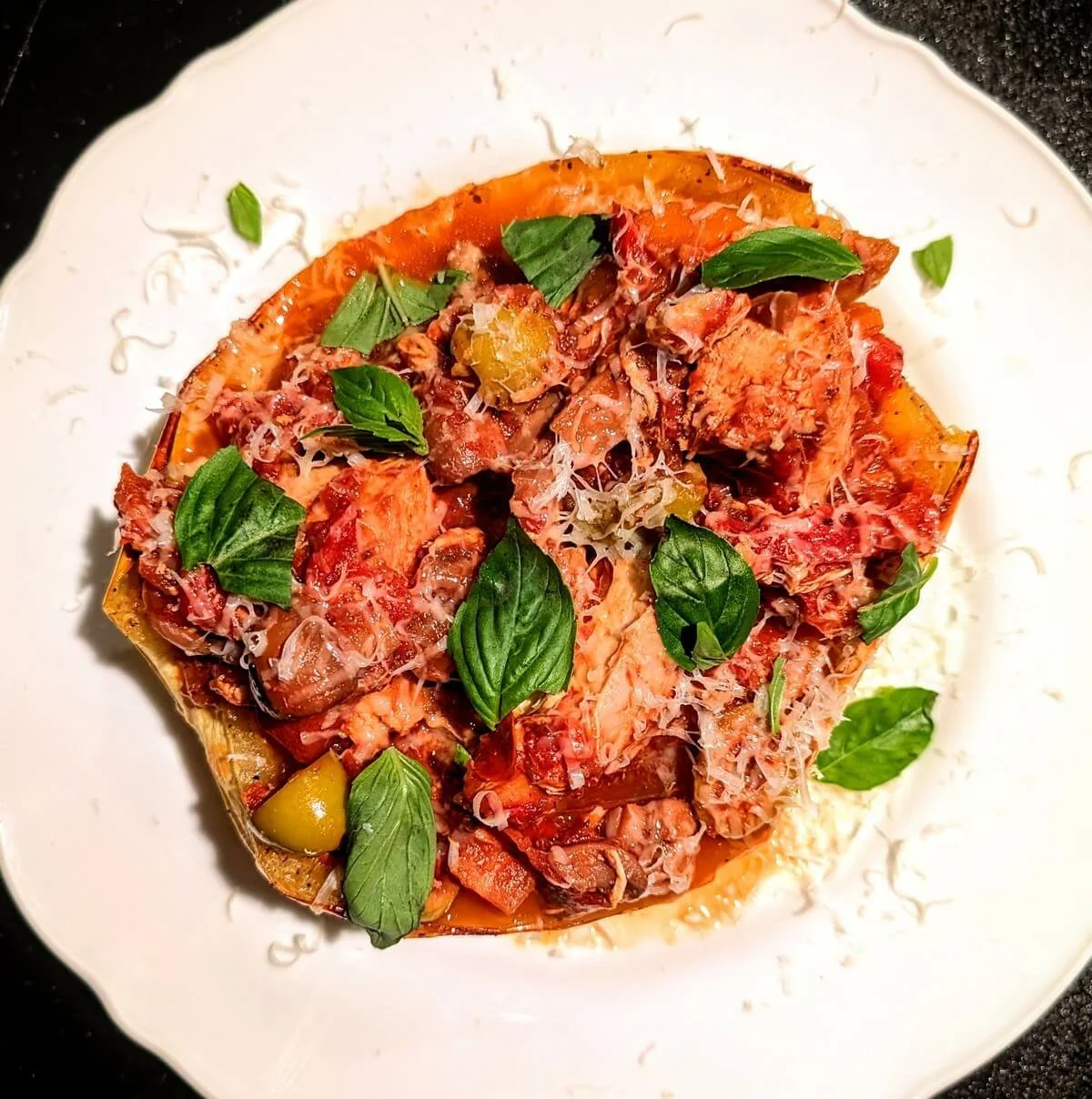
A Twist on Classic Chicken Cacciatore
This turkey cacciatore is rooted in rustic Italian tradition. Inspired by the alla cacciatora braises I’ve made in restaurant kitchens, this version trades the usual chicken or rabbit for lean turkey breast. It’s not just a healthier twist—turkey brings a deeper, richer flavor that shines when braised until fall-apart tender.
Once everything’s layered in the pot, the rest is low maintenance. Like any good braise, the magic comes from building deep flavor: searing the meat, sautéing the soffritto, deglazing with wine, and simmering it all low and slow with tomatoes, olives, and herbs. The result is a deeply comforting sauce you just can’t shortcut—and the best part is, you can step away while the pot does the work.
Why You’ll Love This Turkey Cacciatore Recipe
Hearty and Healthy: This version uses lean turkey breast for a twist on classic chicken cacciatore, without sacrificing comfort or richness.
Deep, layered flavor: A soffritto made with onions, carrots, peppers, and garlic provides the flavorful base, while red wine, olives, and herbs add complexity to the tomato sauce.
Make-ahead friendly: Like most braised dishes, this cacciatore tastes even better the next day and freezes beautifully—perfect for meal prep or busy holiday gatherings.
Next, I’ll walk you through this authentic turkey cacciatore recipe step-by-step—so you can fill your kitchen with those mouthwatering Italian aromas.
Let’s get braising!
What You’ll Need to Make Turkey Cacciatore
Turkey Cacciatore Ingredients
4 pounds boneless skinless turkey breast, cut into 2-inch pieces
2 yellow onions, diced
8 cloves garlic, minced
2 red bell peppers, diced
2 medium carrots, diced
1 pound white button mushrooms, quartered
2 tablespoons tomato paste
2 tablespoons dried oregano
4 bay leaves
2 cups dry red wine
2 (28-ounce) cans whole plum tomatoes, crushed by hand
1 bunch rosemary
1 bunch thyme
2 cups stuffed green olives, halved
salt & pepper, to taste
olive oil, for searing turkey
Equipment for Cooking Turkey Cacciatore
Large heavy-bottomed pot with lid or Dutch oven
Knife and cutting board
Wooden spoon or spatula
Tongs (for searing turkey)
Butcher’s twine, for tying the rosemary and thyme into a bundle
Makes: 6 servings
Prep: 15 min Cook: 2 hours
How to Make Turkey Cacciatore
Step-by-Step with Photos
Step 1: Prepare the turkey and chop the vegetables
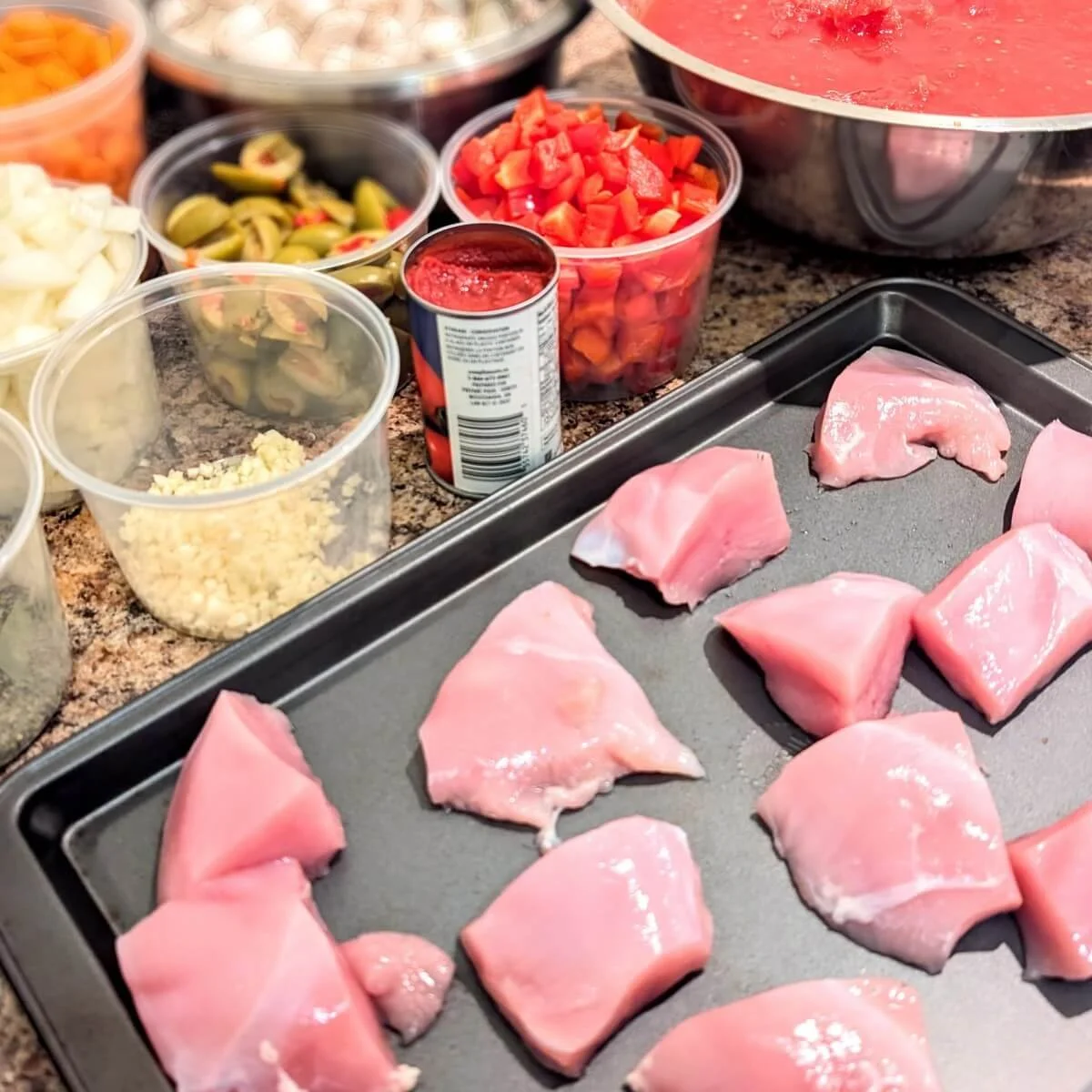
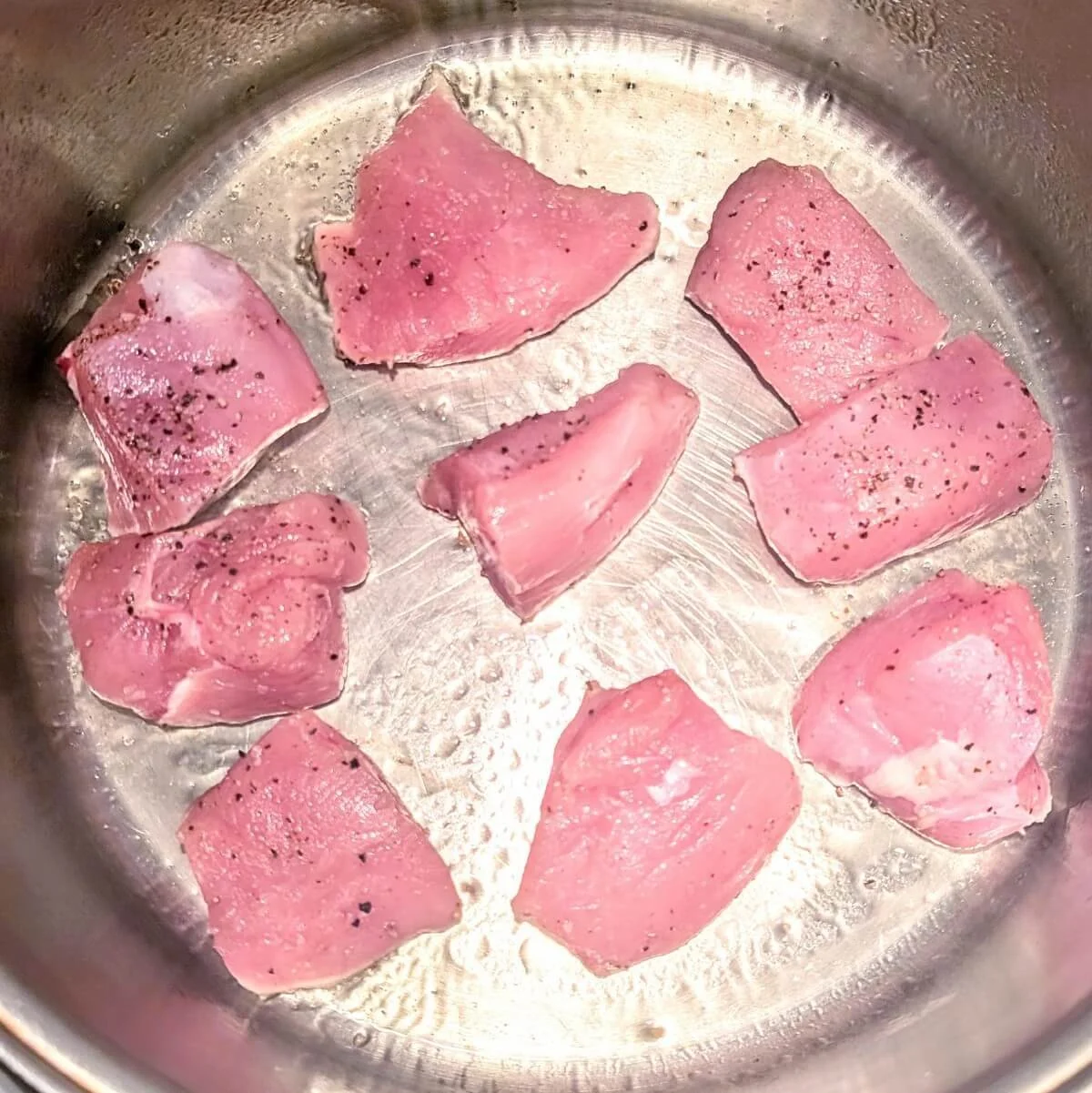
Pat the turkey breast dry and cut into roughly 2-inch chunks.
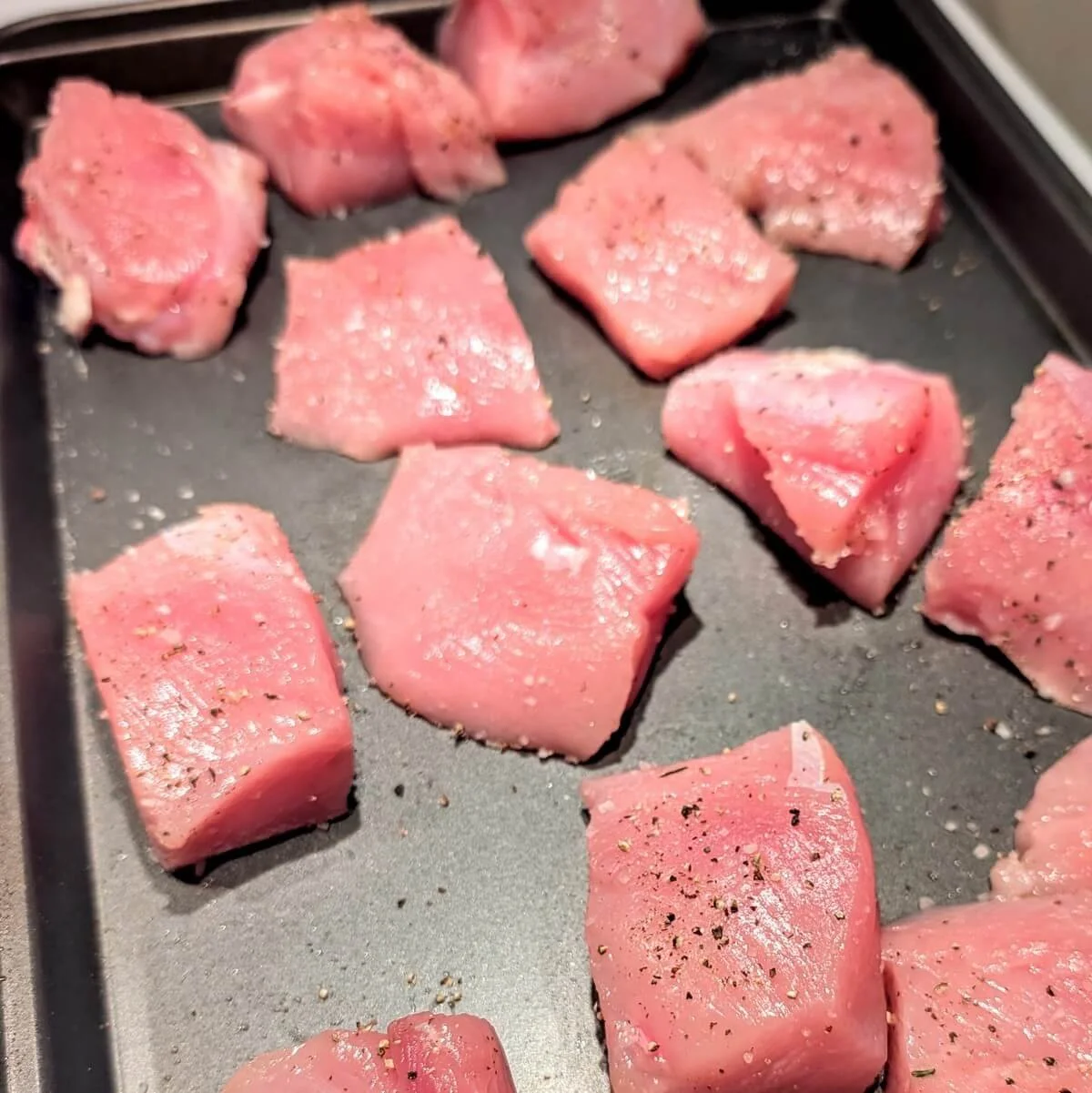
Season all over with salt and pepper and set aside.
Dice the onions, red peppers, and carrots, mince the garlic, and quarter the mushrooms so everything’s ready to go when it’s time to build the cacciatore base.
Step 2: Sear the turkey breast in batches
Place a heavy-bottomed pot over medium-high heat and add enough olive oil to coat the bottom.
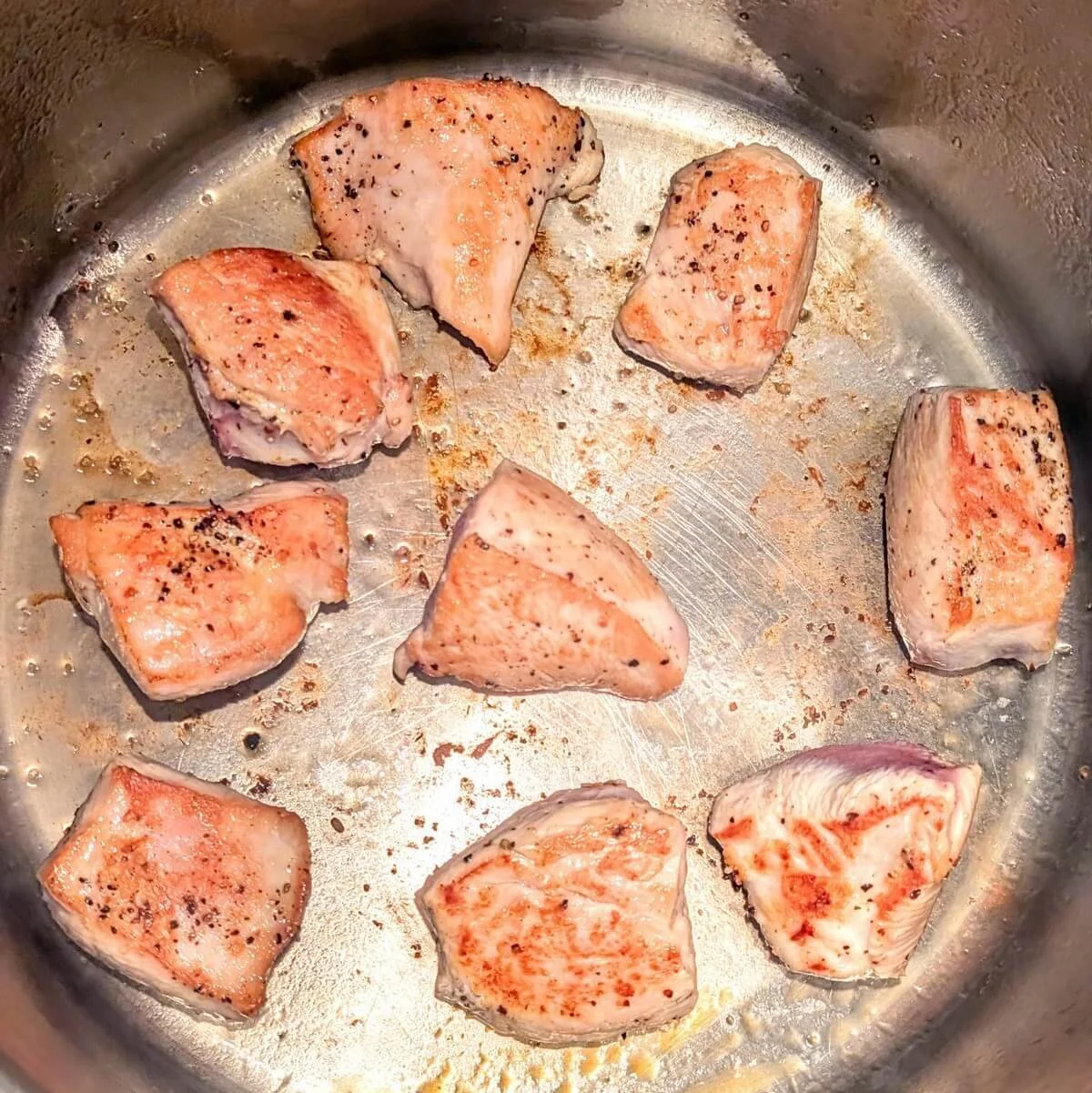
Working in batches to avoid crowding, sear the turkey pieces until golden-brown on all sides, about 2–3 minutes per side.
Transfer the seared turkey to a plate and set aside—don't worry about cooking it through yet, it will finish braising in the cacciatore sauce later.
Step 3: Build the soffritto for the cacciatore base
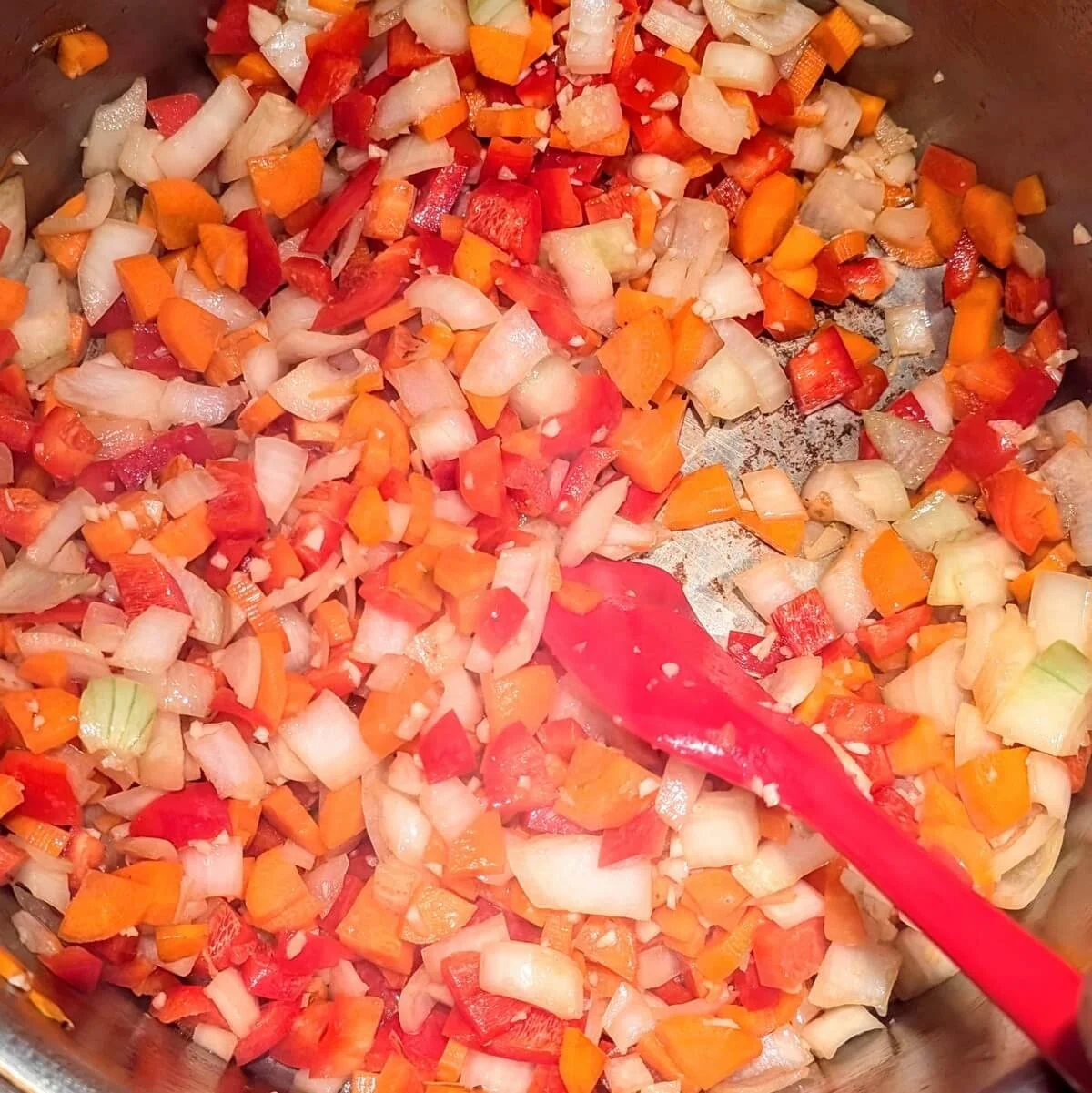
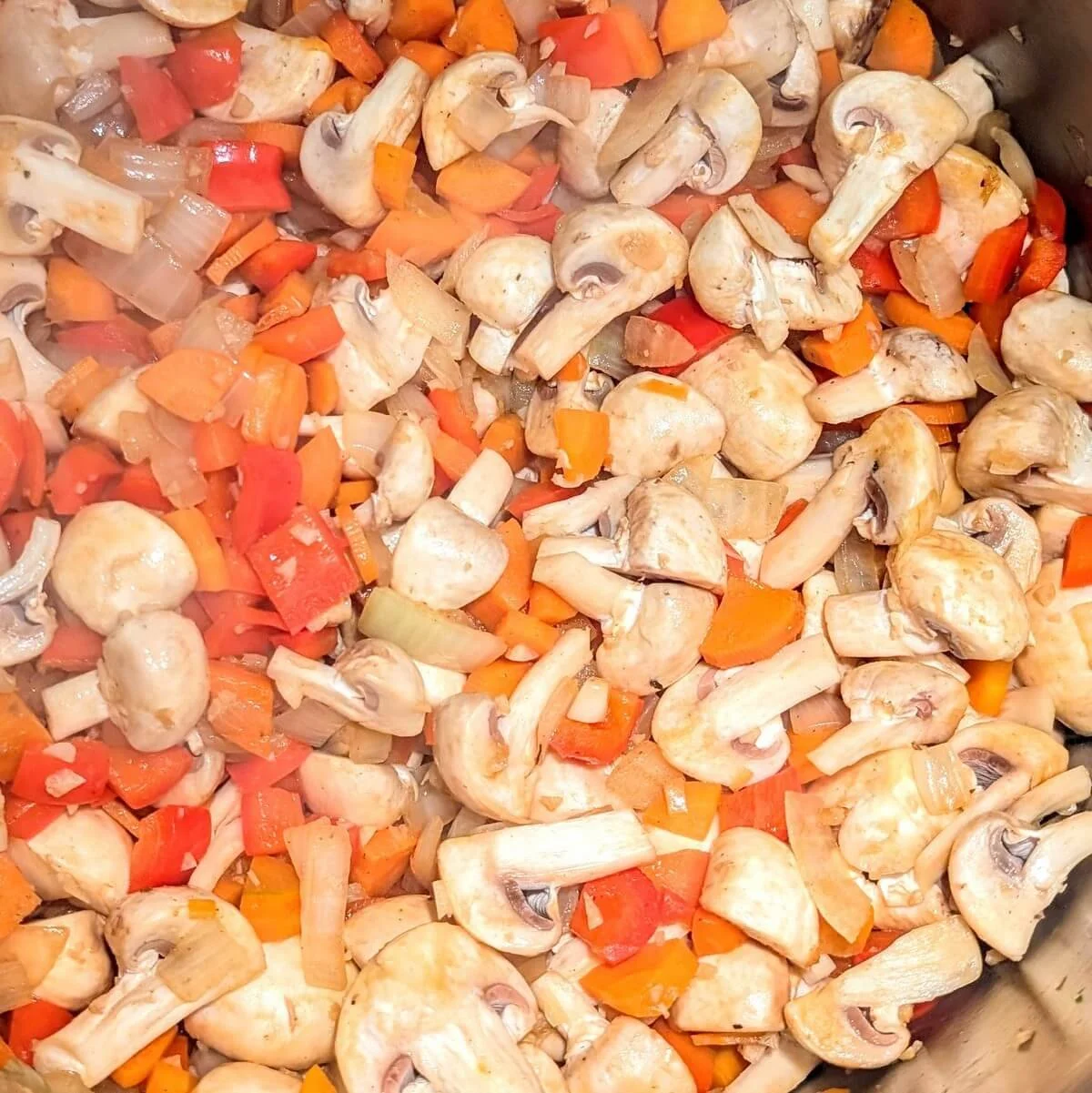
Add the soffritto vegetables (diced onions, carrots, red peppers, and garlic) to the pot.
Sauté for 5–7 minutes, stirring often, until softened, scraping up the fond (browned bits) from the bottom of the pot.
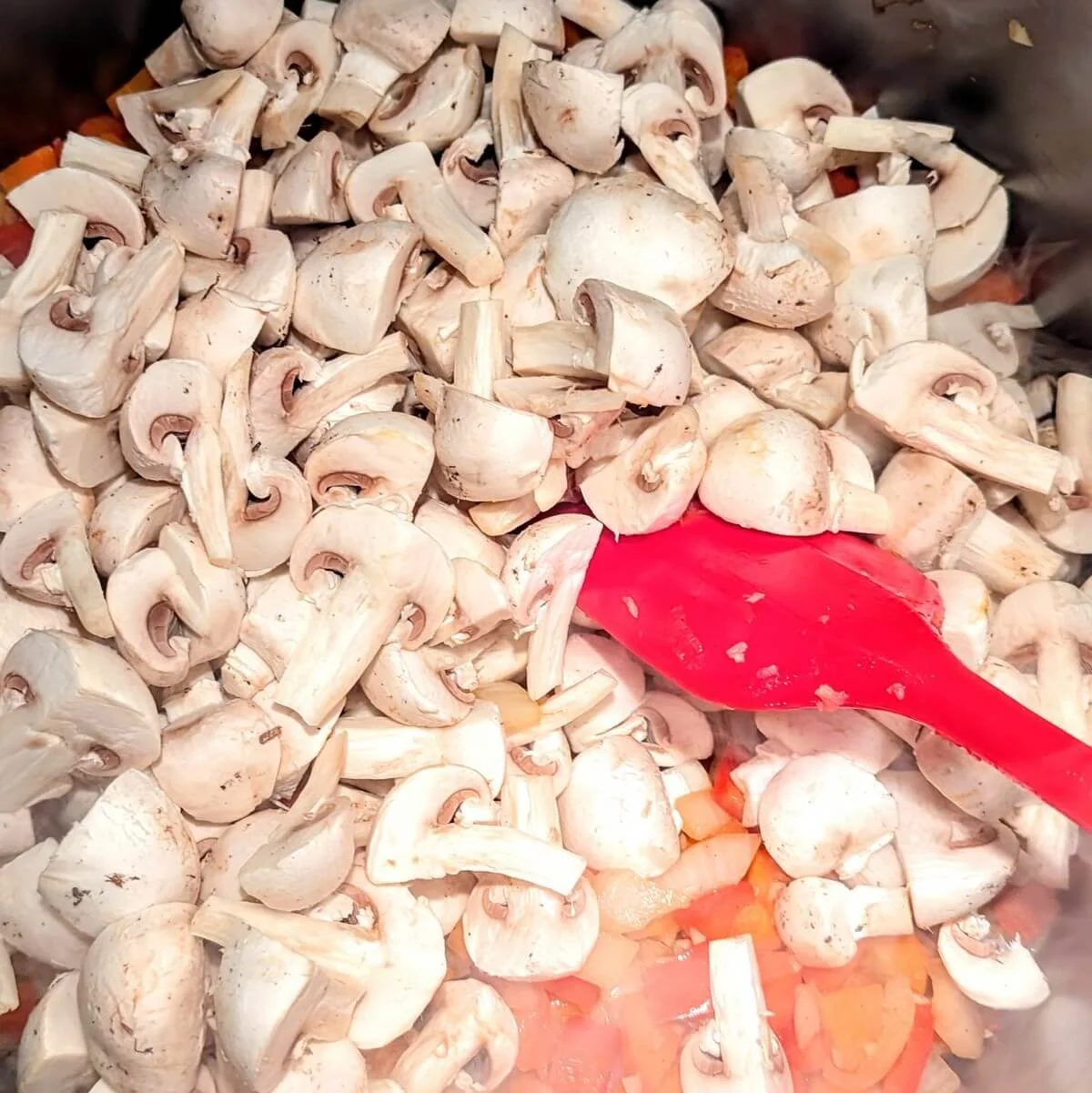
Add the mushrooms and cook for another 5 minutes, until they've released their moisture and reduced in size.
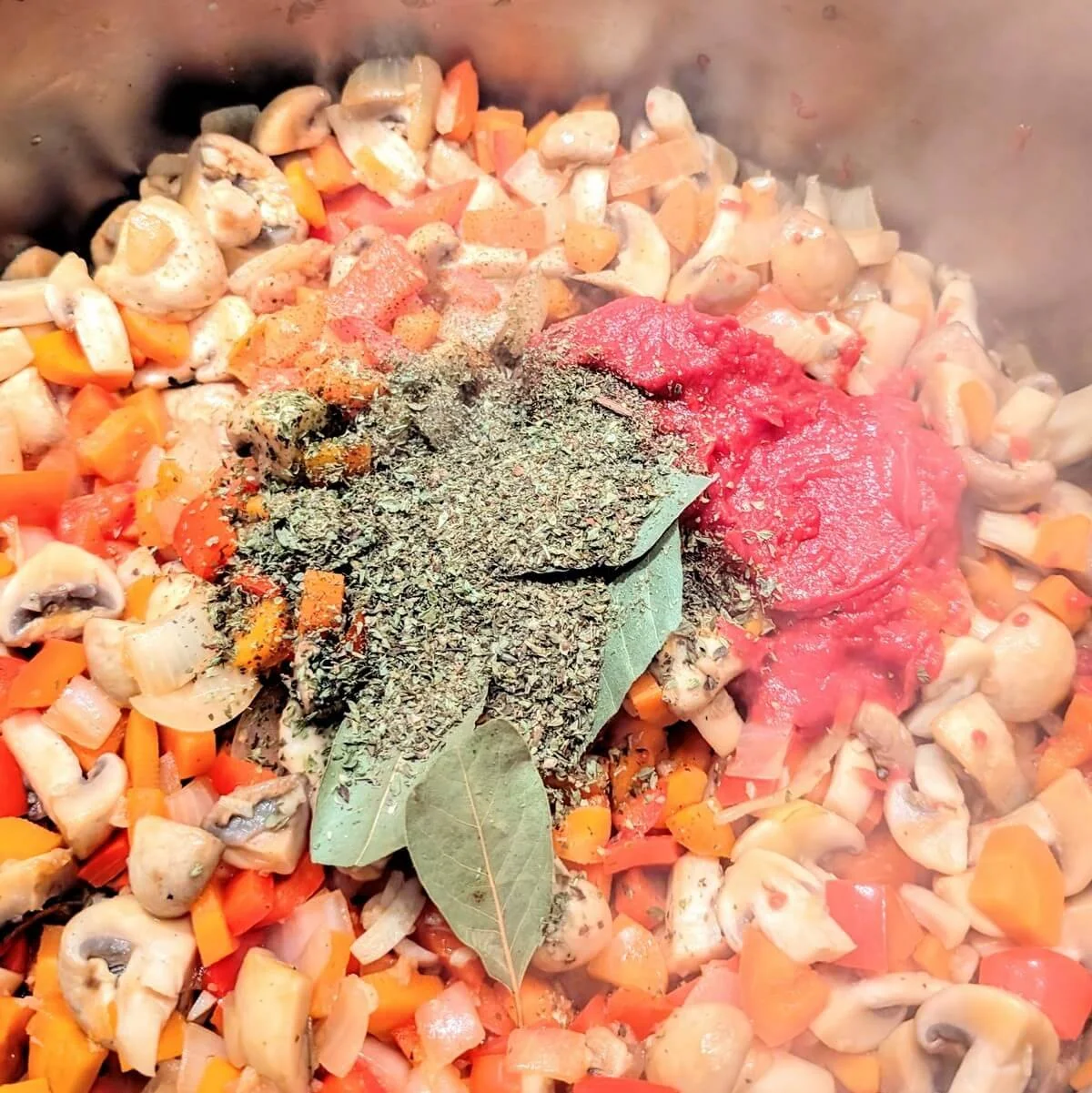
Stir in the tomato paste, dried oregano, and bay leaves. Cook for 2–3 minutes to coat the vegetables and caramelize the paste for deeper flavor.
Step 4: Deglaze and assemble the cacciatore
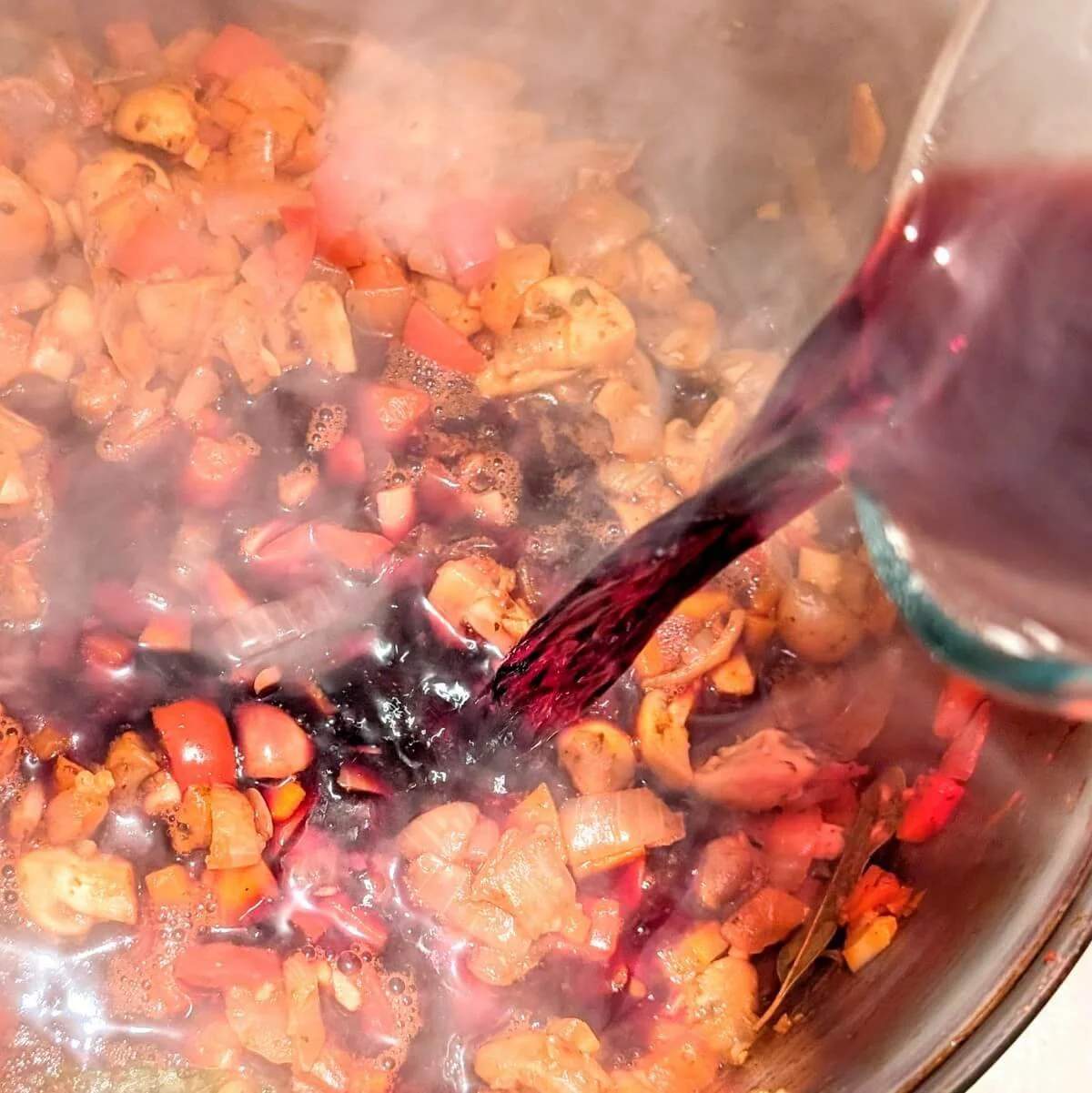
Pour in the red wine and stir well, scraping the bottom of the pot to release any remaining fond.
Let the wine simmer for 5–7 minutes, reducing by about half to concentrate the flavor.
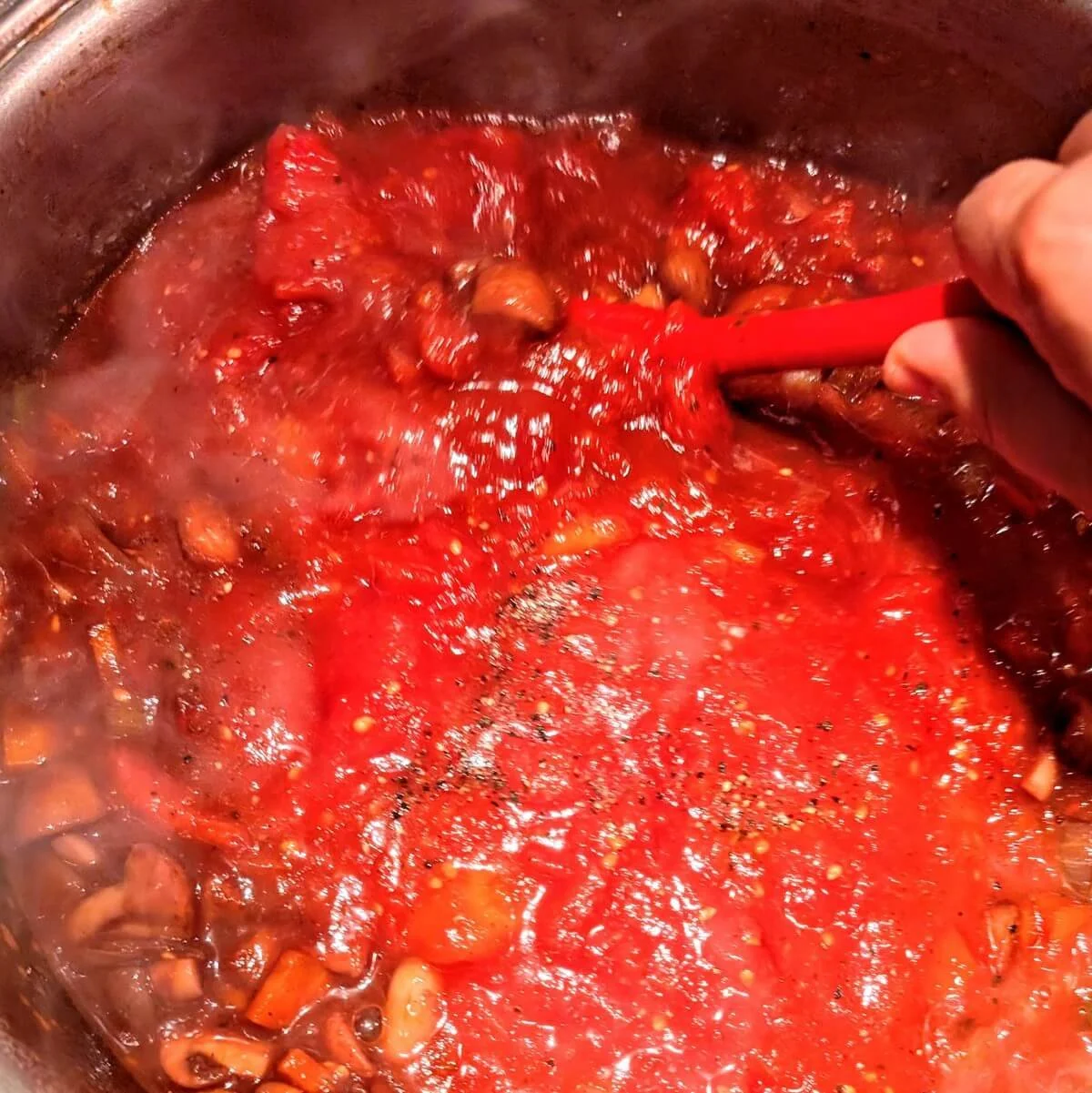
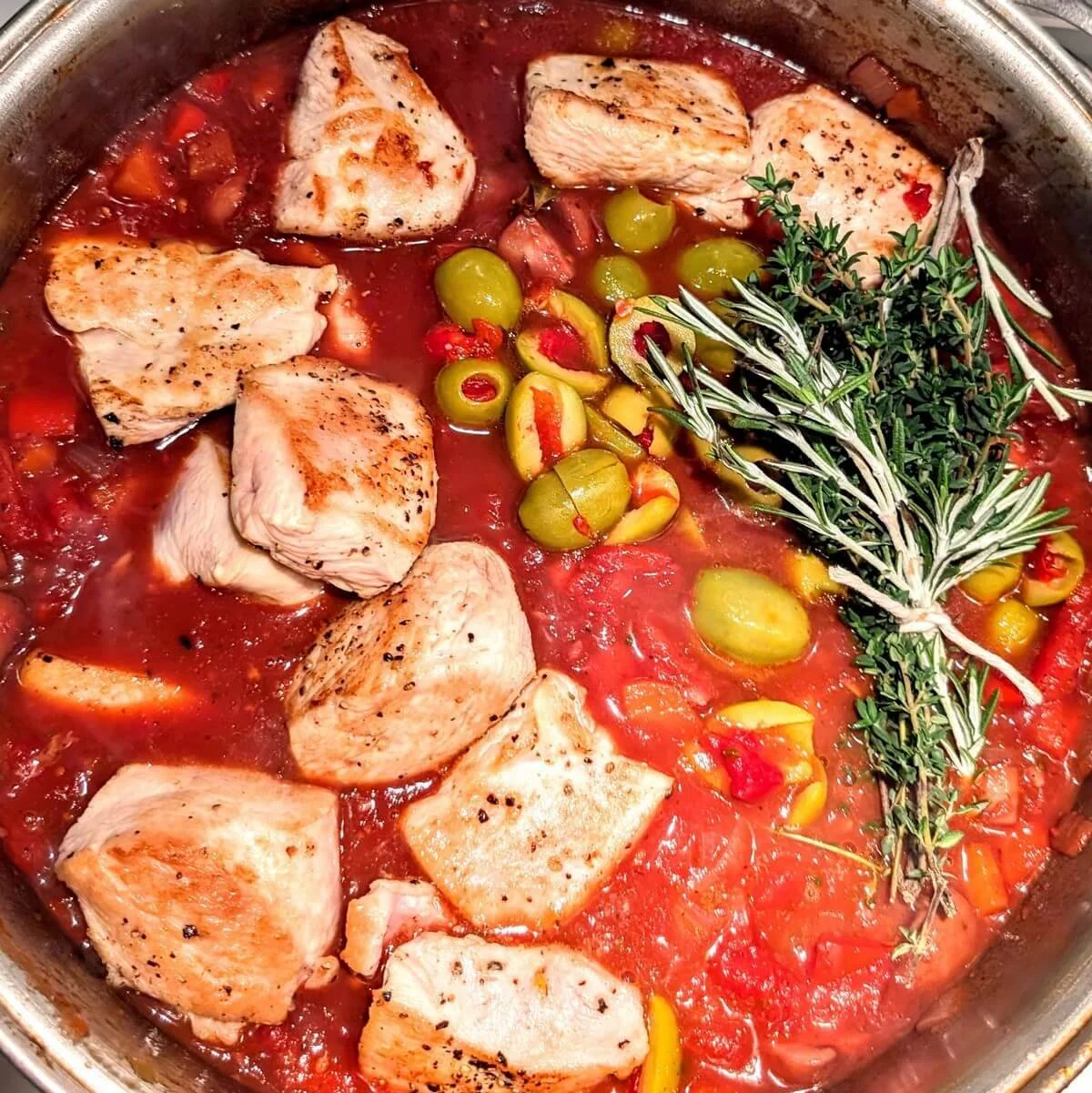
Add the hand-crushed tomatoes with their juices, halved olives, and seared turkey to the pot.
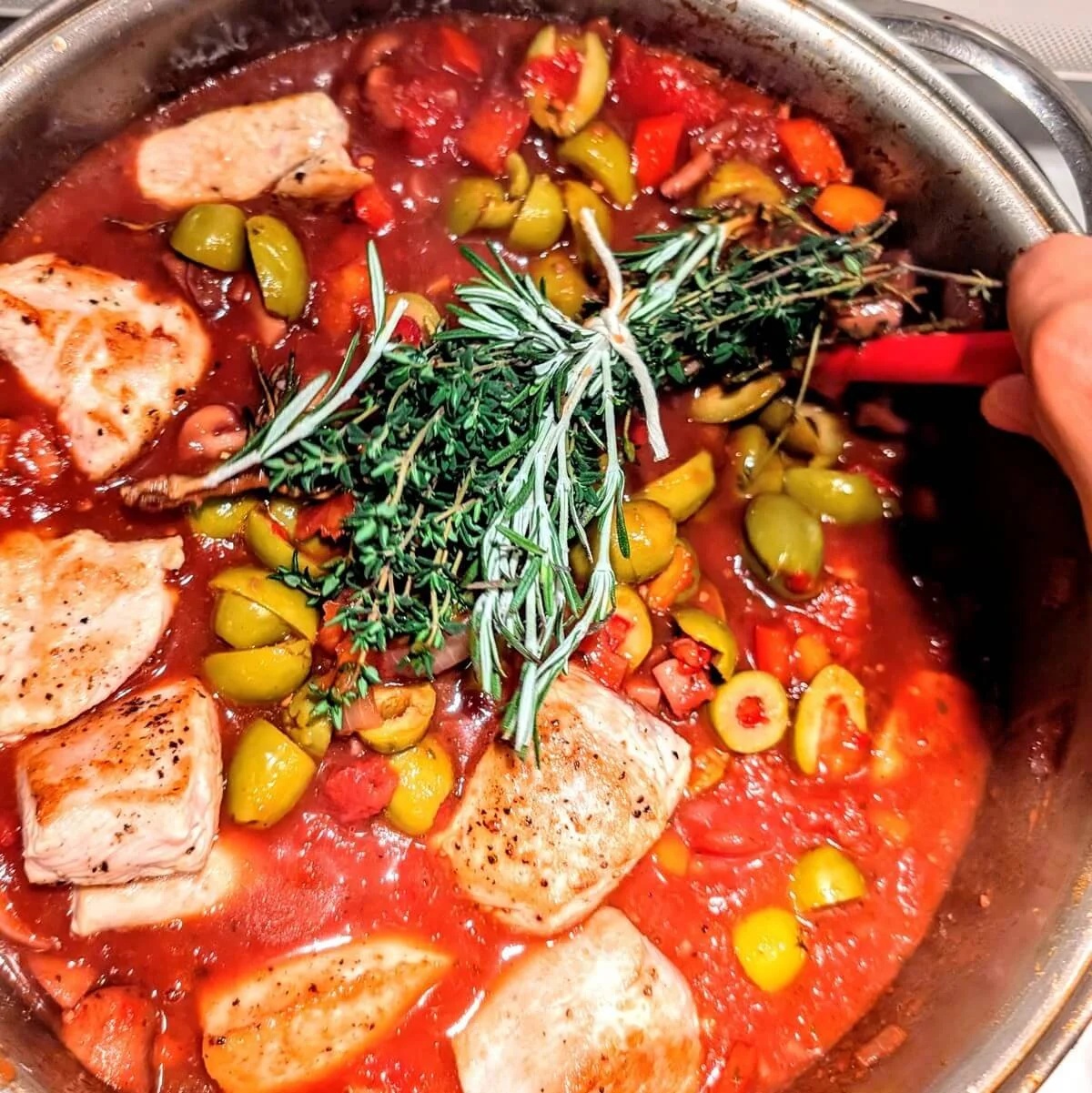
Tie the rosemary and thyme into a bundle with butcher’s twine and nestle it into the sauce—this makes it easy to retrieve later.
Stir everything together and bring to a gentle simmer.
Step 5: Simmer the turkey cacciatore until tender
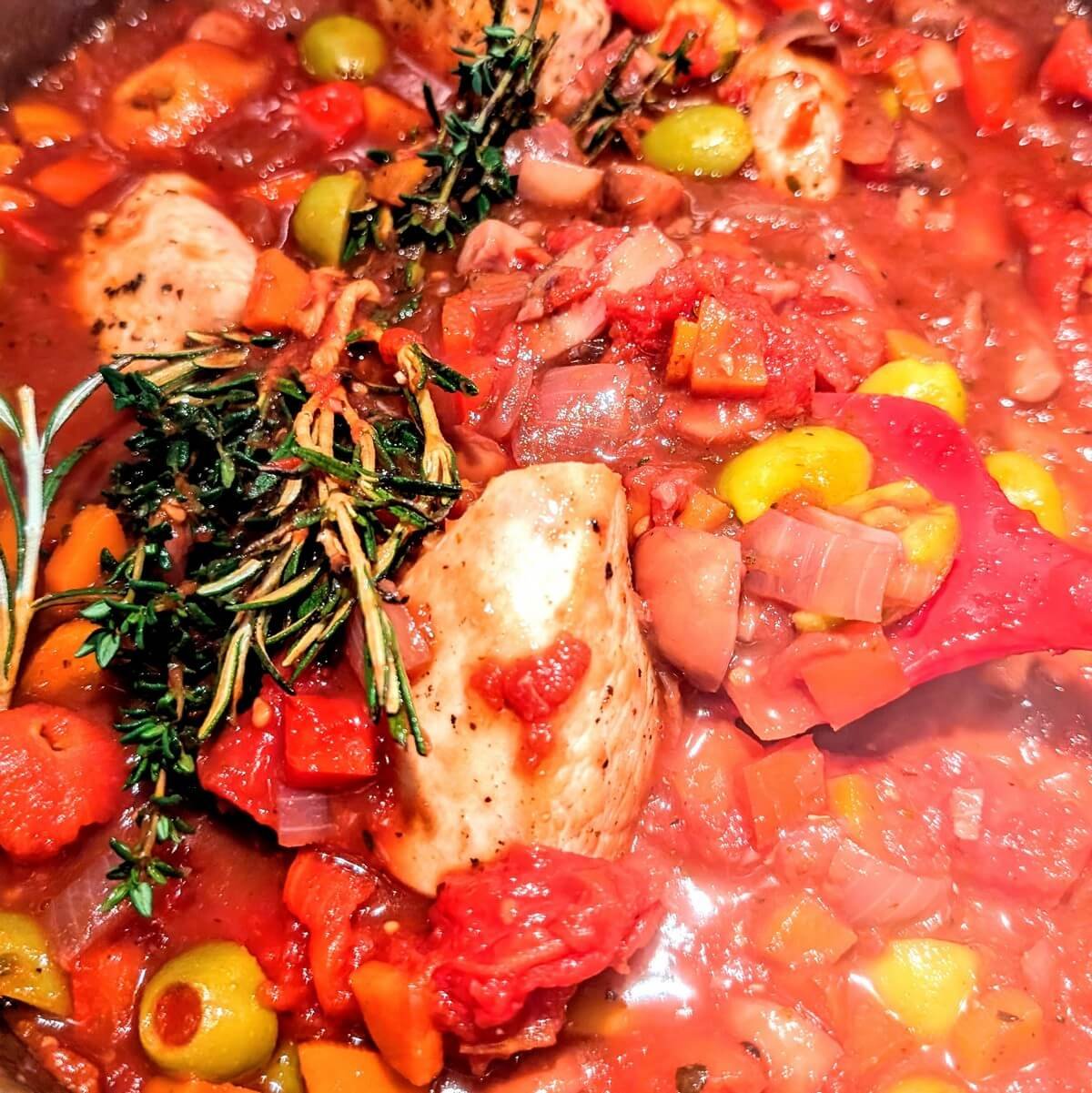
Cover the pot and reduce the heat to low. Simmer gently for 45 minutes, stirring occasionally to prevent sticking.
Uncover and continue to simmer for another 30 minutes to thicken the sauce.
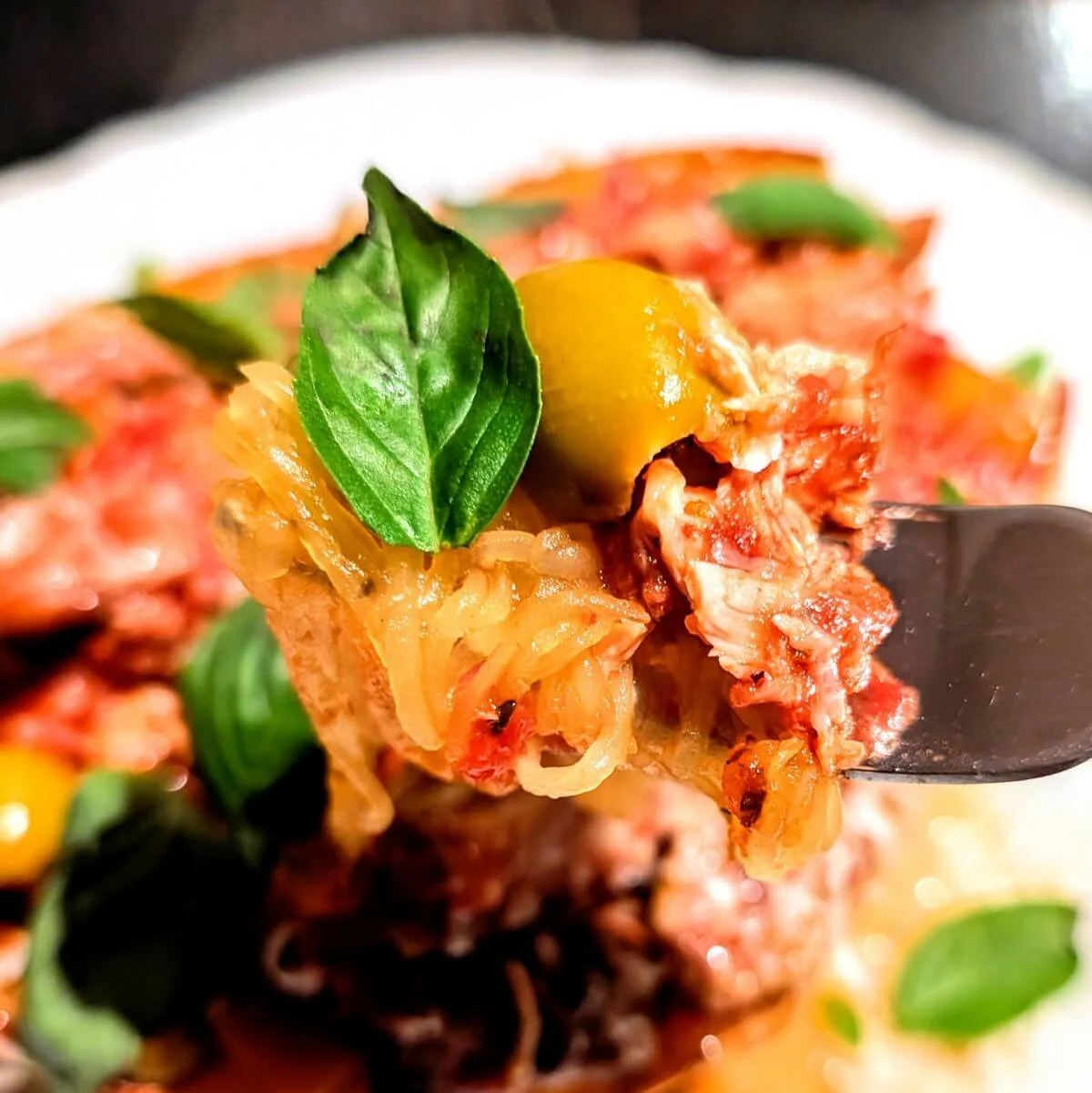
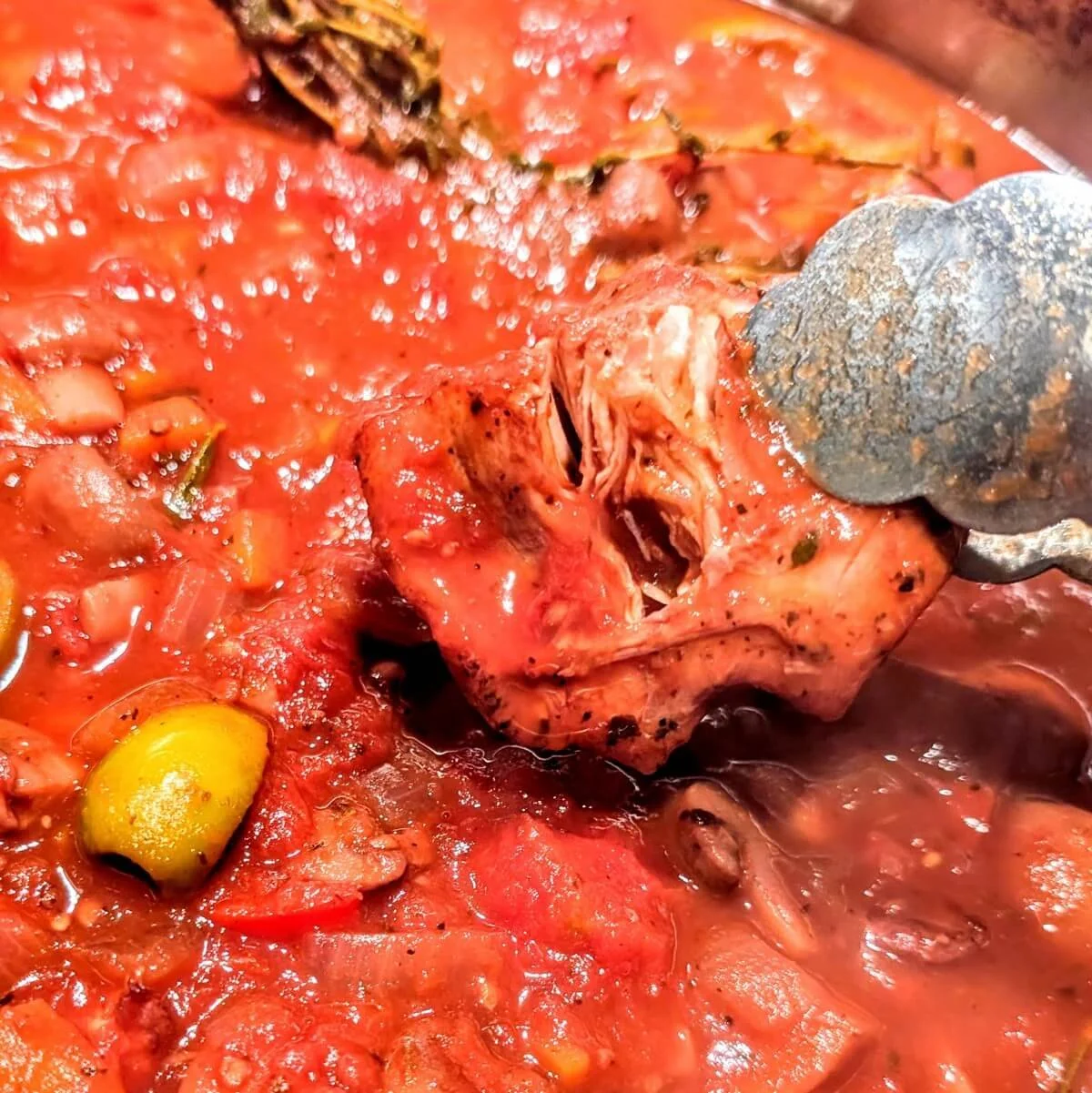
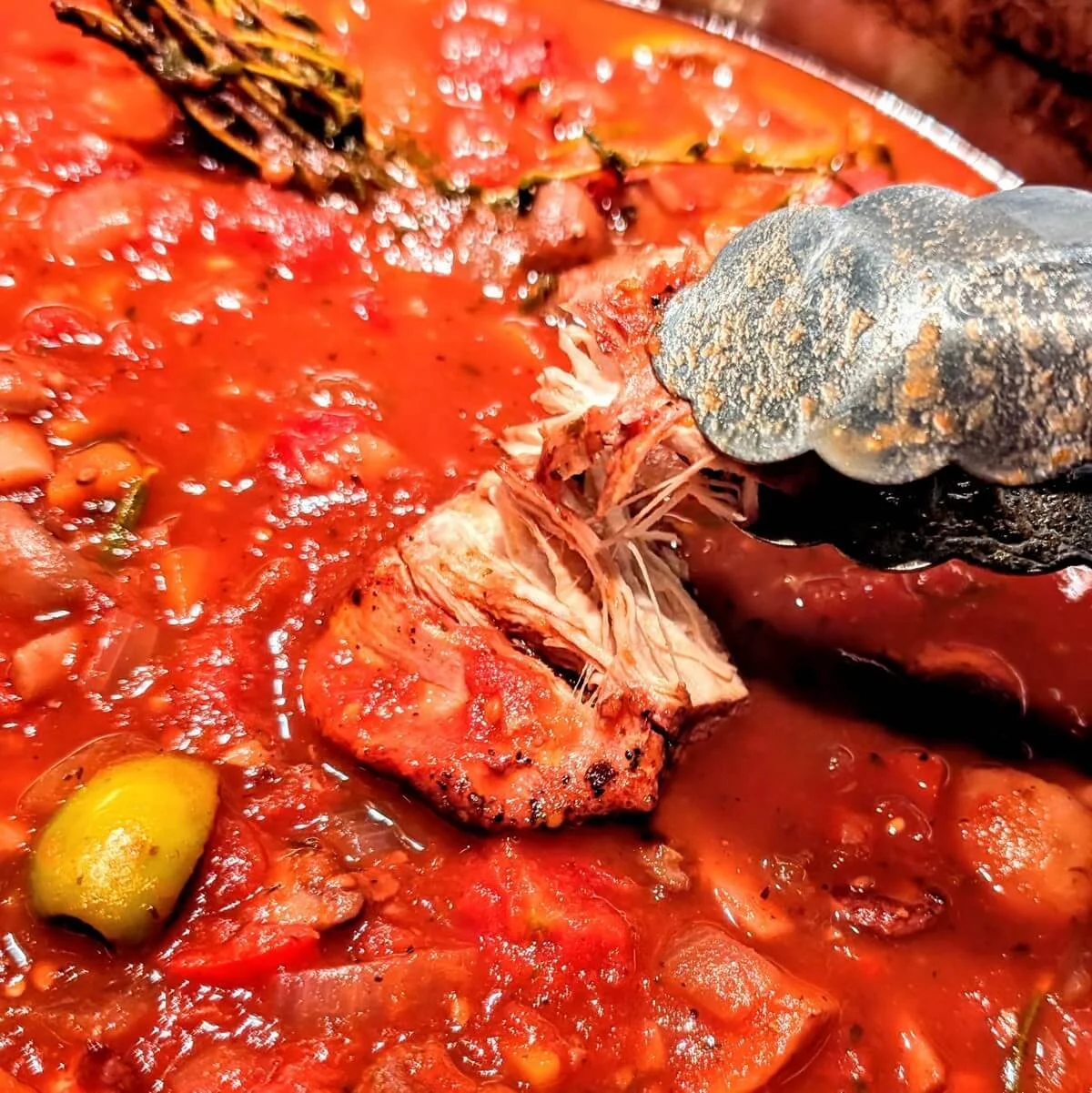
Test the turkey with tongs—it should be fall-apart tender and shred easily when pressed (see photos below).
Once the turkey is tender and the sauce is rich and glossy, take it off the heat, remove the herb bundle and bay leaves. Taste and adjust the seasoning with salt and pepper.
Let the cacciatore rest for at least 10 minutes before serving—this gives the sauce time to thicken slightly and helps the turkey soak up even more flavor.
My Tips for the Best Turkey Cacciatore
Don’t rush the soffritto: Taking the time to sweat the onions, garlic, carrots, and peppers builds caramelization and complexity.
Use good red wine and canned tomatoes: A dry red wine you actually enjoy drinking and high-quality canned tomatoes make all the difference. If you can find them, San Marzano tomatoes offer the best flavor and texture.
Even better the next day: Like most tomato-based braises, turkey cacciatore only improves overnight. Make it ahead and reheat gently for an even richer flavor.
Turkey Cacciatore Ingredient Swaps and Cooking Variations
Slow Cooker: Sear the turkey and build the base on the stovetop, then transfer everything to a slow cooker. Cook on Low for 6–7 hours or High for 3–4 hours, until the turkey is fall-apart tender. Uncover for the last 30 minutes to reduce the sauce.
Oven Braise: After assembling the cacciatore in an oven-safe pot on the stovetop, cover it and transfer to a preheated 375°F oven. Bake for 45 minutes with the lid on, then uncover and bake another 30 minutes to thicken the sauce. This method provides even, gentle heat—no stirring required—and is a great hands-off alternative to stovetop braising.
Turkey: Boneless turkey thighs work just as well as breasts. If you’re using bone-in, just give them a little extra time to become fully tender. You can also opt for classic chicken thighs or breasts if turkey isn’t available or if that’s your preference.
Wine: Try white wine instead of red for a lighter flavor profile. Or, if you want to omit it entirely, use an equal amount of chicken stock with a splash of balsamic or red wine vinegar for acidity and depth.
Tomatoes: If whole canned tomatoes aren’t available, use diced instead—just make sure they’re high quality. Avoid tomato purée, which won’t give you that rustic texture or rich flavor.
Olives: Castelvetrano olives add a firm, buttery bite with mild saltiness. Manzanilla, kalamata, Cerignola, and Gaeta olives are all great too—each brings its own Mediterranean character to the dish.
Herbs: No fresh rosemary or thyme? Use 1 teaspoon each of dried, or sub in an Italian herb blend if needed.
How to Store and Reheat Turkey Cacciatore
Fridge: Let the cacciatore cool completely, then store in an airtight container in the fridge for up to 5 days.
Freezer: This dish freezes beautifully. Portion into freezer-safe containers and freeze for up to 3 months. Thaw overnight in the fridge before reheating.
Reheating: Warm gently on the stovetop over medium-low heat, adding a splash of water if the sauce is too thick. Stir occasionally until heated through. You can also microwave individual portions in short bursts, stirring between each.
What to Serve with Cacciatore
Pasta: Serve this saucy braise over wide noodles like pappardelle or hearty tubes like rigatoni—shapes that are perfect for catching every bit of that chunky tomato sauce.
Starches: Mashed potatoes, rice, creamy polenta, crusty sourdough, or cheesy garlic bread are all ideal for soaking up every last drop.
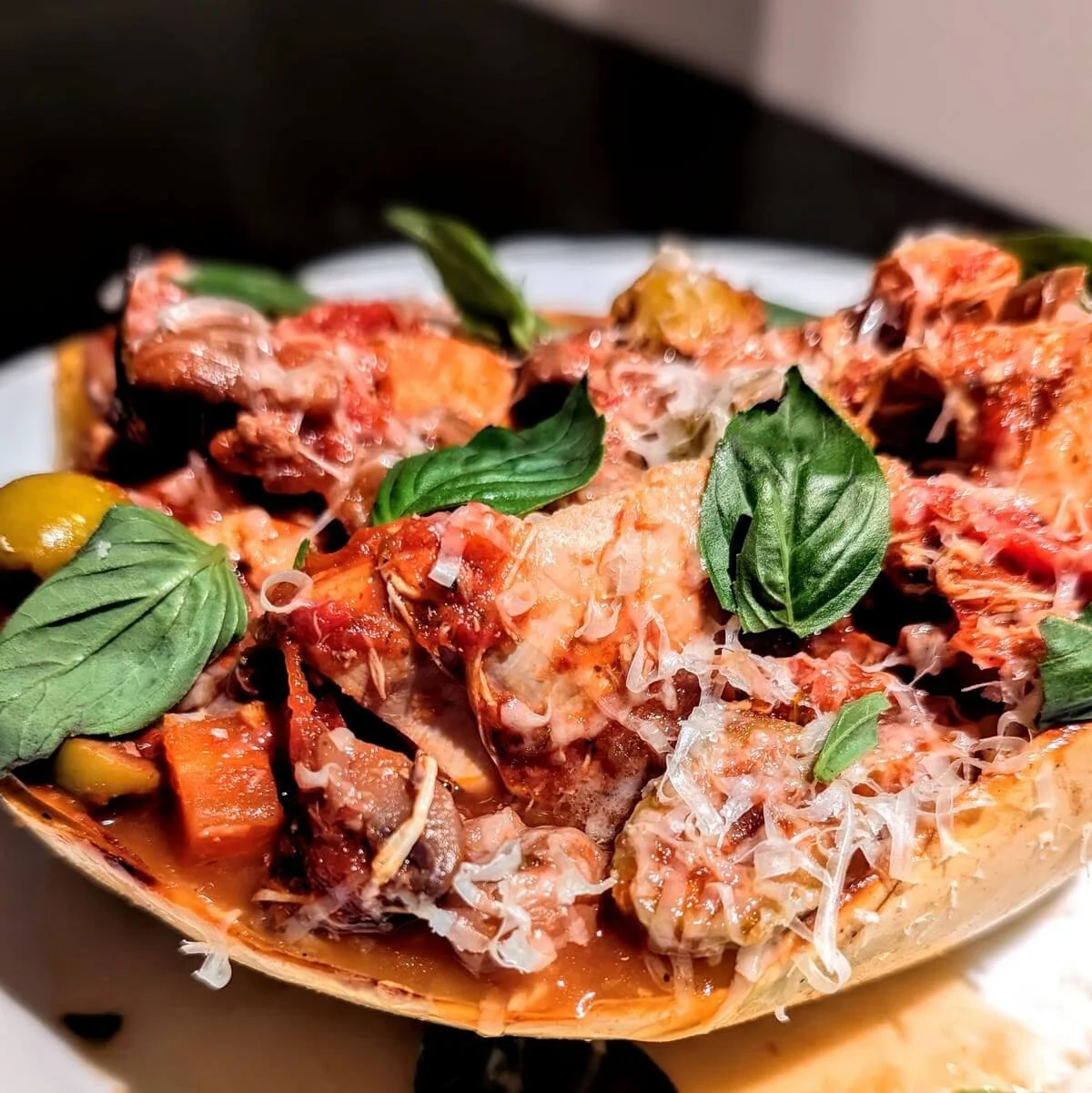
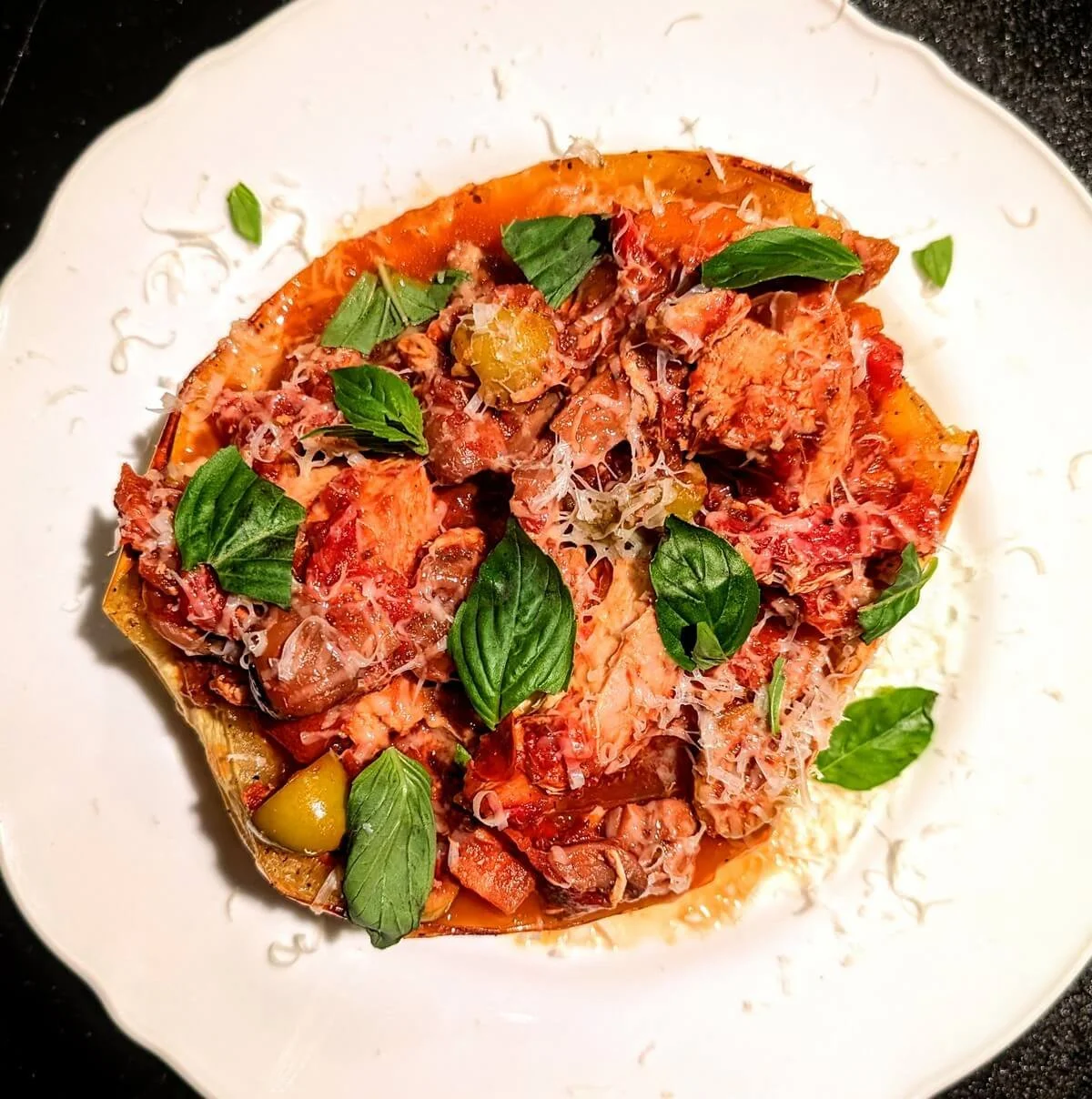
Veggies: For a lighter pairing, go with cauliflower mash, marinated green beans, roasted Mediterranean vegetables, or zucchini noodles. I served mine with roasted spaghetti squash—it made the perfect hearty base for the cacciatore sauce. For a smokier twist, try my grilled spaghetti squash recipe.
Salads: Balance the richness with a crisp green salad. Peppery arugula, crunchy romaine, or mixed greens tossed with preserved lemon vinaigrette or Caesar salad dressing all pair well.
Repurpose Leftovers: Shred the turkey and make melty paninis with mozzarella and cacciatore sauce on ciabatta, then press until golden and gooey. Or warm the leftovers in a skillet, crack in a few eggs, cover to poach, and serve with bread for dipping.
Turkey Cacciatore FAQs and Expert Advice
What does cacciatore mean in Italian?
“Cacciatore” means “hunter” in Italian. The dish alla cacciatora refers to a rustic “hunter-style” stew, traditionally made with game like rabbit or chicken, simmered with vegetables, herbs, wine, and sometimes tomatoes or olives.
What are the different types of cacciatore?
The most common types of cacciatore are chicken and rabbit, but Italians also make it with lamb, capon, pheasant, duck, goose, or even potatoes. Ingredients vary by region—northern Italy often makes a lighter, white-wine version without tomatoes, while the south tends to include more tomato and peppers.
What is soffritto in Italian cooking?
Soffritto is a mix of diced onions, garlic, carrots, and sometimes celery or peppers, gently sautéed in olive oil. It translates to “softly fried” in Italian and is similar to a French mirepoix (onions, carrots, celery) or Cajun holy trinity (onions, celery, bell peppers). It’s the aromatic base of many Italian dishes, and the first step in building deep, layered flavor.
Can I make turkey cacciatore in the oven?
Yes—oven-braising turkey cacciatore is a great hands-off option. After assembling everything in an oven-safe pot, bake it covered at 375°F for 45 minutes, then uncover and bake for another 30 minutes to thicken the sauce. The oven’s even, gentle heat means there’s no need to stir while it cooks.
Can I make turkey cacciatore ahead of time?
Absolutely. Like many braised dishes, turkey cacciatore tastes even better the next day. Make it in advance, store it in the fridge overnight, and reheat gently before serving. It also freezes well for up to 3 months—just defrost in the fridge before reheating.
How do I thicken cacciatore sauce if it’s too thin?
To thicken turkey cacciatore sauce, simmer uncovered to reduce the liquid. If the turkey is already very tender, remove it from the pot so it doesn’t fall apart, then reduce the sauce on its own before adding the turkey back in.
For a faster fix, stir in a cornstarch slurry (1 tablespoon cornstarch + 1 tablespoon cold water) and repeat as needed.
What are the best canned tomatoes for cacciatore?
The best canned tomatoes for cacciatore are whole peeled San Marzano tomatoes. They have a sweeter, richer flavor and firmer texture. Look for DOP-certified cans for authenticity. Avoid puréed or crushed tomatoes—they won’t give you that rustic texture.
What pasta goes best with cacciatore?
The best pasta for cacciatore is wide, like pappardelle, tagliatelle, or fettuccine, or sturdy tubes such as penne or rigatoni. They’re perfect for holding the chunky tomato sauce, full of vegetables and fall-apart tender turkey.
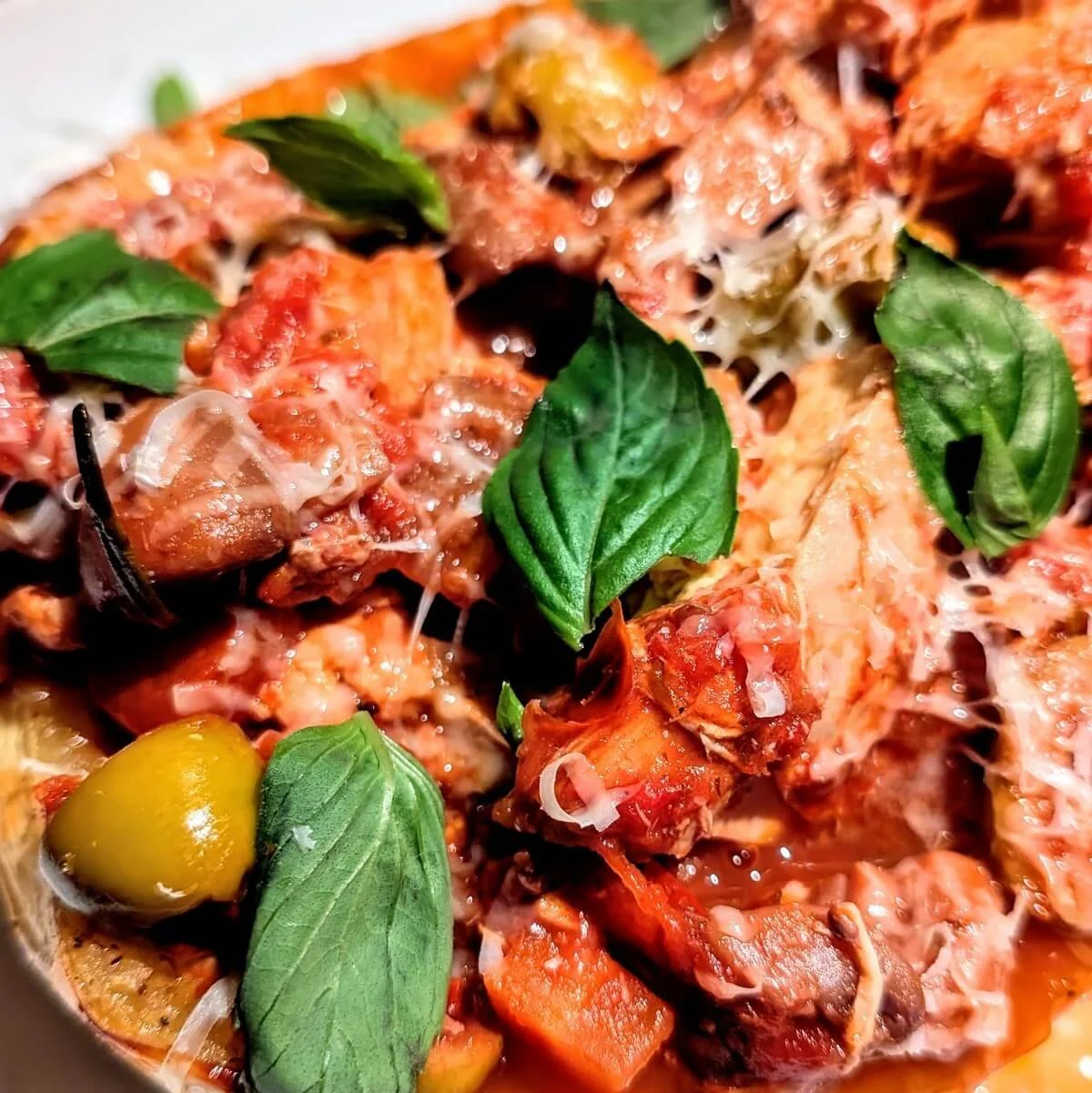
That’s it—Your Comforting Turkey Cacciatore Is Ready to Serve!
This rustic turkey cacciatore has roots in both restaurant kitchens and family tables. I first created it as part of a meal kit during the early pandemic when we couldn’t serve guests in person. Years later, when I offered my brother his choice of meal kit after my niece was born, he asked for it by name…sort of—"that hunter stew you make."😅
Since that first one, I’ve made this cacciatore more times than I can count. From restaurant service to cozy dinners at home, turkey cacciatore always delivers comfort. It’s the kind of meal that makes people feel cared for, especially when paired with creamy polenta or a warm, crusty loaf of bread.
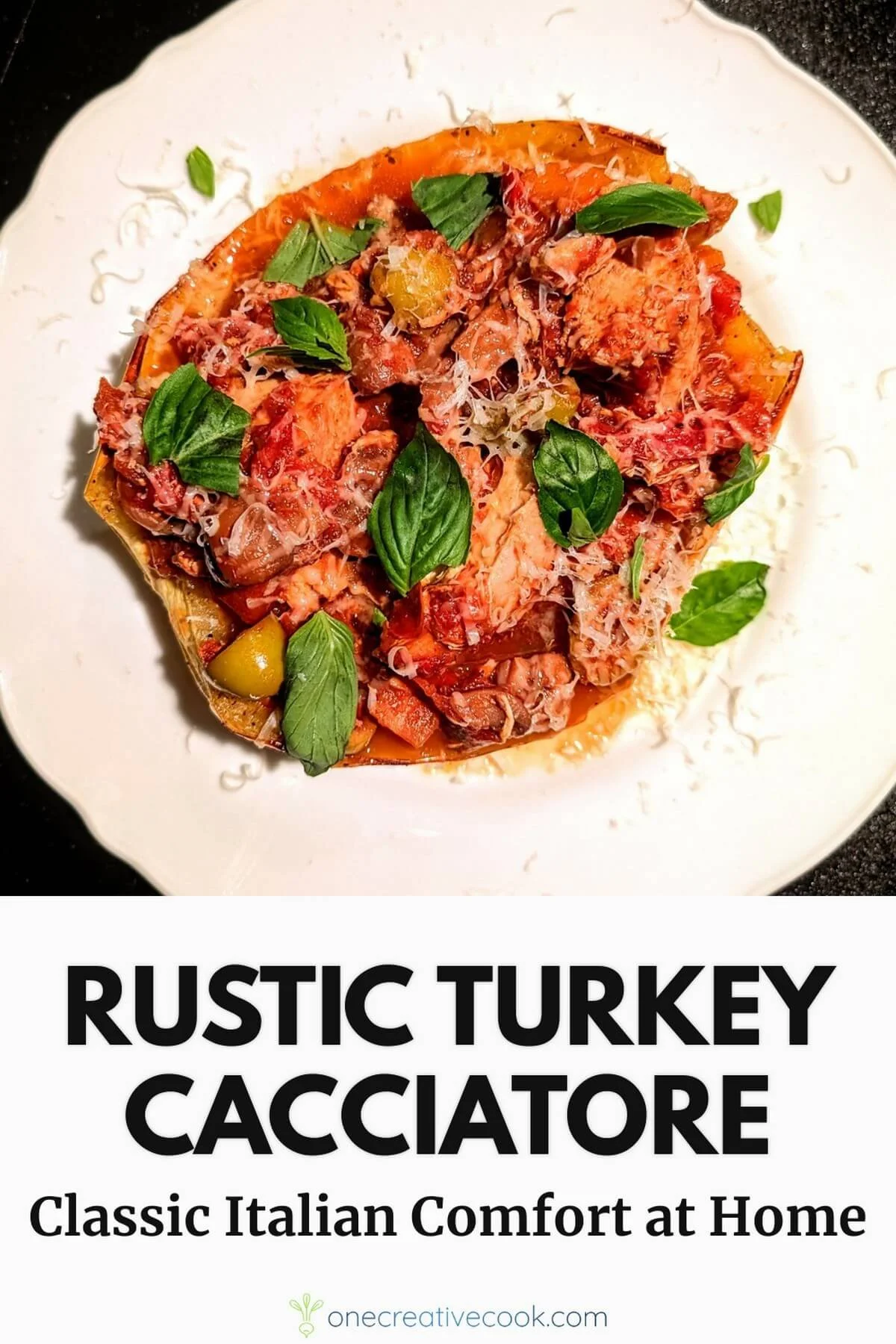
Pin This Turkey Cacciatore Recipe for Later!
Turkey Cacciatore Recipe
This fall-apart tender turkey cacciatore is braised with red wine, olives, peppers, mushrooms, and herbs in a rich Italian tomato sauce.
Makes: 6 servings
Prep: 15 min Cook: 2 hours
Dietary Notes: Gluten-free, Dairy-free, Egg-free, Low-carb, High-protein
Turkey Cacciatore Ingredients
4 pounds boneless skinless turkey breast, cut into 2-inch pieces
2 yellow onions, diced
8 cloves garlic, minced
2 red bell peppers, diced
2 medium carrots, diced
1 pound white button mushrooms, quartered
2 tablespoons tomato paste
2 tablespoons dried oregano
4 bay leaves
2 cups dry red wine
2 (28-ounce) cans whole plum tomatoes, crushed by hand
1 bunch rosemary
1 bunch thyme
2 cups stuffed green olives, halved
salt & pepper, to taste
olive oil, for searing turkey
How to Make Turkey Cacciatore
Prep the turkey and vegetables. Pat the turkey breast dry and cut into 2-inch chunks. Season with salt and pepper. Dice the onions, peppers, carrots, and garlic. Quarter the mushrooms.
Sear the turkey. Place a large heavy-bottomed pot over medium-high heat and add a drizzle of olive oil. Sear the turkey in batches until golden brown on all sides, about 2–3 minutes per side. Transfer to a plate and set aside.
Sauté the soffritto and mushrooms. In the same pot, add the soffritto vegetables: onions, carrots, peppers, and garlic. Cook for 5–7 minutes, stirring often and scraping up the fond (browned bits on the bottom). Add the mushrooms and cook for another 5 minutes, until they release their moisture and shrink. Stir in the tomato paste, oregano, and bay leaves; cook for 2–3 minutes to caramelize the paste and coat the vegetables.
Deglaze and assemble cacciatore sauce. Pour in the red wine and scrape up any remaining fond. Simmer for 5–7 minutes to reduce slightly. Add the hand-crushed tomatoes, halved olives, and seared turkey. Tie the rosemary and thyme into a bundle with butcher’s twine and nestle it into the sauce. Stir everything together and bring to a gentle simmer.
Simmer cacciatore until turkey is tender. Cover and reduce the heat to low. Simmer for 45 minutes, stirring occasionally. Then uncover and cook for another 30 minutes to thicken the sauce. Check the turkey for doneness—it should be fall-apart tender. If not, continue simmering on low until it is. Once tender, remove from heat, discard the herb bundle and bay leaves, and adjust seasoning with salt and pepper. Let rest for 10 minutes before serving.
Top Tips for the Best Turkey Cacciatore
Storage: Let the cacciatore cool completely, then store it in an airtight container in the fridge for up to 5 days or freeze for up to 3 months. Like most tomato-based braises, it tastes even better the next day—making it a great choice for meal prep.
Don’t rush the soffritto: Take your time sautéing the onions, garlic, carrots, and peppers. Properly sweating the vegetables builds deep flavor and sets the foundation for the sauce.
Use good red wine and canned tomatoes: A dry red wine you enjoy drinking and high-quality canned tomatoes make all the difference. San Marzano tomatoes (DOP certified) are ideal for their sweetness, texture, and rich tomato flavor.
For more, check out my tips, substitutions, how to store, serving ideas, and FAQs!
Did you try this authentic cacciatore recipe?
I’d love to hear how it went—or how you made it your own. Please leave a comment below or tag me on Instagram @onecreativecook if you share your creation!
More Comforting, Slow-Cooked Recipes to Try Next
All day San Marzano tomato sauce: With just five ingredients and a long, slow cook, this rustic red sauce is your new freezer-friendly secret weapon.
All-beef meat sauce: This ultra-savory, slow-simmered bolognese is pure comfort in a bowl—ideal for pasta night or layered into lasagna.
Braised brisket with red wine jus: A classic low‑and‑slow beef braise with deep, rich flavor—ideal for dinner parties or cold nights in.
Moroccan chicken tagine: Fragrant, warmly spiced, and deeply comforting, this one-pot braise with dried apricots, olives, and preserved lemon has a flavor like no other.
Chunky beef chili con carne: Hearty, beefy, and built on layers of flavor—this chili is perfect for weekend meal prep or cozy game-day eats.









Learn how to make beef Wellington with crisp puff pastry and medium-rare beef, using the same techniques I mastered in professional kitchens.