How to Make Stock from Kitchen Scraps
Turn kitchen scraps into flavorful homemade stock instead of throwing them away. Use vegetables alone, or add leftover bones for a meat-based stock.
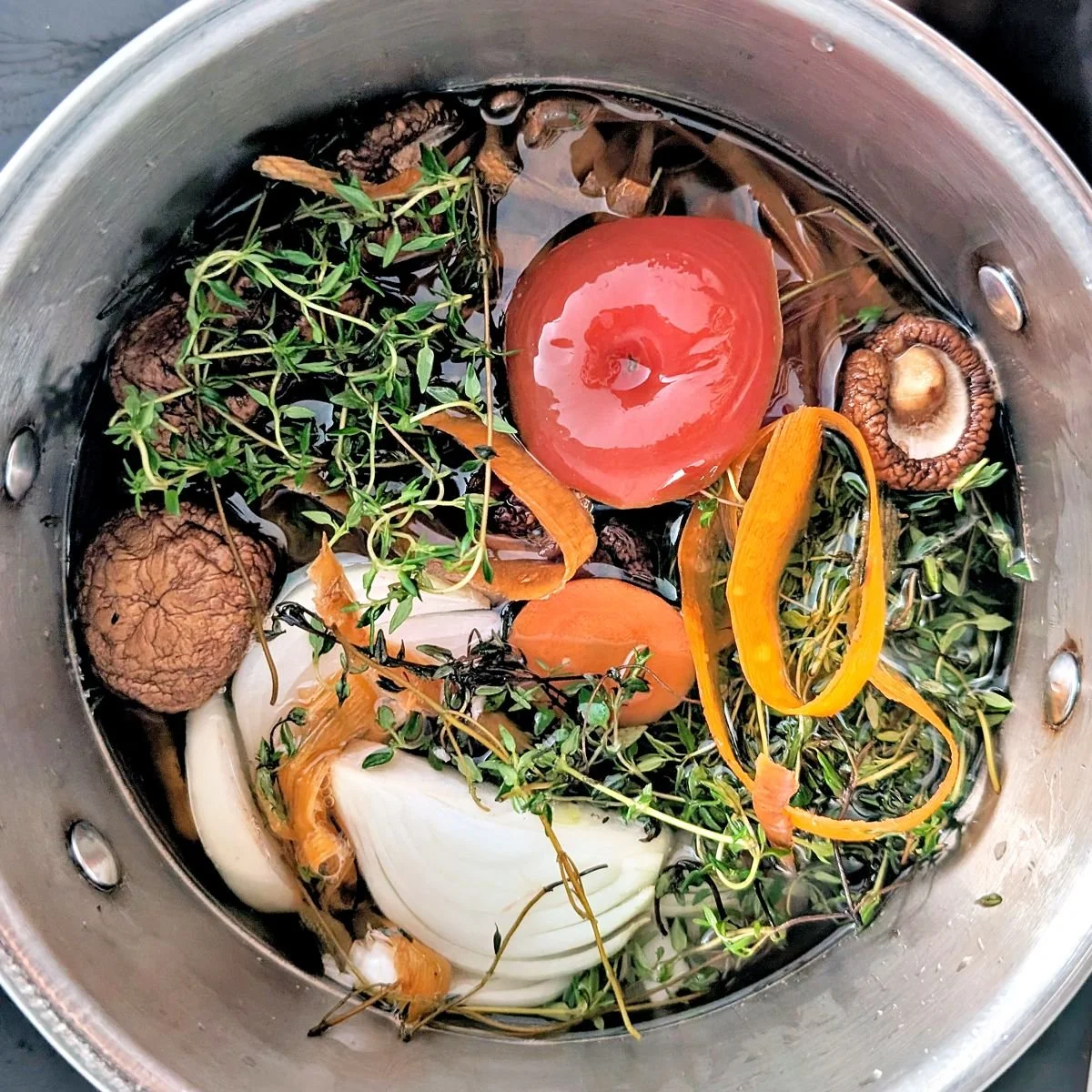
Why I Save Kitchen Scraps for Stock
There’s a lot of flavor hiding in the scraps we normally throw away. Carrot peels, onion ends, herb stems, mushroom stems, and even leftover bones can all be turned into something useful instead of going straight into the garbage.
It’s something I learned early on working in professional kitchens. As a chef, you learn pretty quickly that every little piece of food has value. We saved scraps from all our vegetable and meat prep and turned them into vegetable, chicken, or beef stocks that became the foundation for soups, sauces, braises, and plenty of other dishes.
The same technique is incredibly easy to use at home. I keep my scraps in the freezer as I cook, and once I have enough, I turn them into a batch of homemade stock. Use vegetables alone for vegetable stock, or add leftover bones for a richer meat-based version.
I’ll show you exactly how I do it. We’ll go over which scraps are worth saving, which ones I avoid, how to balance the flavors, and how to turn whatever you’ve collected into a flavorful zero-waste stock.
The Best Kitchen Scraps for Stock
Vegetable Scraps
Carrot peels, tops, and ends
Onion skins and ends
Corn cobs
Pea pods
Celery leaves and ends
Mushroom stems
Leek tops and ends
Tomato tops and scraps
Herb stems like parsley, thyme, and rosemary
Vegetables that are starting to wilt or become overripe, as long as they haven’t spoiled
Meat Scraps
Raw poultry or meat bones
Cooked bones, bits of meat, and skin from roasts, rotisserie chicken, or bone-in cuts
Meat trimmings such as skin, silverskin, and connective tissue
Fish bones and heads
Scraps I Avoid
Cruciferous vegetables like broccoli, cauliflower, and Brussels sprouts, which can overpower the stock
Large amounts of bitter greens like kale stems, dandelion greens, or turnip greens
Potatoes and other very starchy vegetables
Anything spoiled, moldy, or covered in dirt
Large amounts of highly pigmented vegetables like beets or purple carrots, unless you’re okay with a bright pink-colored stock
How I Store Scraps Until I Have Enough
I freeze vegetable and meat scraps as I cook. Everyday cooking rarely gives you enough scraps for a full batch at once, so this makes it easy to build up a stock bag over time.
I usually freeze scraps in a zip-top bag or freezer-safe container. They’ll keep for up to 6 months, although I usually make stock long before that.
How to Balance the Flavor of Your Stock
A good stock needs a mix of flavors. Too much of any one ingredient can throw it off. A pot full of onion skins can become bitter and overpowering, while mostly carrots or corn cobs can make the stock surprisingly sweet.
The classic French base for stock is mirepoix:
2 parts onion
1 part carrot
1 part celery
Optional in smaller amounts: garlic, leeks, tomato paste, bay leaves, peppercorns, parsley stems, and thyme
You don’t need to follow that ratio perfectly when you’re working with scraps, but it’s a useful guide. If your freezer bag is heavy on one ingredient, add a fresh carrot, onion, or stalk of celery to bring things back into balance.
For a vegetable stock, those scraps can stand on their own. For chicken or meat stock, add your bones to the vegetable base.
Mushroom stems and meat scraps can also make flavorful stocks on their own, but I usually add some mirepoix for a little more depth.
What You’ll Need
Ingredients for Kitchen Scrap Stock
About 2 pounds kitchen scraps (roughly 1 large freezer bag)
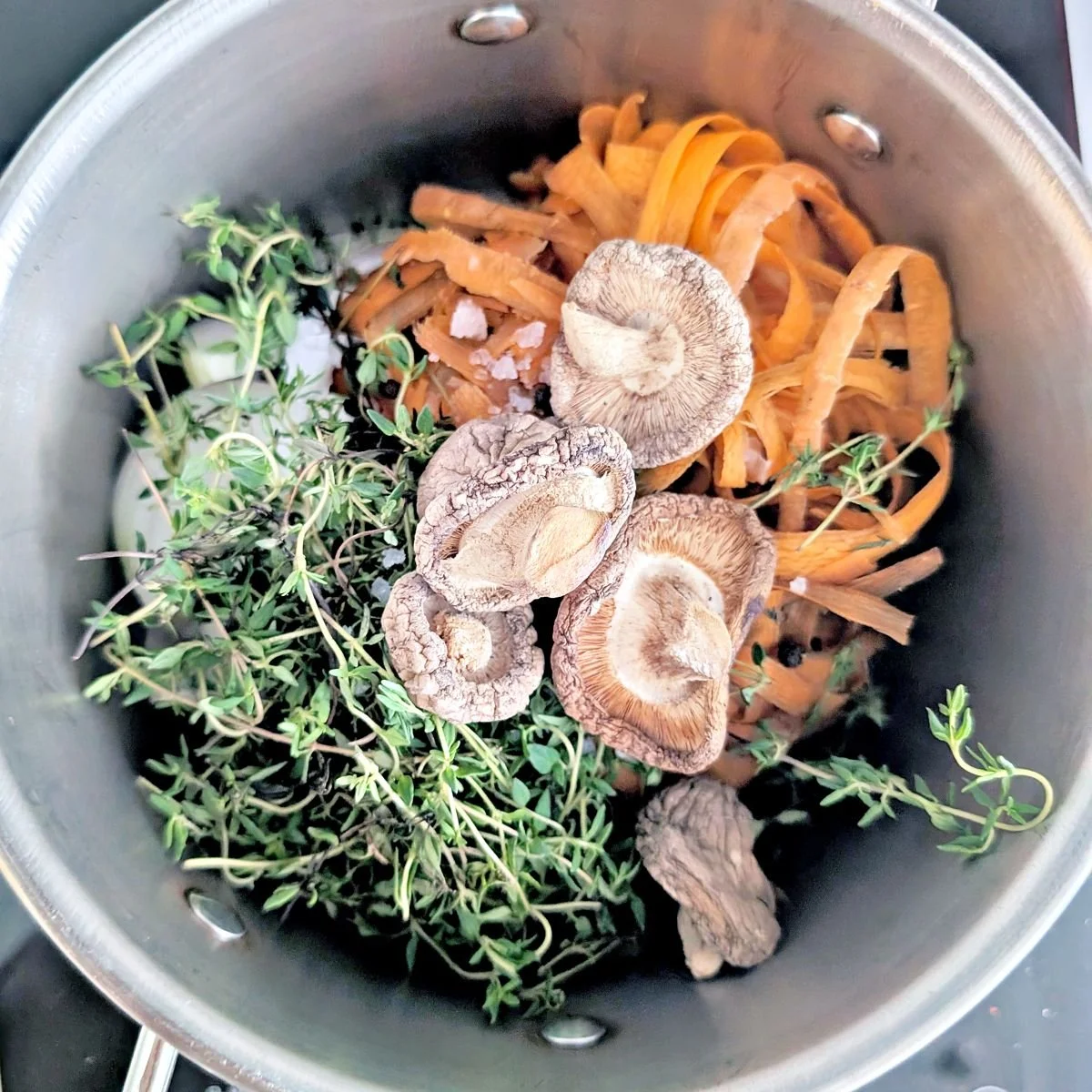
For vegetable stock: carrot peels, onion skins, leek tops, mushroom stems, herb stems, and similar scraps
For meat-based stock: chicken carcasses, leftover bones, skin, meat trimmings, plus vegetable scraps
Optional flavor boosters:
2 bay leaves
1 teaspoon black peppercorns
2 garlic cloves
4 quarts water
Equipment
Large stockpot
Fine-mesh strainer and bowl
Storage containers
Makes: About 3 quarts stock
Prep: 2 min Cook: 1–4 hours
How to Make Homemade Stock from Scraps
Step 1: Combine the stock ingredients
Place the frozen scraps (no need to thaw) and any optional flavor enhancers in a large pot. Cover with cold water, bring to a boil, then reduce to a simmer.
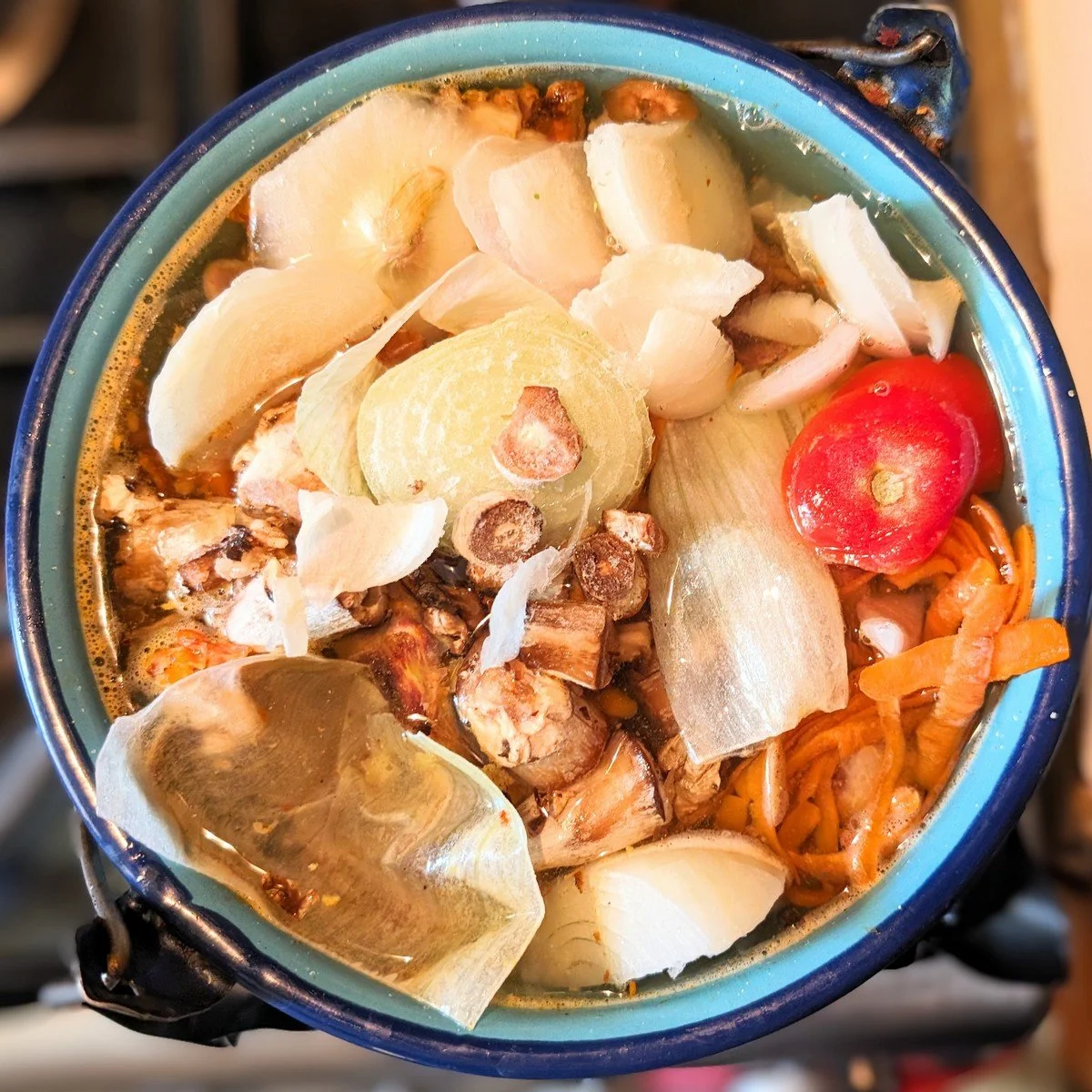
I’m using cooked leftover chicken bones, carrot peels, and onion scraps here.


Step 2: Simmer stock for 1–4 hours
Simmer uncovered for about 1 hour for vegetable or fish stock, or up to 4 hours for meat-based stock. Skim off excess fat or foam as needed.
The stock is ready when it smells deeply savory, has reduced by roughly 25%, and has noticeably darkened in color.

Step 3: Strain the stock
Remove from the heat and strain through a fine-mesh sieve or cheesecloth. Discard the solids, then transfer the stock to storage containers or jars. Cool before refrigerating or freezing.

How to Store Homemade Stock
Fridge: Let the stock cool, then transfer it to airtight containers or jars and refrigerate for up to 5 days.
Freezer: For longer storage, freeze the stock in freezer-safe containers or ice cube trays. Leave a little space at the top for expansion. It will keep well for up to 6 months.
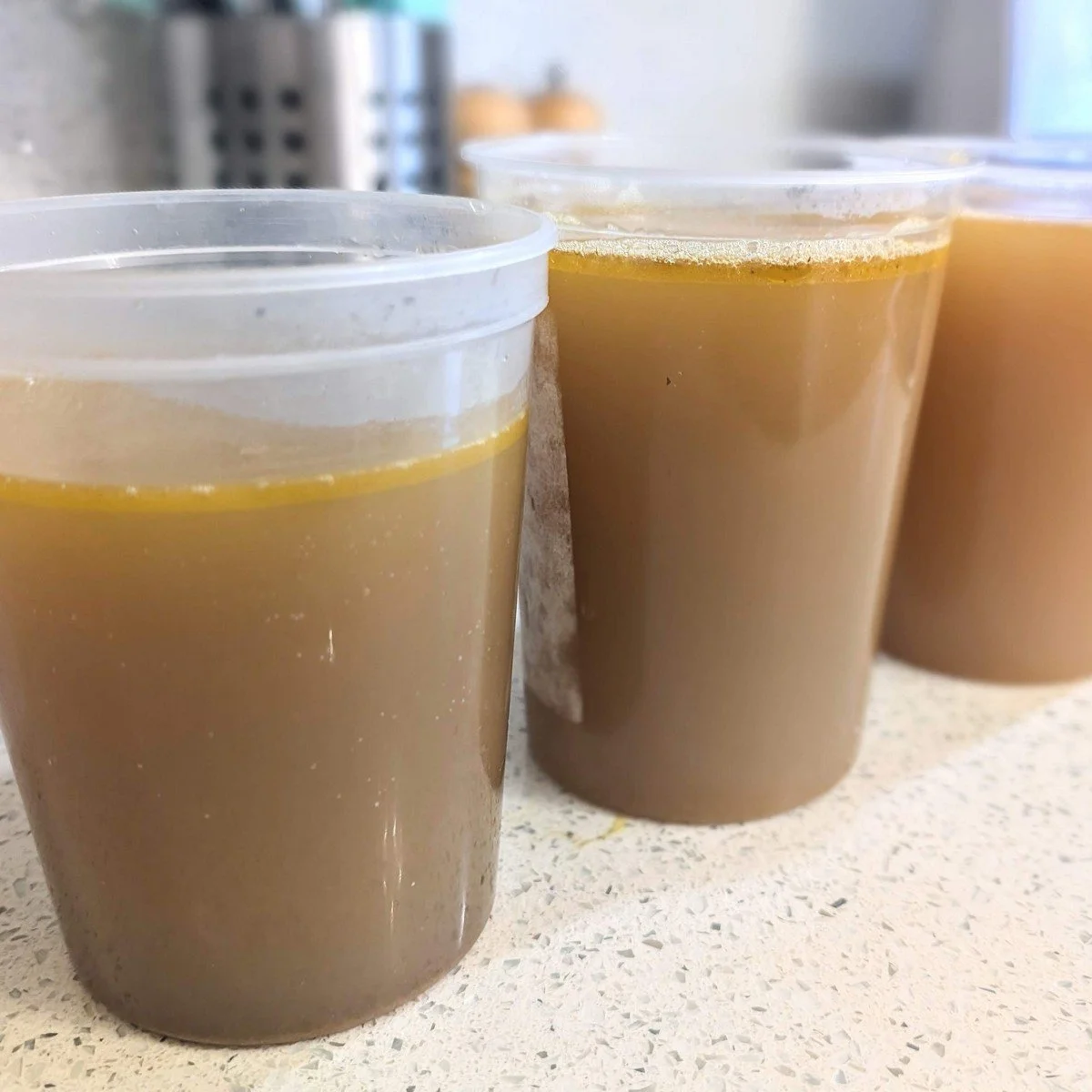
I personally like using 1-liter (32-ounce) deli containers because they stack easily and are a convenient size for most recipes.
Should You Roast Scraps Before Making Stock?
You don’t have to roast your scraps first. Roasting bones and vegetables will give you a darker, deeper-flavored stock, but it isn’t necessary for an everyday batch.
If your scraps are already cooked or roasted, or you want a lighter stock, simply add them straight to the pot. I usually choose based on how I plan to use the finished stock.
Ways to Use Homemade Stock
Soups and stews: Use it as the base for ramen, pho, one-pot chicken soup, or chunky beef chili con carne.
Sauces and gravies: Boost the flavor of sauces like homemade mushroom gravy or velouté with a homemade stock.
Cooking grains: Replace water with stock when cooking rice, couscous, bulgur, or lentils.
Braising: Use it as the cooking liquid for meats or vegetables, like braised beef brisket.
Risotto: Homemade stock is ideal for risotto, especially if you’ve saved mushroom stems for a mushroom risotto.
Deglazing pans: Use a splash of stock to loosen browned bits and build a quick pan sauce, like in my duck breast with red wine pan sauce.
Casseroles and bakes: Add it to chicken pot pie, shepherd’s pie, pasta bakes, or vegetable casseroles for extra flavor.
Did you try making stock from scraps?
I’d love to hear how it went, or if you have any questions. Leave a comment below, I’m always happy to help!