How to Make Roux and Use It
Learn how to make white, blond, and brown roux, when to use each one, and how to get a perfectly smooth texture every time.
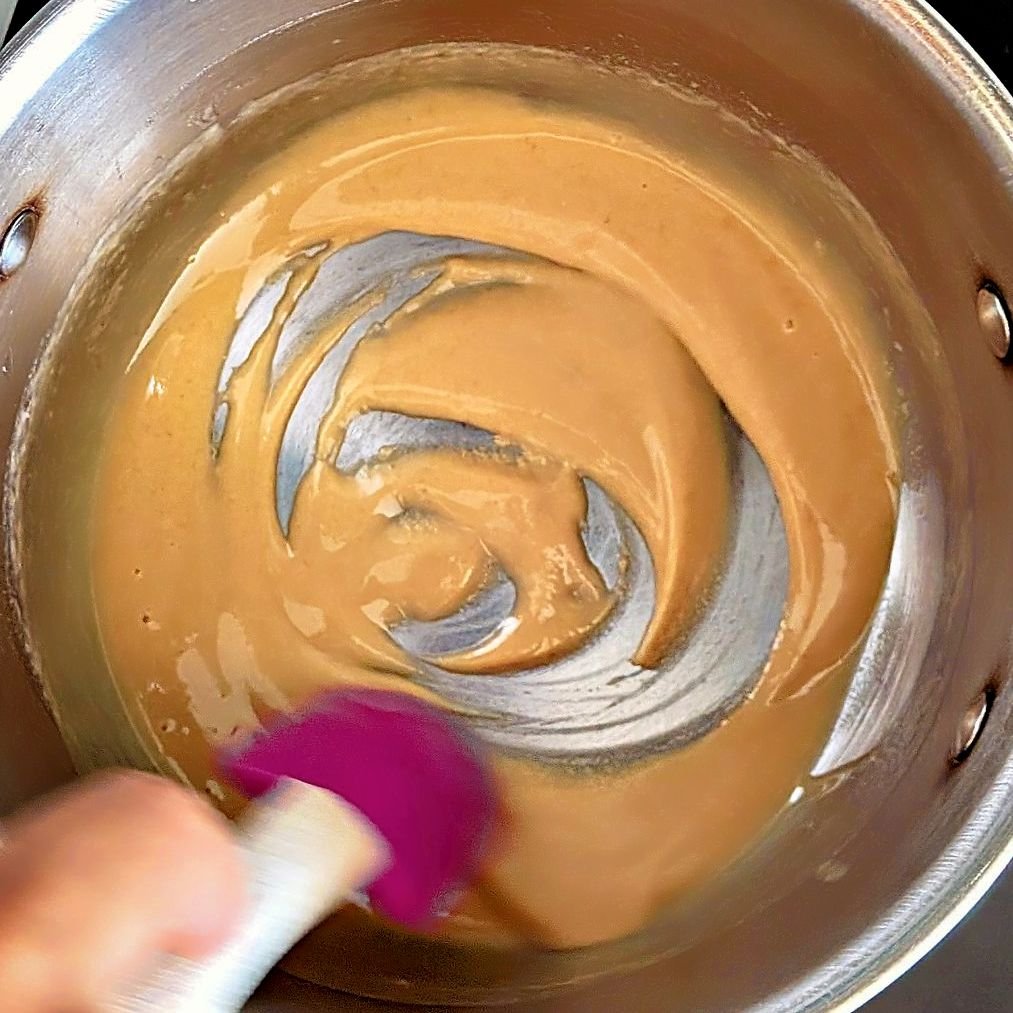
What Is a Roux?
A roux is made by cooking equal parts fat and flour together. It's the thickening base for everything from classic French mother sauces to everyday gravies, chowders, and soups.
I first learned to make roux in chef school and then used it almost daily in restaurant kitchens. It's one of the first techniques a chef learns because so many classic recipes start with it.
It may seem simple, but getting the right fat-to-flour ratio, figuring out how much roux you need, and cooking it properly can mean the difference between a smooth, silky sauce and one that's lumpy, too thin, or too thick.
By the end of this guide, you'll know exactly how to make white, blond, and brown roux, when to use each one, and what to look for as it cooks so you can stop relying on timers and start trusting what you see happening in the pan.
Roux Colors
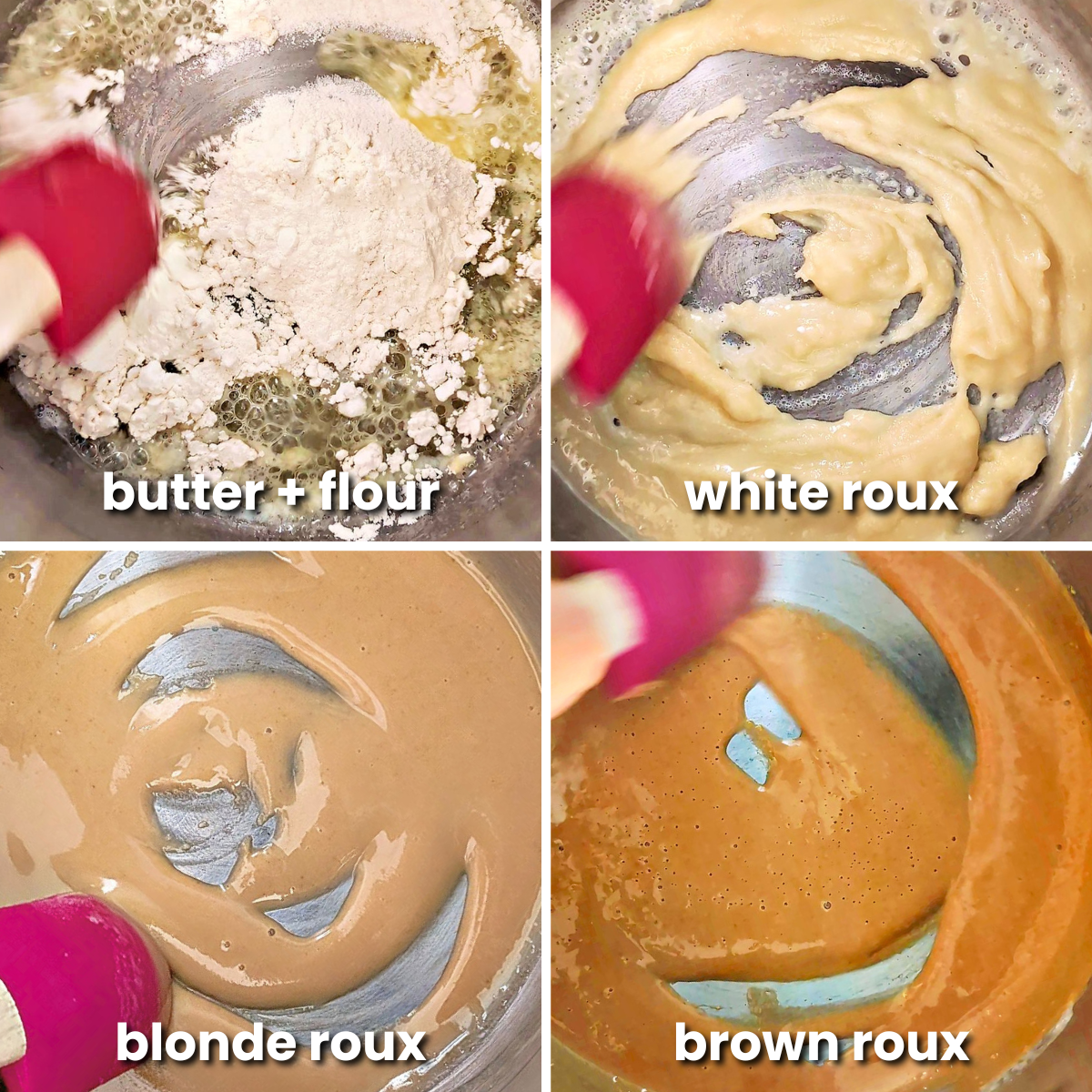
The longer you cook a roux, the darker and toastier it gets. A white roux has the mildest flavor, a blond roux takes on a subtle toasted flavor, while a brown roux develops a deep, nutty taste.
Roux also loses some of its thickening power the longer it cooks. So you'll need to adjust the amount depending on which type of roux you're using and how thick you want the final result.
Basic Roux Ratio
A traditional roux uses equal parts fat and flour by weight. Since fat and flour have different densities, weighing them gives the most accurate ratio.
For everyday home cooking, though, I usually measure equal volumes of fat and flour. After making roux for years, I've found that for small batches, you really can't tell the difference, and it's much more practical.
What Can You Make with Roux?
Roux is used to thicken all kinds of liquids. That could be milk for a creamy cheese sauce, pan drippings for gravy, or broth for soups and chowders.
That's what makes roux such a useful technique to learn. Once you know how to make it, you can use the same basic method to make endless recipes simply by changing the liquid and how long you cook the roux.
What You’ll Need
Roux Ingredients
2 tablespoons fat (I’m using butter)
2 tablespoons all-purpose flour
Equipment for Making Roux
Small saucepan
Whisk
Spatula
Measuring spoons
Makes: Thickens about 2 cups of liquid
Prep: 1 min
Cook: 3–10 min (depending on color)
How to Make a Roux
Step 1: Melt the butter and add the flour
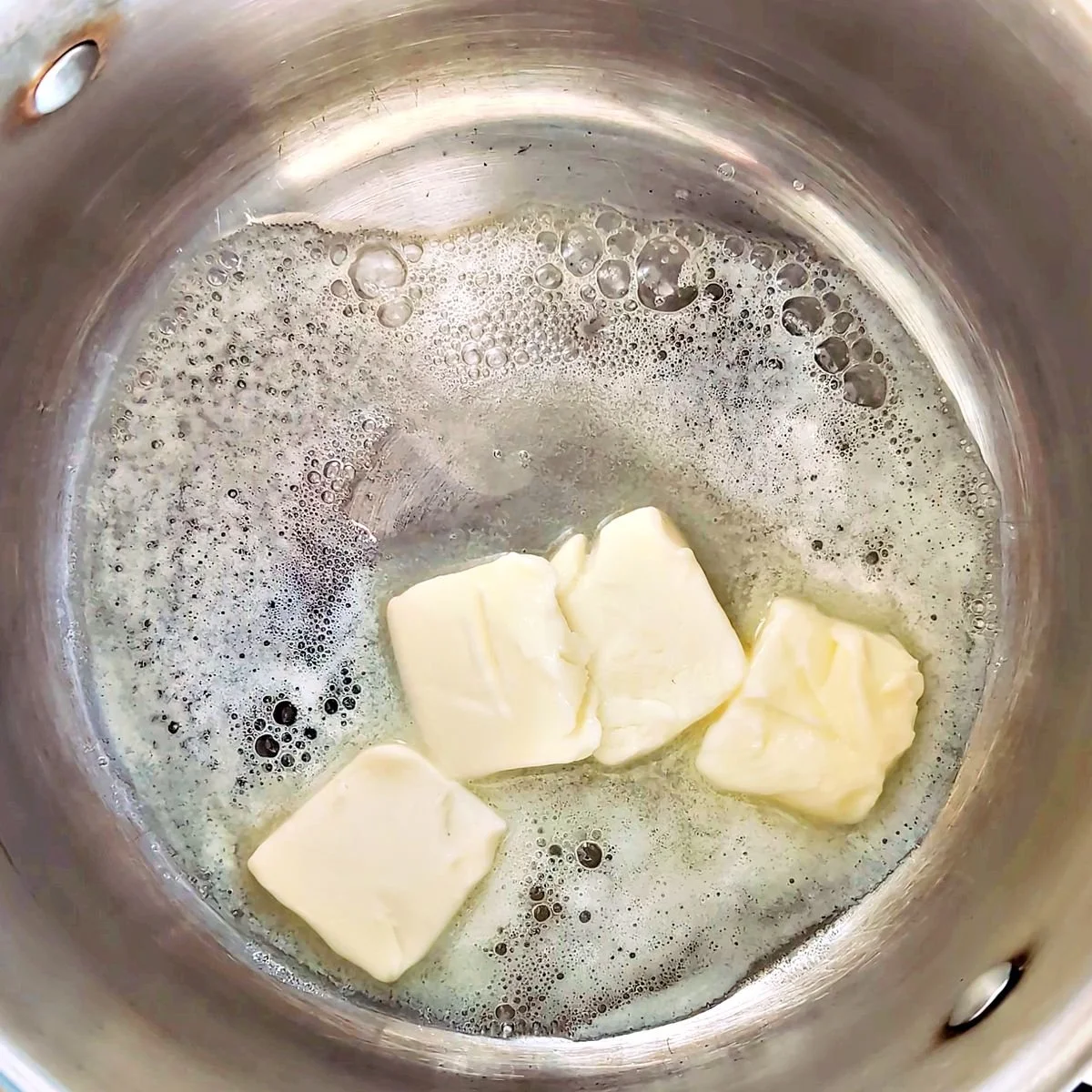
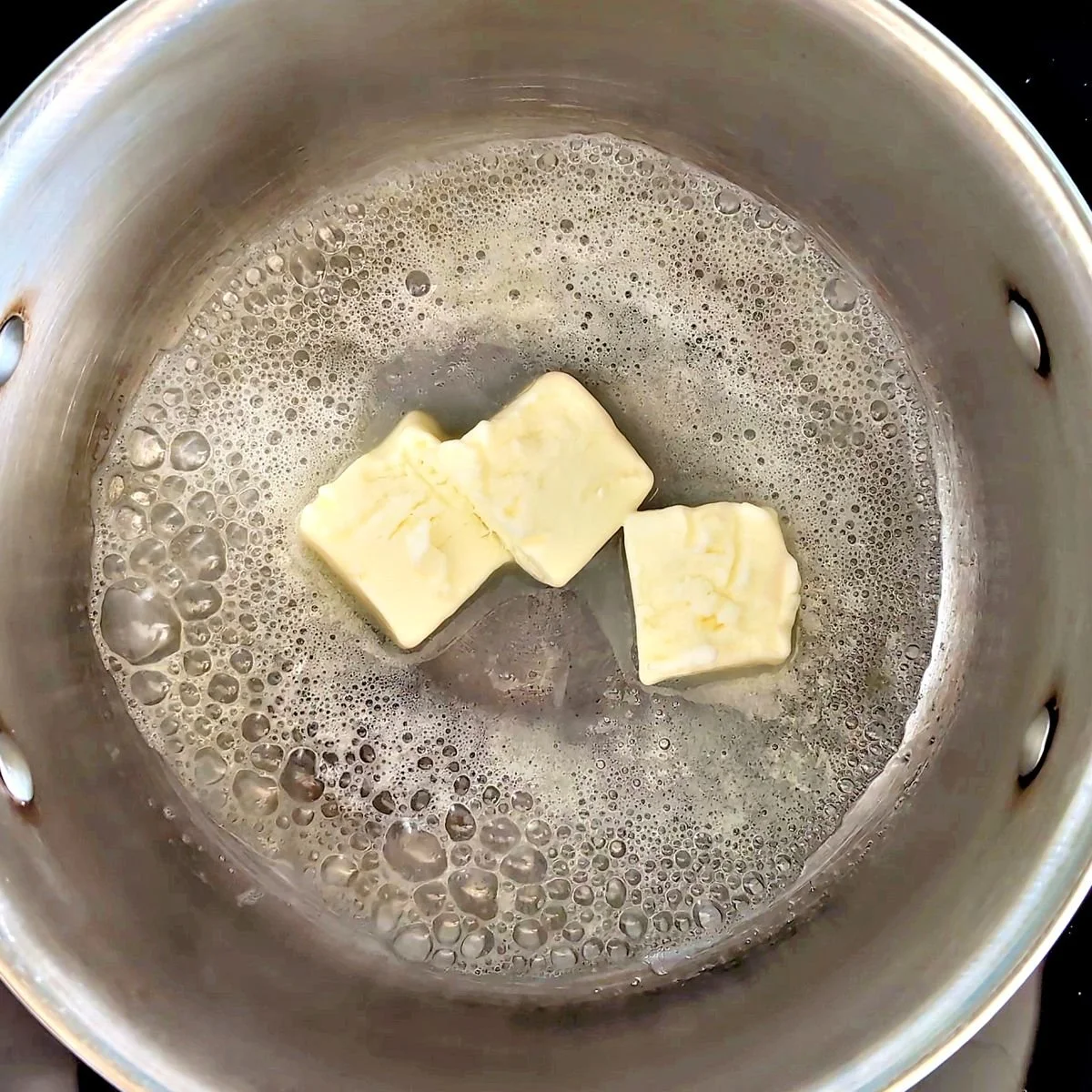
Melt the butter in a small saucepan over medium heat.
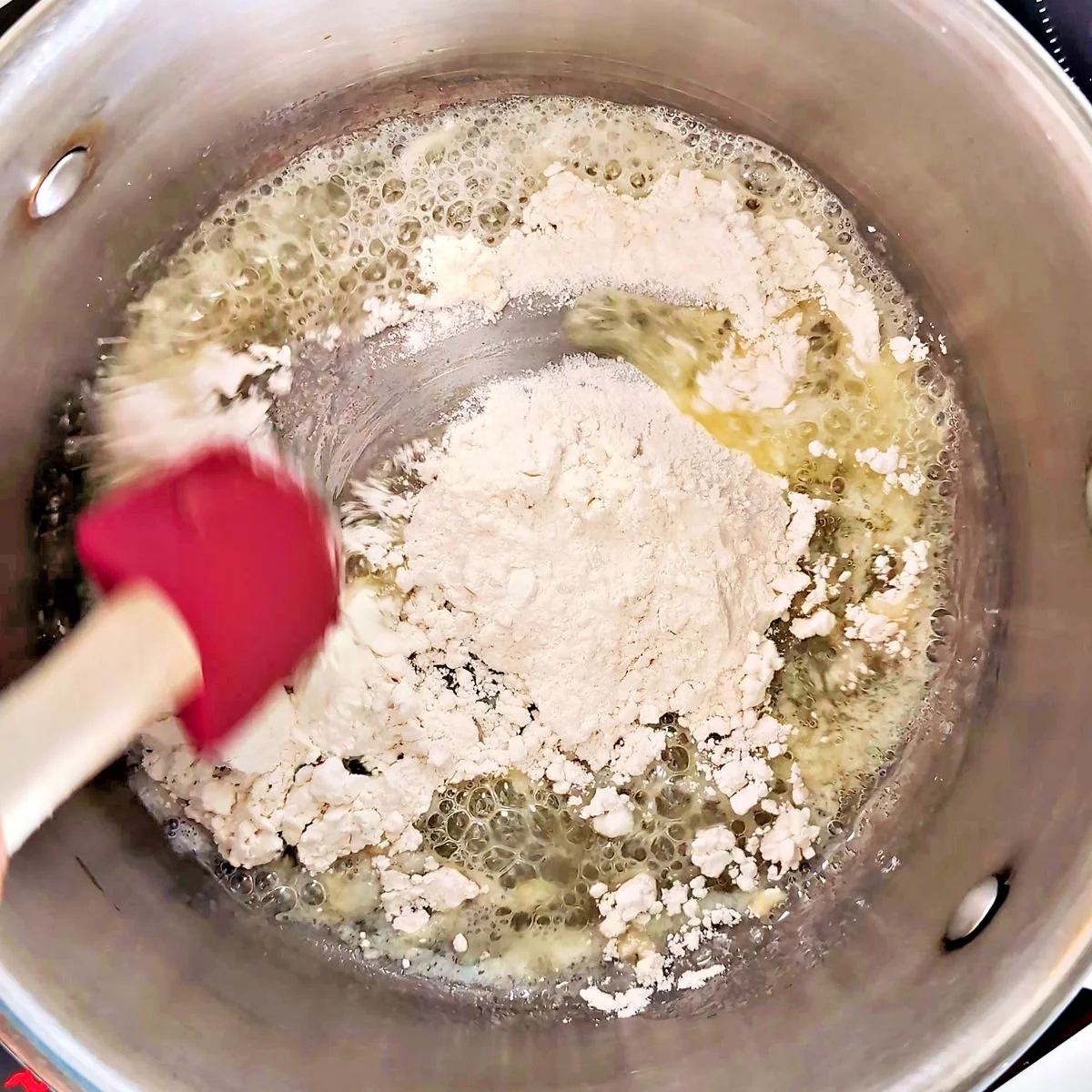
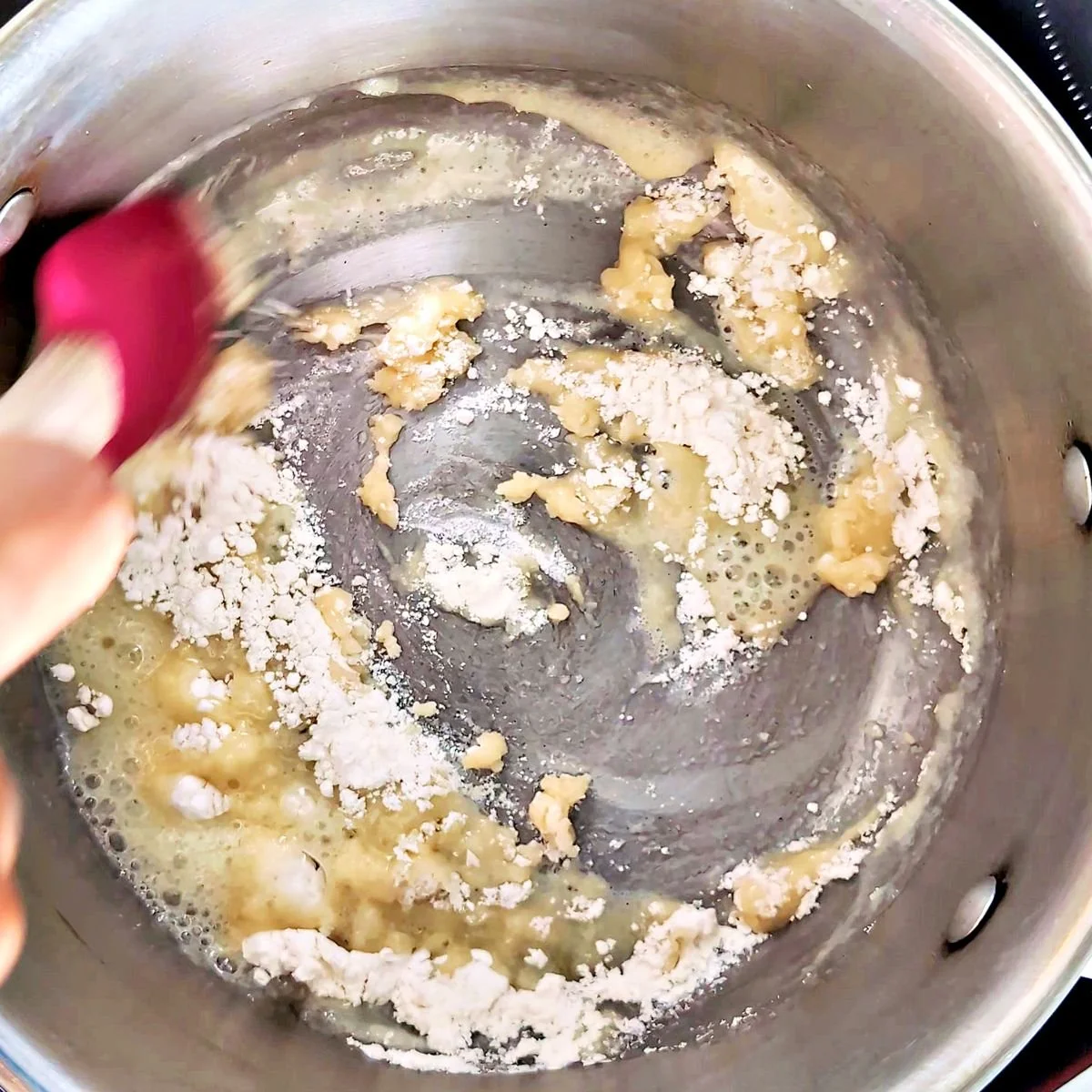
Add the flour and stir with a spatula until it forms a smooth paste, scraping the bottom and corners of the pan to work out any lumps.
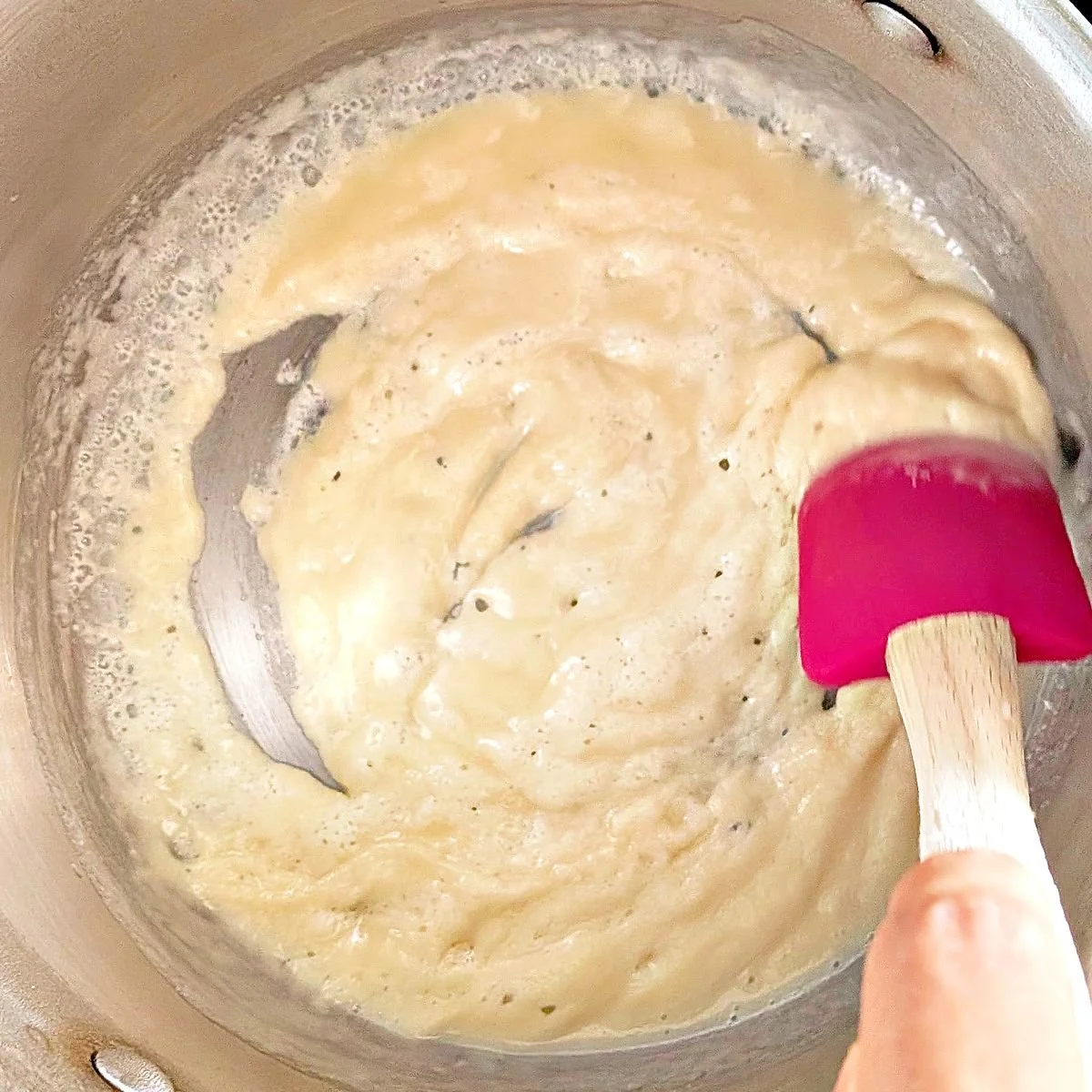
It should look like a smooth, wet sand-like paste. As it cooks, it'll start to foam a little, which is exactly what you want to see.
Step 2: Cook the roux to your desired color
Continue cooking the roux over medium heat, stirring frequently with the spatula until it reaches the color you're after.
For a white roux, cook it just long enough to lose the raw flour taste while keeping it pale, about 1–3 minutes. It'll smell lightly toasted when it's ready.
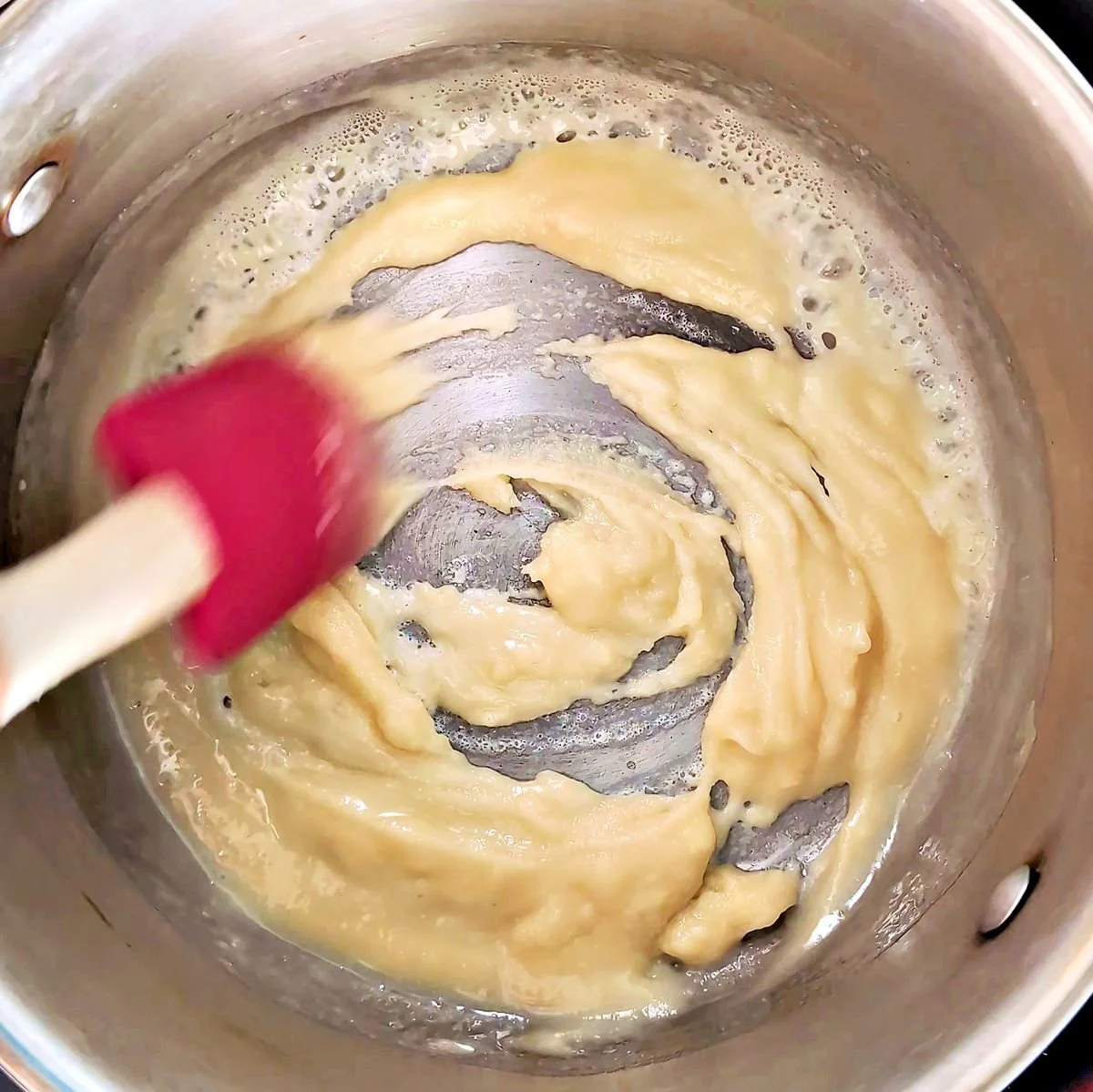
For a blond roux, keep cooking until it turns golden or light tan, about 3–5 minutes.
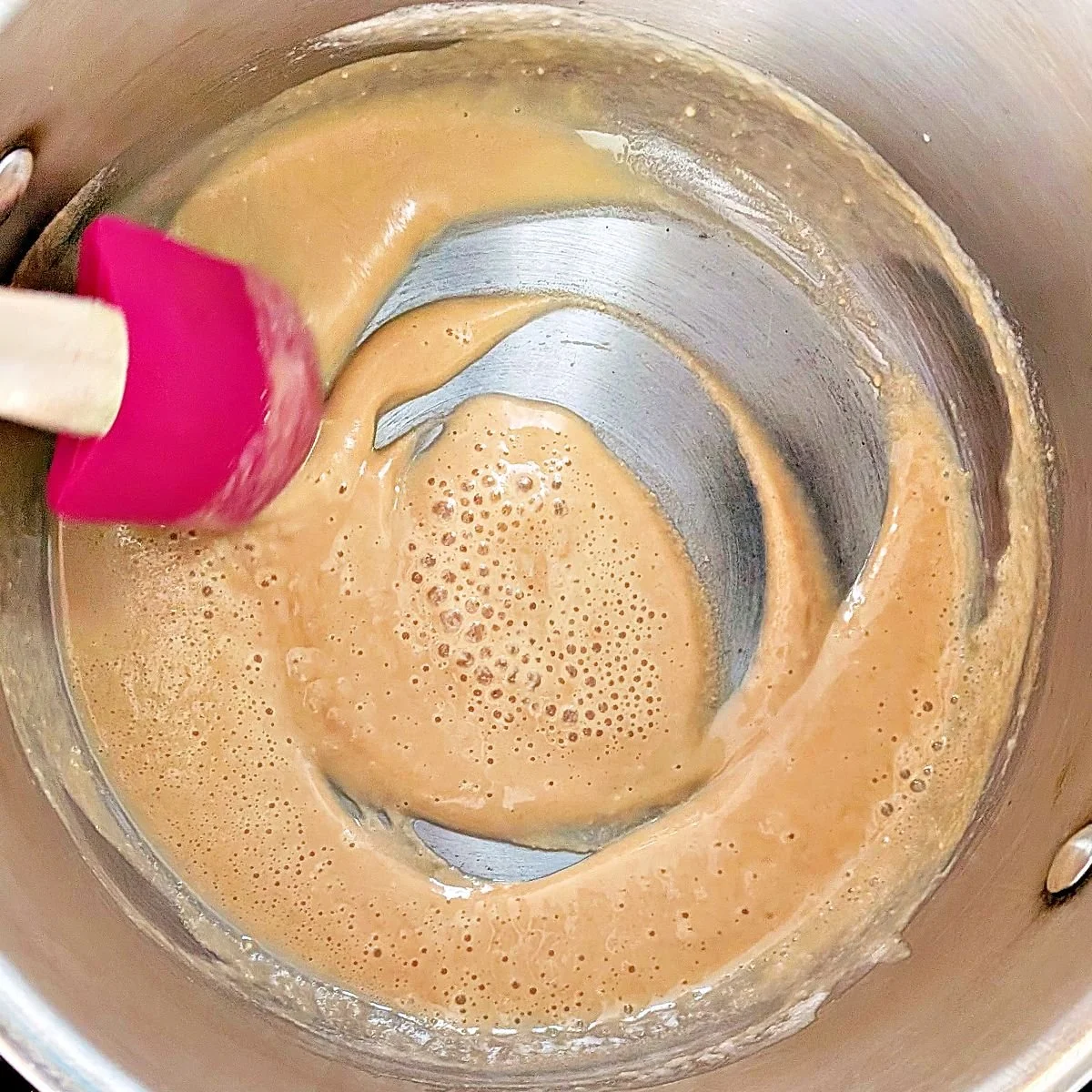
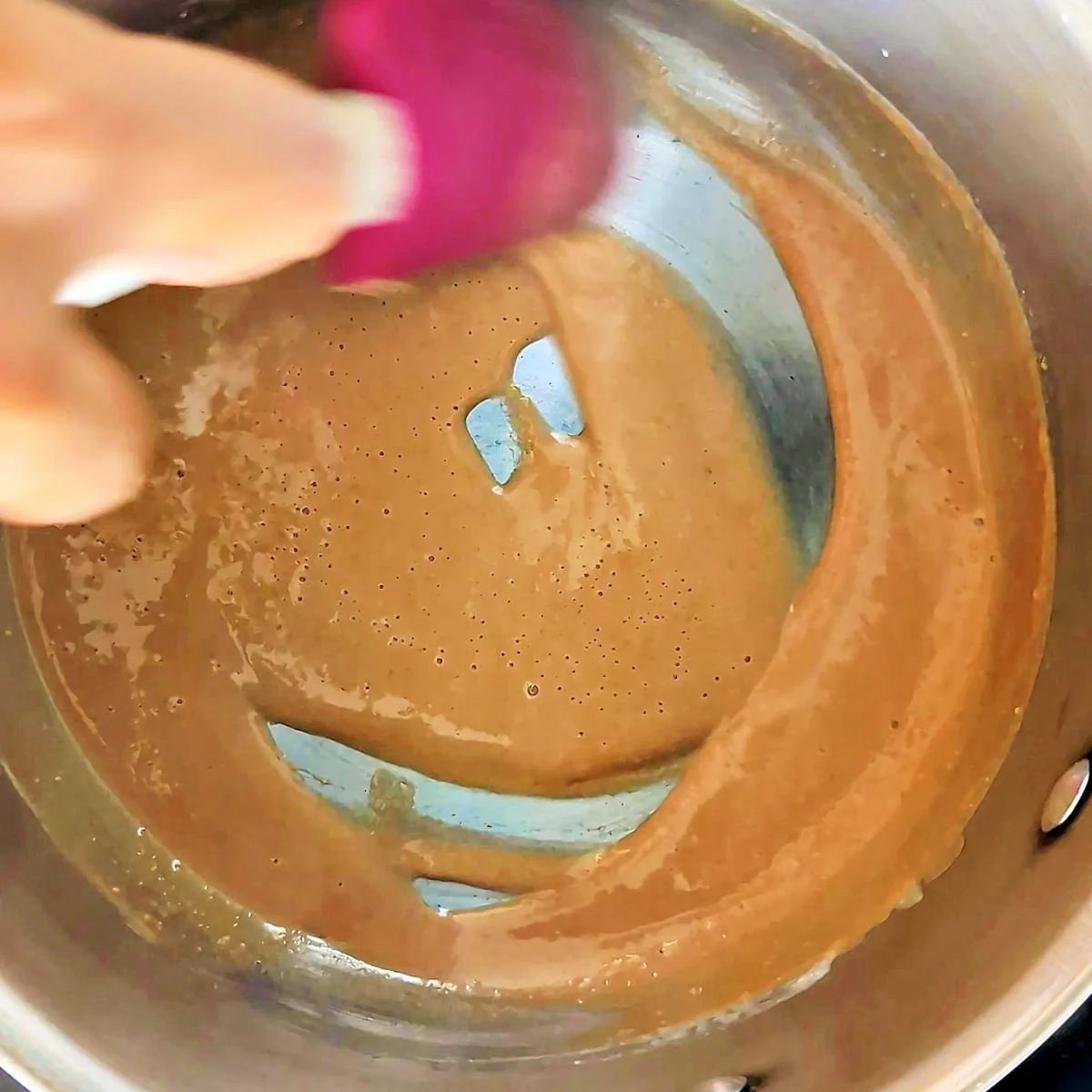
For a brown roux, continue cooking until it reaches the color of peanut butter or milk chocolate, about 5–10 minutes. Stop before it starts to smoke or black specks appear.
Step 3: How to incorporate liquids into roux
Depending on the recipe you’re working on, you’ll most likely be using milk, stock, or some sort of liquid. No matter what it is, the method stays the same.
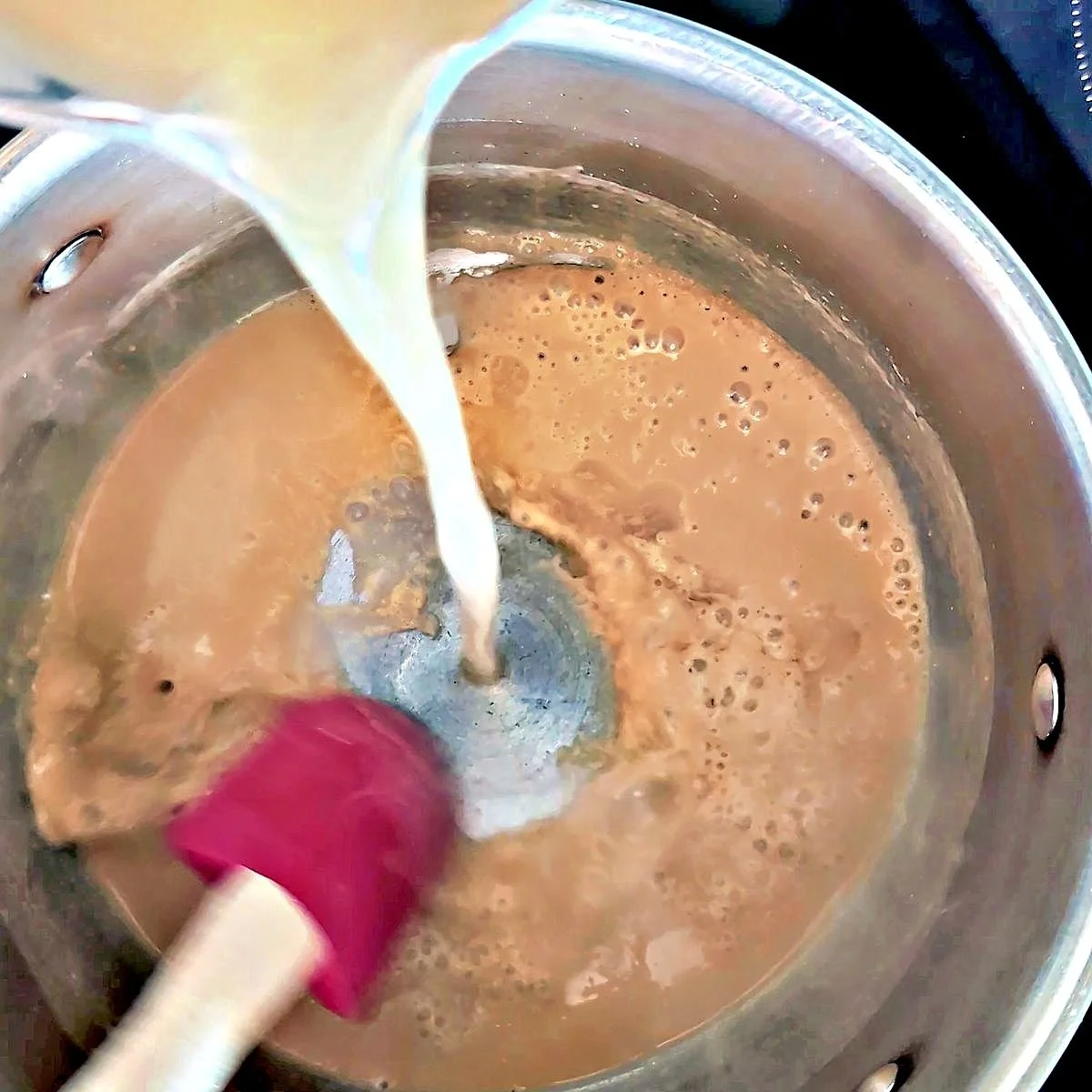
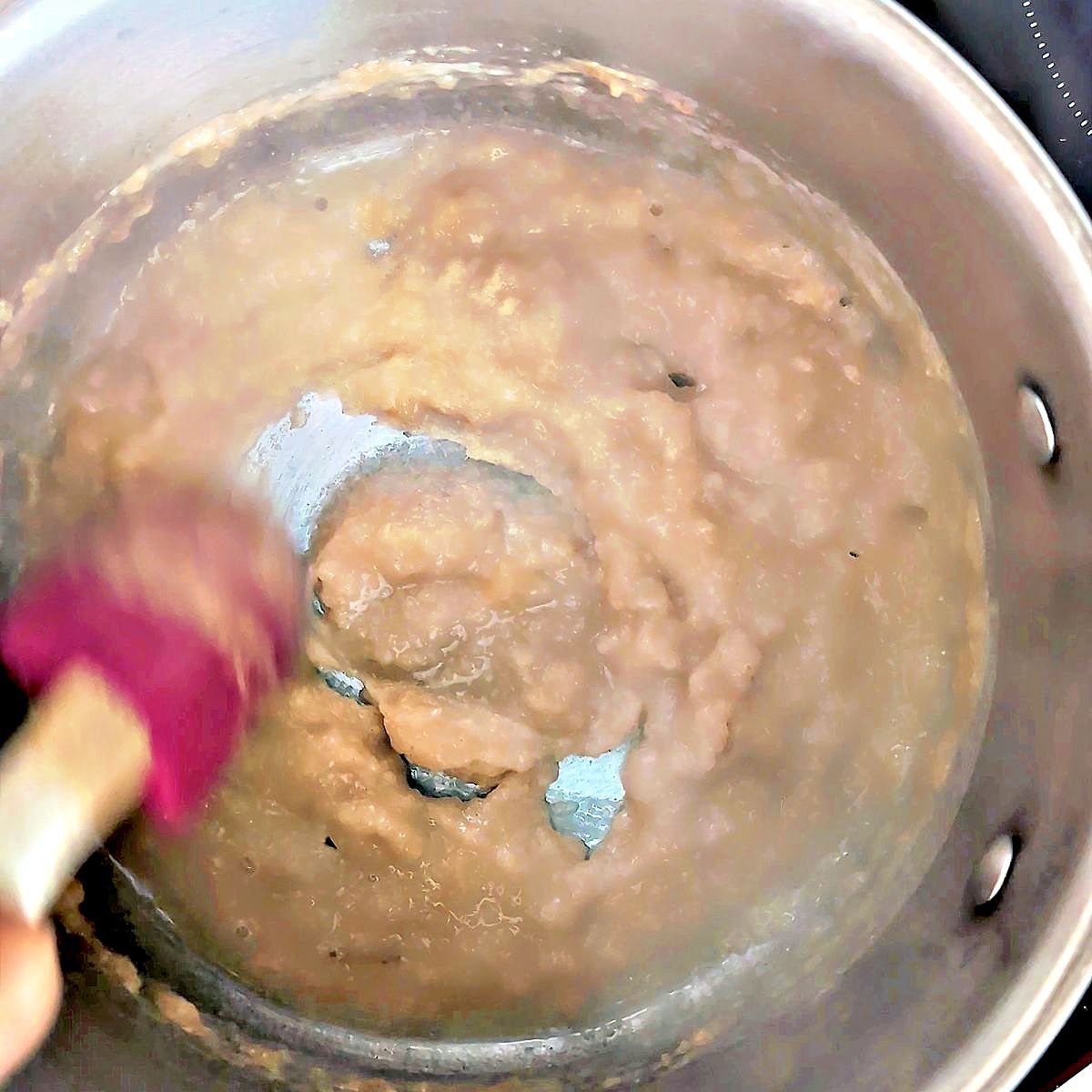
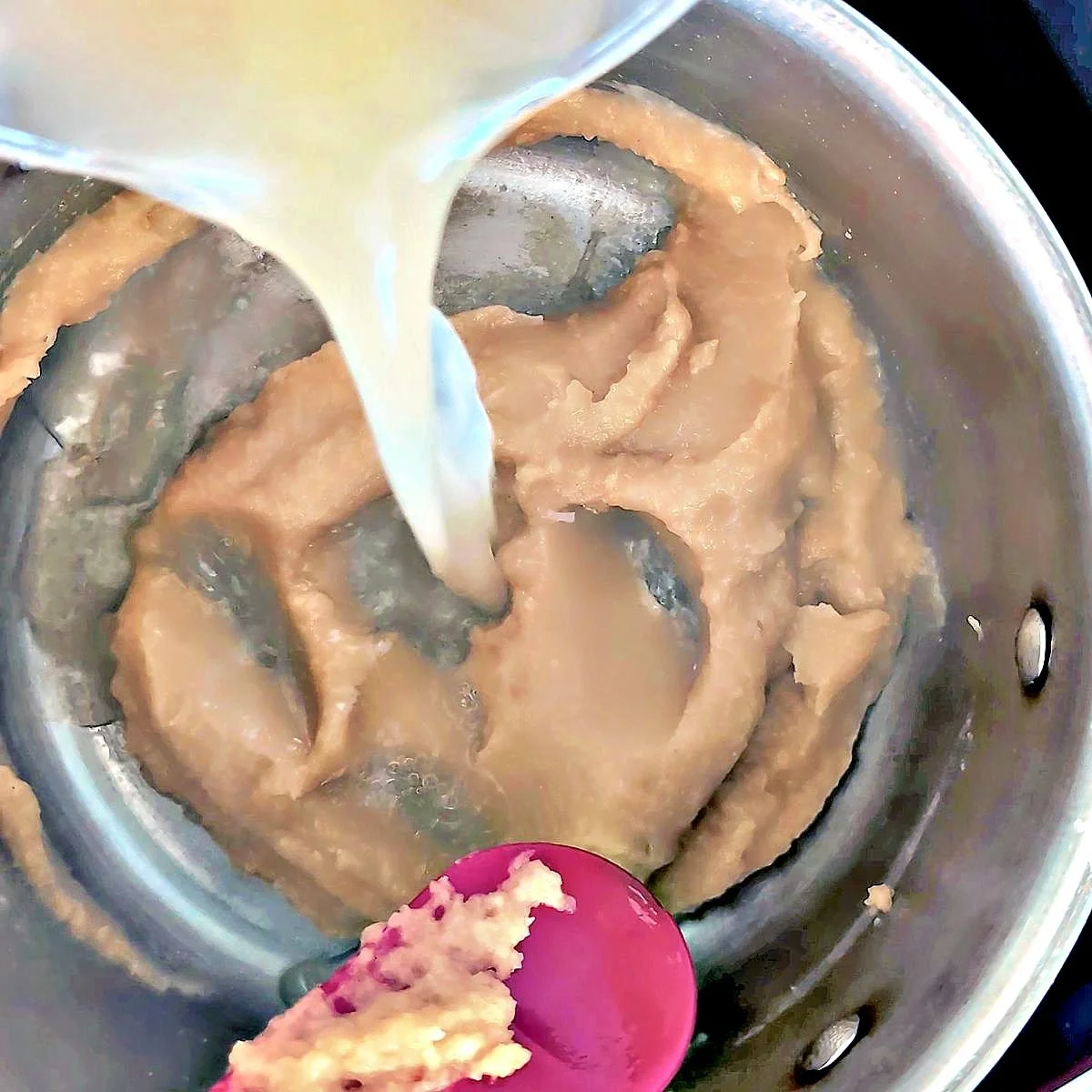
Add a small splash of liquid to the roux and stir with the spatula. At first, the mixture will become very thick, almost like mashed potatoes. That's exactly what you want.
Keep adding the liquid a little at a time, using the spatula to work out any lumps before adding more.
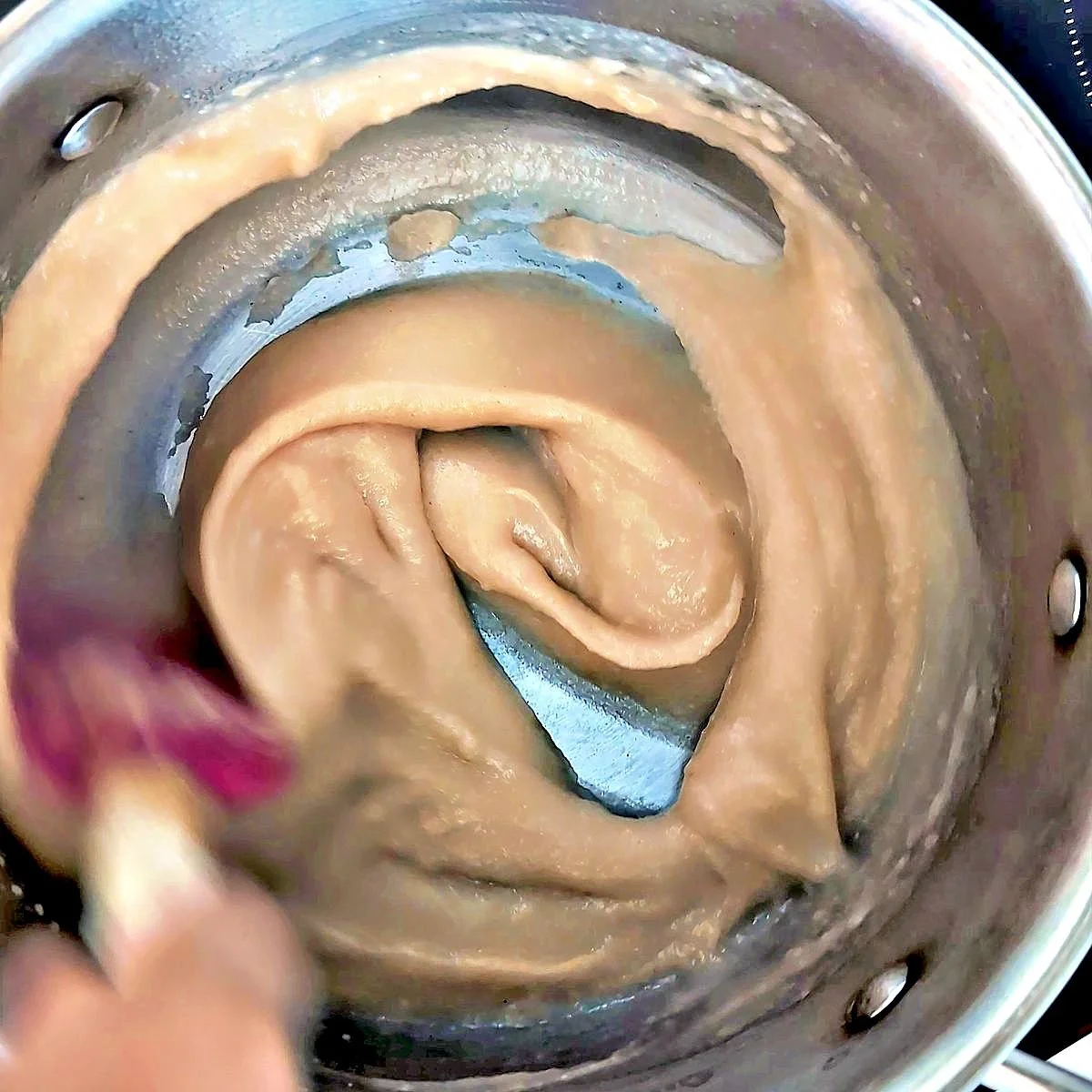
Once the mixture loosens up, switch to a whisk and continue adding the remaining liquid until it's fully incorporated and smooth.
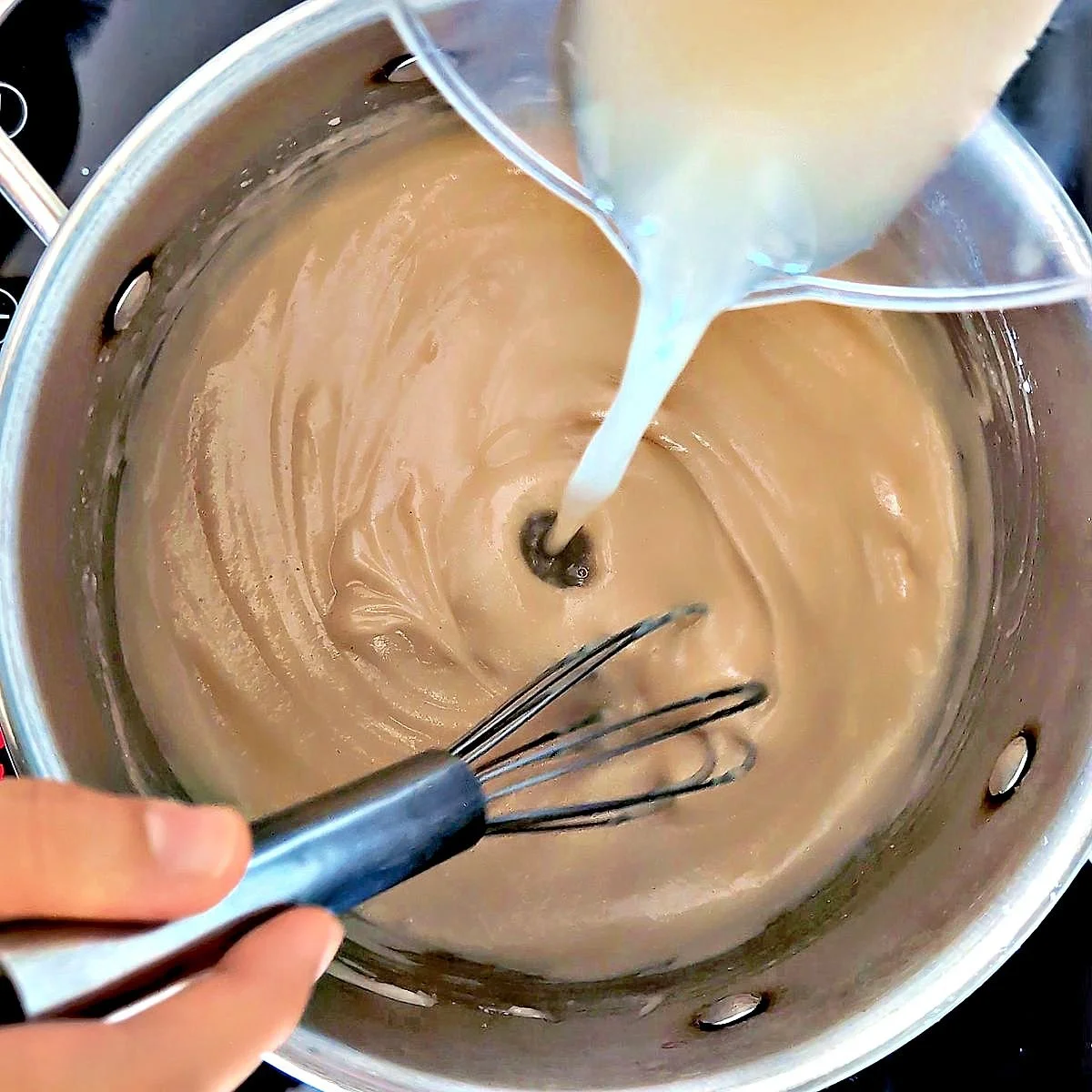
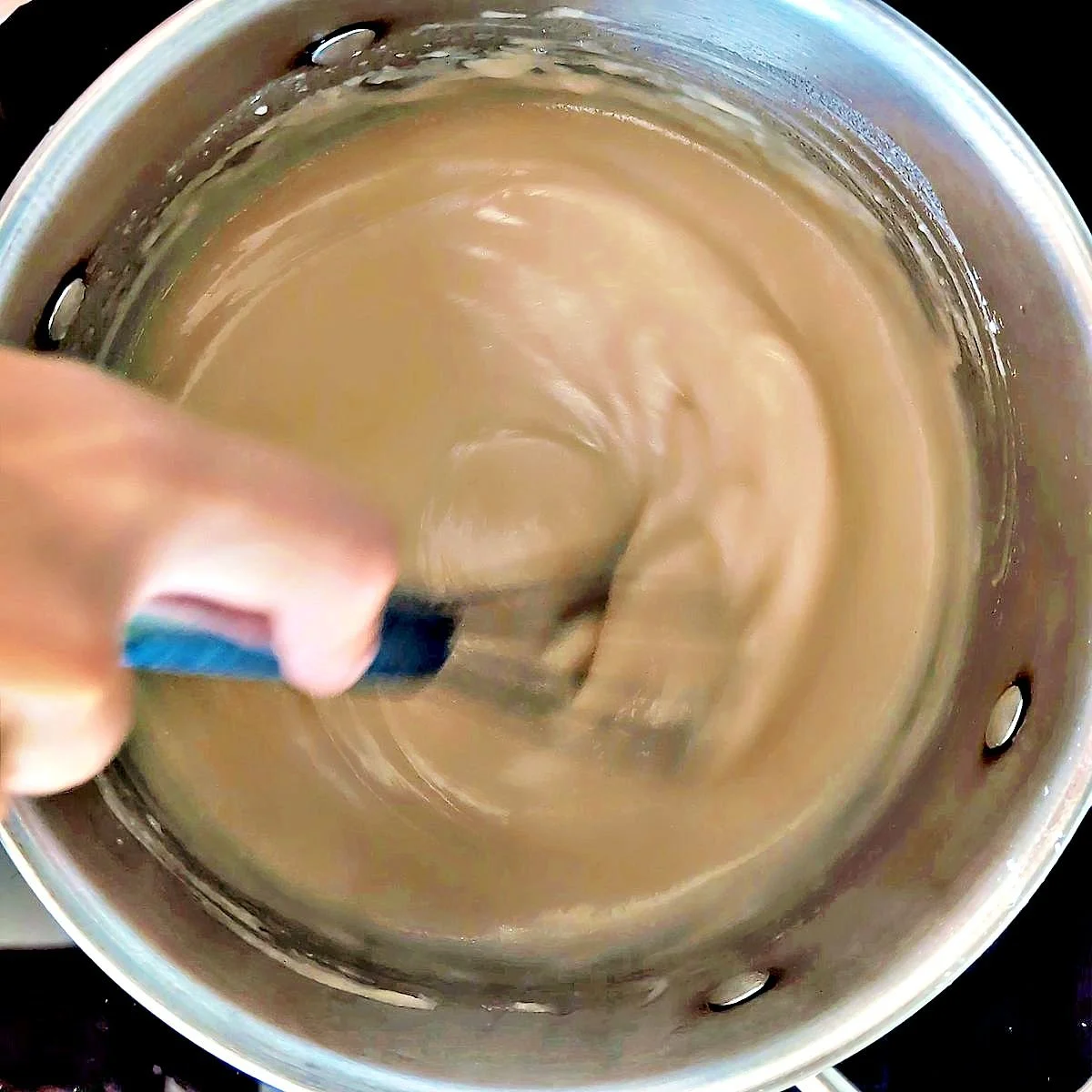
Step 4: Simmer until thickened
Once you've added all the liquid, bring it to a gentle simmer over medium-high heat. Let it cook for about 5 minutes, stirring frequently so it doesn't stick to the bottom of the pan.
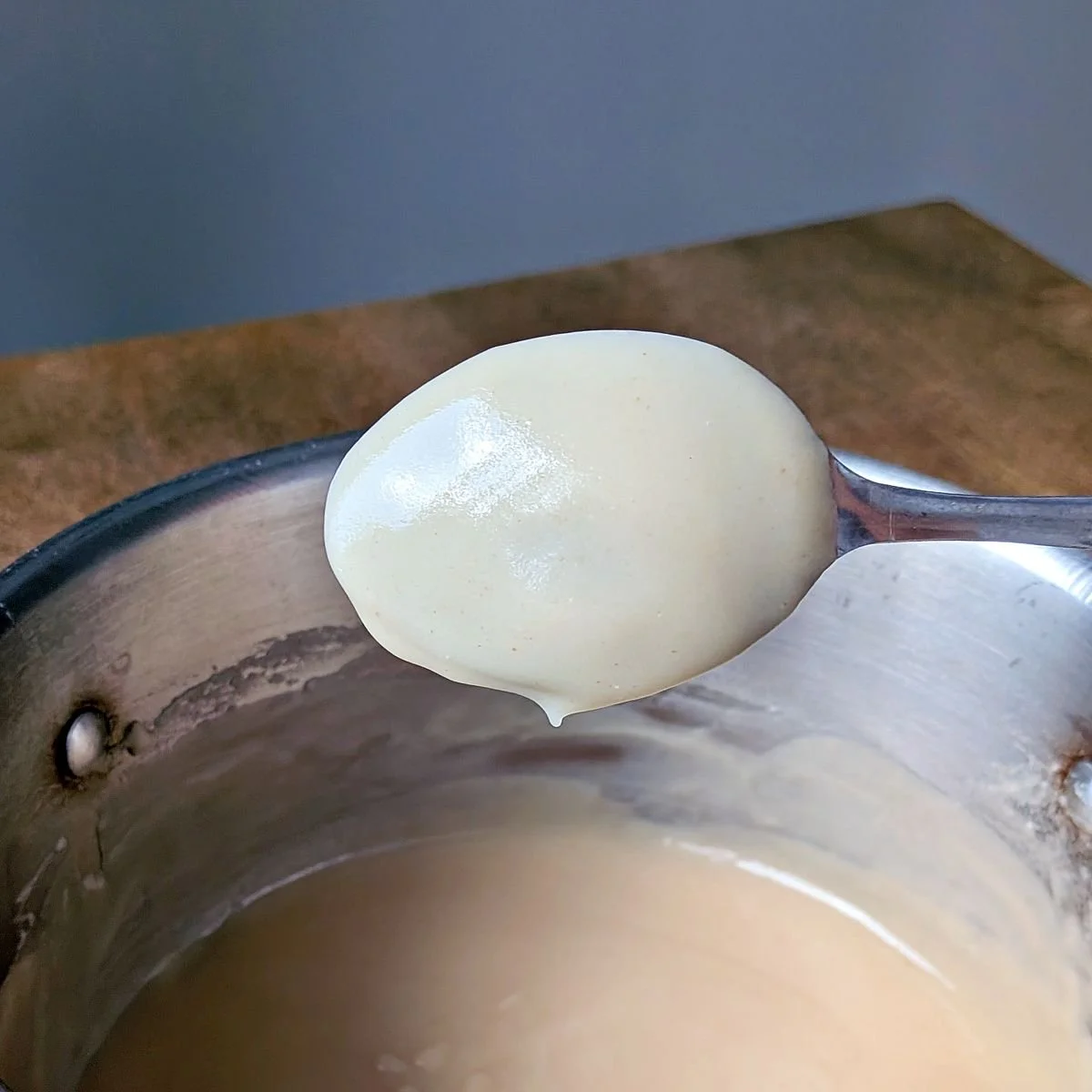
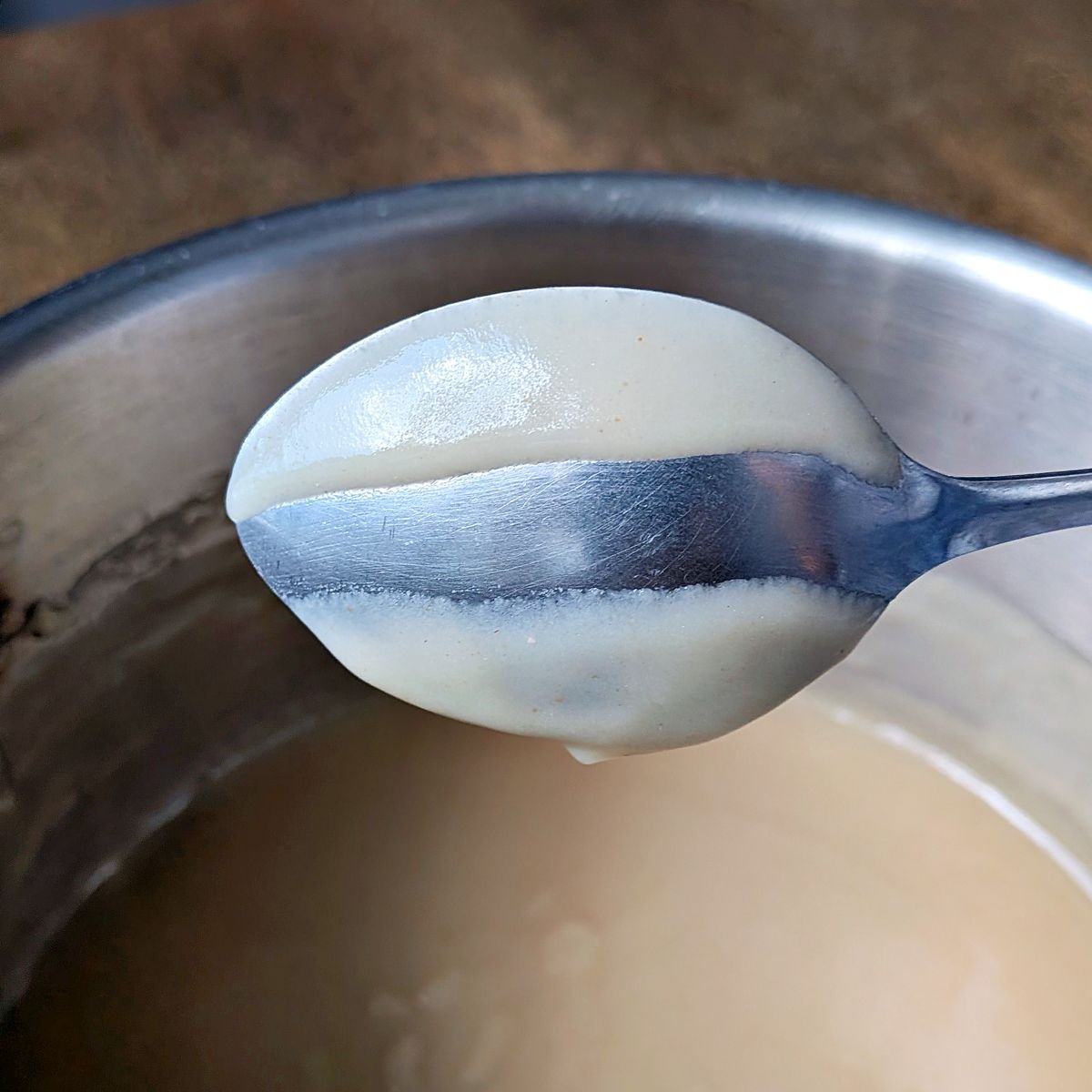
It should have a nappe consistency, meaning it coats the back of a spoon. If you draw a line through it with your finger, the line should hold and not immediately run back together.
When to Use Each Type of Roux
White Roux
A white roux is cooked just long enough to remove the raw flour taste while keeping it pale. It's my go-to whenever I want to thicken something without changing its color or flavor too much.
It works best with milk or lighter-colored stocks like vegetable or seafood.
Best uses for white roux:
Cream sauces
White gravies
Blond Roux
A blond roux is cooked a little longer until it turns light tan and starts to smell slightly nutty. It's the middle ground between a white and brown roux, giving you a nice balance of flavor without overpowering the dish.
It works well with light to medium-colored stocks like chicken, pork, or veal.
Best uses for blond roux:
Chowders
Cream soups
Brown Roux
A brown roux is cooked until it reaches the color of peanut butter or milk chocolate, depending on how dark you want to take it. It has the richest, nuttiest flavor of the three and can stand up to bolder flavors.
It works well with brown stocks like beef or lamb, rich pan drippings, or tomato-based broths.
Best uses for brown roux:
Braised meats
Gumbo
Choosing the Right Fat for Roux
Butter
Butter is what I use for most roux-based recipes. It works well in everything from classic French sauces to everyday gravies, soups, and chowders.
It's versatile, tastes great, and it's usually what I have in the fridge.
Oil
Oil is a great choice if you want a more neutral flavor or need a dairy-free option.
Canola, vegetable, and avocado oil also have a higher smoke point than butter, so they're a better choice if you're making a darker roux without worrying about it burning. That's why they're commonly used in Cajun cooking to make very dark brown roux for dishes like gumbo, where the roux is cooked until it's the color of dark chocolate.
Olive oil works too, but it has a more noticeable flavor. I like using it in Mediterranean-inspired dishes where that flavor complements the finished dish.
Animal Fats
Rendered fats like bacon fat, beef tallow, duck fat, lard, or pan drippings all make excellent roux.
They add another layer of savory flavor, making them a great choice for gravies, stews, chowders, and other dishes where you want to build on the meat’s flavor.
Which fat is best for roux?
There isn't one best fat for every roux.
Butter is the one I reach for most often because it's so versatile, but the best choice depends on the flavor you're after, what you have on hand, and any dietary restrictions.
How Much Roux Do You Need?
The amount of roux you need depends on two things: how thick you want the finished sauce and which type of roux you're using.
The longer you cook the flour, the more its starch breaks down. That gives a brown roux its rich, nutty flavor, but it also means it won't thicken as much as a white roux.
As a general rule, for 1 cup of liquid:
White roux: 1 tablespoon fat + 1 tablespoon flour
Blond roux: 1½ tablespoons fat + 1½ tablespoons flour
Brown roux: 2 tablespoons fat + 2 tablespoons flour
I use these amounts as my starting point for most medium-thick sauces. From there, I adjust depending on whether I want something that's pourable or much thicker.
For example, the béchamel for moussaka is thick enough to hold its shape between the layers, so I use more roux than I would for a sauce that's meant to be poured over chicken or vegetables.

Troubleshooting Roux Problems
Raw flour taste
Cause:
A white roux wasn't cooked long enough. Blond and brown roux naturally cook past this stage as they continue to brown.
How to fix it:
Cook a white roux for 1–3 minutes to remove the raw flour taste. Larger batches may take a little longer.
If you've already added the liquid, simmering the sauce for a few more minutes can sometimes help reduce the raw flour taste.
Burnt roux
Cause:
The heat was too high or the roux wasn't stirred often enough.
How to fix it:
Once a roux is burnt, there's really no saving it.
If it smells burnt or has black specks throughout, it's best to start over.
Roux that's too thick
Cause:
Too much flour relative to the fat.
How to fix it:
Stir in a little more fat until the roux becomes smooth and easier to work with.
A properly balanced roux should look like a smooth paste or wet sand, not a stiff dough.
Use weight measurements if you're making a larger batch.
Roux that's too loose
Cause:
Too much fat relative to the flour.
How to fix it:
Stir in a small amount of flour and continue cooking until the roux becomes a smooth paste.
It should briefly hold its shape when stirred rather than spreading like a liquid across the pan. Add the flour gradually—a little goes a long way.
FAQs About Roux
How do you pronounce roux?
Roux is pronounced "roo." The x at the end is silent.
How does roux thicken sauces?
Roux thickens sauces because the starch in the flour absorbs liquid and swells as it cooks. As it expands, the starch then gelatinizes and gives sauces, gravies, and soups their structure and thickened texture.
Does liquid temperature matter for roux?
Not as much as people think. I've used both hot and cold liquids over the years, and both work.
Some say that adding a cold liquid to a hot roux or a cold roux to a hot liquid is the best way to avoid lumps. But in my experience, the biggest cause of lumps isn't temperature—it's adding too much liquid at once.
In restaurant kitchens, we almost always added hot liquid to a hot roux. Adding cold liquid cools the roux down, so it takes longer for the sauce to heat back up and thicken. When you're making 20 liters of Mornay sauce, that difference can save a lot of time.
Can you make roux ahead of time?
Yes. Roux can be made ahead and stored in the refrigerator for several weeks or in the freezer for several months.
We made large batches ahead in restaurant kitchens because darker roux can take a long time to cook. At home, though, I usually make it fresh because it's quick to make and I can measure exactly how much I need.
Recipes to Make with Roux
Béchamel Sauce: The classic white sauce made with milk and white roux. Use it for lasagna, gratins, casseroles, or as the base for Mornay sauce.
Velouté Sauce: A velvety French mother sauce made with blond roux and stock. It's one of my favorite sauces for chicken and also makes a great base for chicken pot pie.
Espagnole Sauce: A rich brown sauce made with brown roux and beef stock and forms the foundation of demi-glace.
Mornay Sauce: A creamy cheese sauce made by adding cheese to béchamel. It's perfect for mac and cheese, broccoli, cauliflower, and croque monsieur.
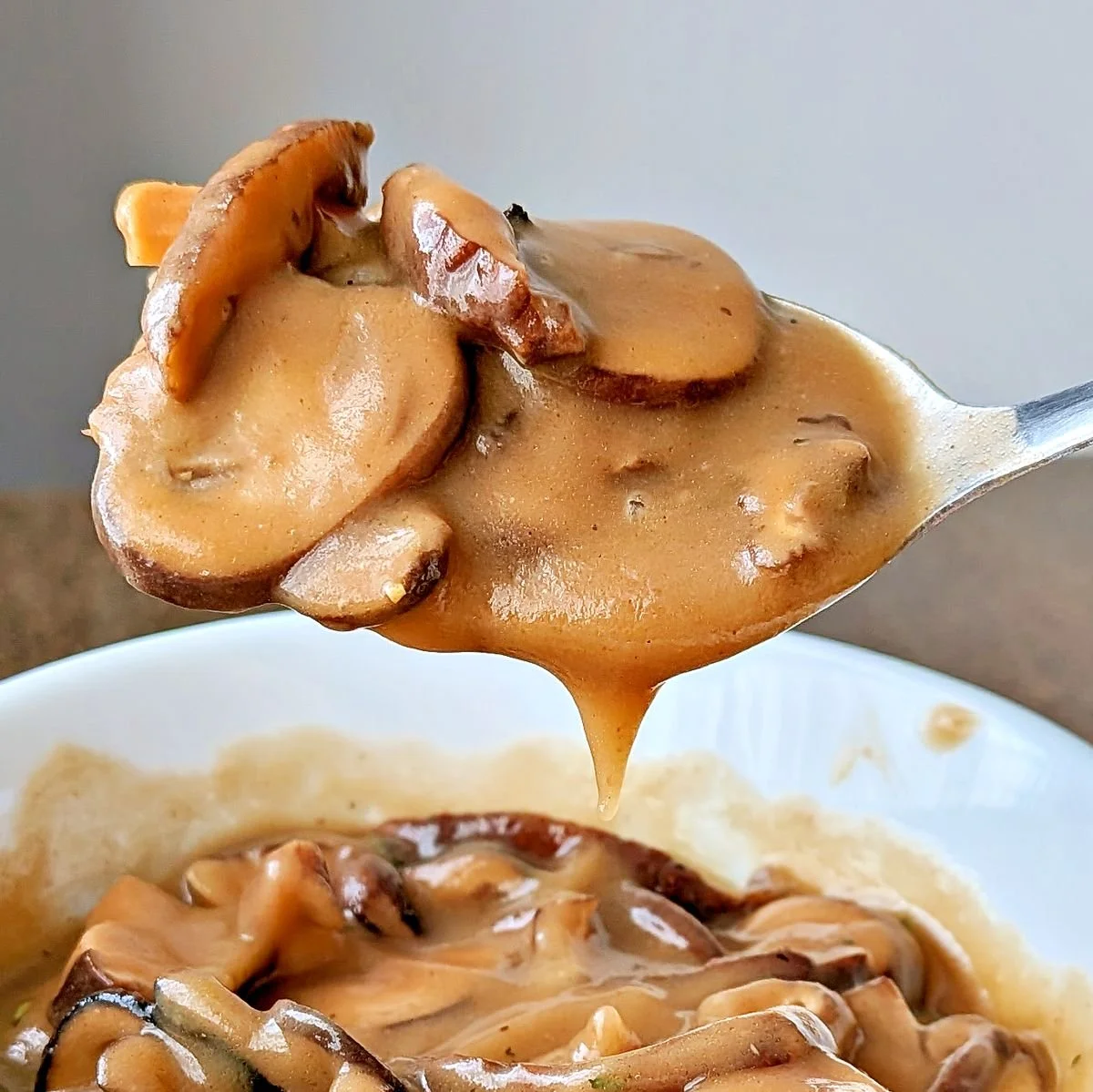
Mushroom Gravy: A rich vegetarian gravy made with brown roux and shiitake mushroom stock. It's perfect over mashed potatoes, poutine, or vegetarian roasts.
How do you use roux?
I'd love to hear how you use roux in your own cooking. Leave a comment below with your favorite recipe or any questions you have—I read every comment and am always happy to help.