Delter Coffee Press Review
After five years of brewing coffee with the Delter Coffee Press, here's my honest review—plus exactly how I brew and clean it outdoors.
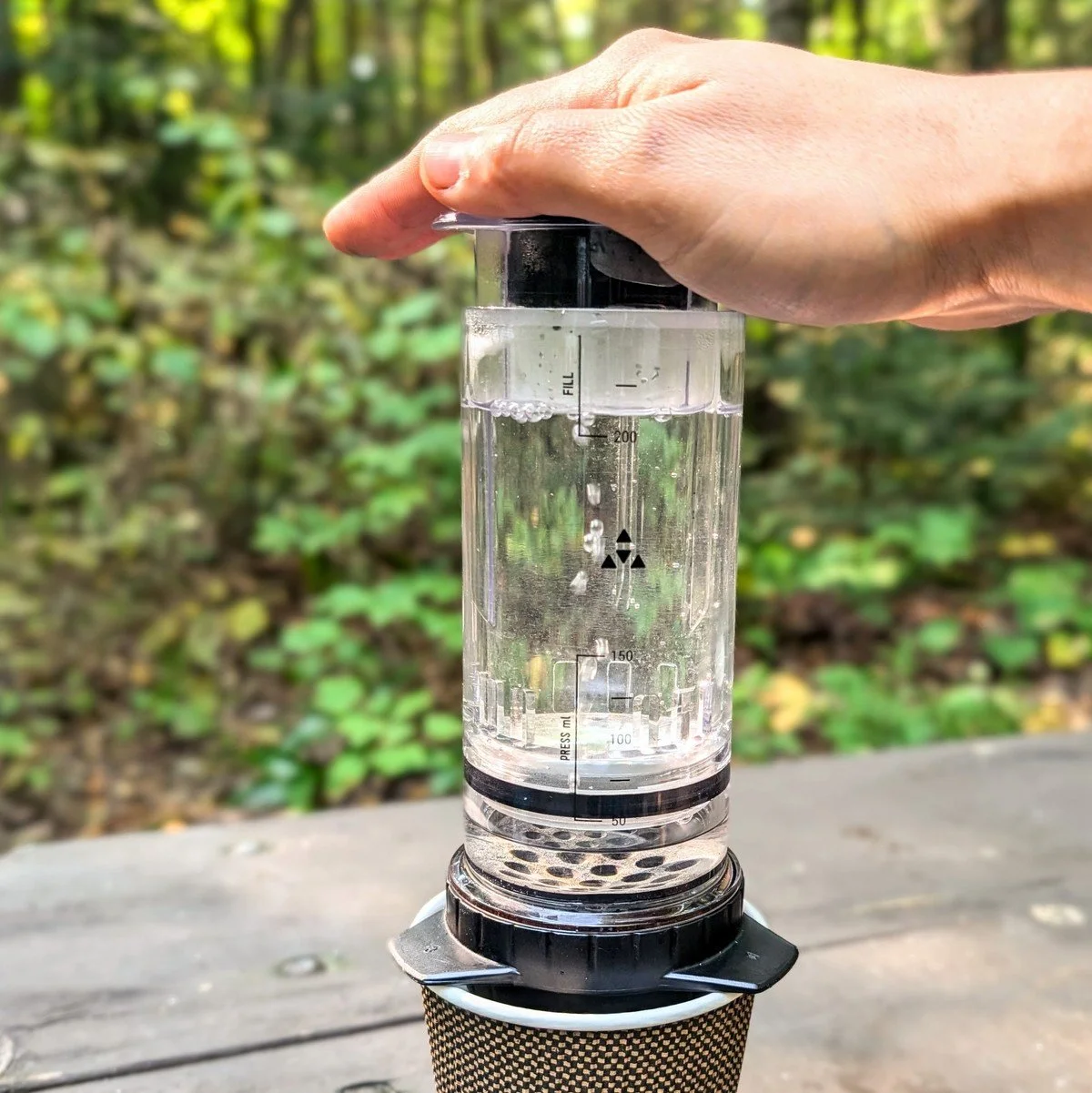
Why It's Still My Go-To Camping Coffee Maker
I genuinely enjoy using it, and it holds up. I've been using the Delter Coffee Press on camping trips for the past five years, and it hasn't disappointed me yet. Not only does it make great-tasting coffee, but it's also easy to use, and clearly built to last.
Great coffee, even when you're outdoors. I don't expect campground coffee to taste like something from a specialty café, but I do want it to be smooth, balanced, and something I actually look forward to drinking in the morning. I think the Delter is a huge upgrade over instant coffee or even a French press—I’ll explain why below.
In this review, I'll tell you what I really like about the Delter Coffee Press, where I think it falls short, who I think it's best for, and exactly how I brew and clean it at the campsite.
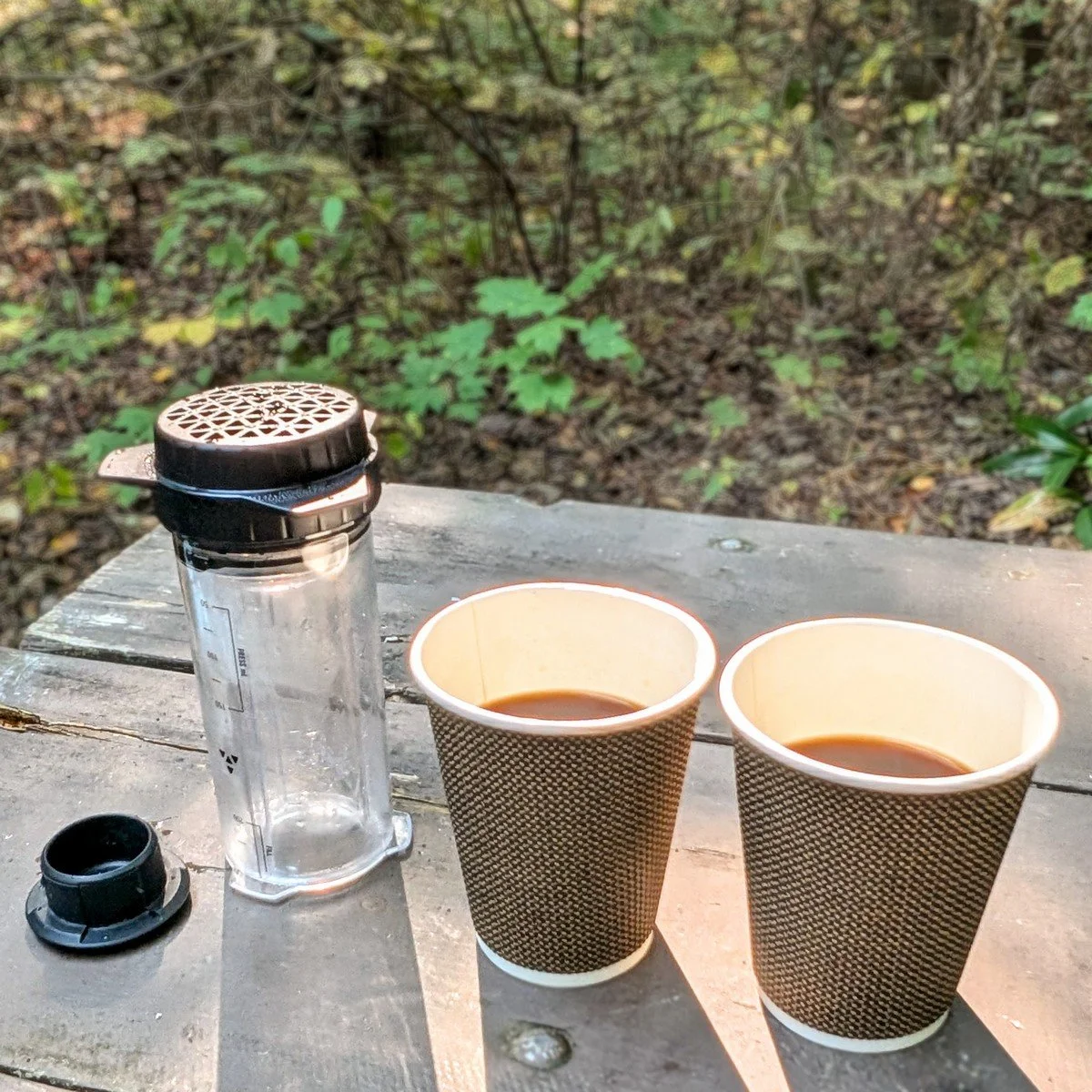
My Delter Coffee Press Review
What Is the Delter Coffee Press?
The Delter Coffee Press is a portable coffee maker that brews by gently pressing hot water through coffee grounds and a paper filter.
Unlike an AeroPress or French press, the water doesn't steep with the grounds—it only passes through them, which helps produce a cleaner, smoother cup.
It brews up to two cups at a time, and packs down into a compact size, making it convenient for camping.
Delter vs AeroPress
The Delter and AeroPress look similar, but they brew quite differently.
The AeroPress uses immersion brewing, meaning the coffee and water steep together. For that reason, it produces a richer, fuller-bodied cup, and the brew time has a big impact on the final flavor. The original makes 1 cup at a time, while the XL can brew up to 2 cups.
The Delter, on the other hand, is more consistent. It makes smooth, balanced coffee that’s hard to mess up. Since the coffee sits in its own chamber, it only comes into contact with the water when you press, and that gives you more control over the strength.
Pros
Makes great coffee. It consistently brews a smooth, clean-tasting cup with very little bitterness.
Perfect for camping. It's lightweight, compact, and packs away easily with the rest of our camp kitchen gear.
Easy to use. After a couple of brews, the process becomes second nature.
Quick to clean. Dump the grounds, give it a quick wash, and you're done.
Built to last. It's made from durable Tritan plastic, and after five years of regular camping trips, ours still works like new.
Cons
Not dishwasher safe. It only takes a couple of minutes to wash by hand, but it's something to keep in mind.
Not ideal for large groups. It brews up to two cups at a time, so you'll need multiple batches for a crowd.
Requires a steady hand. You'll need to press slowly and keep it balanced on your cup while brewing.
Who I Think the Delter Coffee Press Is Best For
I think the Delter is a great choice if you enjoy smooth, balanced coffee and want something that's portable, reliable, and easy to use—especially if you spend a lot of time camping or traveling.
If you're deciding between the Delter and the AeroPress, I don't think you can go wrong with either.
Personally, I started with the Delter, loved the coffee it made, and never found a reason to switch. After years of camping with it, I'd happily buy the same one again.
Where to Buy the Delter Coffee Press
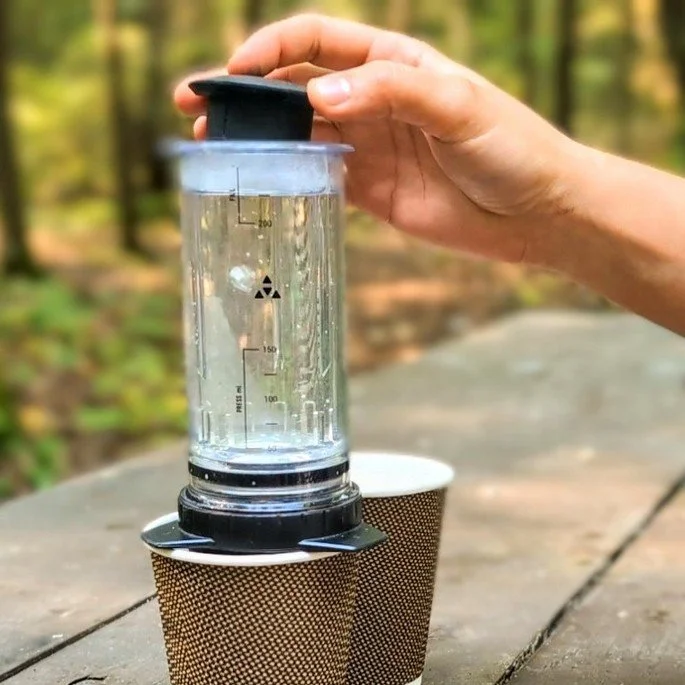
Delter Coffee Press – Clear
This is the exact Delter Coffee Press I've been using for the past five years. It comes with 100 biodegradable paper filters.
Check Price on AmazonI may earn a small commission from some of the links on this page if you make a purchase, at no extra cost to you. I only recommend products I genuinely believe in and already have or would purchase myself.
How to Brew and Clean the Delter Coffee Press
What You’ll Need
Coffee: The standard ratio is 6g ground coffee per 100ml water. I’m using about 28g to make 2 cups with 500ml water.
Grind size: Slightly finer than French press but coarser than espresso. I used store-bought medium-ground coffee, and it still turned out great.
Filter: 1 Delter Micro Filter.
Water: Heat filtered water to 94°C for best results (water just off the boil works).
How to Brew Coffee with the Delter Coffee Press
Step 1: Rinse the filter
Place a filter into the filter cap and pour a little water over it to give it a quick rinse. This helps it stick and gets it primed for brewing.
The water temperature isn't crucial for this step. When camping, I often use water straight from the bottle while my kettle comes to a boil. Then, set it aside.


Step 2: Add coffee
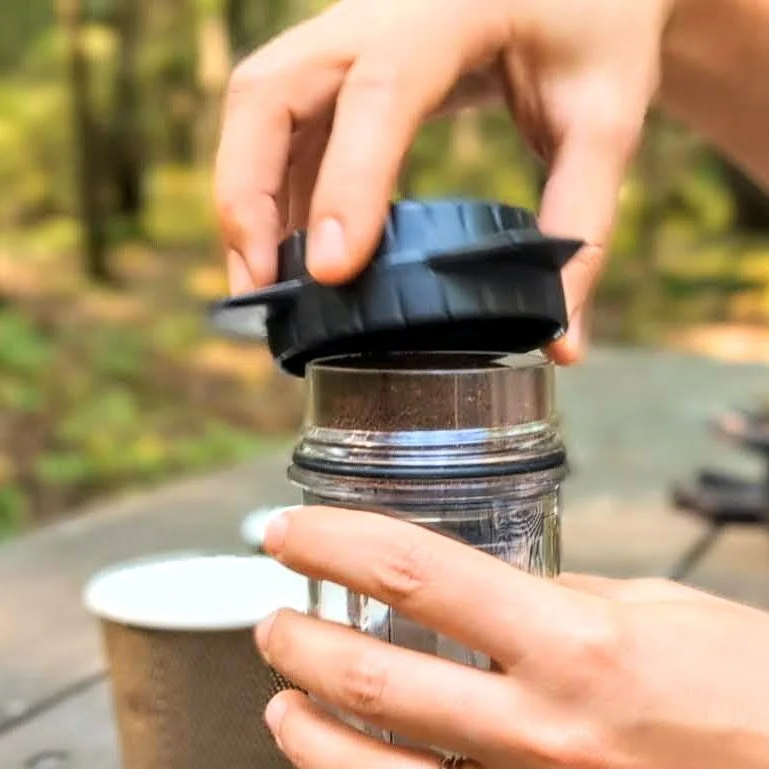
Insert the plunger all the way into the brew chamber, flip it over, and add ground coffee to the coffee chamber on the other end.
There’s a 6g doser included for measuring, but since I always make 2 cups, I just fill it to the top (about 28g), which pairs perfectly with 500ml of water (conveniently one bottle of water).
Screw the filter cap onto the coffee chamber until tight.

Step 3: Brew coffee
Flip the Delter upright, place it on a cup, and pour hot water to the 200ml line. Cover with the doser as a lid.
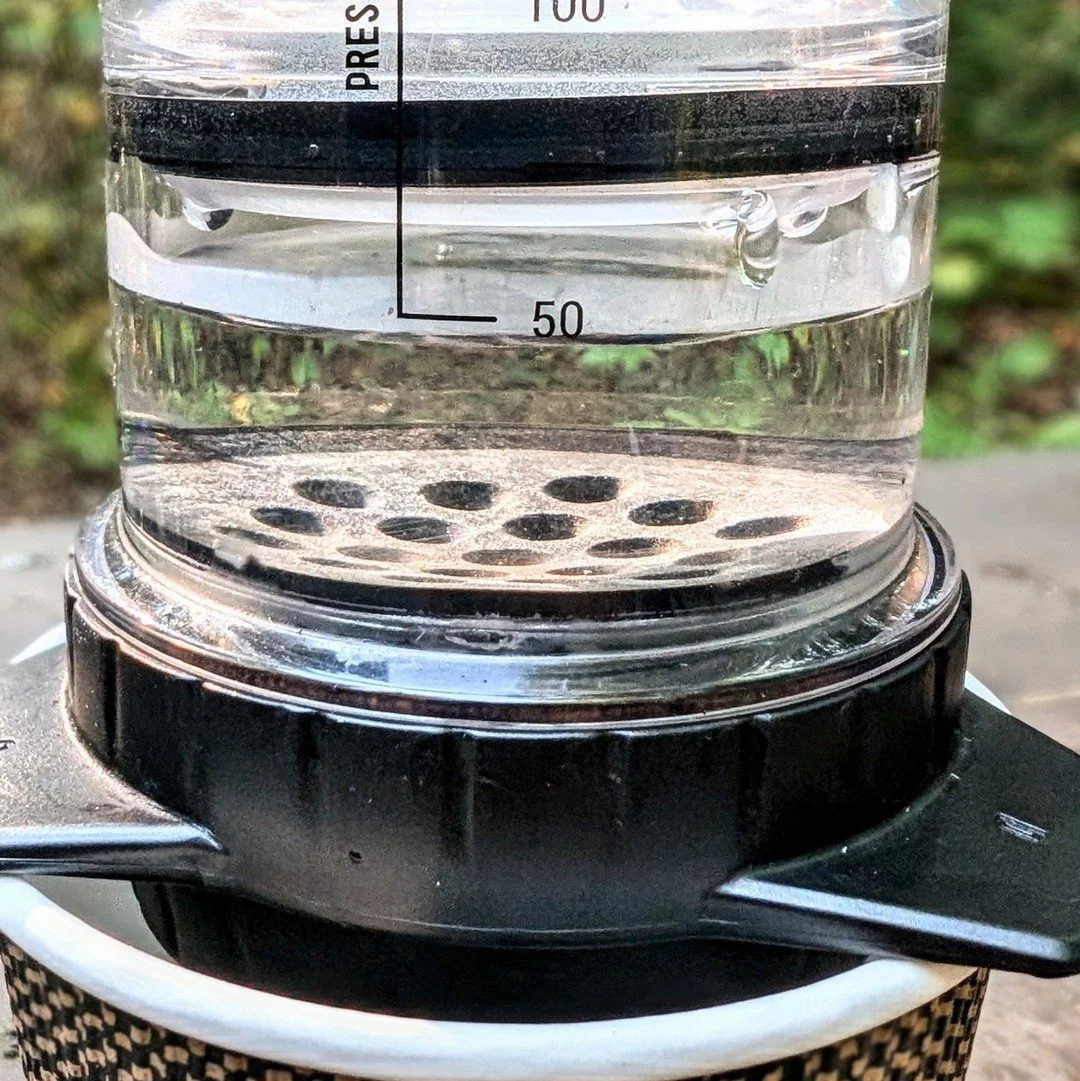
Lift the plunger, allowing water to trickle through until it reaches the 50ml line, then press gently all the way down. This first press blooms the coffee grounds, helping them extract more evenly.
Repeat, raising the plunger to the 100ml mark and pressing again, ensuring you don’t rush. Raise it one last time to let in the remaining water and press through. Aim for a brew time of about 2-3 minutes.
If you’re making one cup, your coffee is ready. Press air through at the end to get any remaining coffee from the grounds.



Step 4: Brew second cup
If using a decanter or large container, keep the Delter in place. Otherwise, place the Delter on a second cup.
With the plunger fully down, pour in another 200ml of hot water, replace the doser lid, then raise the plunger to the 100ml mark and press gently. Repeat until all the water is pressed through.
Since I use 500ml of water, I usually have a little extra, so I pour that in and press it through as well. Then press air through to extract any remaining coffee from the grounds.
If you're using a decanter, your coffee is ready to pour into cups.
If using two cups, the first will be stronger. I even them out by pouring the coffee back and forth between the cups until both look the same.
Tip: Don’t press more than 150ml of water at a time; it makes it harder to keep everything stable and press without toppling over.


How to Clean the Delter Coffee Press
Step 1: Dump out the grounds
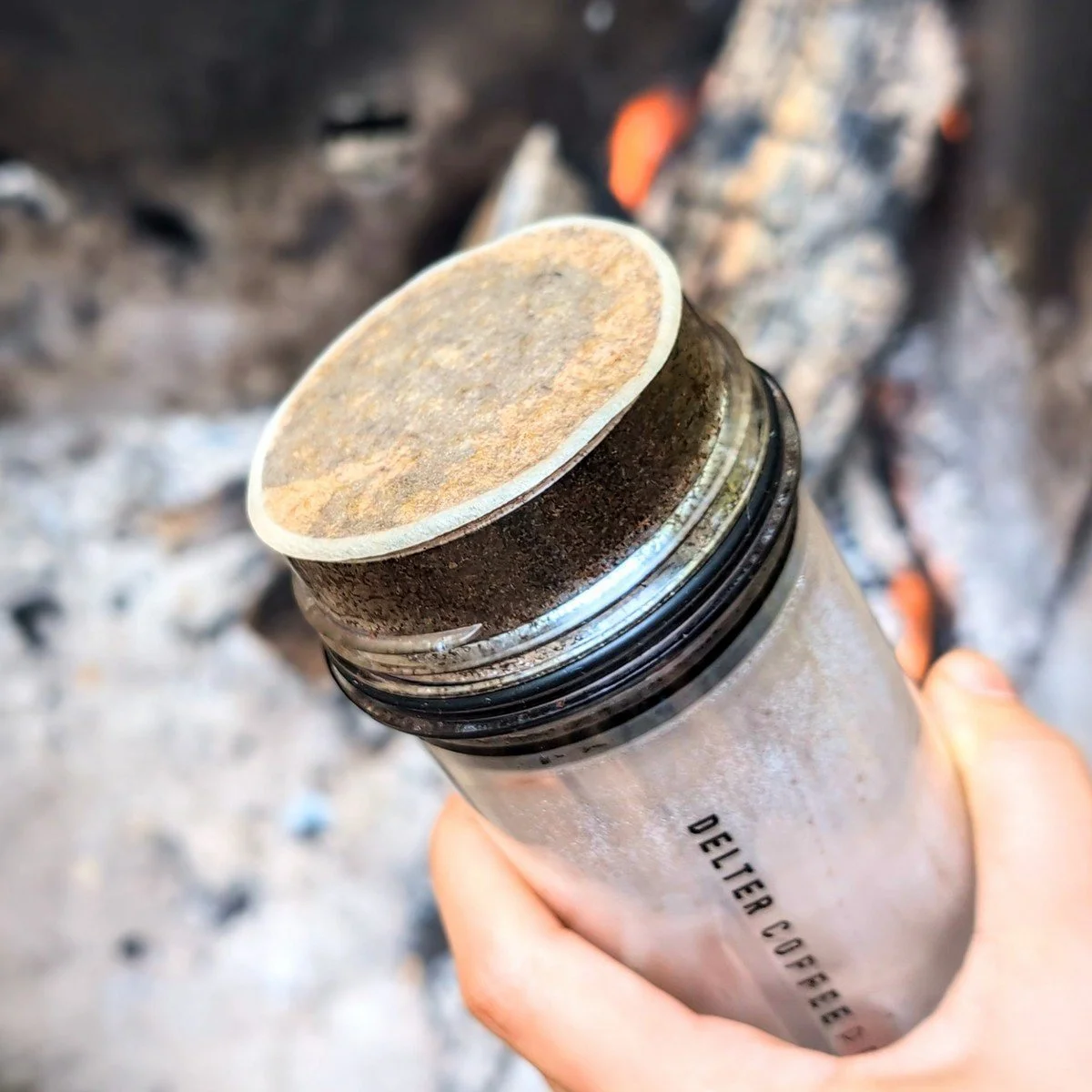
Unscrew the filter cap and tap or plunge the grounds out of the coffee chamber. They should pop out easily.
I usually dump mine right into the fire for easy cleanup.

Step 2: Rinse and wipe
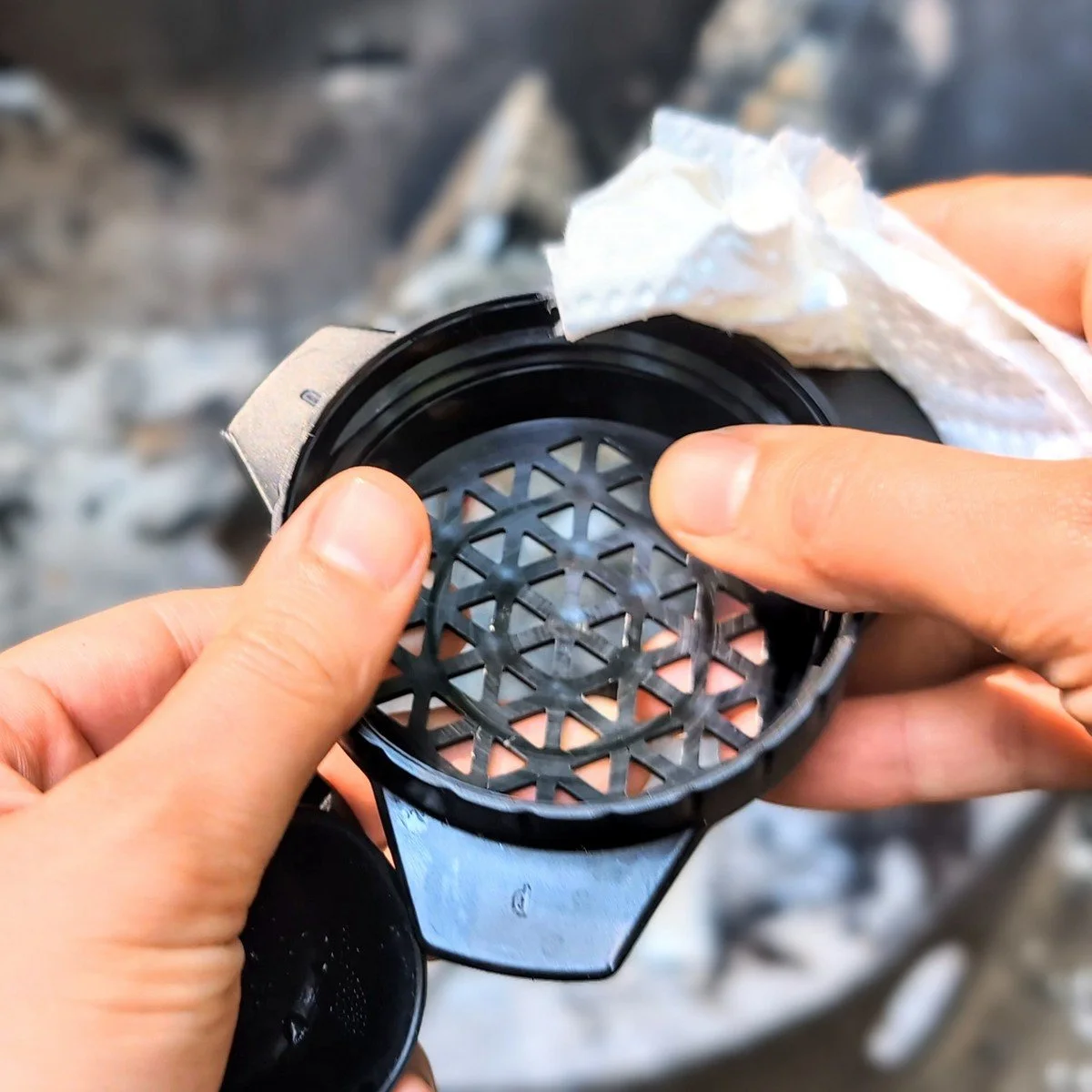
Rinse the coffee chamber and filter cap with regular or leftover hot water. Then, wipe everything down with a paper towel.
For a deeper clean, wash it with warm, soapy water—something I prefer to do at home after a few uses at the campsite.
Note: The Delter Coffee Press isn’t dishwasher safe.



Step 3: Let it dry
Air dry the Delter Coffee Press completely before reassembling and storing it.

Delter Coffee Press FAQs
What coffee grind size is best for the Delter Coffee Press?
I recommend a medium-fine grind, but slightly coarser coffee (around a standard medium grind) works well too and is what I usually use.
If it's really difficult to press the water through, your grind is probably too fine. If it presses too easily and the coffee tastes weak, try grinding a little finer next time.
What are the best Delter coffee recipes?
Basic Coffee-to-Water Ratio: 6g of coffee per 100ml of water (12g for 200ml, 18g for 300ml, and 24g for 400ml).
For 2 Cups Regular-Strength Black Coffee My Way: Fill the coffee chamber to the top with medium-ground coffee (about 28g) and use 500ml of water.
For 1 Cup Flat White/Latte: Use a higher dose of medium-fine ground coffee (18-22g) with less brewing water (100ml). This creates a concentrated brew that pairs perfectly with hot or steamed milk.
For 1 Cup Iced Coffee: Use 18g of medium-fine ground coffee and substitute half of the brewing water with the equivalent weight in ice (e.g., 100ml of brew water over 100g of ice in your cup) for a delicious flash iced brew.
Is the Delter compatible with AeroPress filters?
Yes, AeroPress filters are 2 mm wider in diameter than Delter filters, so they can fit if you have some leftover from your AeroPress. However, the reverse does not work; Delter filters are too small for the AeroPress, causing coffee grounds to leak through.
I should mention that the 100-pack of filters that comes with the Delter lasts a long time. Since I got my Delter 5 years ago, I still haven’t finished my pack, but I primarily use it while camping and not at home.
Does the Delter Coffee Press make espresso?
No. The Delter doesn't generate enough pressure to make true espresso. It can, however, brew a stronger, more concentrated coffee by using more coffee and less water, which works well for lattes and flat whites.
What cups work best with the Delter Coffee Press?
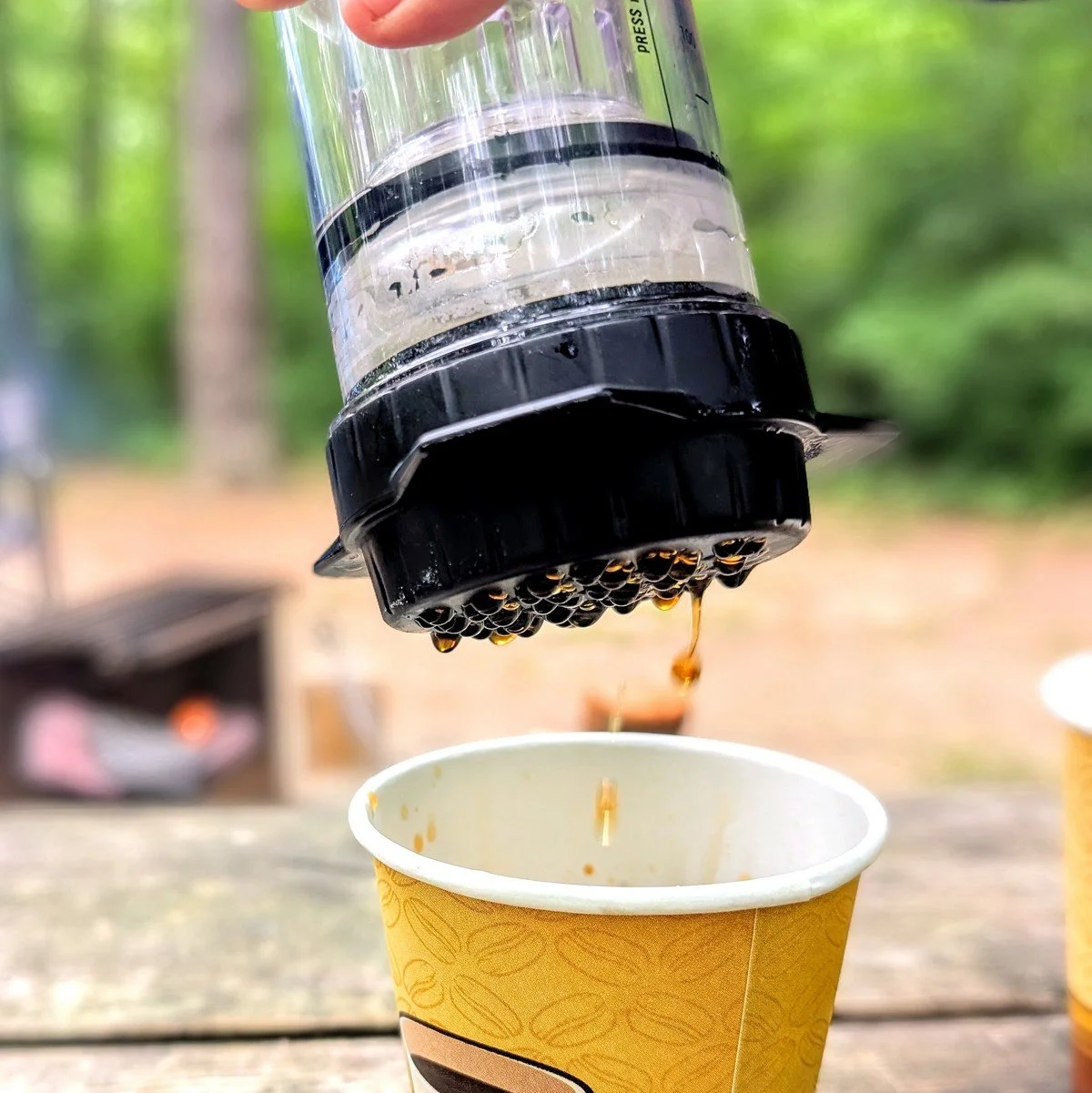
I recommend using sturdy mugs or thicker paper cups that can comfortably support the weight of the brewer while you're pressing. Thin disposable cups can flex or become unstable.
When I'm camping, I usually use thicker paper cups because they're sturdy enough for brewing and can go straight into the fire afterward.
More Kitchen Equipment Guides
The best campfire cooking tools: Everything I actually pack to make recipes on the blog, plus fun extras that elevate outdoor cooking.
How to pack a food cooler for camping: Chef-level food layer tips, smart ice hacks, and lasting meal prep strategies.
The best electric kettles for cooking: I compared dozens of electric kettles to find the best ones for real cooking—perfect for dorms, tiny kitchens, or travel.
The best small kitchen appliances: Ready to level up your kitchen? This is the high-end gear I swear by when I’m not on the road.