

The Best Open Fire Cooking Equipment (Tested by a Chef)
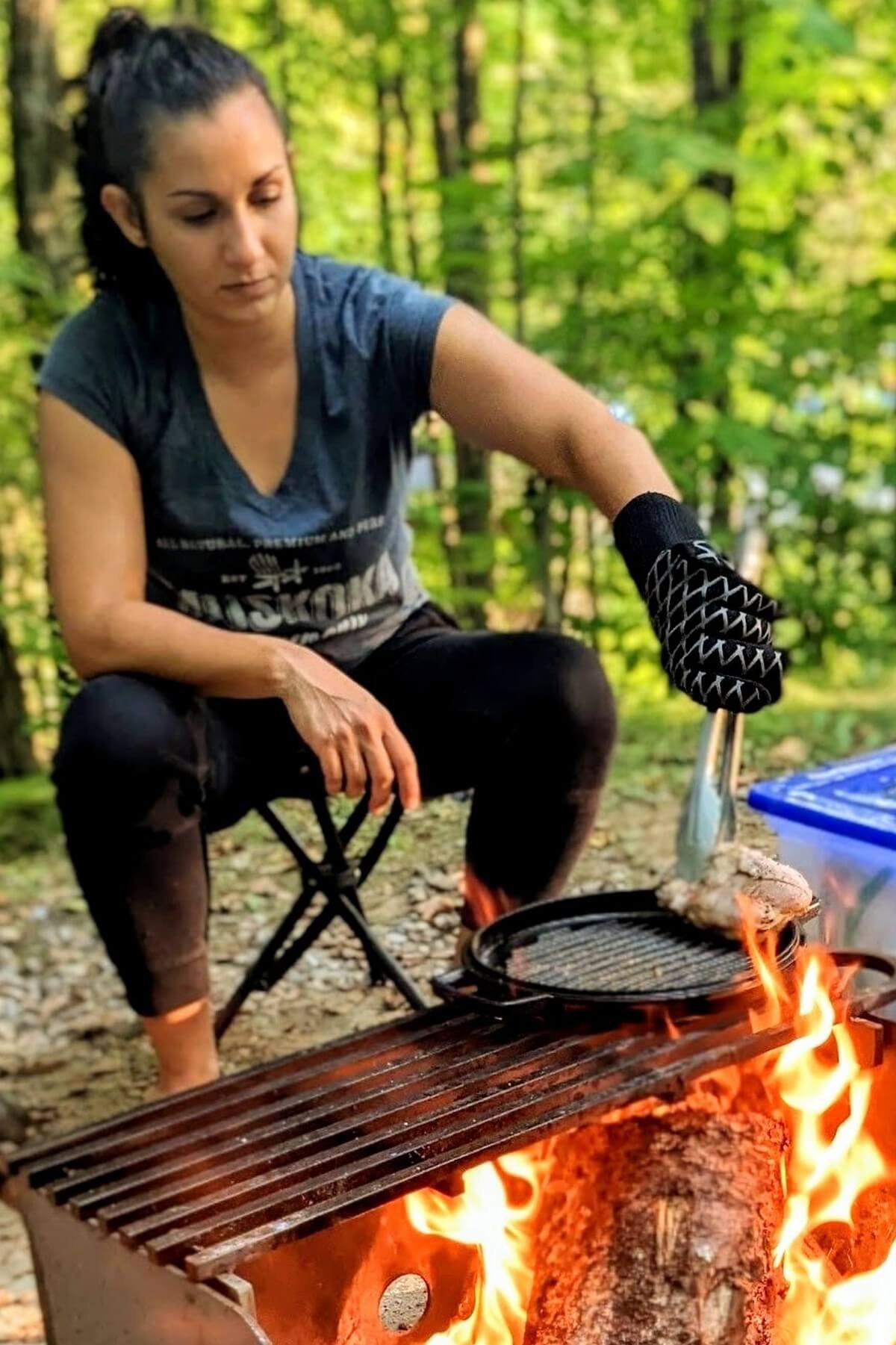
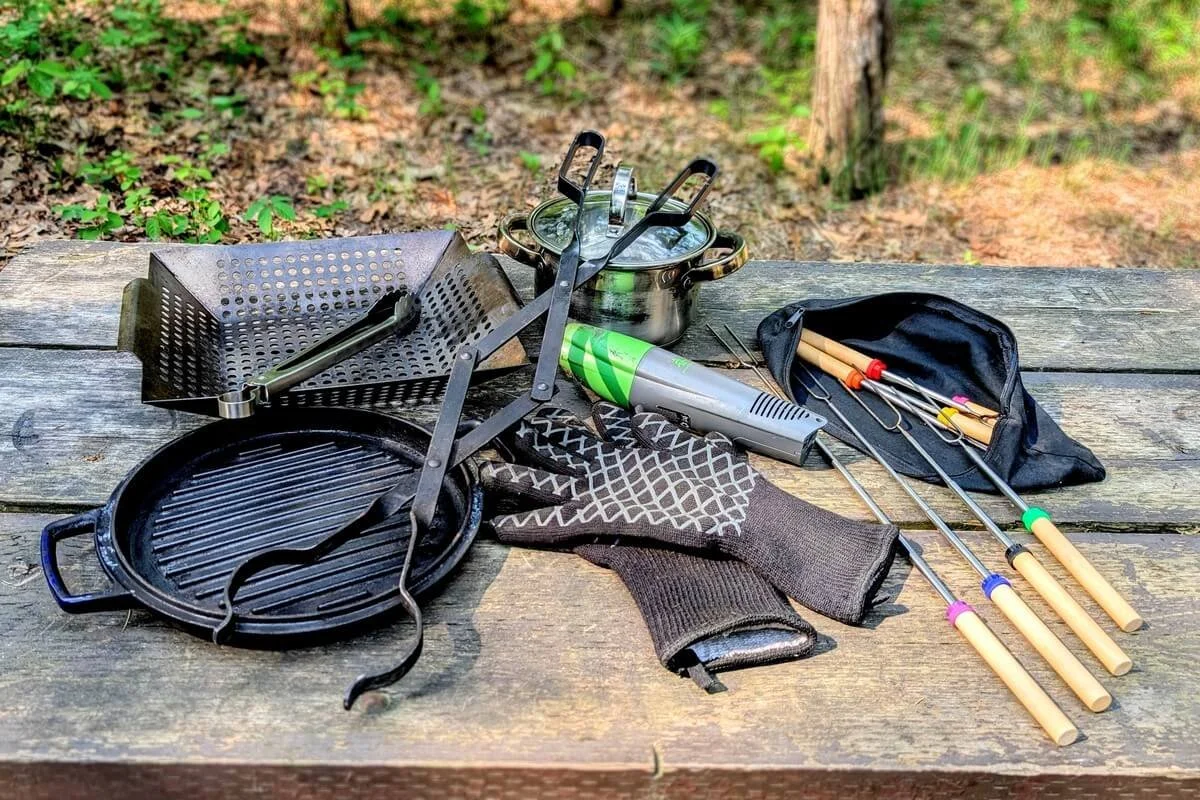
These are the 8 campfire cooking tools I bring on every trip, plus a few bonus picks. Each one is chef-tested over years of open fire cooking and has earned its place in my kit.
Essential Campfire Cooking Tools I Always Pack
As a professional chef and lifelong camper, I’ve tested a lot of campfire cooking tools. Over the years, I’ve narrowed it down to the essentials I actually bring on every trip, from fire-starting gear to cookware that can handle high campfire heat.
If you’re brand new to cooking over an open fire, check out my full guide to campfire cooking. It covers fire structures, cooking order, and how to manage heat zones so you’re not guessing once you start.
I may earn a small commission from some of the links on this page if you make a purchase, at no extra cost to you. I only recommend products I genuinely believe in and already have or would purchase myself.
My Quick Tool Picks
| Tool | Best For | Price | |
|---|---|---|---|
| 1 | Electric Bellows | Starting a fire fast | Check Price on Amazon |
| 2 | Pit Mitts | Fire safety & comfort | Check Price on Amazon |
| 3 | Firewood Tongs | Log control | Check Price on Amazon |
How I Chose These Campfire Cooking Tools
Car Camping Focus
This guide is geared toward car camping, where space and weight aren’t major concerns. If you’re backpacking, you’ll need to go lighter, so some of these tools might not apply.
What About Camp Stoves?
You won’t find a camp stove on this list. I borrowed one once during a fire ban, and while it worked, it just didn’t compare to cooking over a real wood-burning fire. A compact stove or portable BBQ can be a decent backup if fire pits are off-limits. But personally? I’d rather skip the trip than skip the fire.
Fire Pits with Built-in Grates
Most state and provincial parks in the U.S. and Canada provide fire pits with built-in grates, which makes open fire cooking straightforward. If you’re heading off-grid, you’ll want to pack a campfire tripod or portable grill grate, so you’re fully set up.
My Top 8 Campfire Cooking Tools
1. Electric Bellows
Get your fire roaring in minutes—no blowing, fanning, or wasting time.
I use this compact bellows to start fires fast. It delivers a concentrated stream of air exactly where you need it, so logs catch quickly without hovering over the fire.
The only quirk is that you have to hold the button down to run it. The quick fix? Loop a rubber band around it and set it near the fire so it keeps fanning the flames hands-free while you prep your food.
My Amazon Pick:
Zippo Firefast Bellows
This version is the closest match I’ve found to mine. It runs in 1-minute bursts and delivers a strong air stream. Like mine, it requires you to hold the button to operate. It takes two AA batteries (not included), so don’t forget to grab those too.
Check Price on Amazon

2. Pit Mitts
Protect your hands from intense heat, sparks, and flames.
These gloves are heat-resistant up to 475°F and long enough to shield your wrists while you cook over a wood-burning fire. The textured silicone pattern gives you a solid grip, whether you’re turning steaks, moving cast iron, or adding logs to the fire. Flexible, reliable, and tough enough for real open-fire cooking.
My Amazon Pick:
Charcoal Companion Ultimate Barbecue Pit Mitt
This BBQ glove is very similar to mine—reversible, heat-resistant, and offers excellent grip when handling hot cookware or firewood. Just note, it’s sold individually, so you’ll need two if you want one for each hand.
Check Price on Amazon

3. Firewood Tongs
Stop wrestling logs with sticks—these make managing your fire so much easier.
Whether you’re adding a log or shifting burning wood to control heat zones, a good pair of firewood tongs saves you from burns and frustration. These slim, steel, scissor-style tongs give you precise control without taking up much space.
Before I had mine, I used two random sticks from the woods—no idea why I put up with that for so long. 😅
My Amazon Pick:
AMAGABELI 26" Firewood Tongs
A near match to mine, this updated set includes both the wrought iron firewood tongs and a fire poker. The tongs are lightweight but sturdy enough to handle large logs, and the poker helps reposition wood or break up coals as needed. Thousands of strong reviews back them up, and the long length keeps your hands safely away from the flames.
Check Price on Amazon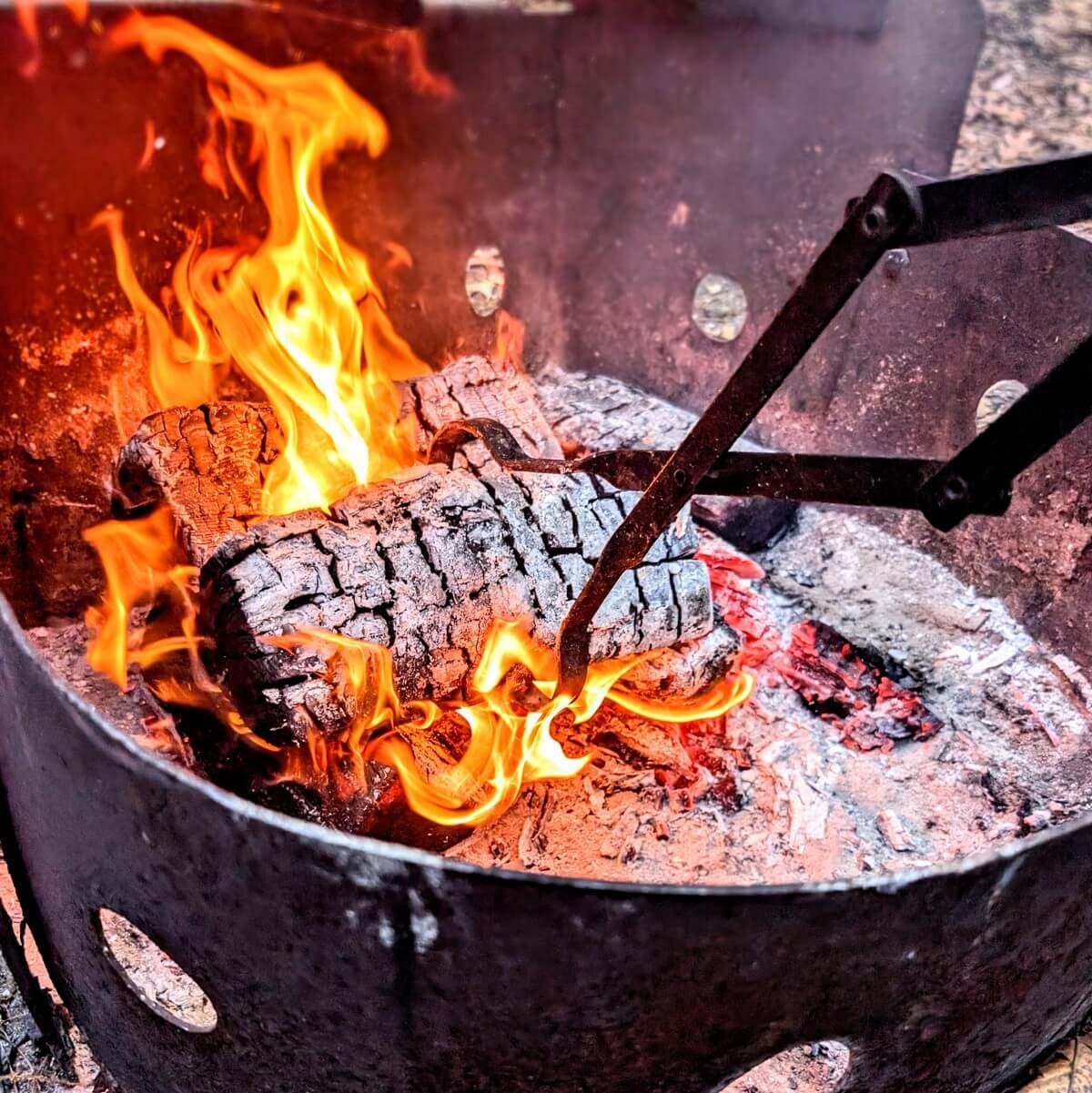
4. Sturdy Locking Grilling Tongs
Reliable, precise, and tough enough for open-fire cooking.
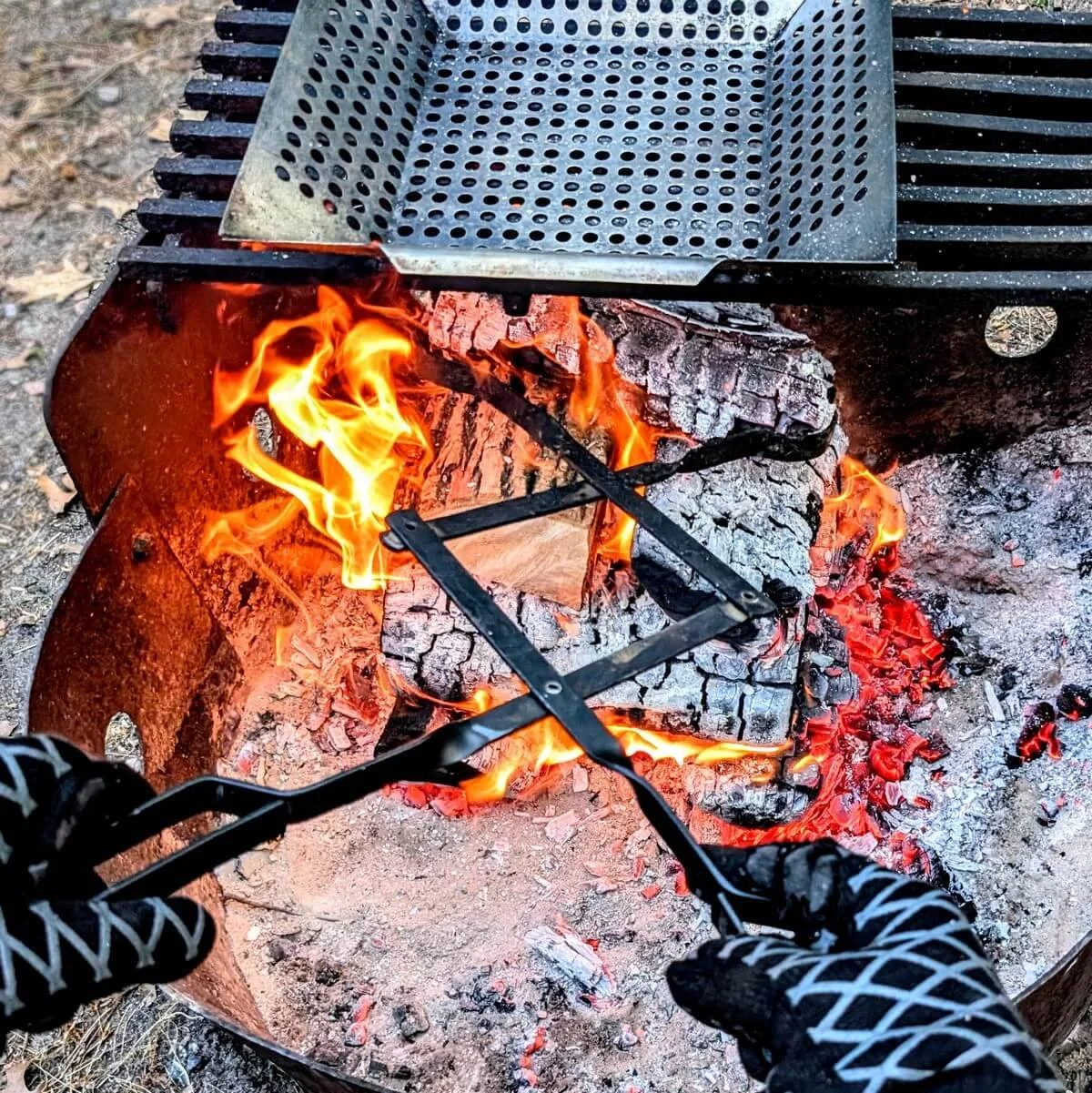
I own a few pairs of tongs, but these are the ones I reach for every time. They’re long enough to keep your hands safely away from the heat, with just the right amount of tension so your hands don’t fatigue even after lots of flipping. They lock shut for compact storage and stay perfectly aligned, even after years of heavy use.
I’ve had mine for at least a decade, and now that I travel full-time, I pack them in my carry-on so I always have a reliable pair of tongs wherever I’m cooking.
My Amazon Pick:
Cuisipro 16" Locking Tongs
These are the exact same tongs I use. Instead of a cheap coil spring, they use a single folded strip of tensioned steel that forms both the hanging loop and the spring mechanism. That simple, durable design is what allows them to open smoothly and hold up for years.
Check Price on Amazon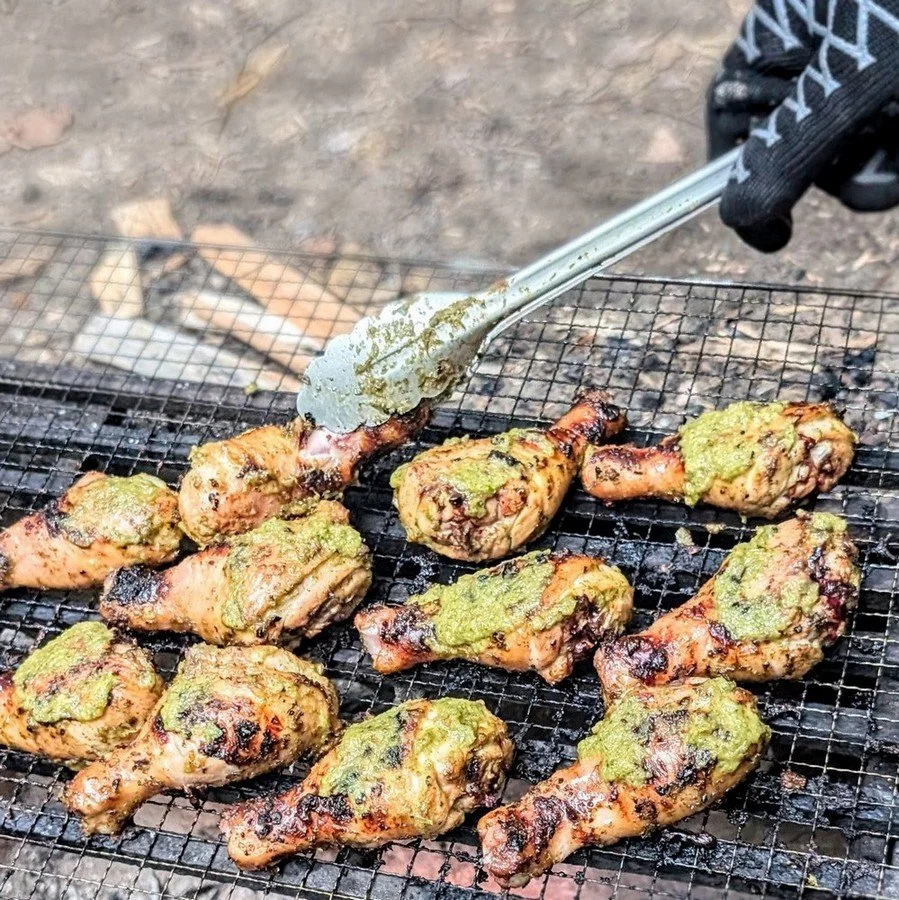

5. Cast-Iron Skillet
The most versatile pan you can bring to a campfire.
A well-seasoned cast-iron skillet lets you sear, sauté, fry, and even build dishes like risotto directly over an open fire. Its heavy base holds steady heat, which matters when flame intensity constantly shifts outdoors, and once properly seasoned, it behaves almost like a nonstick pan.
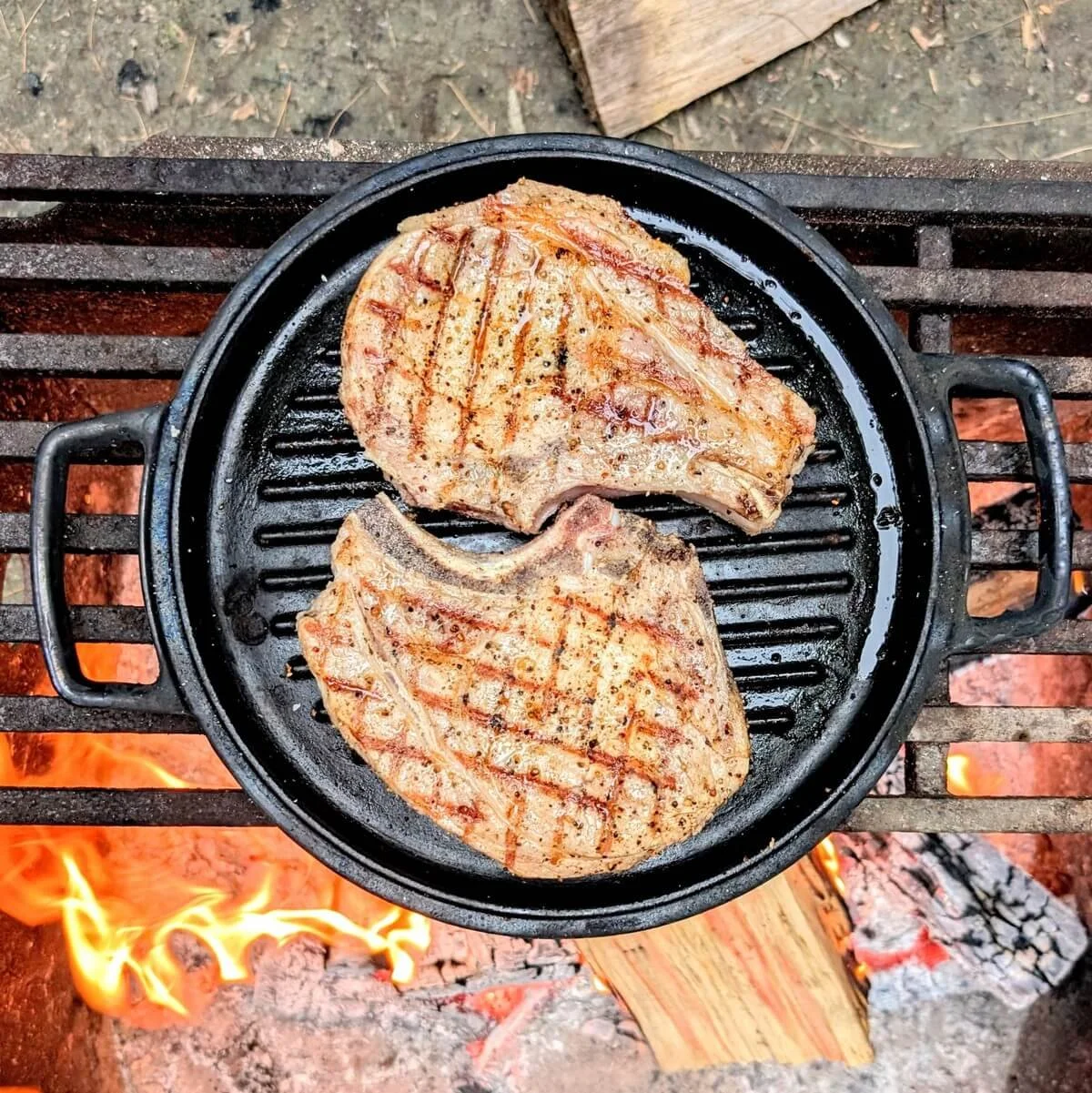
I usually bring two—a standard cast-iron skillet and a cast-iron grill pan. The grill pan gives you defined char marks, and its ridges lift the food slightly, allowing excess fat to drip below. But if you’re choosing just one pan, a regular skillet is the most flexible and adaptable option.
My Amazon Pick:
Lodge Pre-Seasoned 10.25" Cast Iron Skillet
This is the classic Lodge skillet—heavy-duty, affordable, and pre-seasoned so it’s ready to use right out of the box. I’ve owned one for years and used it extensively for campfire cooking without issues. With over 150,000 reviews and consistently high ratings, it’s one of the most trusted cast-iron skillets available.
Check Price on Amazon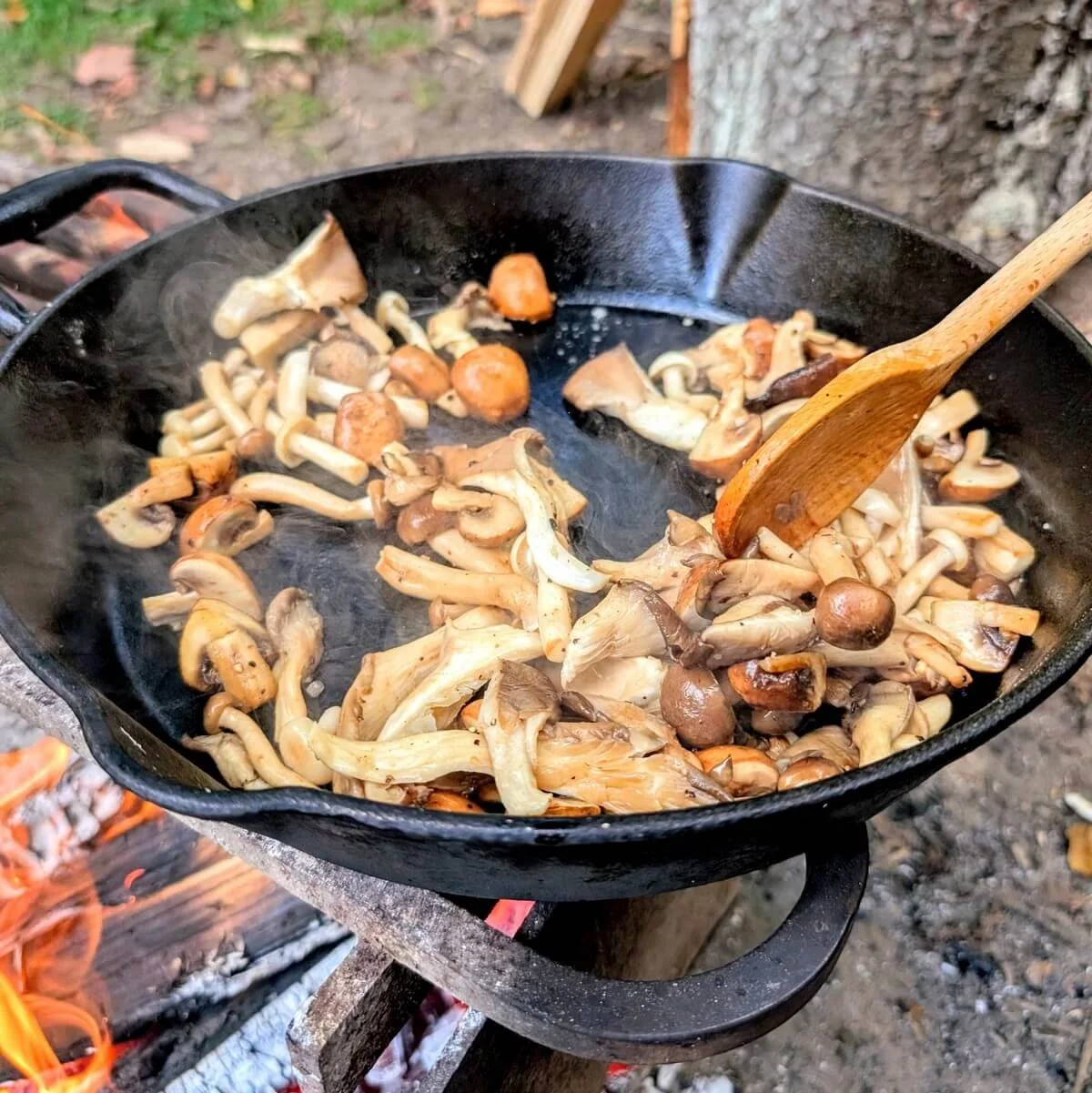
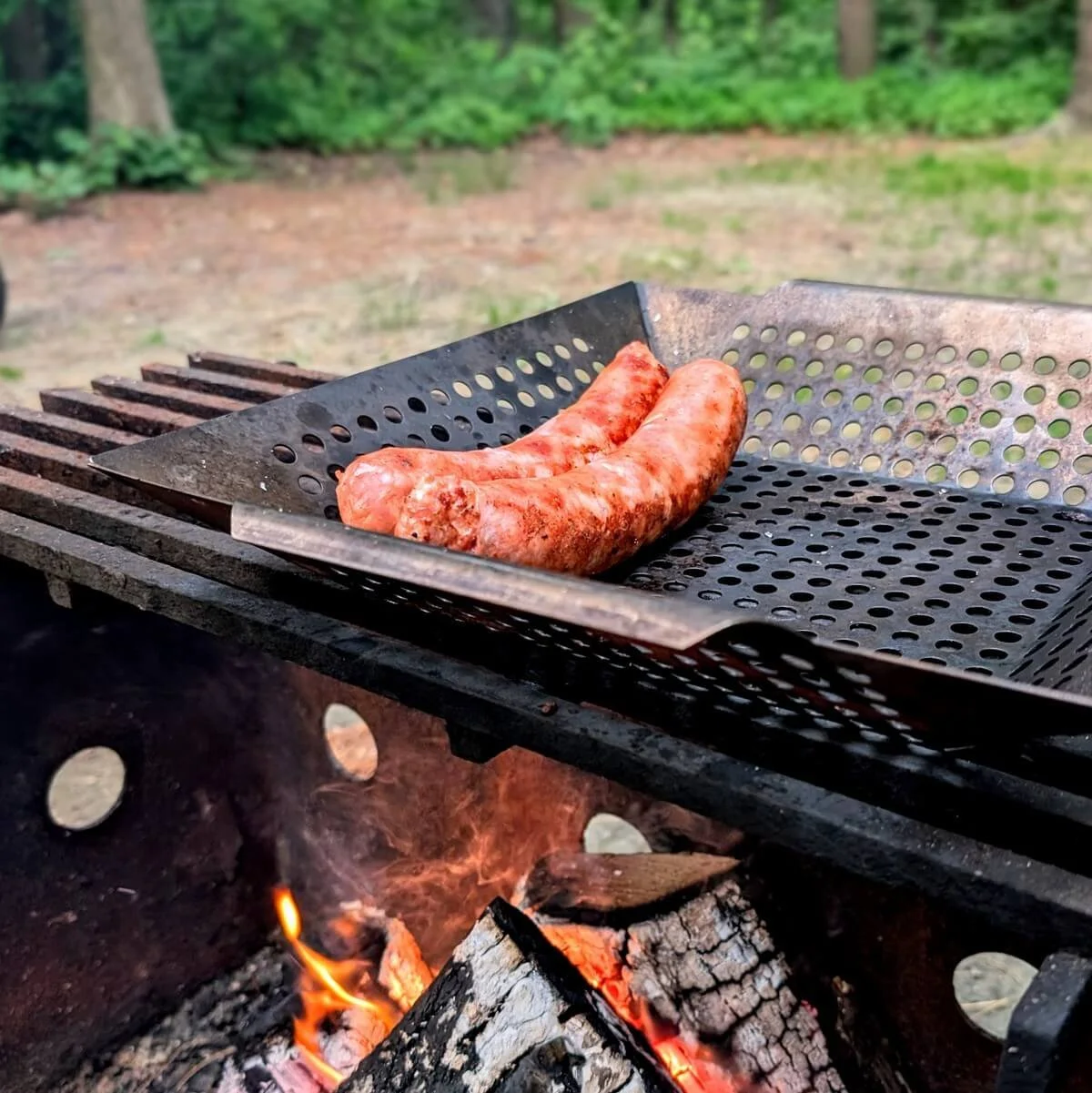
6. Grill Basket
No more lost mushrooms or rolling sausages—this grill basket keeps smaller foods from falling into the fire.
I’ve completely replaced my standard grill grate with a basket like this and use it for everything from steaks and chicken to onions and asparagus. The raised sides keep food contained, while the perforations allow direct heat contact so you still get that perfect char.
My Amazon Pick:
Weber Deluxe Grilling Basket
While I found a few baskets that look more like mine, I can’t confidently recommend them—too many reviews mention warping or flimsy construction after repeated high heat.
This Weber model is heavy-duty stainless steel, designed to resist warping, and uses linear slots (instead of the round ones on mine), which some reviewers find easier to clean. It comes in two sizes, holds a 4.7-star rating from over 8,000 reviews, and is consistently praised for its durability and performance.
Check Price on Amazon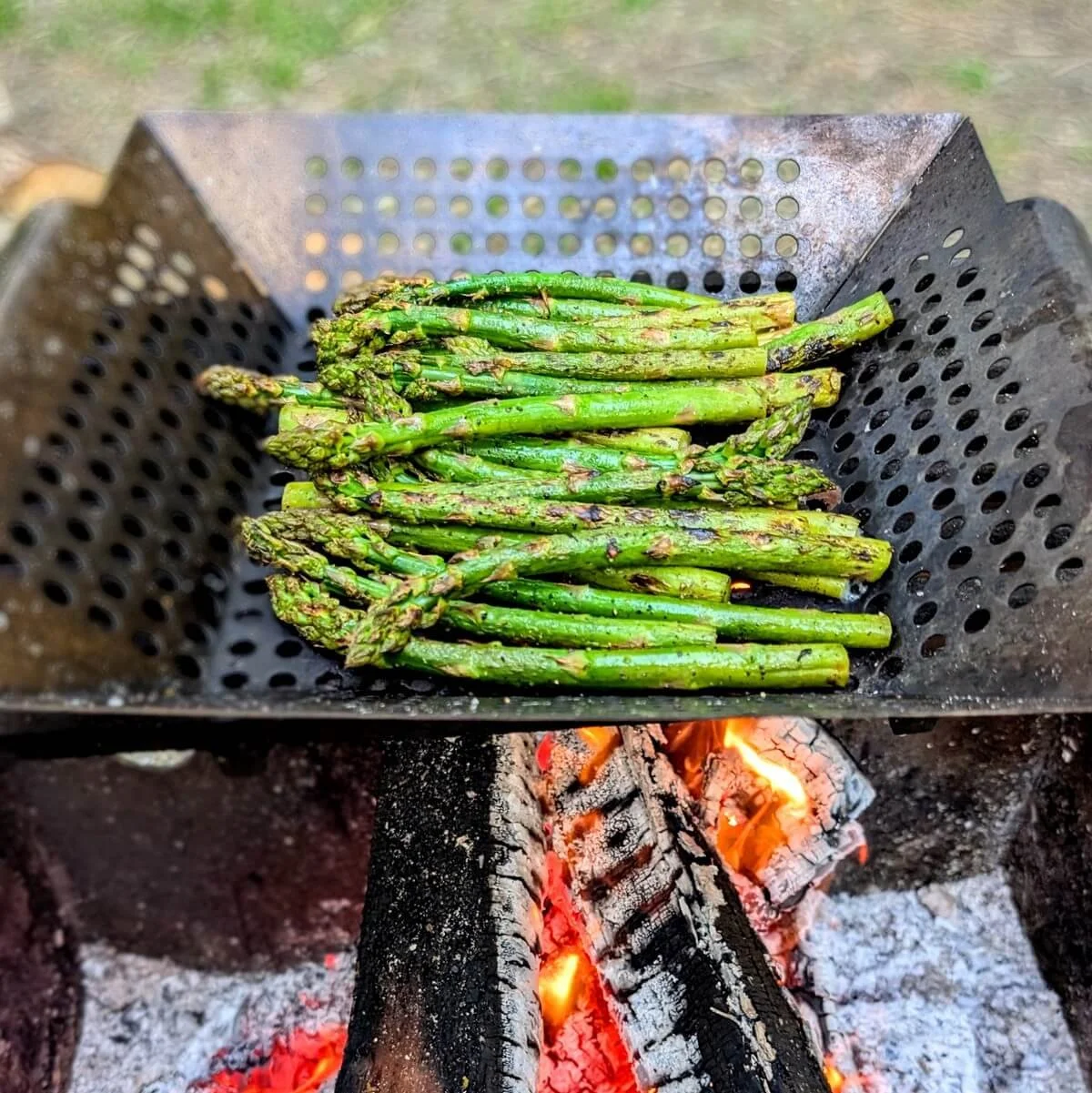
7. Stainless Steel Pot
A must-have for boiling water, cooking grains, or heating soups over the fire.
I only bring one pot when we camp, and this one earns its spot. It’s our go-to for boiling water for coffee, but also pulls double duty for pasta, potatoes, or creamy polenta—no separate kettle needed.
Stainless steel works well because it’s lightweight, easy to clean, and won’t react with acidic ingredients like tomatoes or vinegar (unlike cast iron). The glass lid is another bonus, so you can monitor what’s cooking without lifting it and losing heat.
My Amazon Pick:
NutriChef 3 Qt Stainless Steel Pot with See-Through Lid
This pot is very similar to the one I use and comes in multiple sizes. The 3-quart version is a great all-purpose size for 1–3 campers—big enough for most camp meals, but still compact enough to pack easily.
The durable stainless steel construction can handle temperatures up to 500°F, and it includes a glass lid like mine. It’s a practical, sturdy option that holds up well to high campfire heat.
Check Price on Amazon

8. Telescoping Camp Forks
Cleaner, safer, and way more convenient than hunting for sticks.
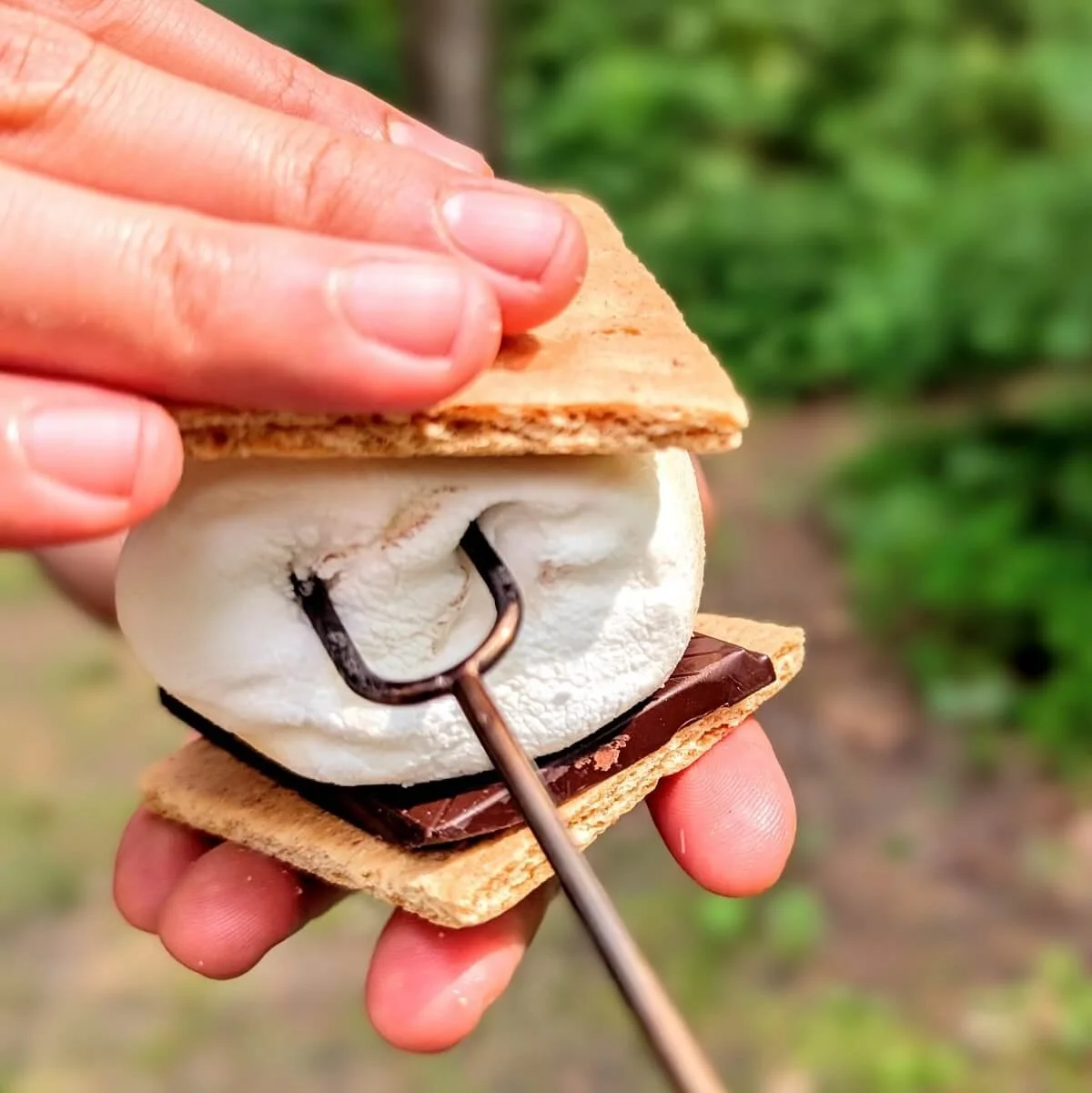
These extendable forks make roasting marshmallows, hot dogs, and even fire-cooked fruit or veggies so much easier. Unless you’re committed to whittling sticks every trip, these are the way to go.
They’re easy to clean (we just burn off any mess in the fire), cool down quickly, and pack into a slim zippered pouch that barely takes up space. Ours have lasted for years, and having a full set means everyone gets their own roasting stick—simple, safe, and way more fun.
My Amazon Pick:
MalloMe Smores Sticks for Fire Pit (8-Pack)
These are nearly identical to the ones we use. They’re sturdy, compact, and extendable, and come in sets ranging from 5 to 20. They’re also super affordable, and the included pouch keeps everything tidy and easy to store.
Check Price on Amazon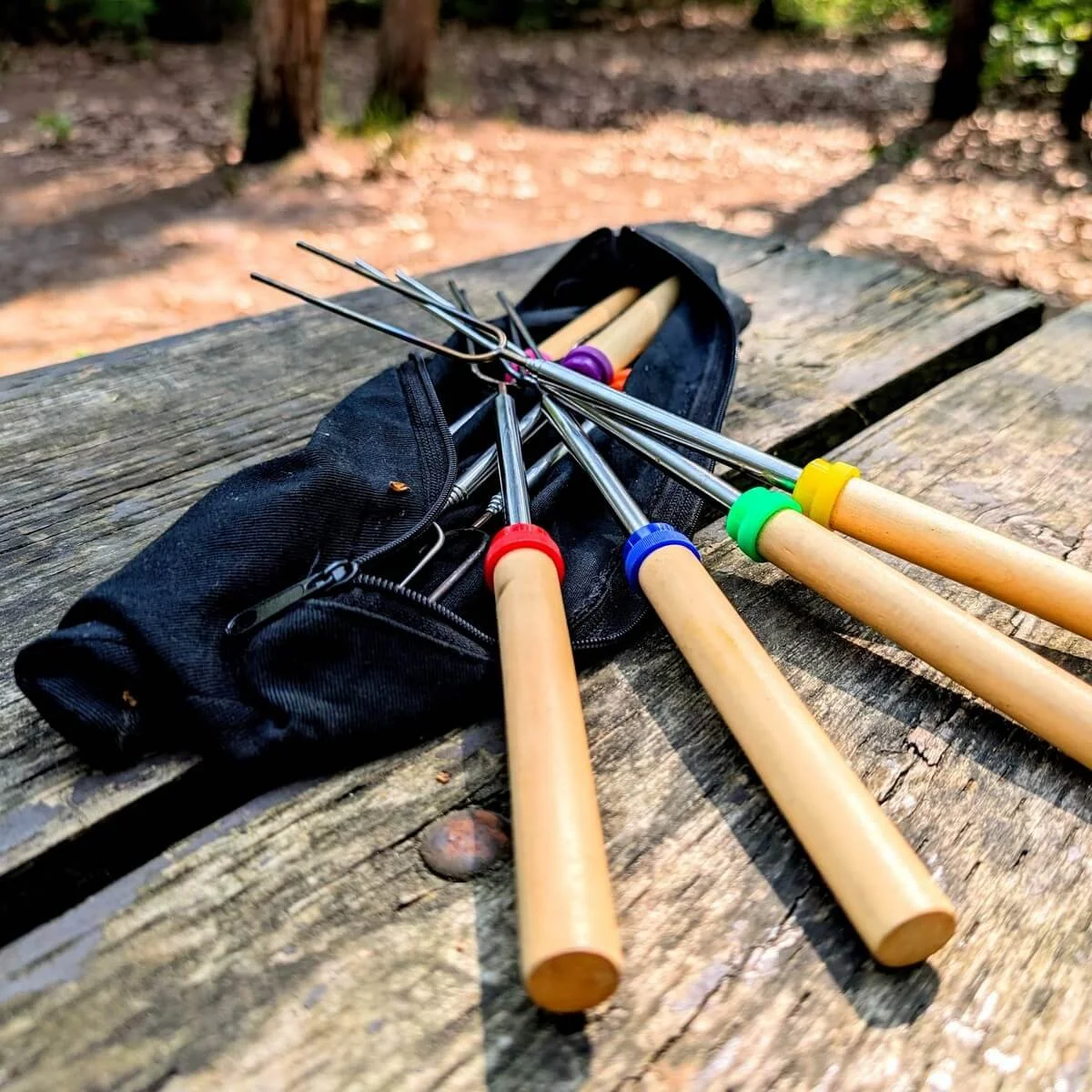
Bonus Camp Kitchen Gear I Always Pack
These aren’t fire tools—just the tried-and-true camp cooking accessories I bring on every trip. I’ve used them for years, trust the brands, and keep coming back to them because they actually make camp life better.
Portable Coffee Press
Because a good cup of coffee beats instant every time.
For great-tasting camp coffee, the Delter Coffee Press is the one I personally use and trust. I’ve brought it on every trip since 2021—it’s compact, lightweight, and brews two strong cups anywhere you can boil water. It’s also easy to clean, which matters when you’re nowhere near a sink.
Unlike a French press or percolator, the Delter uses an injection-style system: the coffee sits in a sealed chamber, and you manually press hot water through it into your cup. The result is a smoother, cleaner brew with zero grit.
If you prefer a more widely recognized option, the AeroPress has been a long-time camping favorite and works a bit differently—the coffee and water steep together before being pressed through a filter directly into your cup. I haven’t personally used it, but it’s widely praised for its durability and consistency.
☕ Want the full scoop? Check out my Delter Coffee Press review & brew guide—with a detailed Delter vs. AeroPress comparison, step-by-step photos, and cleaning tips for camp.
My Amazon Picks:
Delter Coffee Press
My personal, camp-tested pick. Compact, brews two cups at once, and cleans up easily—ideal for off-grid coffee.
Check Price on AmazonAeroPress Original Coffee Maker
A widely trusted camping favorite with over 25,000 reviews. Brews one cup at a time; the XL version makes two but is bulkier.
Check Price on Amazon

Insulated Travel Wine Tumbler
Solo cups are fine for beer, but wine deserves better.
This travel tumbler lets you enjoy a proper glass of wine at camp without worrying about broken glass or your drink warming up too fast. The double-wall insulation holds temperature well outdoors, and the lid helps keep bugs, ash, and accidental spills under control.
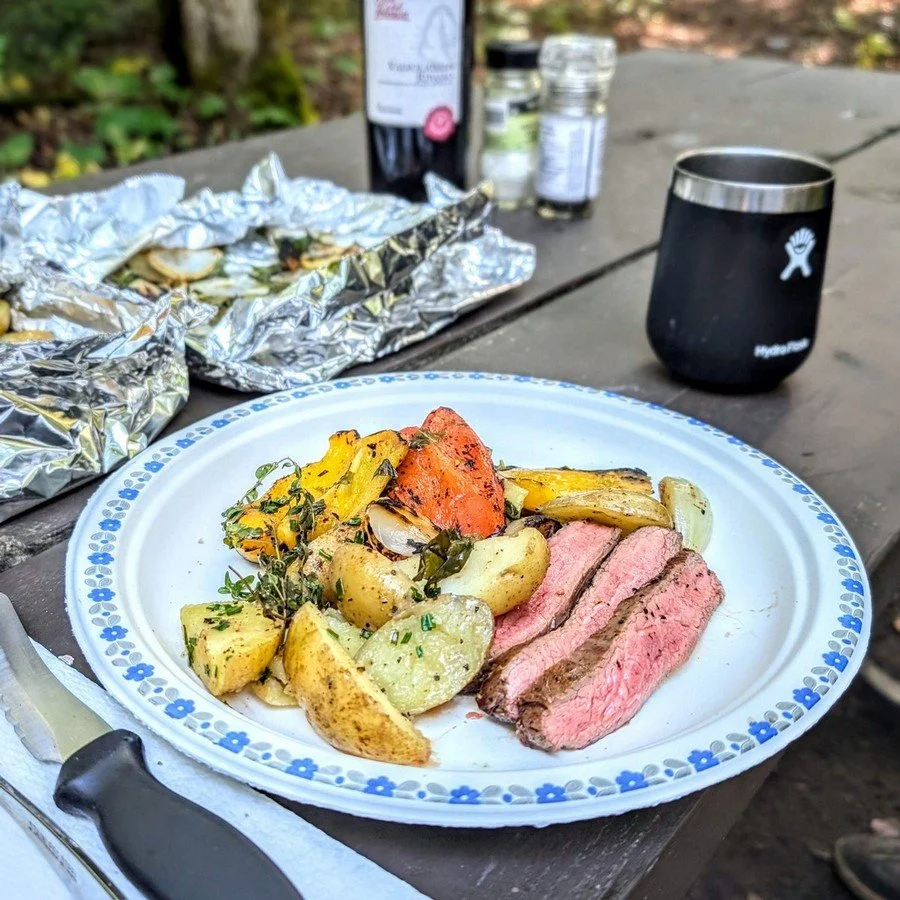
We bring our Hydro Flasks everywhere, from campgrounds to hotel rooms, and they’ve held up really well through years of travel.
My Amazon Pick:
Hydro Flask 10 oz. Vacuum Insulated Travel Wine Glass
This version is nearly identical to the ones we’ve used for years—but slightly improved. It has a ceramic-coated interior for a cleaner taste (ours are stainless steel) and a fully sealable sipping lid, which is a big upgrade for camp use. It’s dishwasher safe, comes in multiple colors, and is built to last.
This is the one we’ll upgrade to next—and the one I’d recommend if you’re buying new.
Check Price on Amazon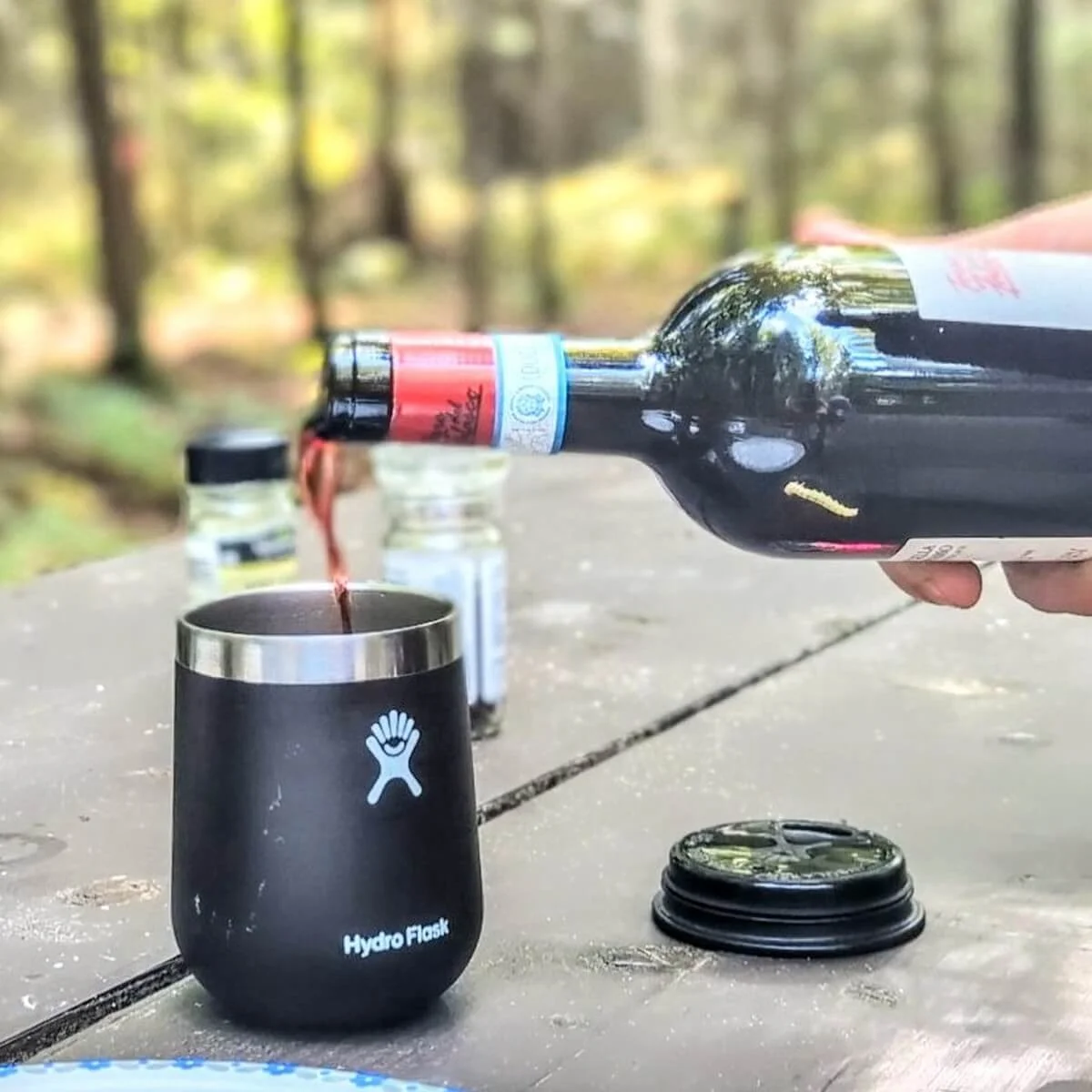
Kitchen Scissors
For the quick jobs that don’t need a knife and cutting board.
A sharp pair of scissors speeds up camp cooking—no digging for your knife or washing a board just to cube cheese, snip herbs, or cut broccoli into florets. I use them right over the pan or plate, which keeps prep tight and cleanup minimal.
My Amazon Pick:
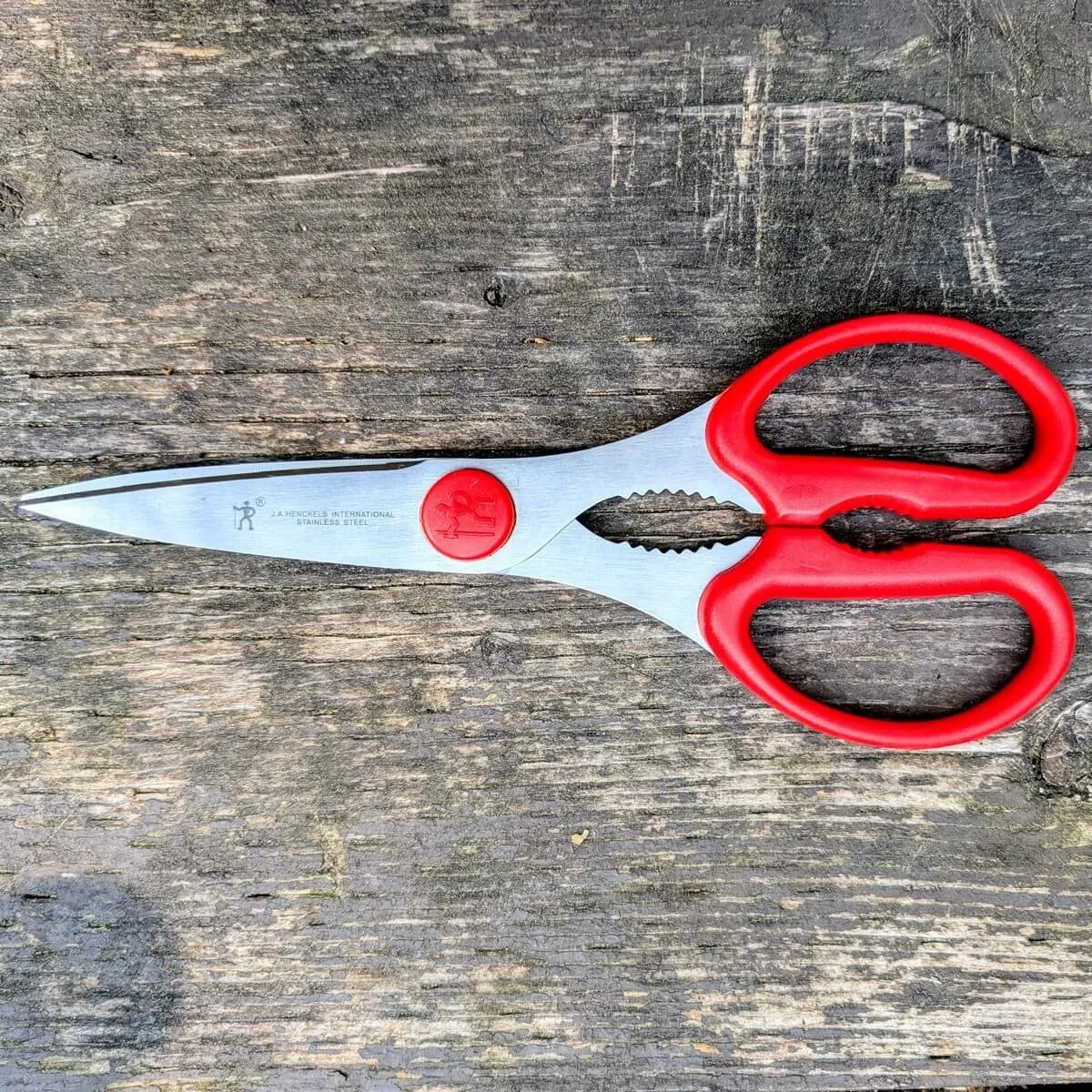
HENCKELS Take-Apart Kitchen Shears
These are the same brand I use, but a newer version. The updated model has a take-apart design for easier cleaning, which is a nice upgrade for camp cooking. A few reviewers mention rust or durability issues, but I’ve never had a problem—I hand-wash and dry them after each use, which has kept mine in great shape even after years of heavy use.
Check Price on Amazon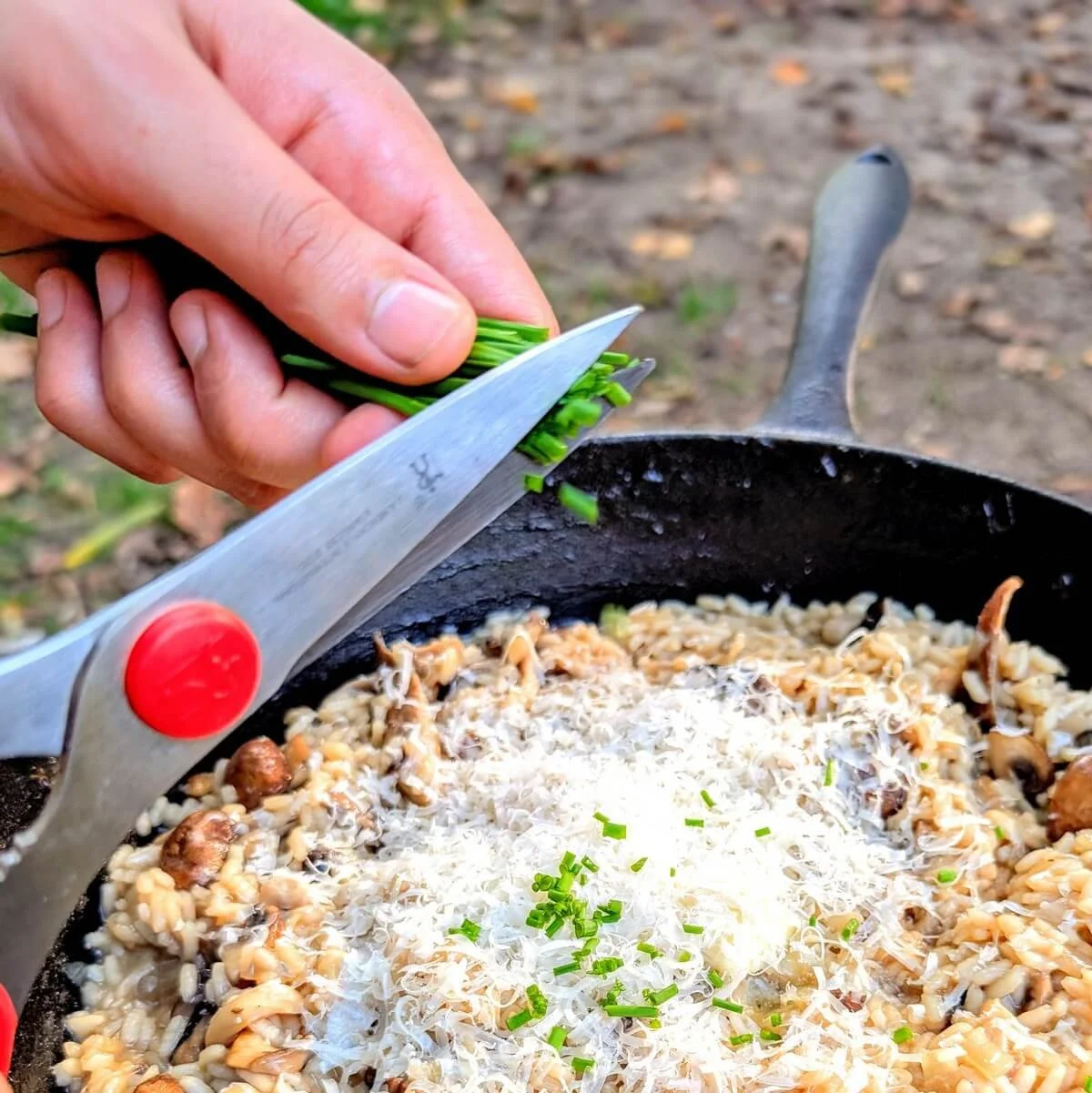
Campfire Cooking FAQs
What material is best for cooking over a campfire?
The best materials for campfire cooking are cast iron and heavy-bottomed stainless steel. Both are durable, safe, and excellent at retaining heat, which is critical when cooking over an open flame. Aluminum is lightweight but can warp easily and doesn’t distribute heat as evenly. Avoid non-stick coatings—high heat can damage them and cause chemicals to leach into your food.
How can I stay organized with my campfire cooking gear?
The easiest way to stay organized is to keep your campfire cooking gear in dedicated bins. I store all my fire tools and smallwares in a couple of plastic bins year-round, which makes packing quick and easy. At camp, they double as side tables, so everything stays within reach while you cook.
Can you cook with aluminum foil on a campfire?
Yes, you can cook with aluminum foil on a campfire, but it’s best used over low to moderate indirect heat. I rarely cook directly in foil—I mostly use it to rest meats, line surfaces, or wrap leftovers.
If you do cook with foil, avoid acidic ingredients like tomatoes or vinegar, since heat and acid can cause aluminum to leach into your food. For extra protection, you can wrap food in parchment paper first before using foil.
🔥 For more campfire cooking tips, check out my full guide on how to cook over an open fire.
How do I clean a cast-iron skillet at camp without ruining it?
To clean a cast-iron skillet at camp, start while it’s still warm. Add a splash of water and scrape off any stuck-on bits with a wooden utensil. Dump the water, wipe it dry, and finish with a light coat of oil before storing.
For heavier grease, a small amount of soap is fine—just rinse well, dry completely, and re-oil the surface to prevent rust.
What should I bring for easy cleanup at camp?
For easy camp cleanup, bring a few simple extras along with your usual dish soap and water:
Disinfectant wipes: Great for quickly cleaning utensils, tongs, and surfaces after cooking.
Disposable gloves: Useful for handling raw meat or messy foods without constant hand washing.
Paper products: Paper plates and cups can be burned after use, reducing waste.
Take-out utensils and chopsticks: A great way to use up extras from home—bamboo versions can go straight into the fire.
A helpful tip from a reader: to prevent your stainless steel pots from getting heavily blackened over the fire, coat the outside with a thin layer of dish soap before cooking. It creates a barrier that helps soot wash off easily later—just be careful to keep it away from the rim.
Happy campfire cooking!
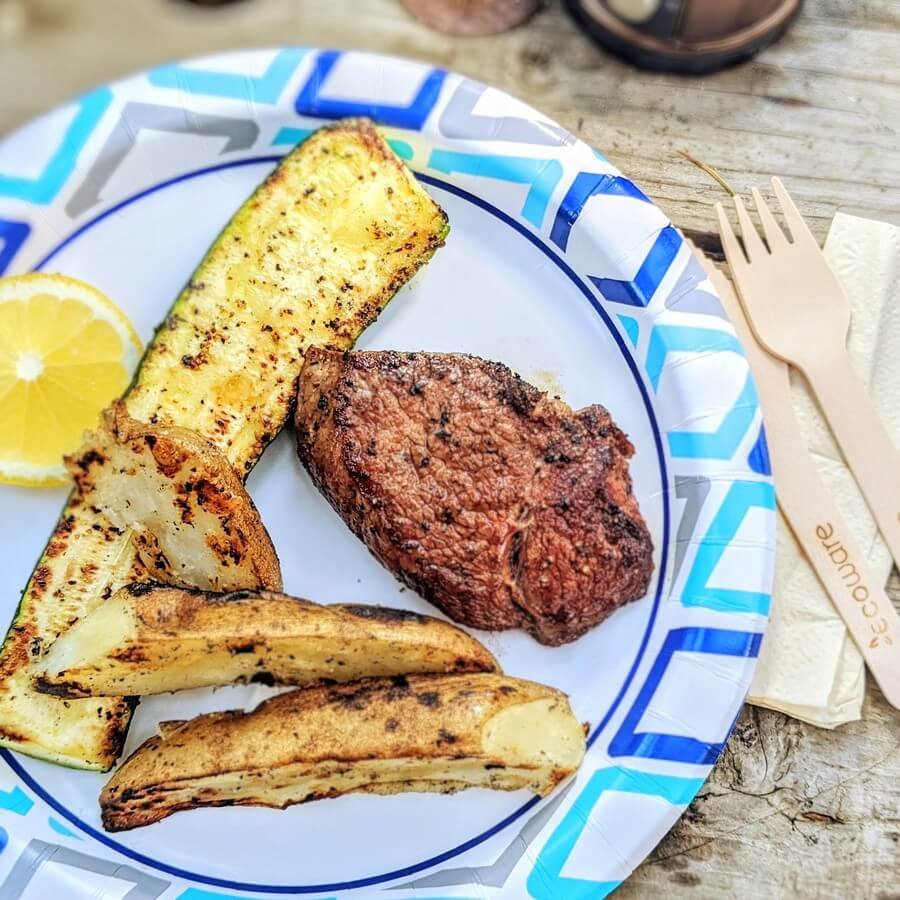
With the right open fire cooking equipment, you’ll be ready to cook incredible meals on your next outdoor adventure. Whether you’re toasting marshmallows or making a gourmet campfire feast, these are the tools I always bring to make cooking over the fire easier, safer, and way more fun.
If you’ve got a favorite tool I missed, let me know in the comments—I’d love to hear what tools you can’t live without!
🍳 If you’re also building out your home kitchen, these are the small kitchen appliances I actually use as a professional chef.
More Campfire Cooking Resources
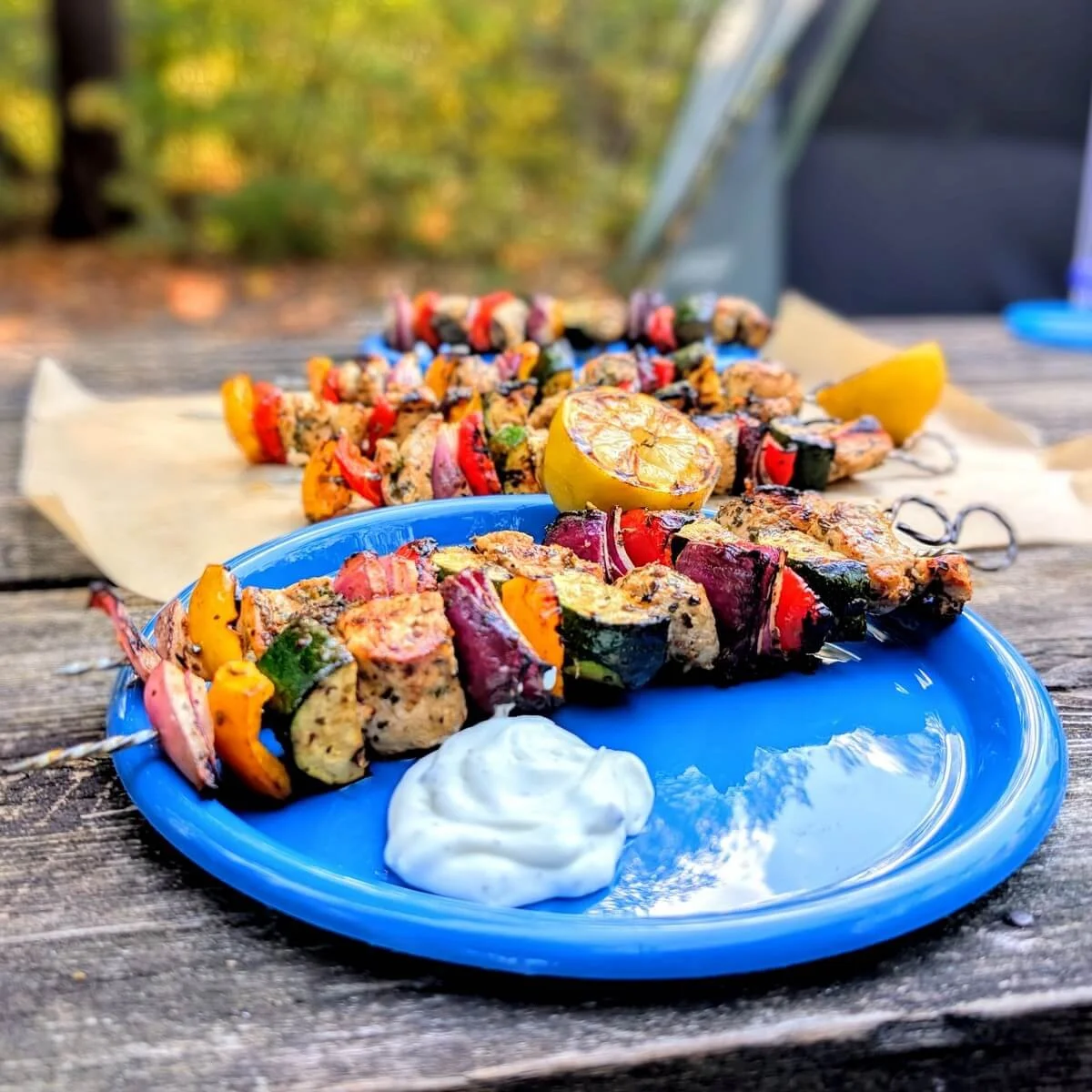
How to cook over a fire like a pro: Master the basics of campfire cooking with this easy guide—from building the perfect fire and managing heat to timing your meals and planning what to cook.
The best way to pack a cooler for camping: Learn how to pack a cooler like a chef with smart food layering, ice strategies, and camping meal ideas that stay fresh for days.
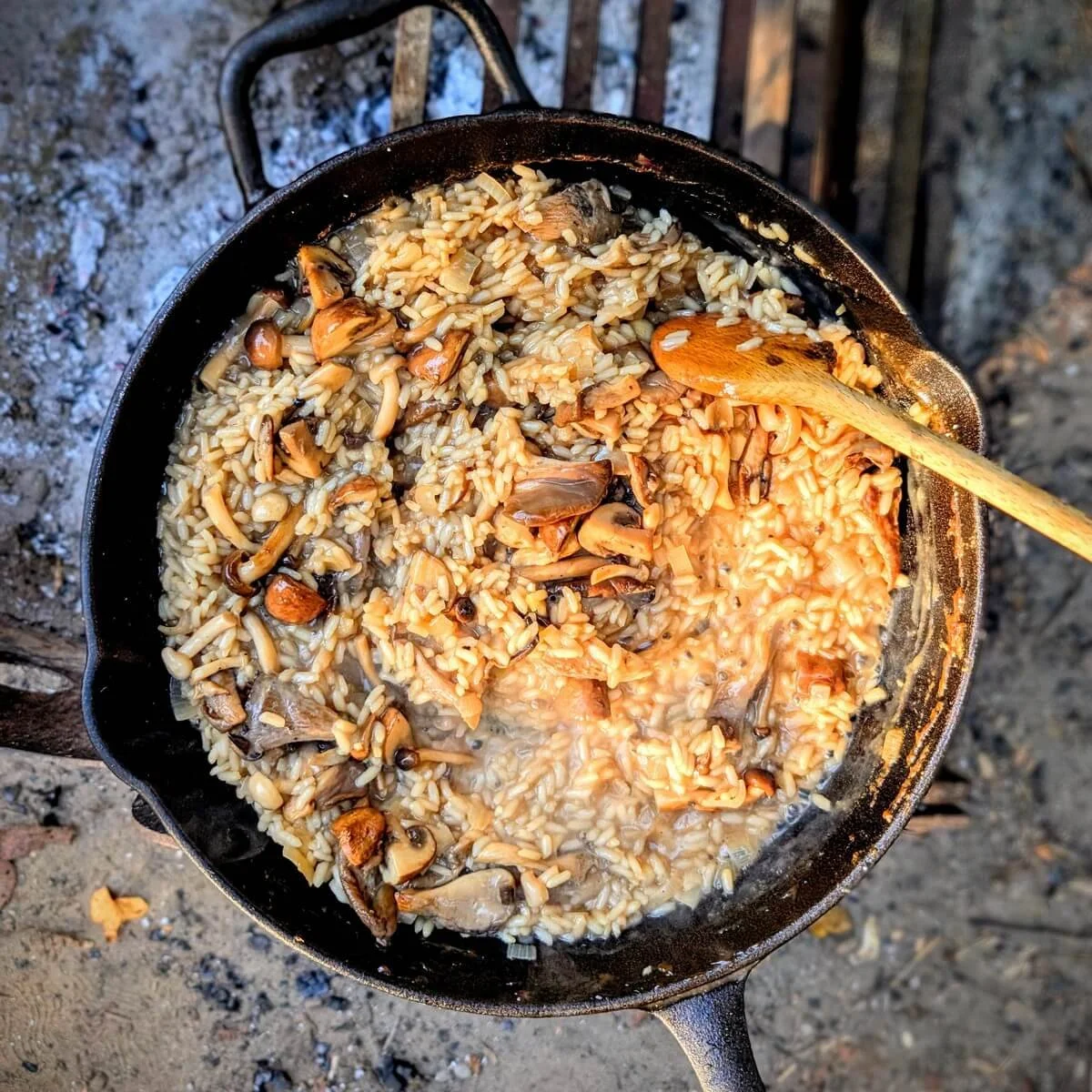
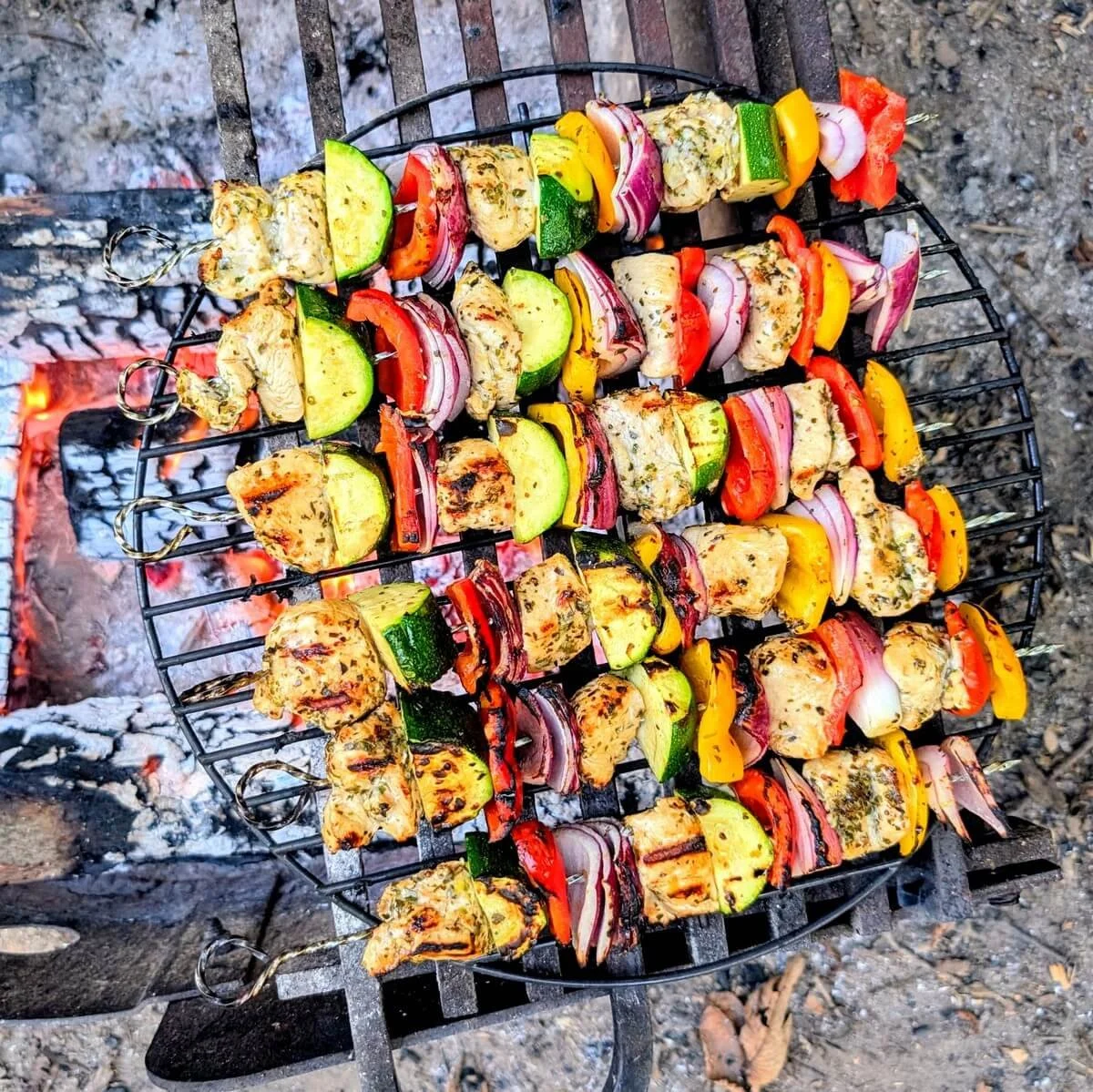
Best camping meal ideas without foil: Fire-cooked and make-ahead camping meals built for your gear—no foil, no stove, just flavorful, smoky food at camp.
Delter Coffee Press review and brewing guide: My go-to for real coffee at camp. This guide covers how it works, why I use it, how to clean it on the go, and where to get your own.



This flank steak is quickly grilled over the campfire and rested with garlic, herbs, and butter for a tender and juicy finish.