Mornay Sauce
Mornay is a classic French cheese sauce built from béchamel. Adding the milk gradually and the cheese off the heat keeps it smooth and creamy.
or read on for step-by-step instructions with photos
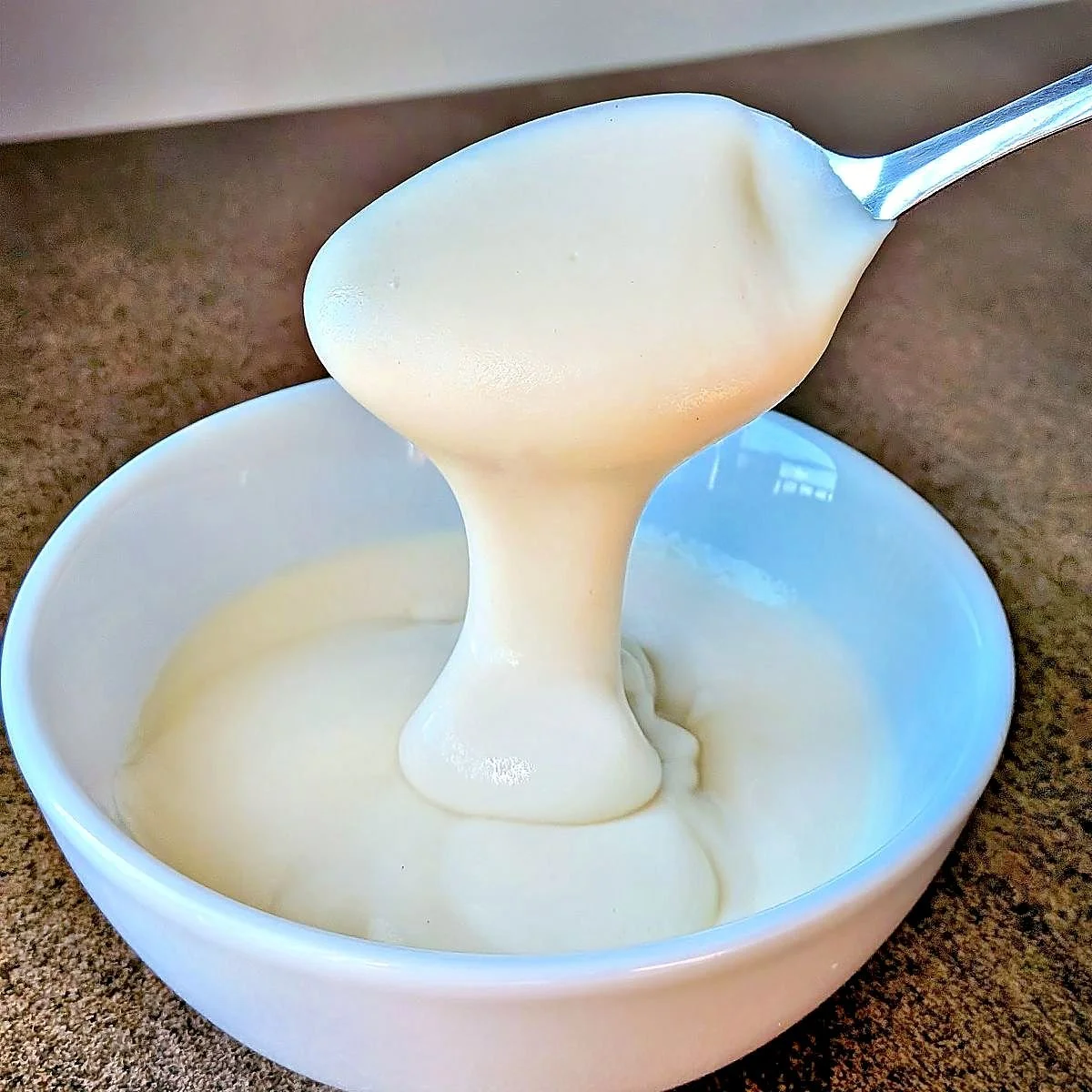
What Is Mornay Sauce?
Mornay is a rich, creamy cheese sauce made by adding cheese to béchamel, one of the classic French mother sauces. It has a smooth, velvety texture and a nutty, slightly tangy flavor from the cheese. I use it for everything from mac and cheese and croque monsieur to casseroles, gratins, and spooning over broccoli.
I've made mornay sauce more times than I can count in restaurant kitchens. Over the years, I've learned that the difference between a silky sauce and a grainy, lumpy one comes down to a few small techniques that are easy to get right once you know what to look for.
Why This Mornay Sauce Recipe Works
White roux base: Butter and flour are cooked together to create a white roux, which thickens the milk into a smooth béchamel before the cheese is added.
Milk added gradually: Adding the milk in stages gives the roux time to absorb the liquid and smooth out any lumps.
Cheese melted gently: Once the sauce is thick, the cheese is stirred in off the heat. This helps it melt smoothly without becoming grainy or separating.
Tiny splash of vinegar: A small amount of acidity brightens the sauce, balancing the richness and bringing out the sharpness of the cheese.
What You’ll Need
Mornay Sauce Ingredients
2 cups milk
2 tablespoons butter
2 tablespoons all-purpose flour
4 ounces Gruyère or white cheddar, grated or cubed
salt, to taste
Optional:
¼ teaspoon white vinegar or lemon juice
freshly grated nutmeg, to taste
Equipment for Making Mornay
2 small saucepans
Whisk and spatula
Measuring cups and spoons
Liquid measuring cup, small pitcher, or ladle
Knife and cutting board or cheese grater
Makes: about 2 cups sauce (2–4 servings)
Prep: 5 min Cook: 15 min
How to Make Mornay Sauce
Step-by-Step
Step 1: Heat the milk
Pour the milk into a small saucepan and set it over medium-low heat. If you're using nutmeg, stir it in now so it has time to infuse the milk.
Heat the milk until it's steaming but not boiling, stirring frequently and scraping the bottom of the pan so it doesn't scorch.
Once it's warm, cover the pan and remove it from the heat to keep it warm while you make the roux.
Step 2: Make the white roux
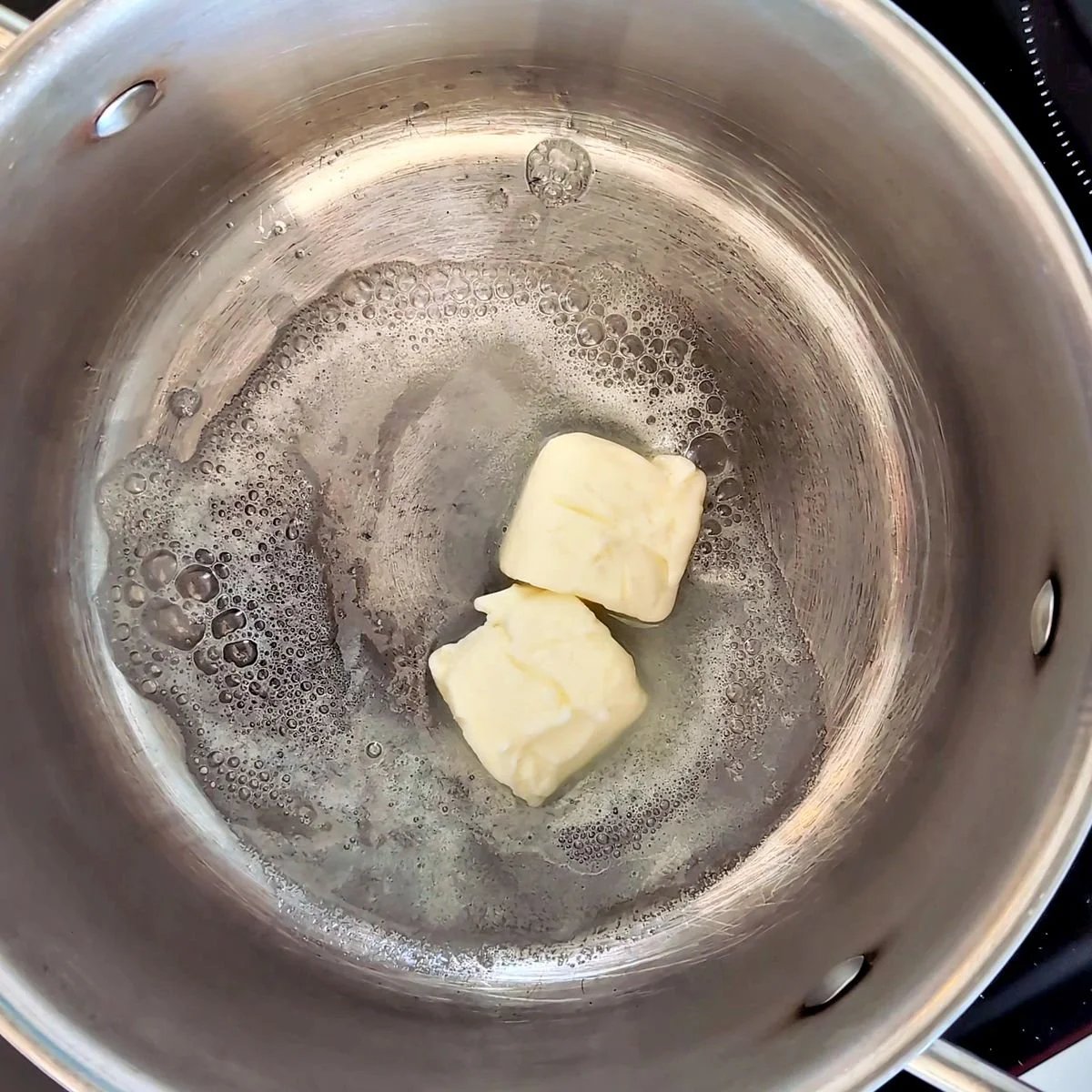
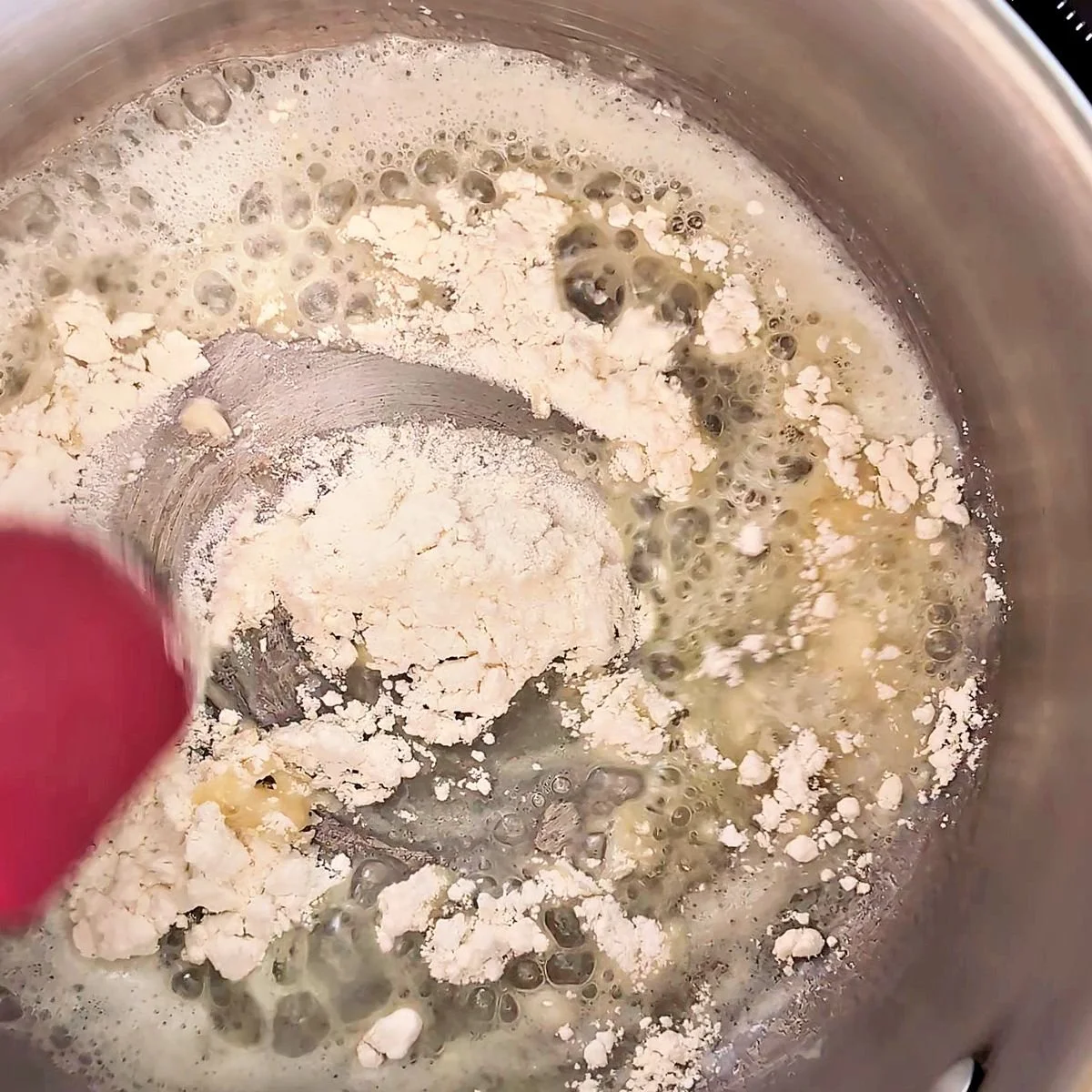
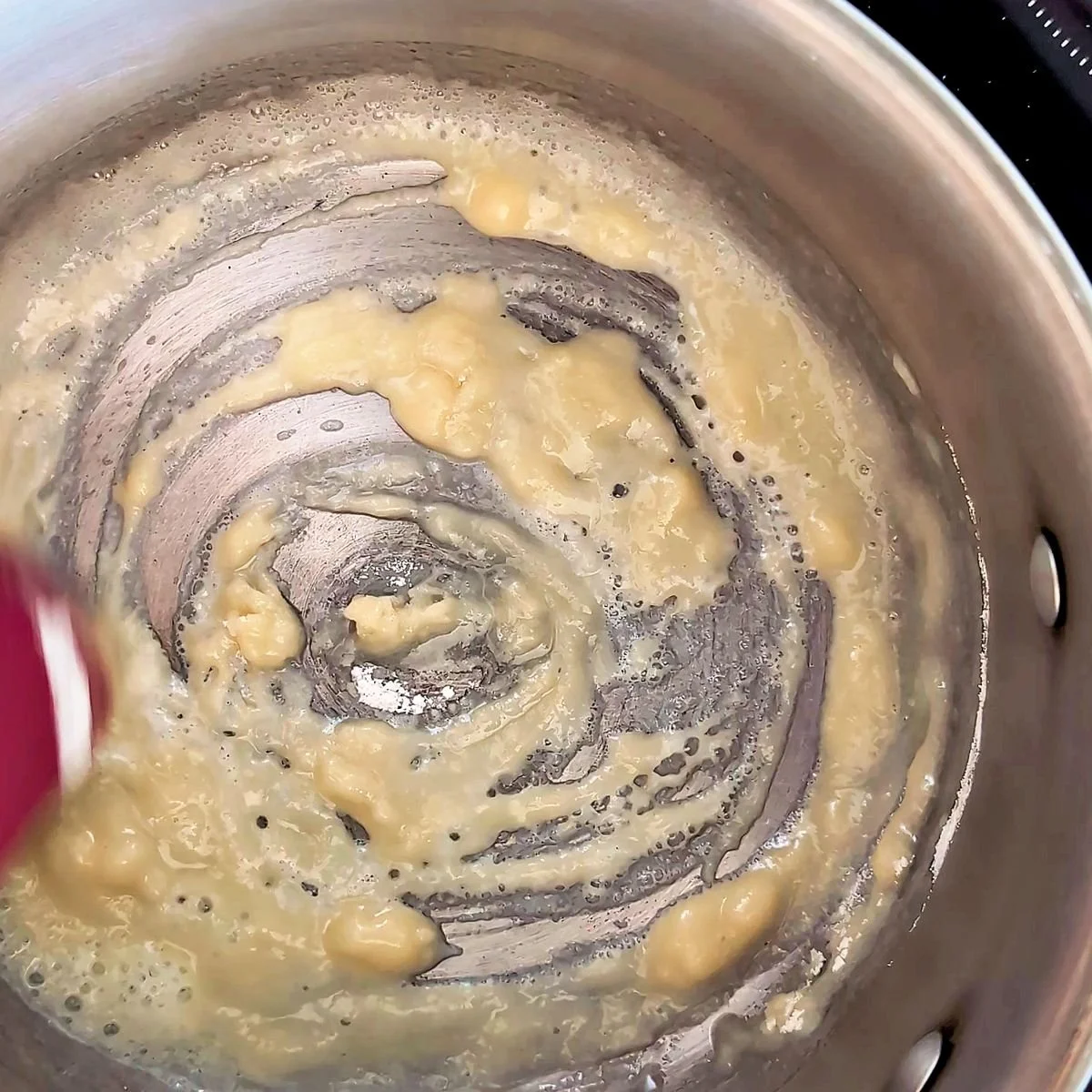
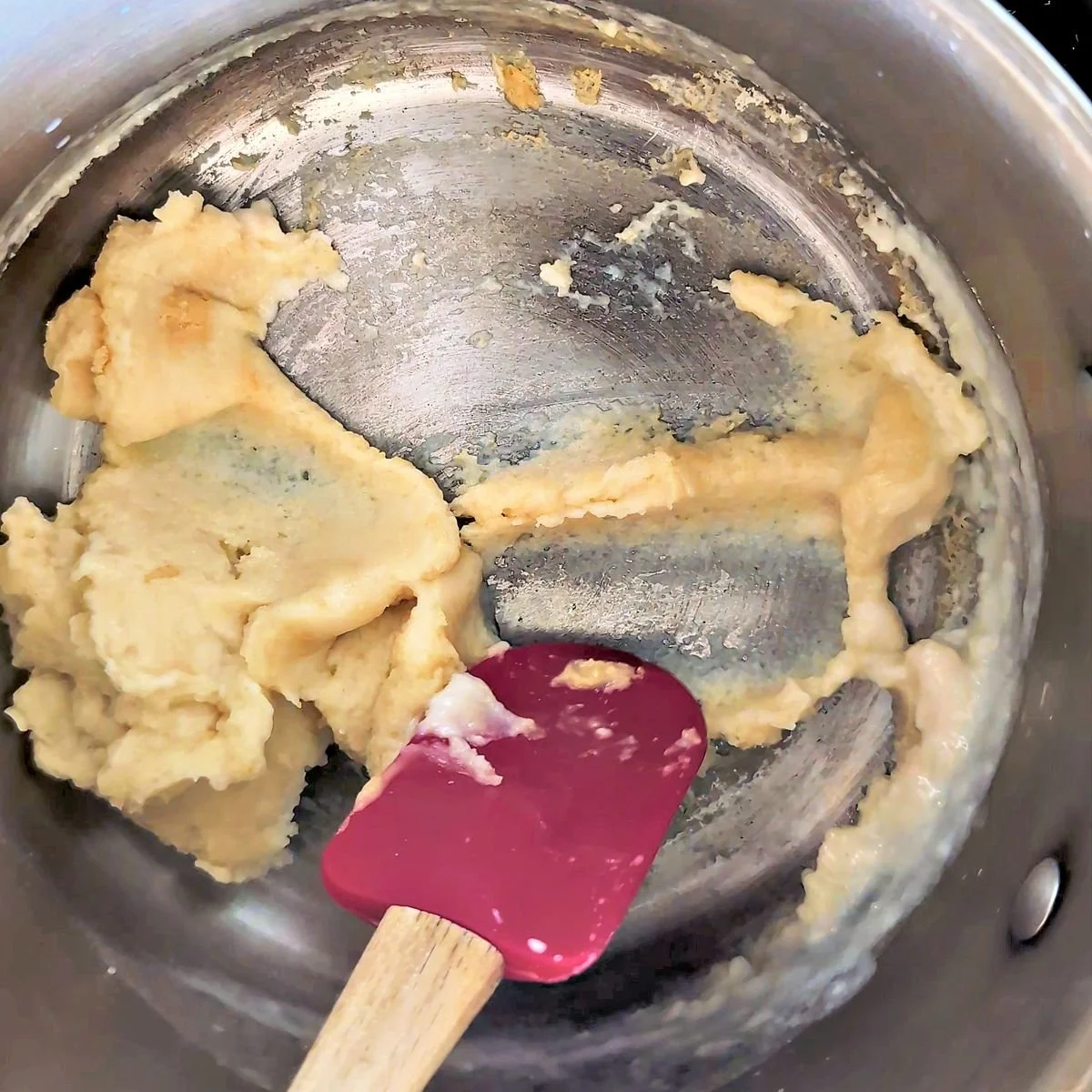
In a separate saucepan, melt the butter over medium heat. Sprinkle in the flour and stir continuously with a spatula until it comes together.
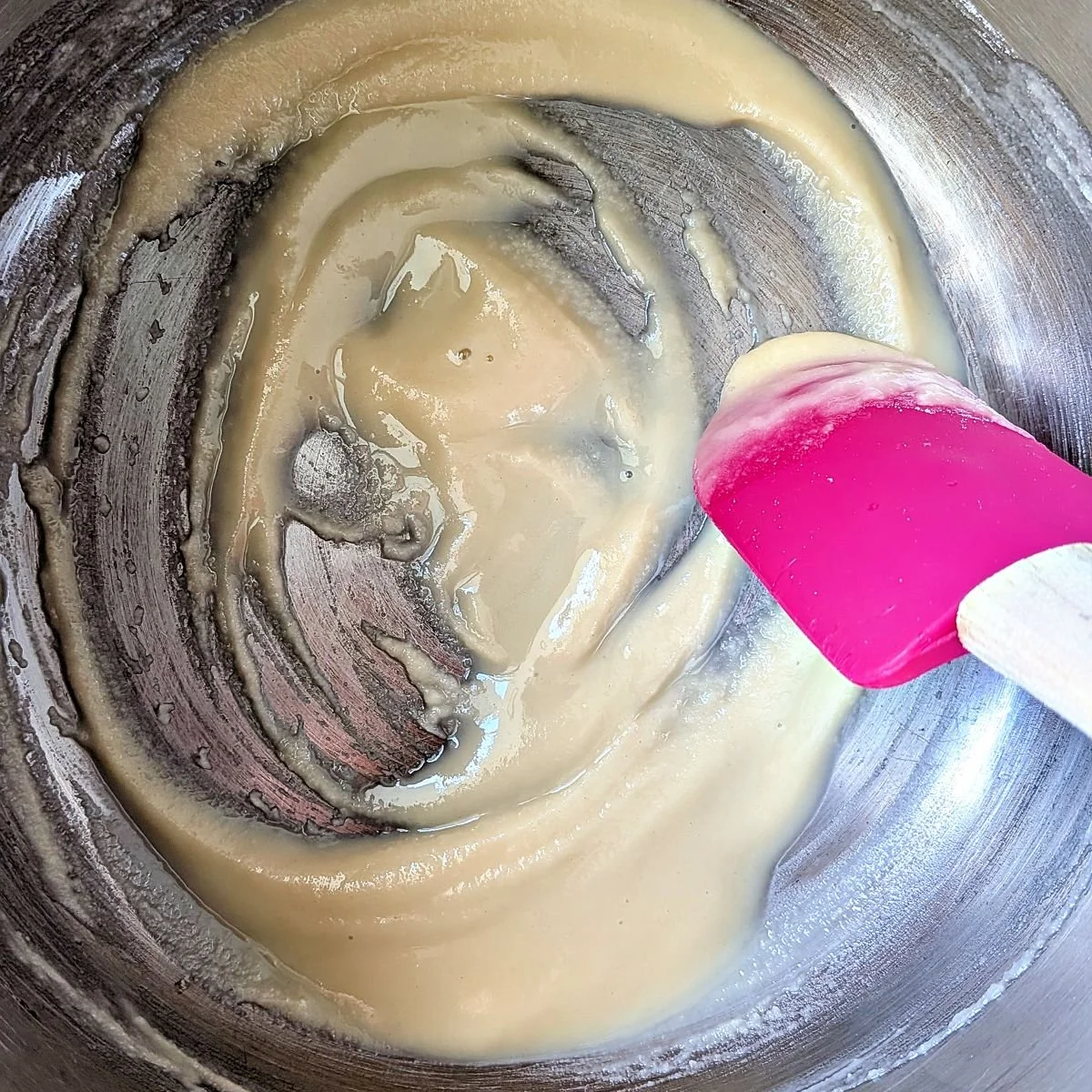
The roux will bubble gently as it cooks. Keep stirring for 2 to 3 minutes, until it smells lightly toasted and has a smooth, creamy texture.
It should stay pale in color without any browning.
For a deeper look at the different types of roux and when to use them, check out my complete guide to making roux.
Step 3: Incorporate the milk
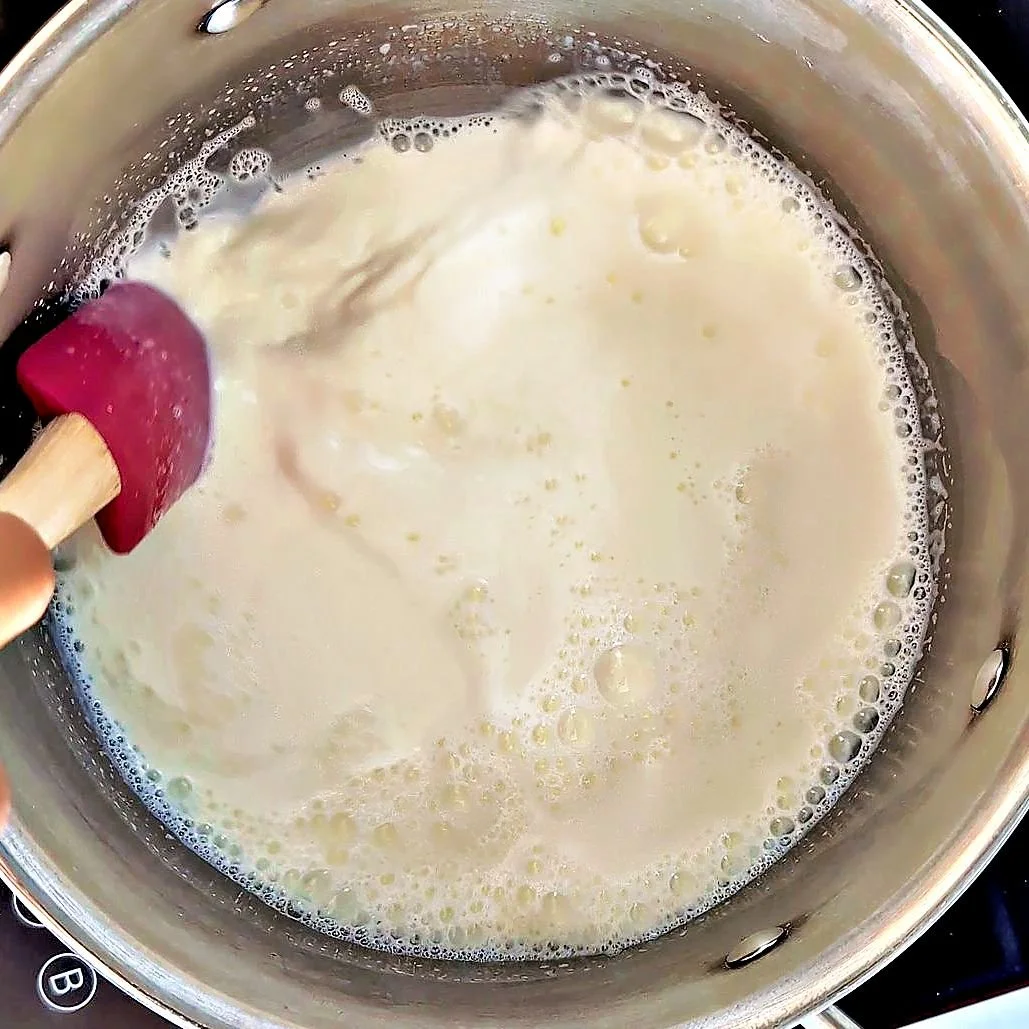
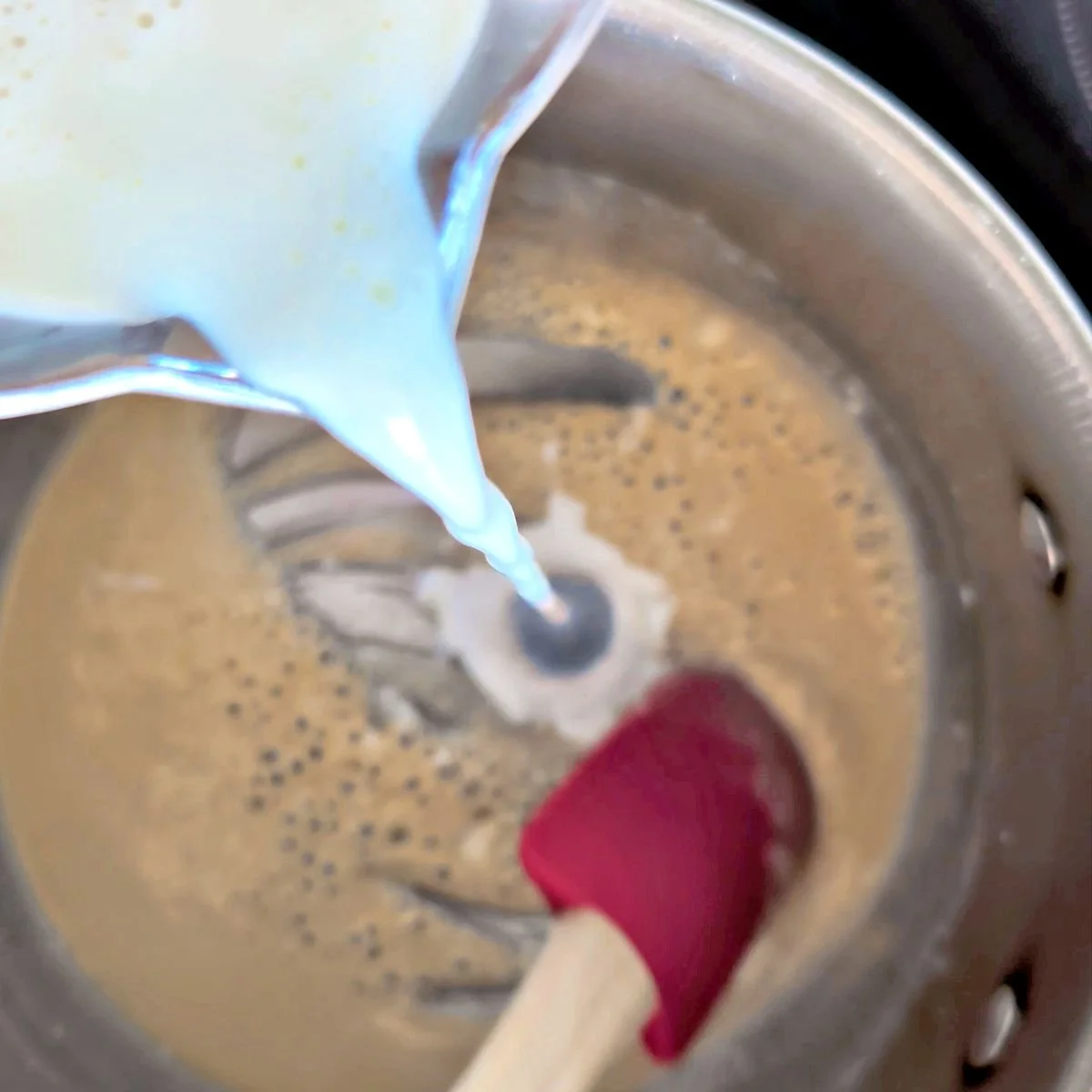
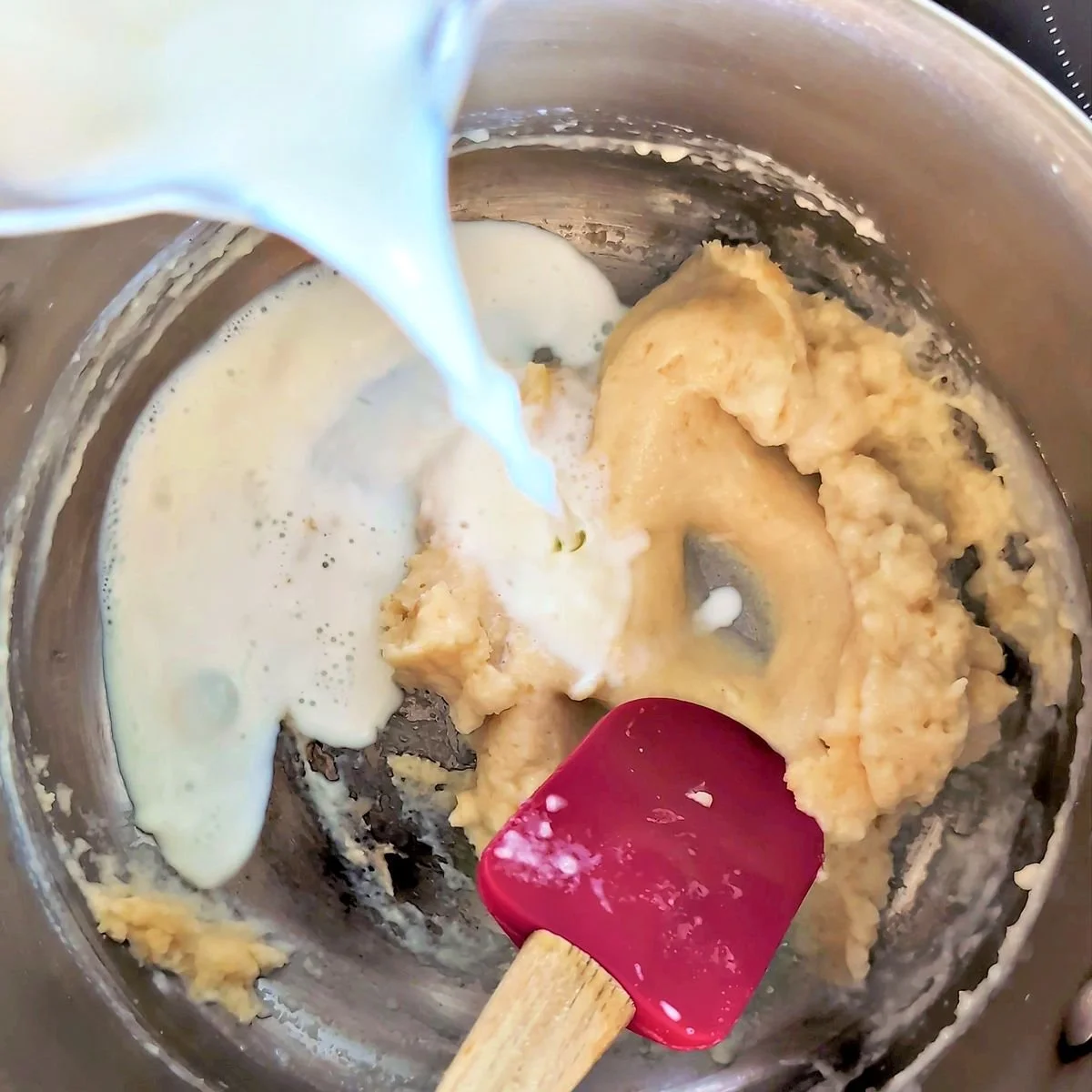
Reduce the heat to medium-low. Using a liquid measuring cup, small pitcher, or ladle, pour a small splash of the warm milk into the roux while stirring constantly with a spatula. The mixture will become very thick at first, which is normal.
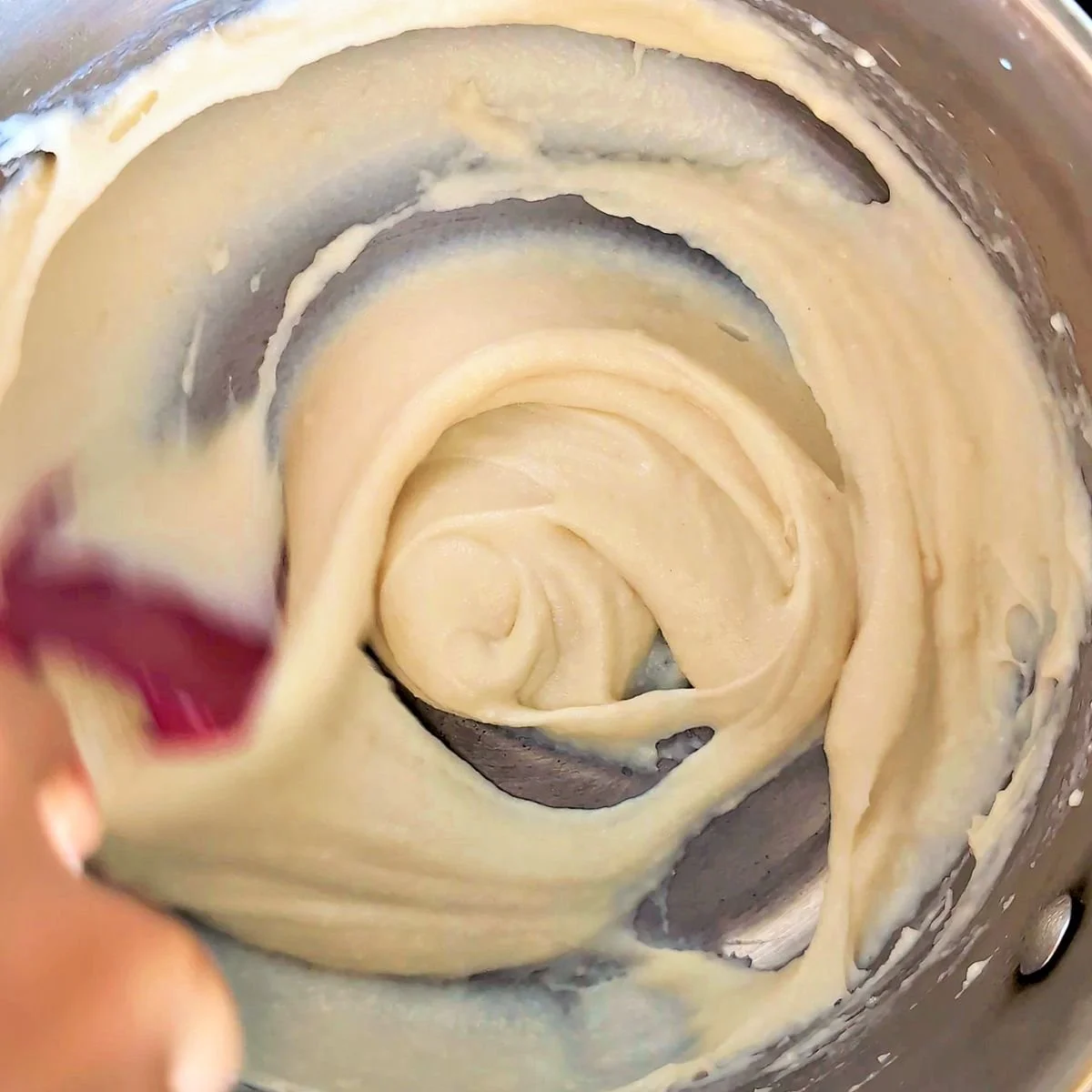
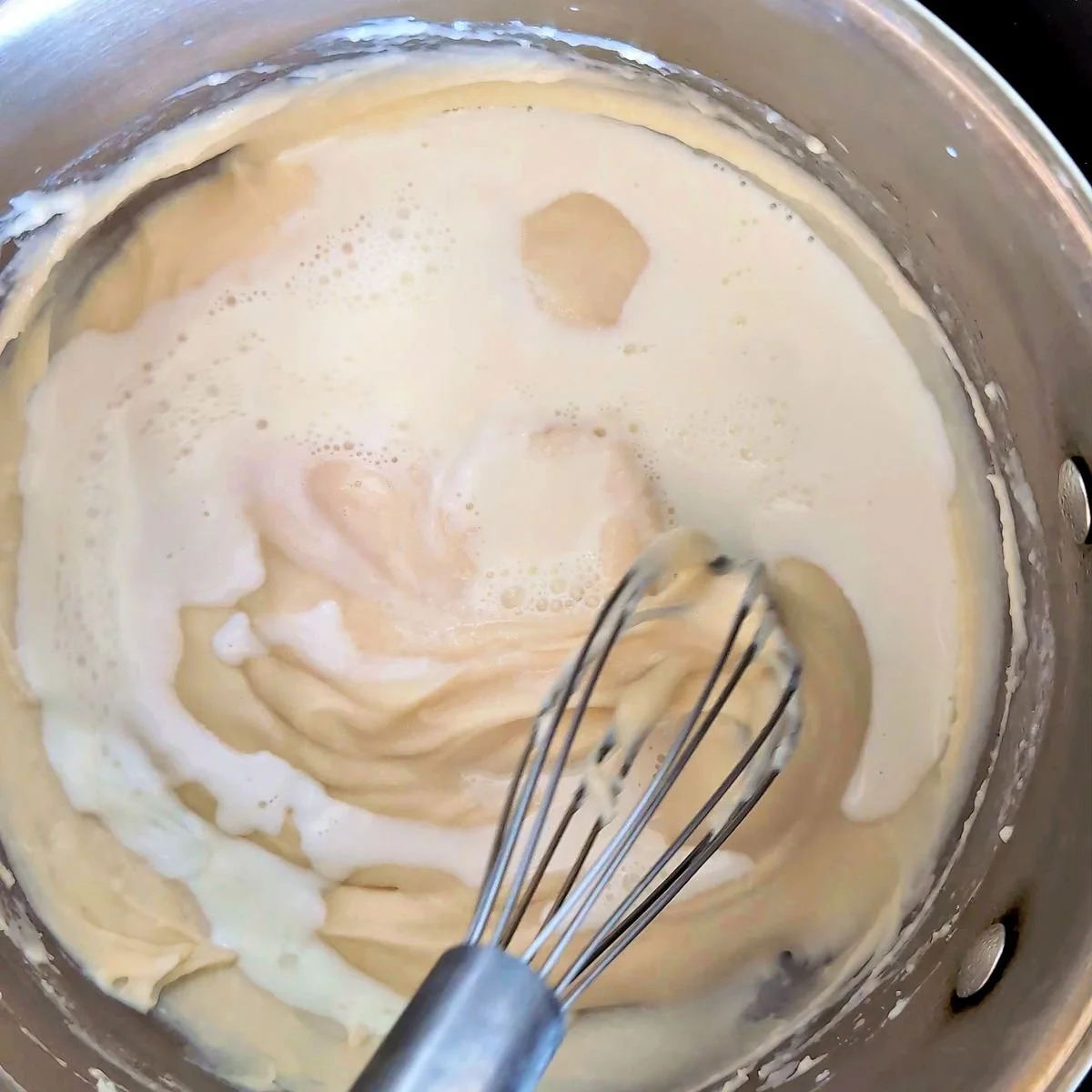
Continue adding the milk a little at a time, using the spatula to smooth out any lumps before adding more. When the sauce begins to loosen, switch to a whisk for a smoother finish.
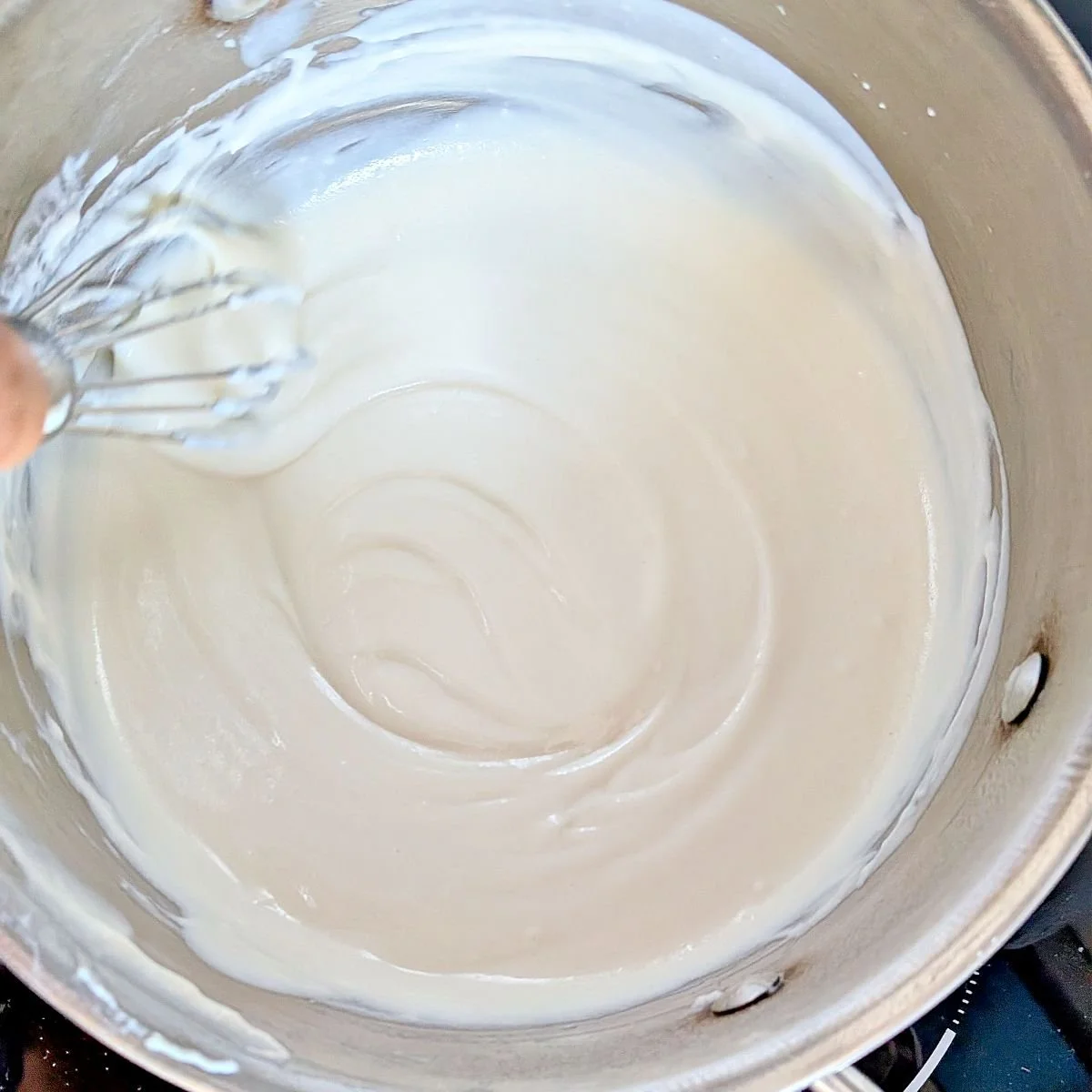
Once all the milk has been added, the sauce should be smooth and silky. If you do happen to have any lumps, don't worry—you can always strain the béchamel through a fine-mesh sieve before adding the cheese.
Step 4: Simmer until thickened
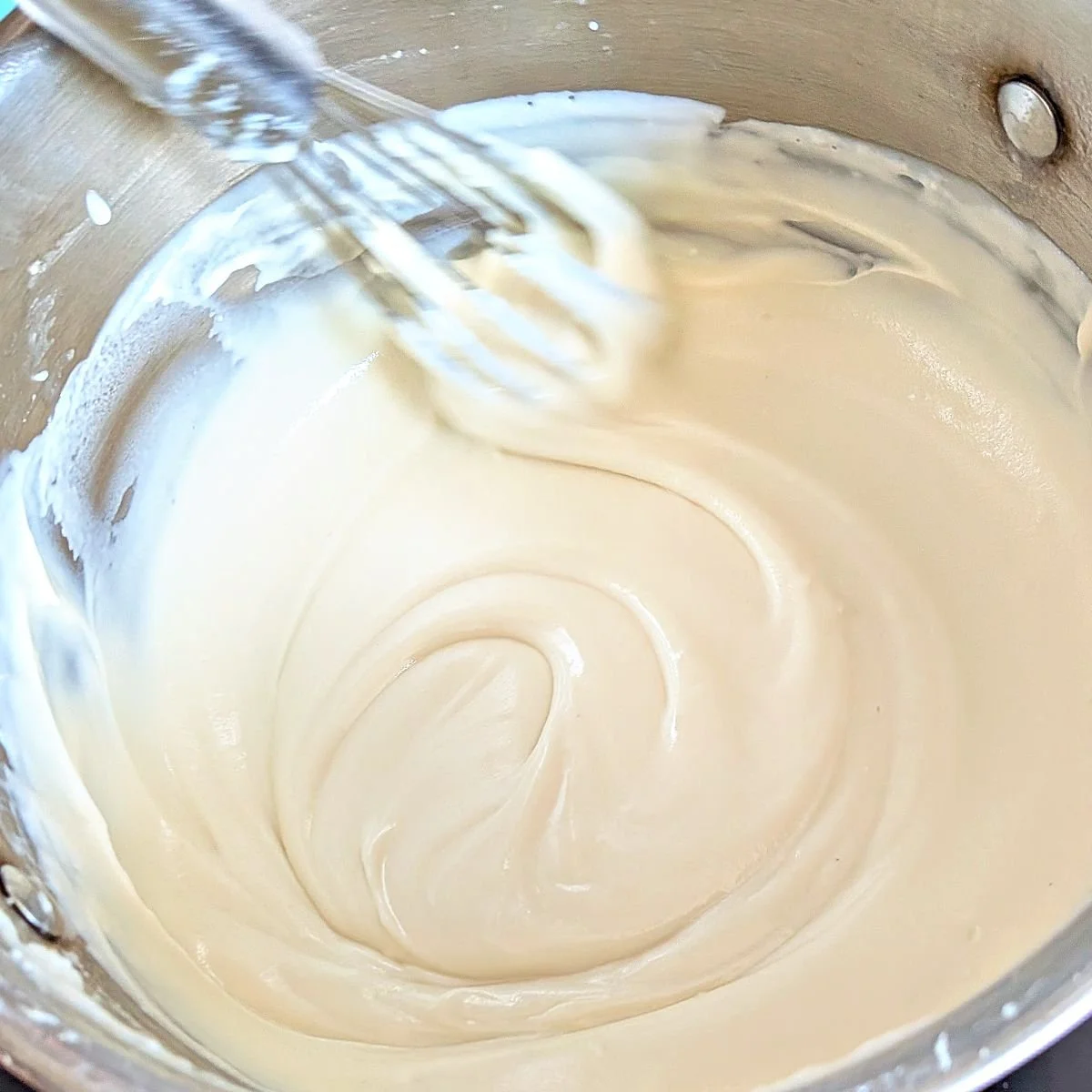
After all the milk has been incorporated, raise the heat to medium-high to bring the béchamel to a gentle simmer. Cook for 3 to 5 minutes, whisking frequently so it doesn't stick to the bottom of the pan.
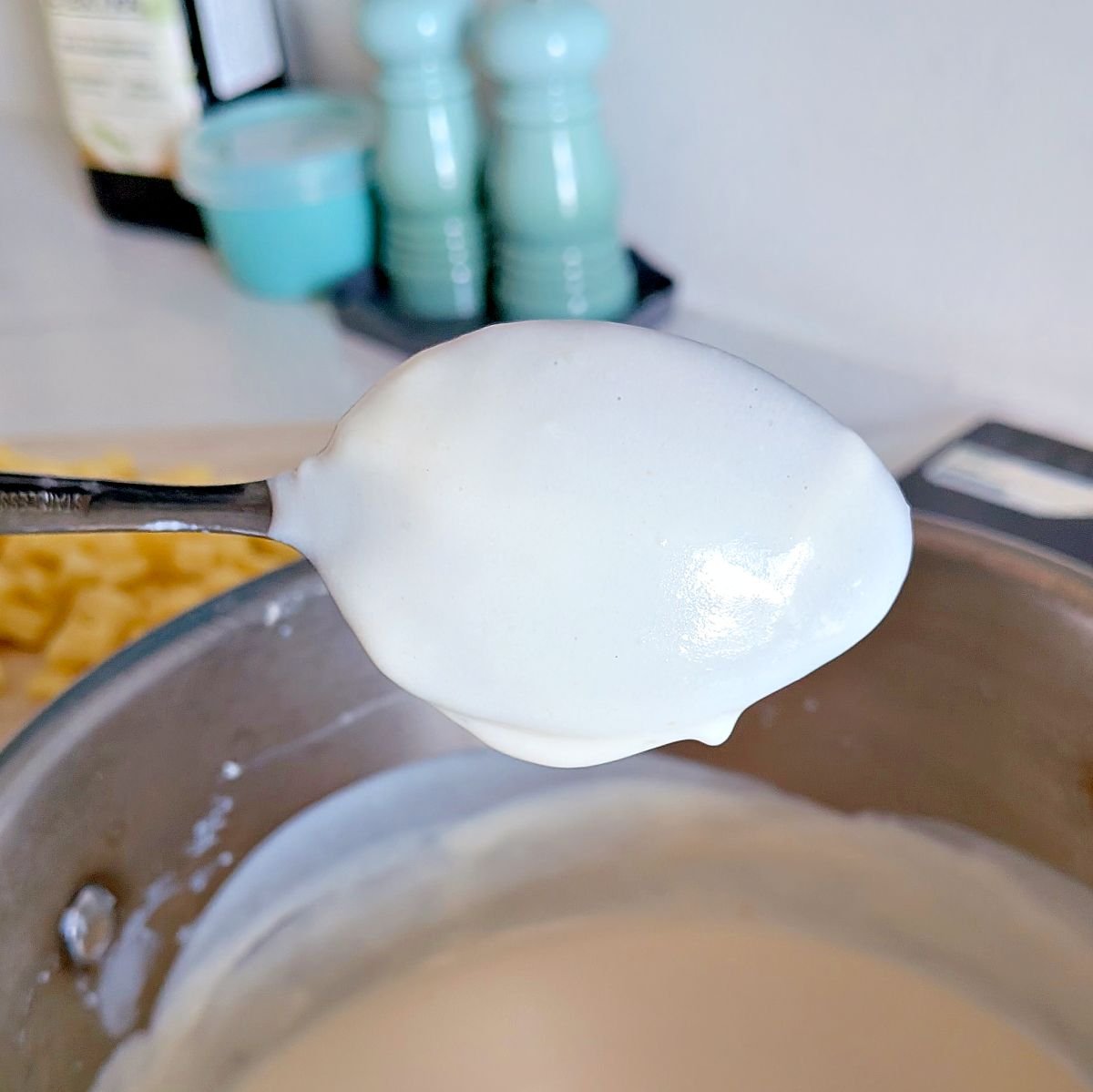
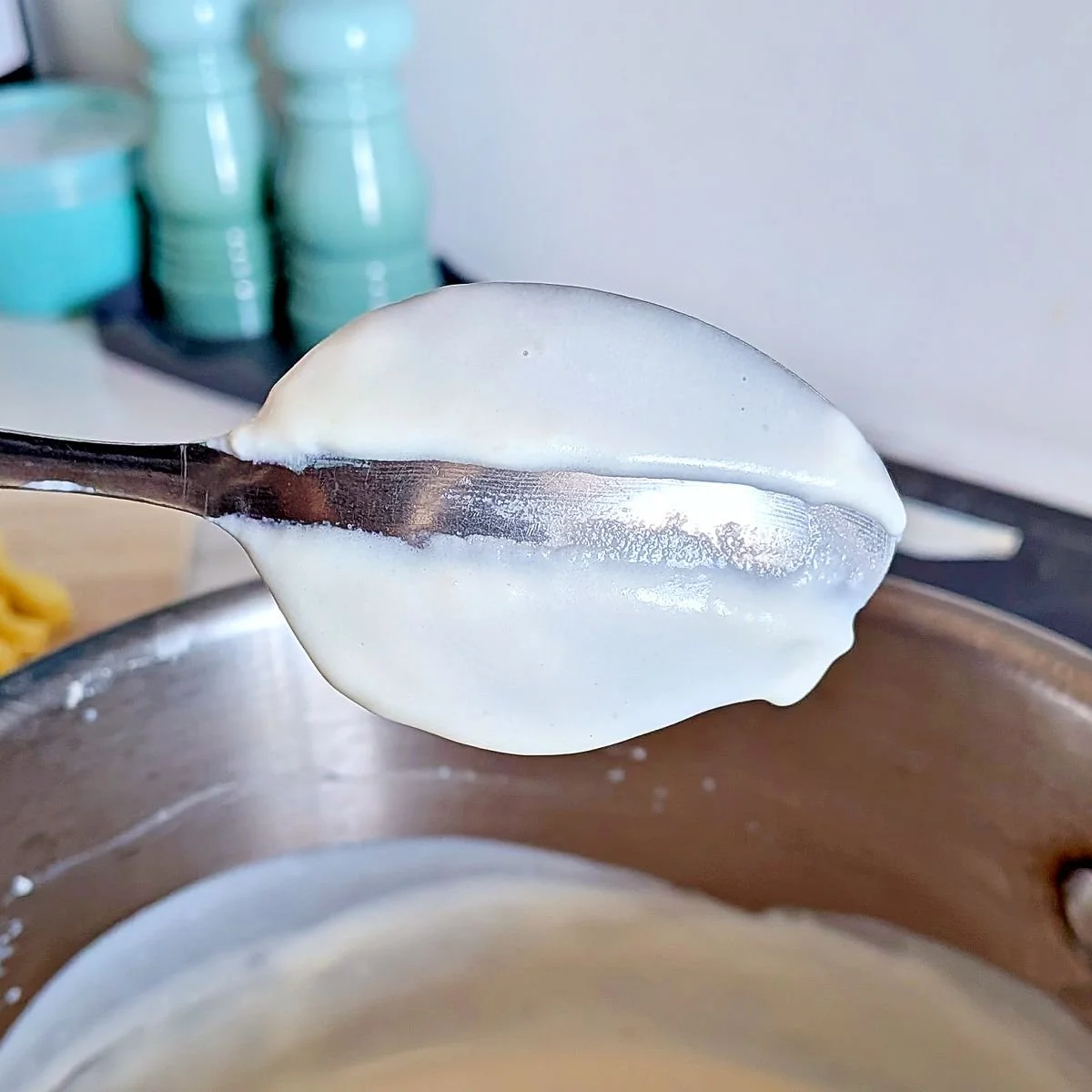
The sauce should have a nappe consistency, which means it coats the back of a spoon.
To test it, run your finger through the sauce on the back of the spoon. If the line stays clear without the sauce running back together, it's ready for the cheese.
If the sauce is still too thin, continue simmering for another minute or two before testing again.
Step 5: Add the cheese
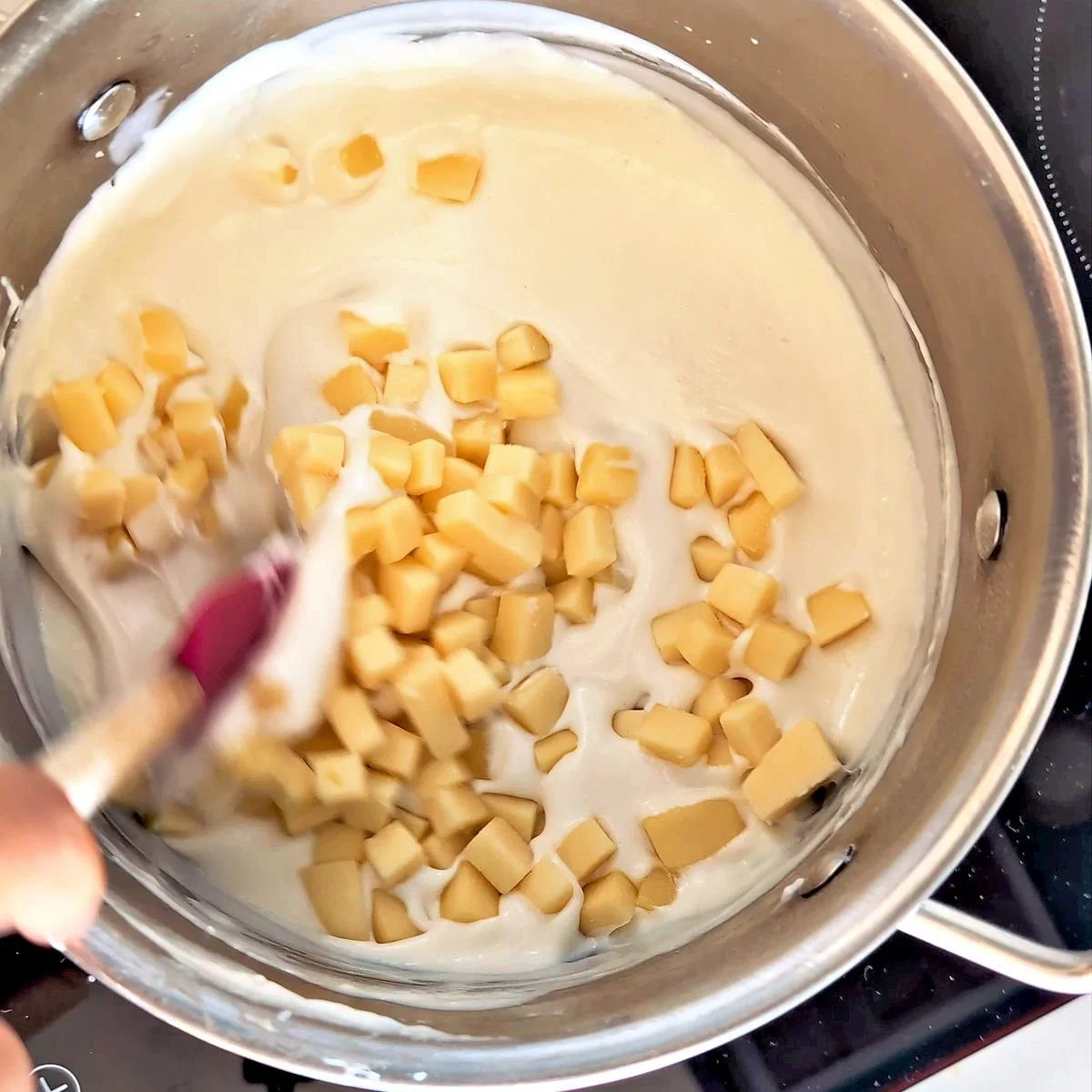
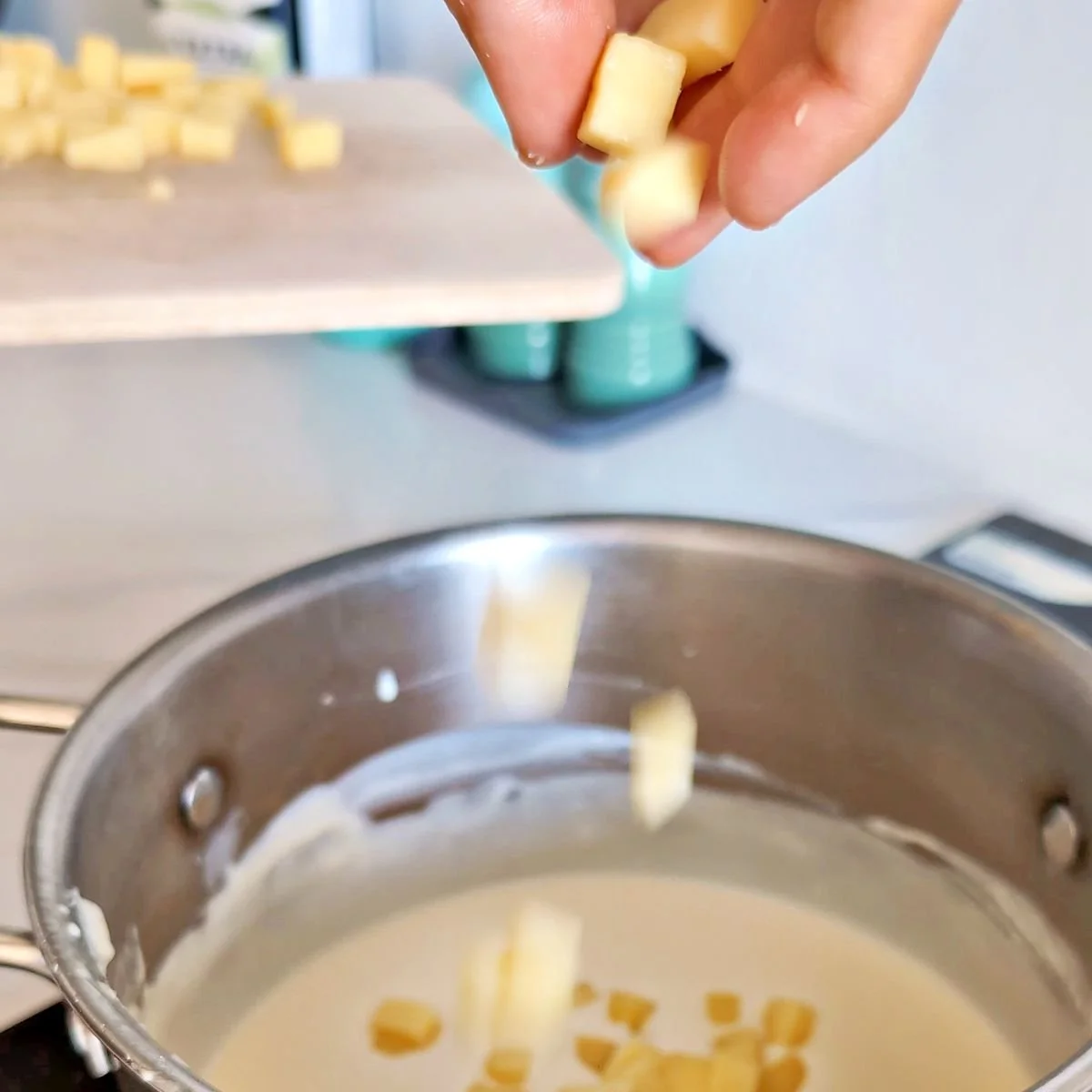
Remove the saucepan from the heat and add the cheese, whisking until it's completely melted and smooth. Adding the cheese off the heat helps prevent it from becoming grainy or separating.
Season with salt to taste, then stir in the vinegar or lemon juice, if using. The acidity helps balance the richness and brings out the sharpness of the cheese.
Serve immediately, or press parchment paper or plastic wrap directly onto the surface to prevent a skin from forming as the sauce cools.
Choosing the Best Cheese for Mornay Sauce
Not all cheeses melt the same way. Traditional mornay sauce is often made with Gruyère, Emmental, or Comté because they melt smoothly and create a silky texture. Non-French varieties like sharp cheddar, young Gouda, and fontina also work well. These cheeses all have the right balance of moisture and protein to blend seamlessly into the béchamel.
The cheese affects both flavor and texture. Gruyère and Comté add a nutty, savory flavor, while sharp cheddar creates a bolder, tangier sauce. Some traditional recipes also include a small amount of finely grated Parmesan for extra depth of flavor. Since Parmesan doesn't melt as smoothly on its own, pairing it with a good melting cheese keeps the sauce creamy.
Skip the pre-shredded cheese if you can. It's coated with anti-caking agents that can interfere with melting and make the sauce less smooth. Whether you're using Gruyère, Gouda, cheddar, or another good melting cheese, freshly grated or cubed cheese will give you the best texture.
Mornay Ingredient Swaps & Variations
Cheese options: For the most traditional French-style mornay sauce, use Gruyère with a little Parmesan. For a slightly tangier sauce, I like using sharp white cheddar. Other good melting cheeses like Comté, Emmental, fontina, and young Gouda all work well too.
Milk options: Whole milk makes the creamiest sauce, but 2%, skim, or even lactose-free milk will also work. Lower-fat milk produces a lighter sauce with a slightly thinner texture.
Flour: For a gluten-free version, substitute an equal amount of your favorite gluten-free flour blend.
Flavor variations: For extra depth of flavor, steep the milk with a bay leaf, garlic clove, onion, fresh thyme, rosemary, or a pinch of nutmeg before making the béchamel. It's a simple restaurant technique that infuses extra flavor into the sauce from the very beginning.
Make Ahead, Storage, and Reheating
Make ahead: Mornay sauce can be made 1 to 3 days in advance. To prevent a skin from forming, press a piece of parchment paper or plastic wrap directly onto the surface of the sauce while it cools before refrigerating.
Fridge: Store leftover mornay sauce in an airtight container in the refrigerator for up to 5 days. The sauce will thicken as it cools, which is completely normal.
Freezer: Mornay sauce can be frozen for up to 3 months. It may become slightly grainy after thawing, but a splash of milk or cream and a good whisking while reheating usually restores its smooth, creamy texture.
To reheat: Warm the sauce gently over low heat or in 30-second intervals in the microwave, stirring frequently. Whisk in a splash of milk or cream to loosen the sauce if needed.
Ways to Use Mornay Sauce
Mornay Sauce for Mac and Cheese
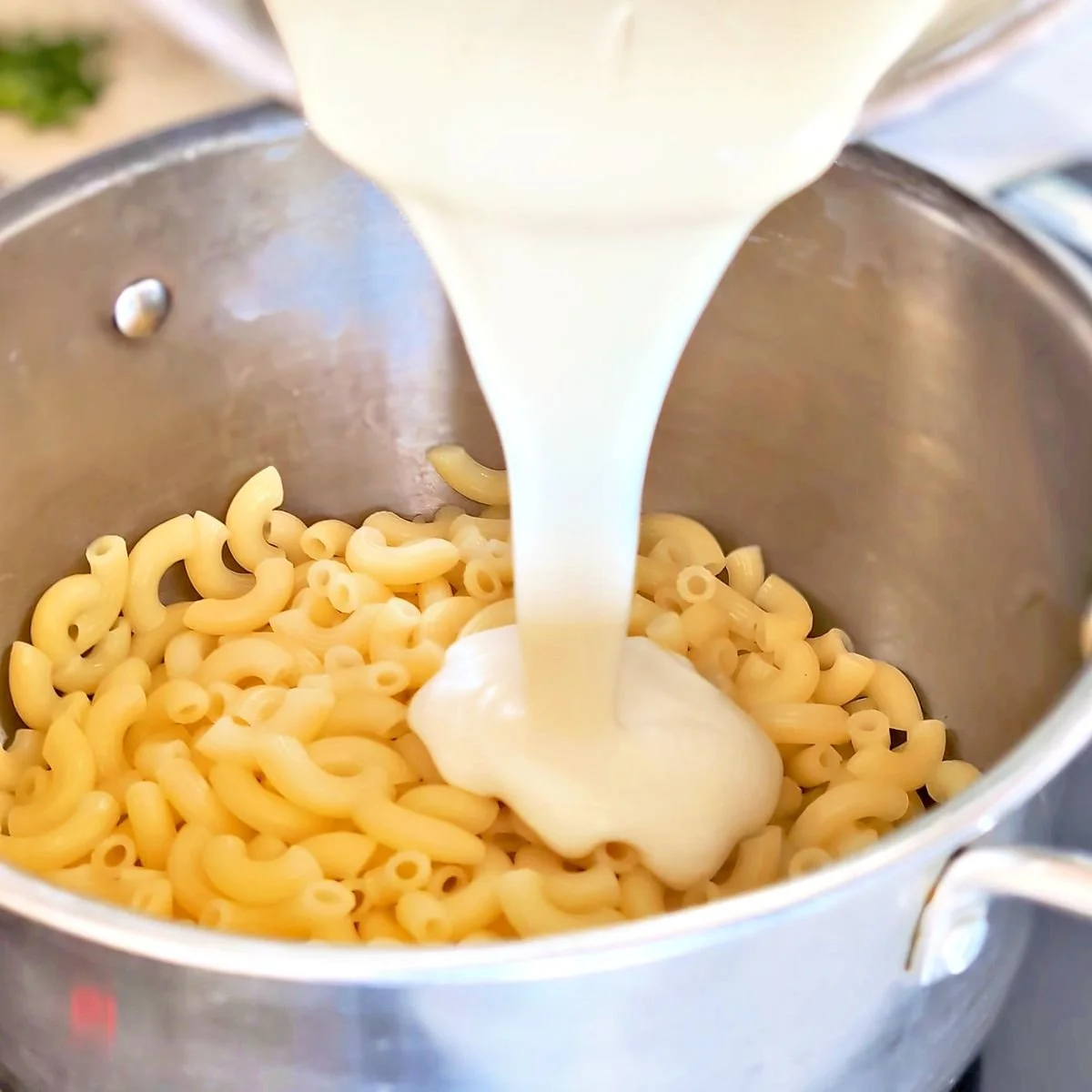
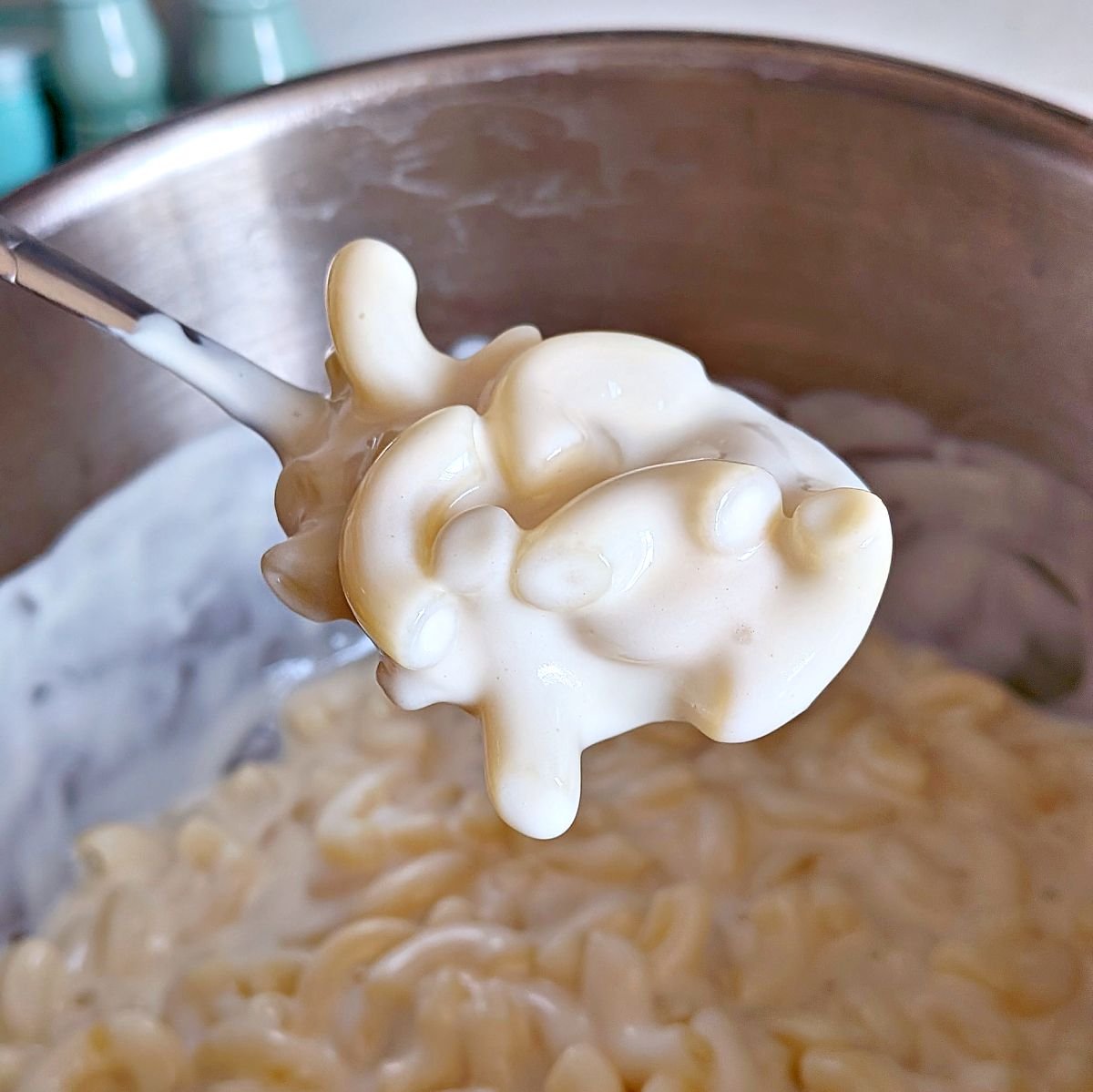
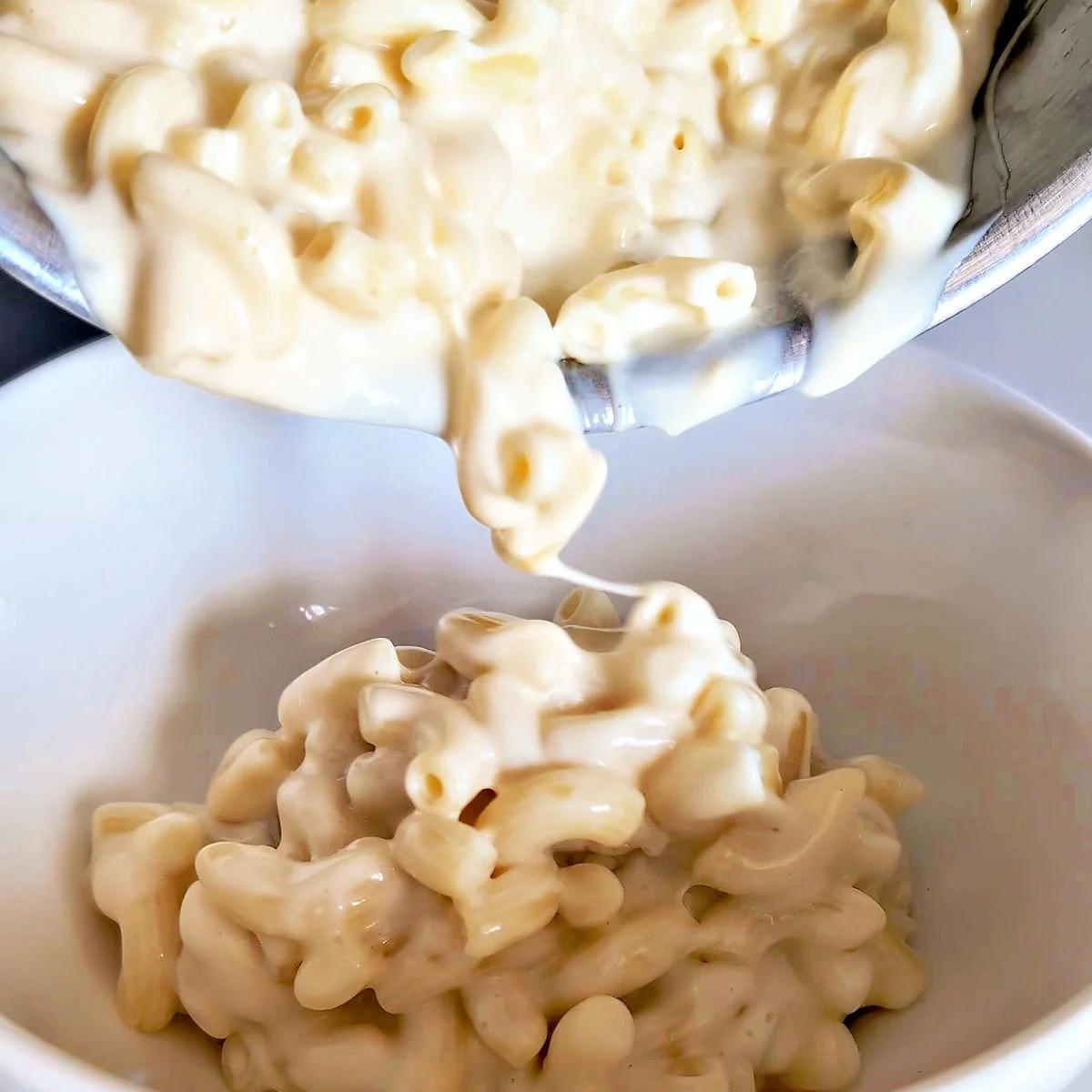
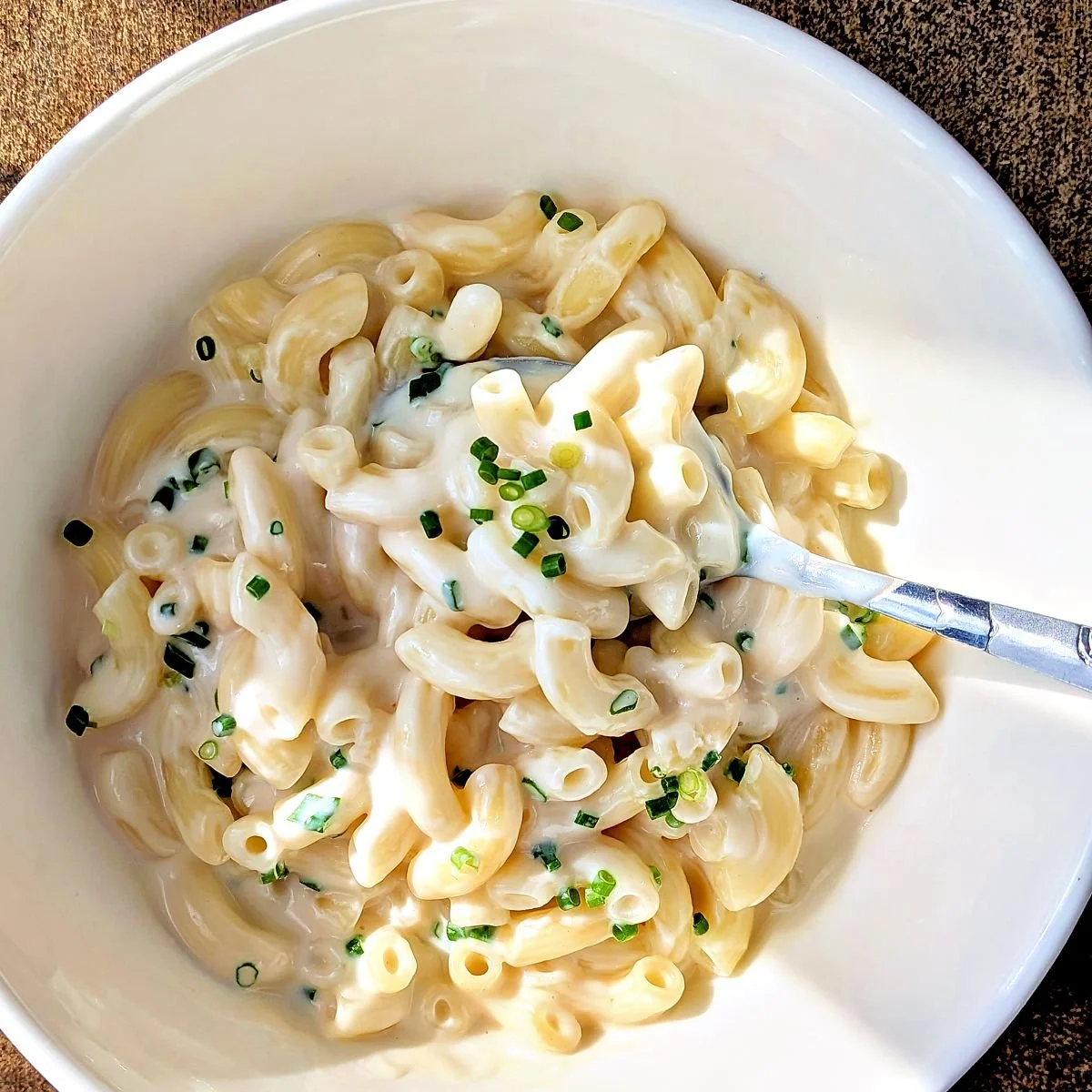
Stir the cooked macaroni directly into the warm mornay sauce until evenly coated, adding a splash of milk or cream if it feels too thick. For a baked version, transfer everything to a baking dish, top with breadcrumbs and a little extra cheese, then bake until golden brown and bubbling.
Spoon it Over Vegetables or Seafood
Warm vegetables like broccoli, cauliflower, asparagus, and green beans are a natural match for mornay sauce. For an easy cauliflower cheese, pour the sauce over cooked cauliflower and finish it under the broiler with extra cheese sprinkled on top.
Try it with cooked shrimp, scallops, crab, or white fish, either served as is or finished under the broiler. Add a squeeze of lemon and a sprinkle of parsley to balance the richness of the sauce.
Use it in Baked Dishes
Once you've made a batch of mornay sauce, you're already halfway to a casserole or gratin. Stir it into cooked potatoes, vegetables, pasta, or shredded chicken, then bake until hot and bubbling.
It's also the traditional topping for croque monsieur. Spread the sauce over the assembled sandwich, add a little extra cheese, and broil until golden brown and bubbling.
Troubleshooting Mornay Sauce
Split or grainy sauce
Cause:
The sauce was overheated, the béchamel wasn't fully thickened before the cheese was added, or the cheese didn't melt smoothly.
How to fix it:
Whisk the sauce thoroughly and, if needed, strain it through a fine-mesh sieve.
To prevent it in the future, let the béchamel come to a gentle simmer and thicken properly before adding the cheese off the heat.
Use a good melting cheese and avoid pre-grated versions that contain anti-caking agents.
Lumpy sauce
Cause:
The milk was added too quickly before the roux had a chance to absorb it evenly.
How to fix it:
Strain the sauce through a fine-mesh sieve before serving.
To prevent it in the future, add the milk gradually, whisking thoroughly between additions.
Sauce is too thick
Cause:
The sauce reduced too much or cooled before serving.
How to fix it:
Whisk in a splash of warm milk or cream and reheat gently until the sauce reaches the desired consistency.
Sauce is too thin
Cause:
The béchamel wasn't simmered long enough to fully thicken or not enough roux was used.
How to fix it:
Continue cooking the sauce gently while stirring until it reaches a simmer and thickens.
If the sauce is still too thin, make a fresh roux and gradually whisk the sauce into it.
Skin on the surface
Cause:
The sauce was left uncovered while cooling.
How to fix it:
Gently remove the skin and use the sauce underneath.
Press a piece of parchment paper or plastic wrap directly onto the surface of the sauce while it cools to prevent a skin from forming.
Pin This Cheese Sauce Recipe for Later
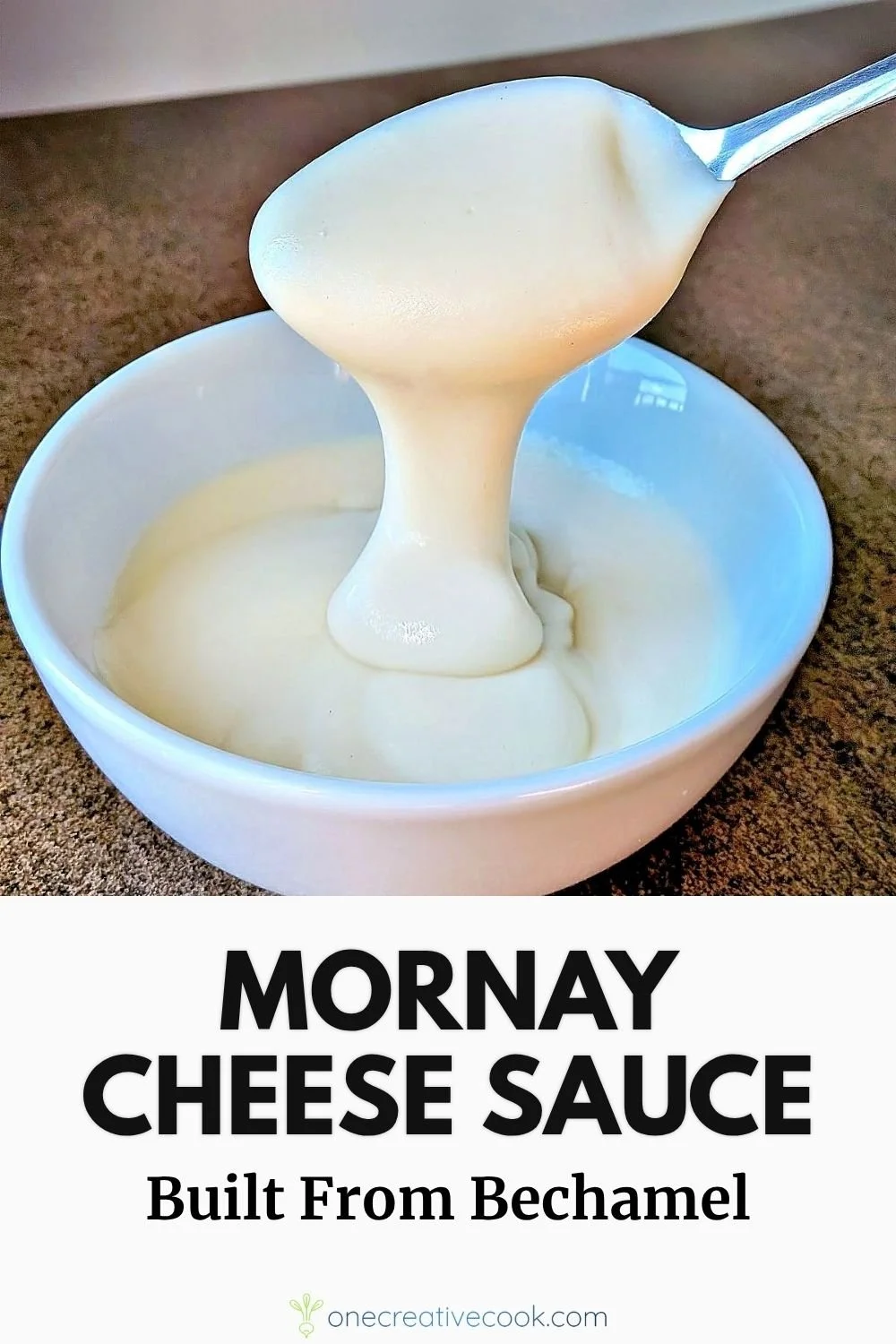
Mornay Sauce Recipe
Learn how to make classic French mornay sauce with béchamel and cheese—with chef-tested tips for a smooth, creamy sauce every time.
Makes: about 2 cups sauce (2–4 servings)
Prep: 5 min Cook: 15 min
Dietary Notes: Egg-free, Vegetarian
Mornay Sauce Ingredients
2 cups milk
2 tablespoons butter
2 tablespoons all-purpose flour
4 ounces Gruyère or white cheddar, grated or cubed
salt, to taste
Optional:
¼ teaspoon white vinegar or lemon juice
freshly grated nutmeg, to taste
Quick Instructions for Mornay Sauce
Heat the milk. Warm the milk (and nutmeg, if using) over medium-low heat until steaming but not boiling, stirring frequently with a spatula. Remove from the heat, cover, and keep warm.
Make the white roux. In a separate saucepan, melt the butter over medium heat, stir in the flour, and cook for 2 to 3 minutes until smooth, lightly toasted but still pale.
Incorporate the milk. Reduce the heat to medium-low. Add the warm milk a little at a time, using a spatula to work out any lumps before adding more. Switch to a whisk as the sauce loosens and continue adding the remaining milk until the béchamel is smooth.
Simmer until thickened. Increase the heat to medium-high and bring the béchamel to a gentle simmer. Cook for 3 to 5 minutes, whisking frequently, until it coats the back of a spoon. Run your finger through the sauce on the back of the spoon—if the line stays clear without it running back together, it's ready.
Add the cheese. Remove the pan from the heat and whisk in the cheese until smooth. Season with salt and stir in the vinegar or lemon juice, if using. Serve immediately, or press parchment paper or plastic wrap directly onto the surface to prevent a skin from forming as it cools.
Helpful Tips for Mornay Sauce
Storage: Mornay sauce keeps in the refrigerator for up to 5 days. Reheat it gently with a splash of milk or cream to restore its smooth, creamy consistency.
Choose a good melting cheese: Gruyère, Emmental, Comté, sharp cheddar, young gouda, and fontina all melt smoothly into a creamy mornay sauce. For the best texture, use freshly grated or cubed cheese instead of pre-shredded.
Strain for a silky sauce: If you end up with a few lumps, don't worry. Pour the béchamel through a fine-mesh sieve before adding the cheese for an extra smooth mornay sauce.
Did you try this mornay sauce recipe?
I'd love to hear how it went, what you used it for, or if you have any questions. Leave a comment below—I'm always happy to help.
More French Sauces to Try Next
Béchamel Sauce: An in-depth dive into the mother sauce that creates mornay sauce.
Velouté Sauce: This velvety sauce uses chicken stock and a blond roux for a lightly golden color and delicate flavor.
Espagnole Sauce: Discover the rich brown sauce that serves as the starting point for many classic French sauces like demi-glace and chasseur.
Hollandaise Sauce: Learn my immersion blender technique for making this silky butter-based emulsion—a must-have for Eggs Benedict.