Velouté Sauce
Learn to make velouté sauce, a classic French mother sauce. Gradually whisking chicken stock into a blond roux creates a smooth, velvety sauce.
or read on for step-by-step instructions with photos
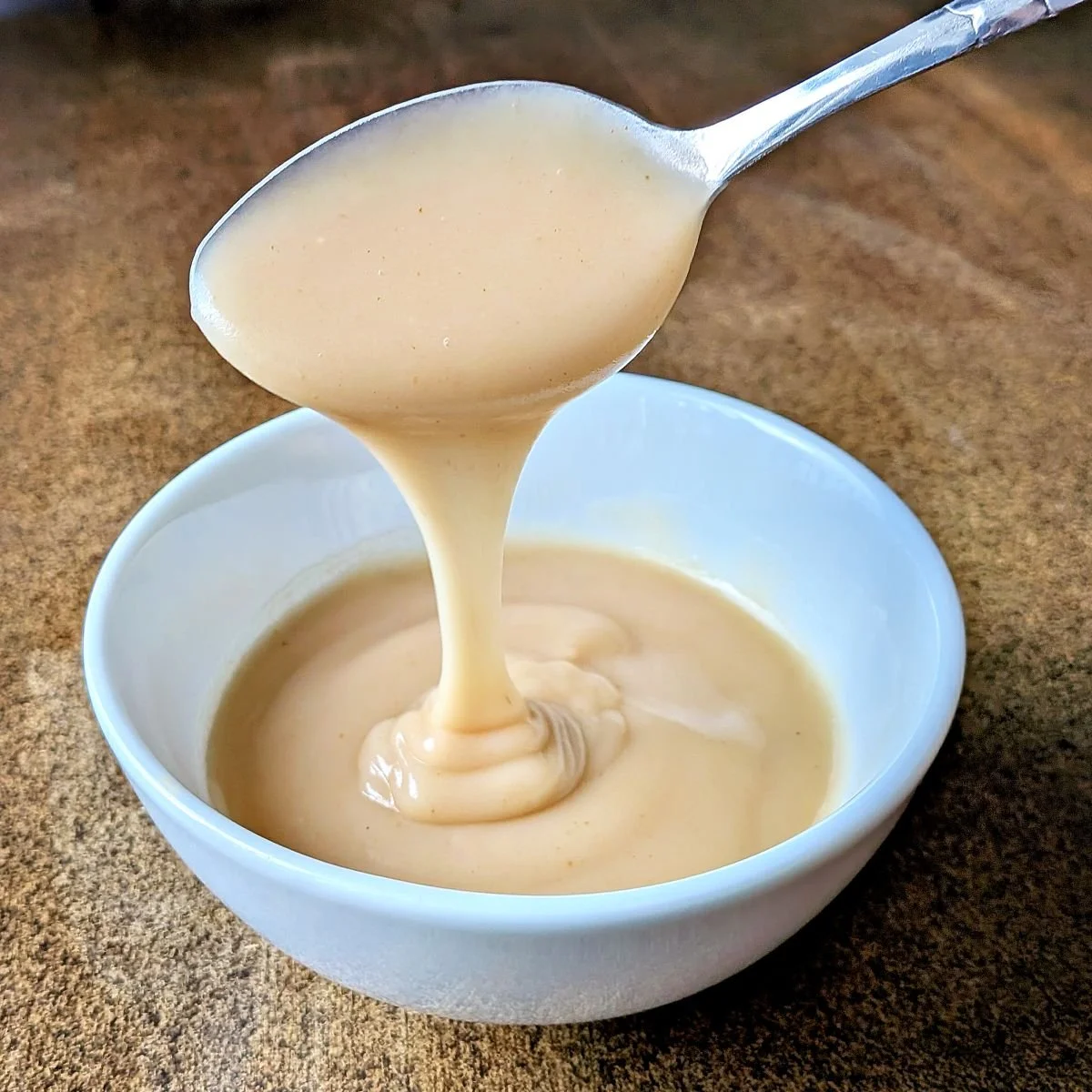
What is Velouté Sauce?
Velouté is made by thickening a light-colored stock, such as chicken, veal, or fish stock, with a blond roux. It's one of the five French mother sauces and serves as the starting point for many classic sauces. Its delicate, savory flavor and smooth, velvety texture make it equally useful as a standalone sauce or incorporated into other recipes.
I learned to make velouté sauce in chef school, and it's been one of my go-to sauces ever since. If you've never had velouté before, think of it as a lighter, silkier version of chicken gravy. In restaurant kitchens, we often used it as a base for soups and Sauce Suprême, and at home, I love adding it to chicken pot pie filling or pasta casseroles.
Why This Velouté Sauce Recipe Works
Properly cooked blond roux: Equal parts flour and butter are cooked first until golden and slightly nutty, creating the thickening base for the sauce without any raw flour taste.
Gradual stock addition: Slowly whisking in the chicken stock in stages helps prevent lumps and creates the rich, luxurious texture velouté is known for.
Detailed sensory cues: I’ll guide you through how the roux and sauce should look, smell, and feel at each stage with step-by-step photos, a video, and clear descriptions, so you'll know exactly what to look for.

What You’ll Need
Velouté Sauce Ingredients
3 tablespoons butter
3 tablespoons all-purpose flour
2 cups chicken stock, warmed
salt, to taste
Equipment for Making Velouté
2 small saucepans
Whisk and spatula
Measuring cups and spoons
Liquid measuring cup, small pitcher, or ladle
Makes: about 2 cups sauce
Prep: 5 min Cook: 15 min
How to Make Velouté Sauce
Step-by-Step
Step 1: Make the blond roux
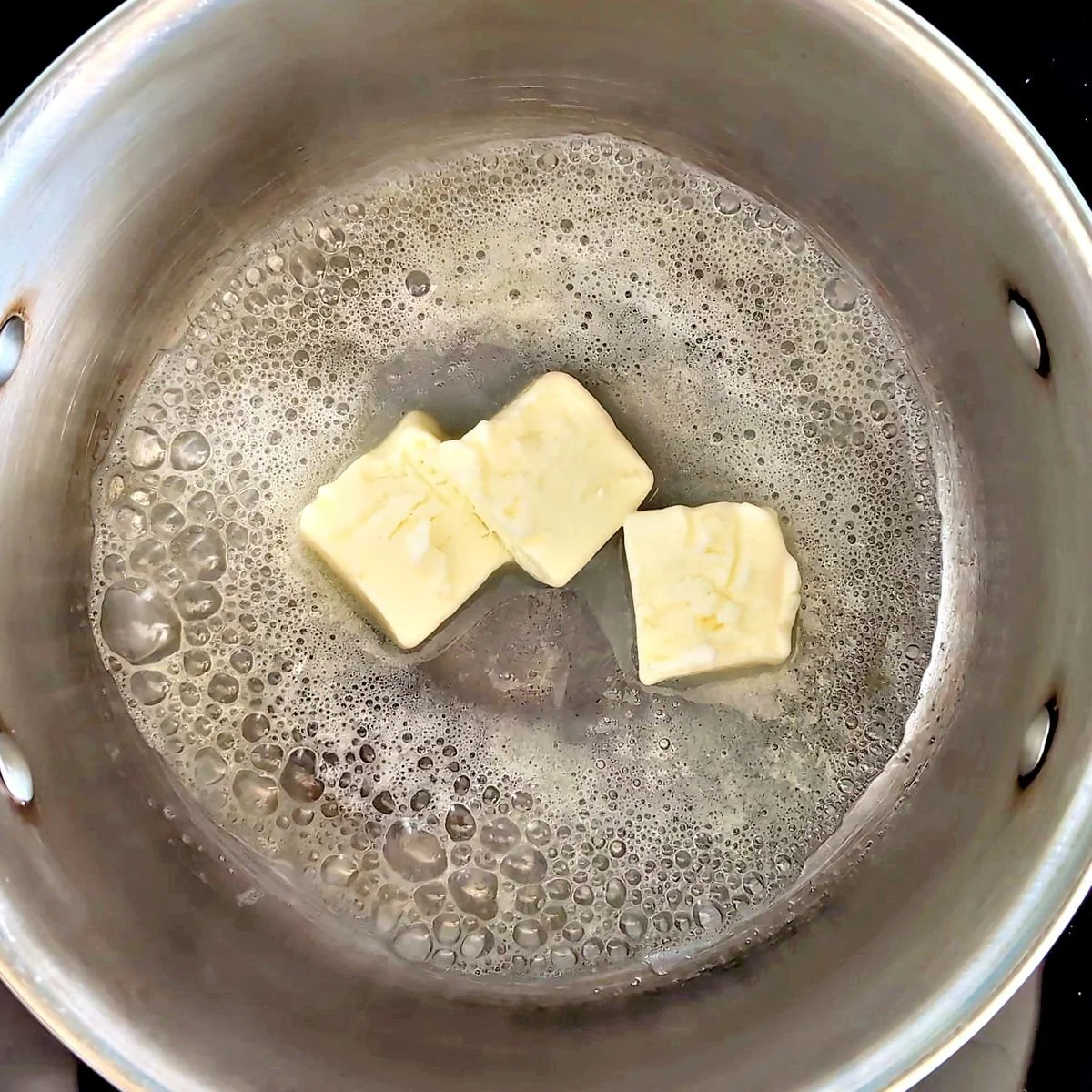
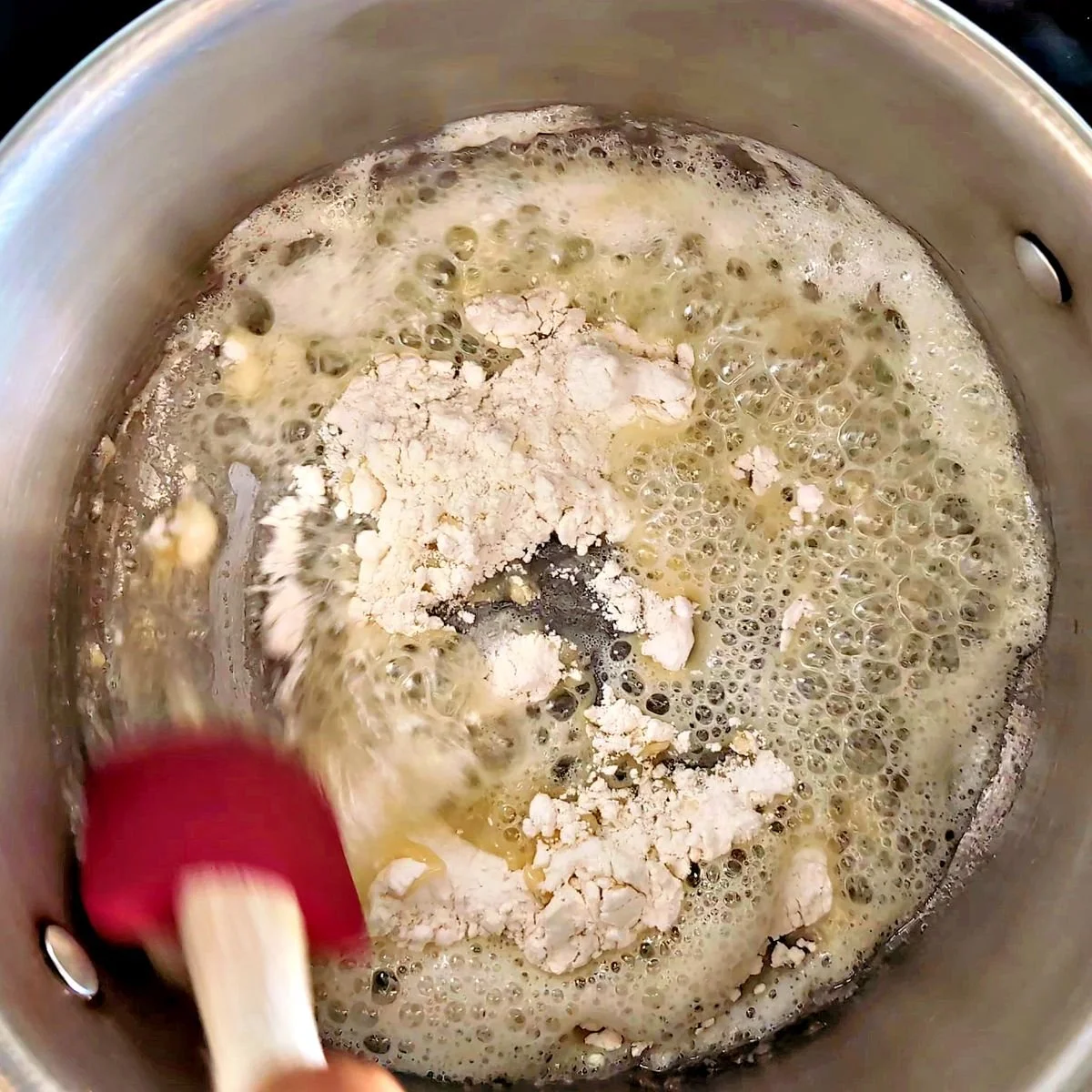
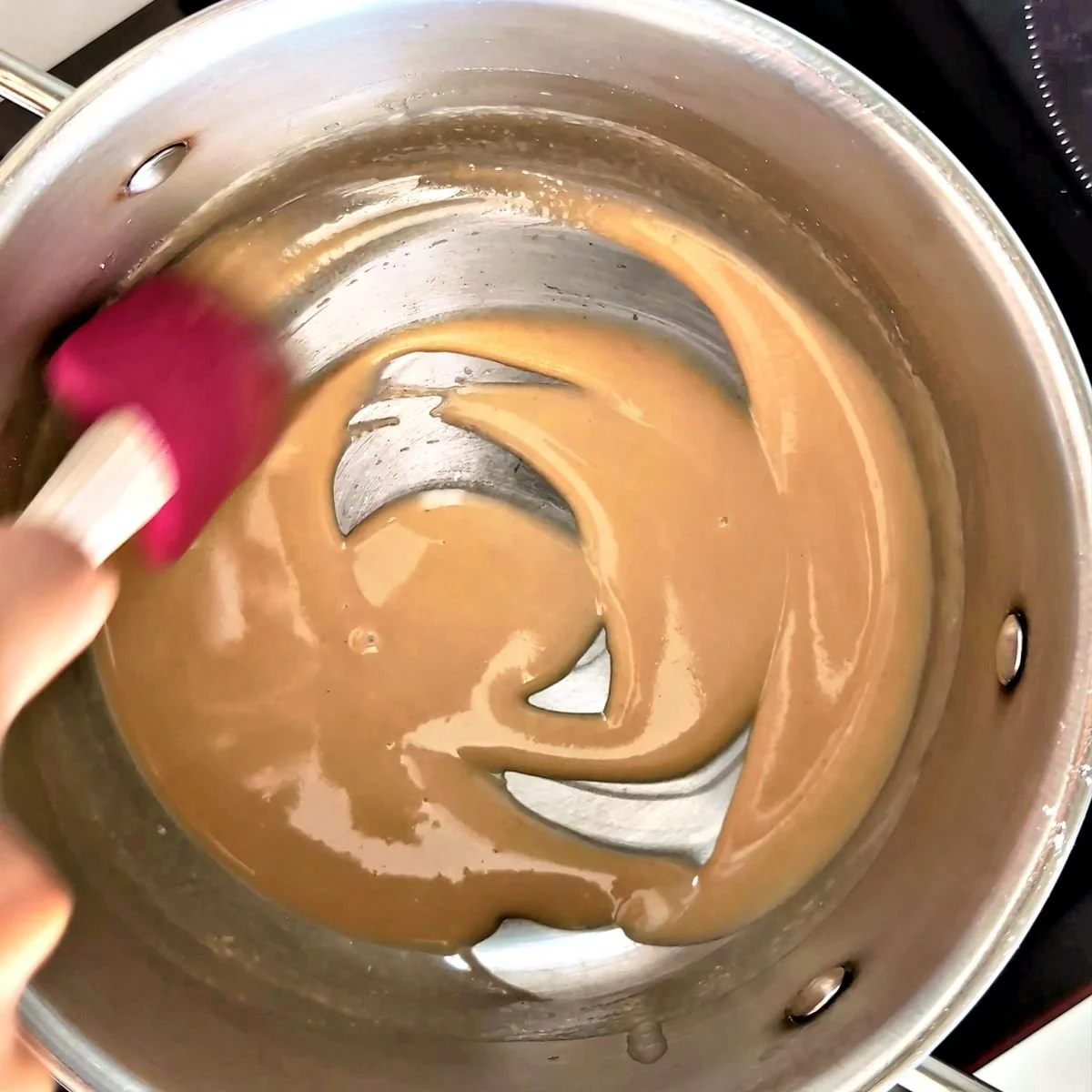
Melt the butter in a medium saucepan over medium heat. Add the flour and cook, stirring continuously with a spatula.
The roux will foam as it cooks and become smooth and glossy. Continue stirring for about 5 minutes, until it smells slightly nutty and turns a light tan color, but stop cooking before it turns brown.
Step 2: Gradually add the stock
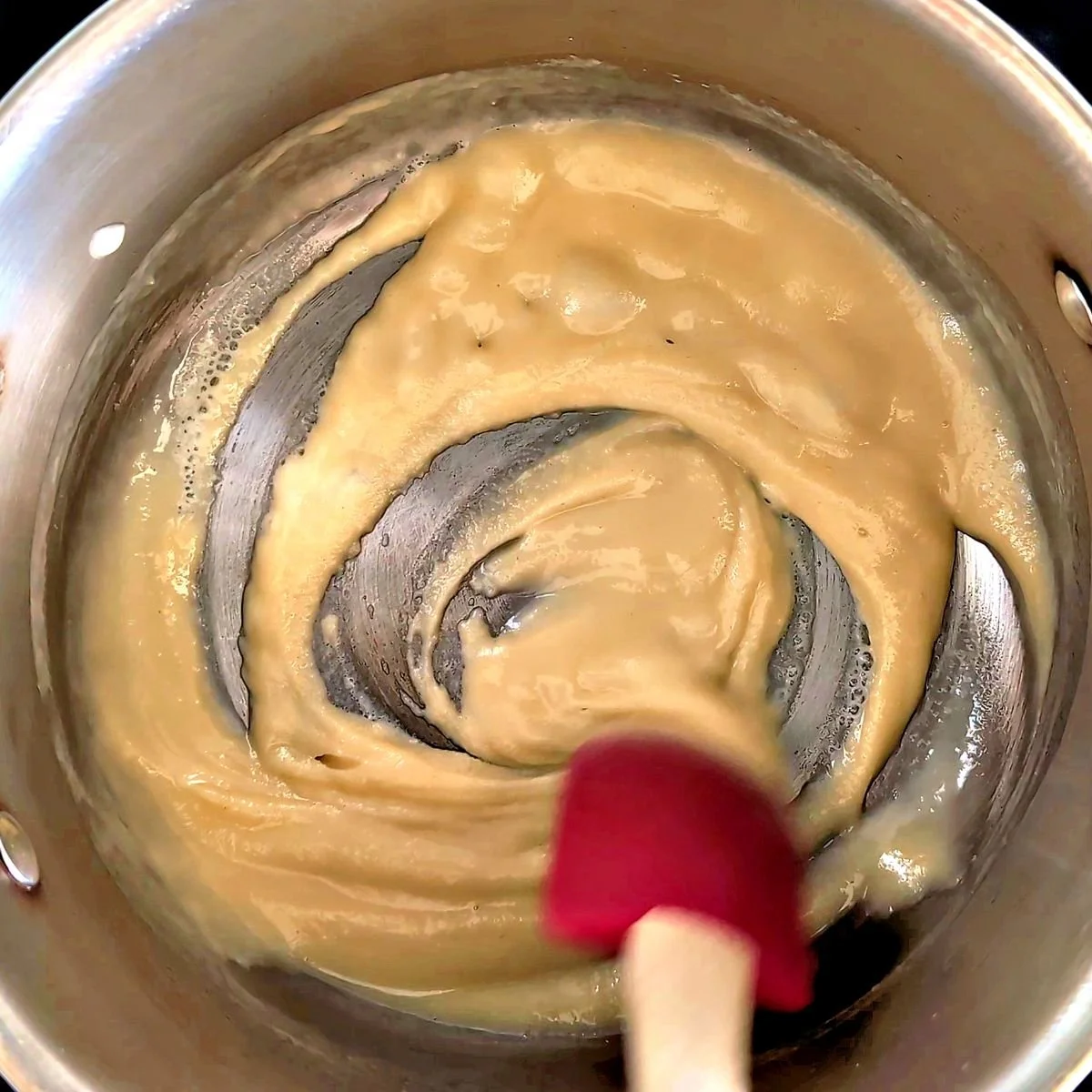
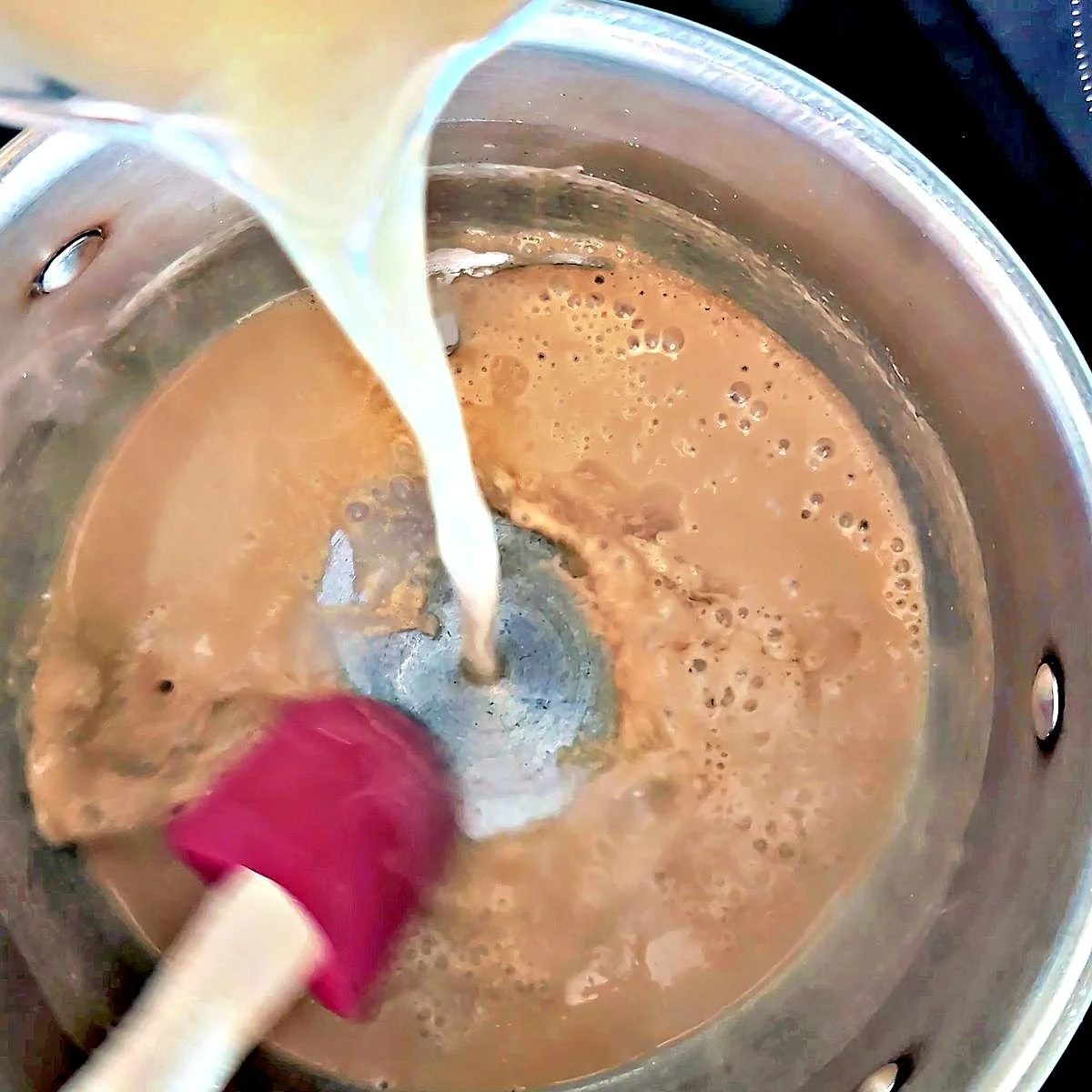
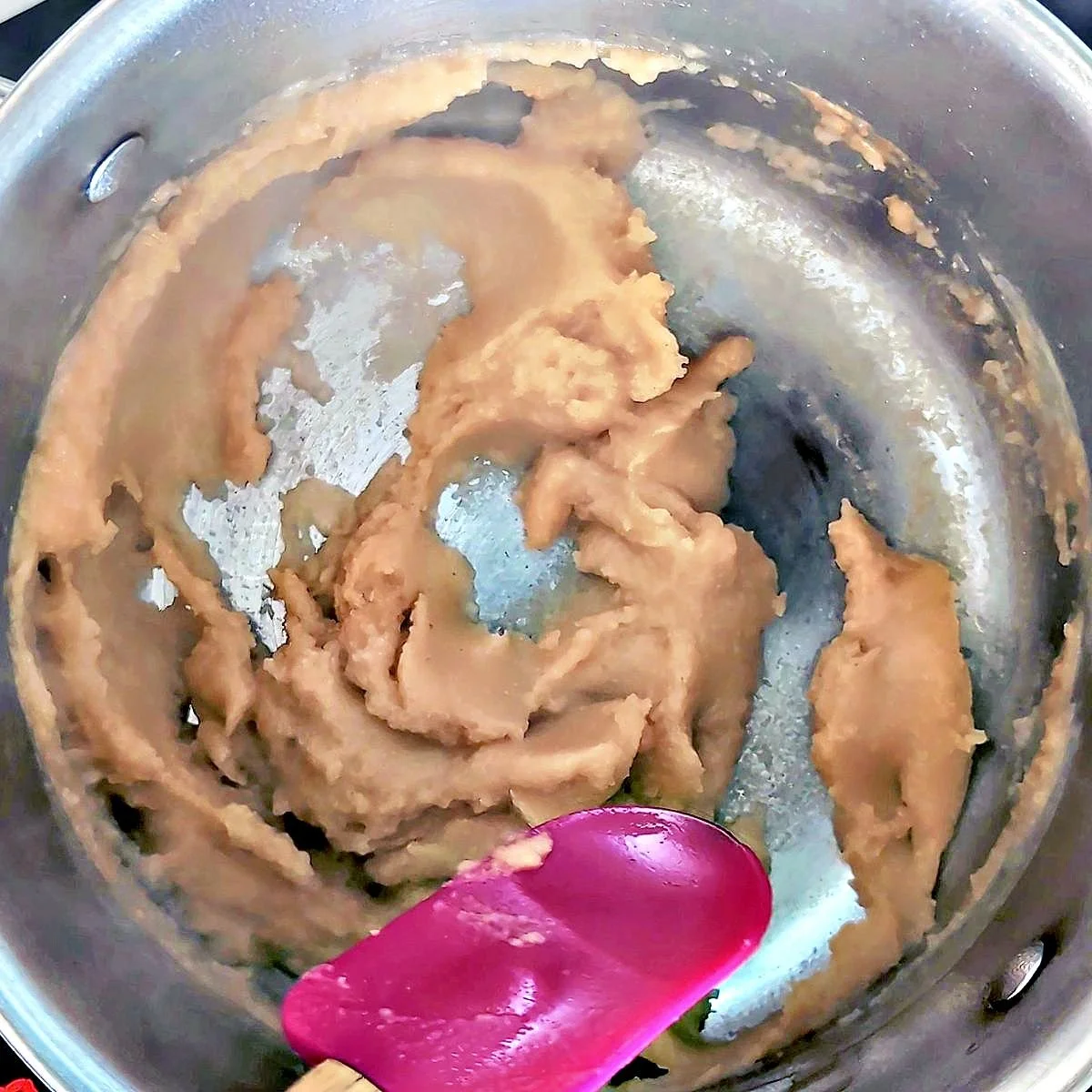
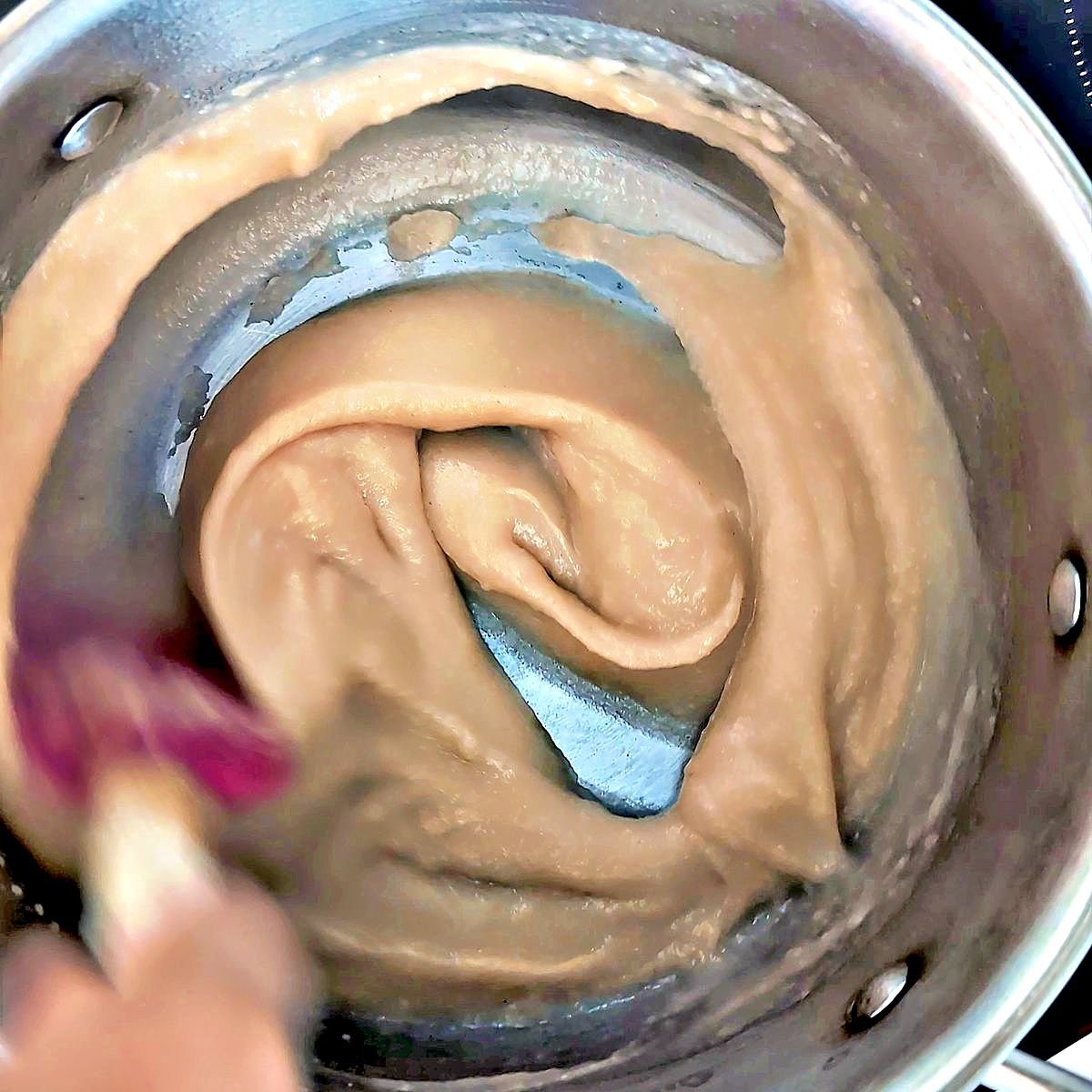
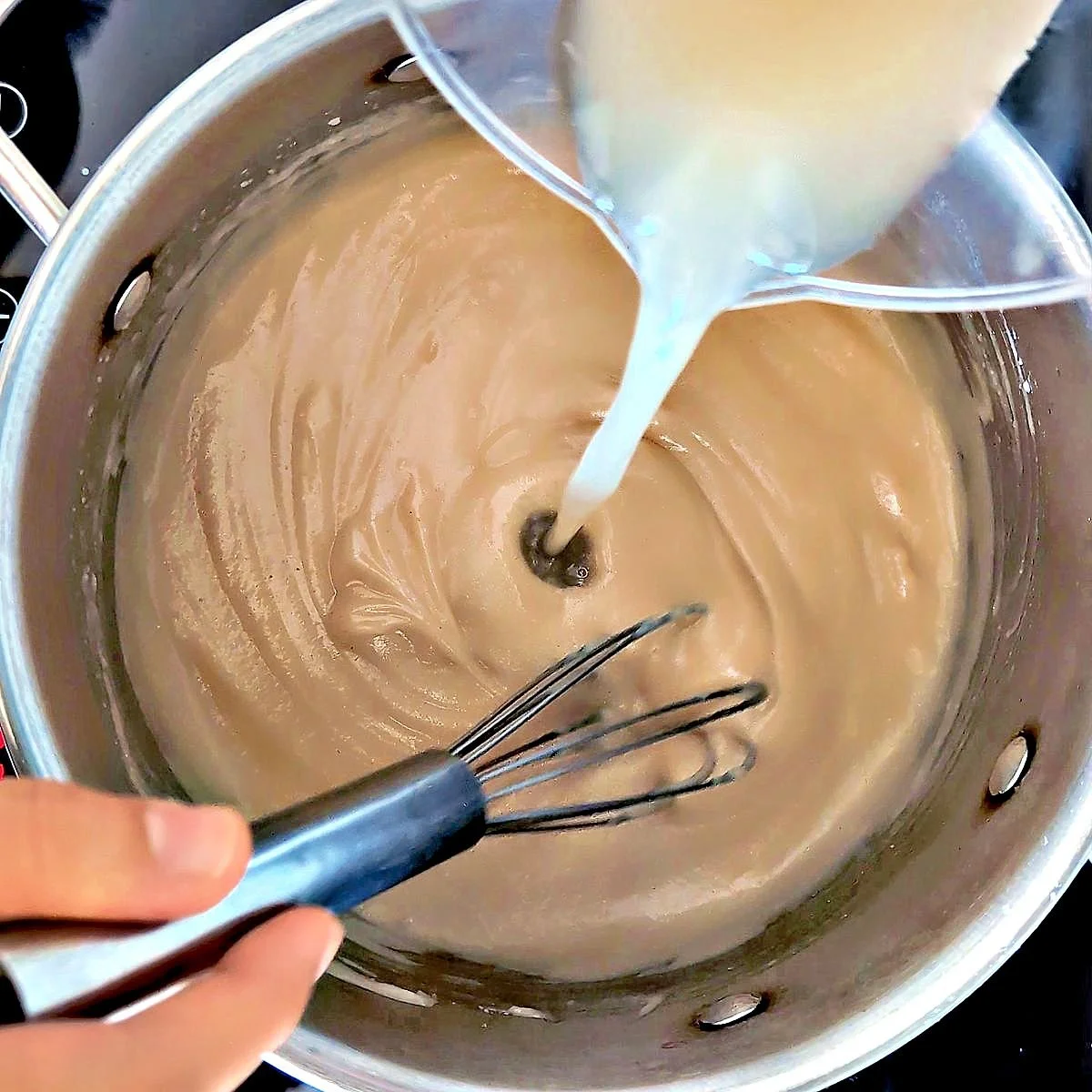
Turn the heat to medium-low. Using a liquid measuring cup, small pitcher, or ladle, add a splash of the warmed chicken stock to the roux, stirring constantly with a spatula.
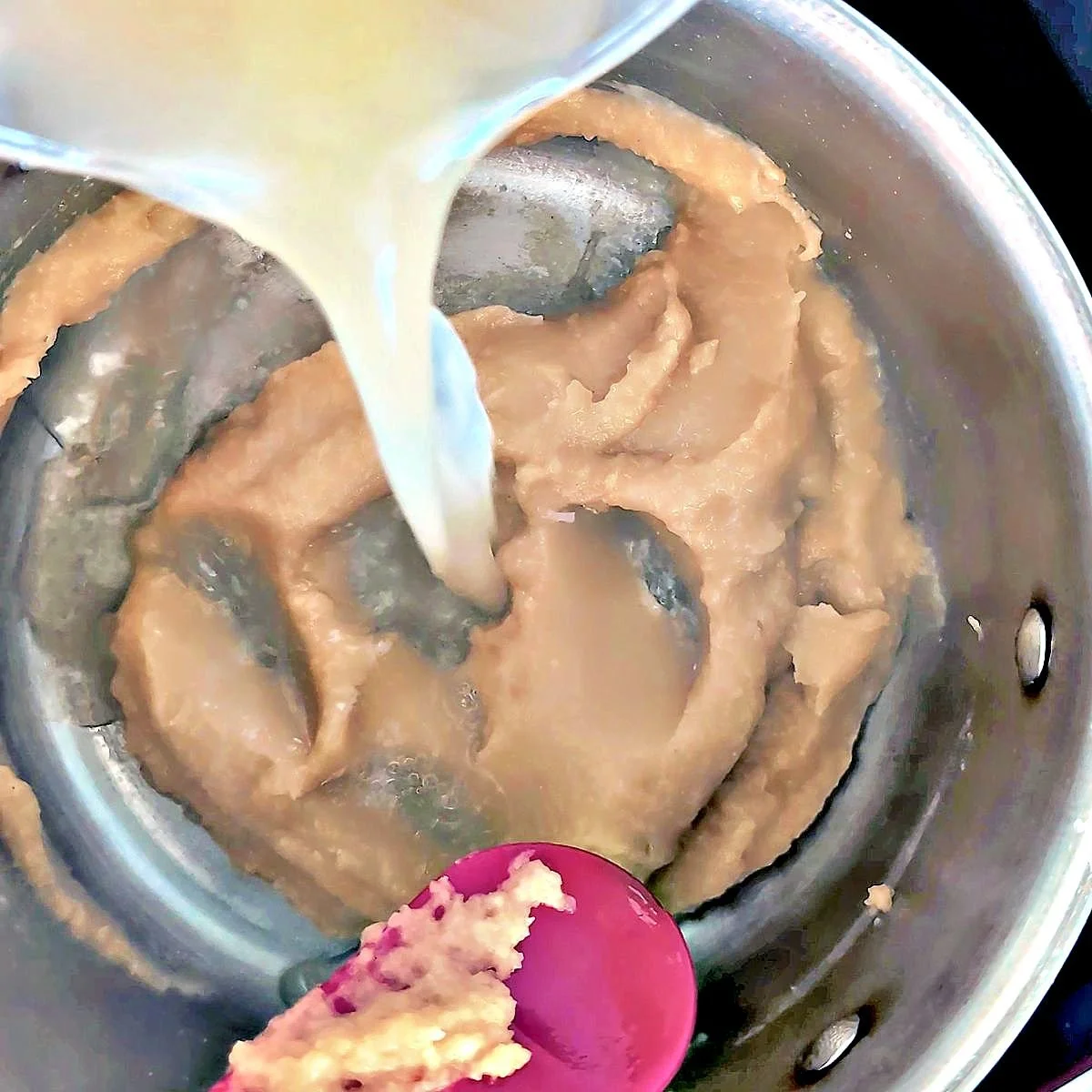
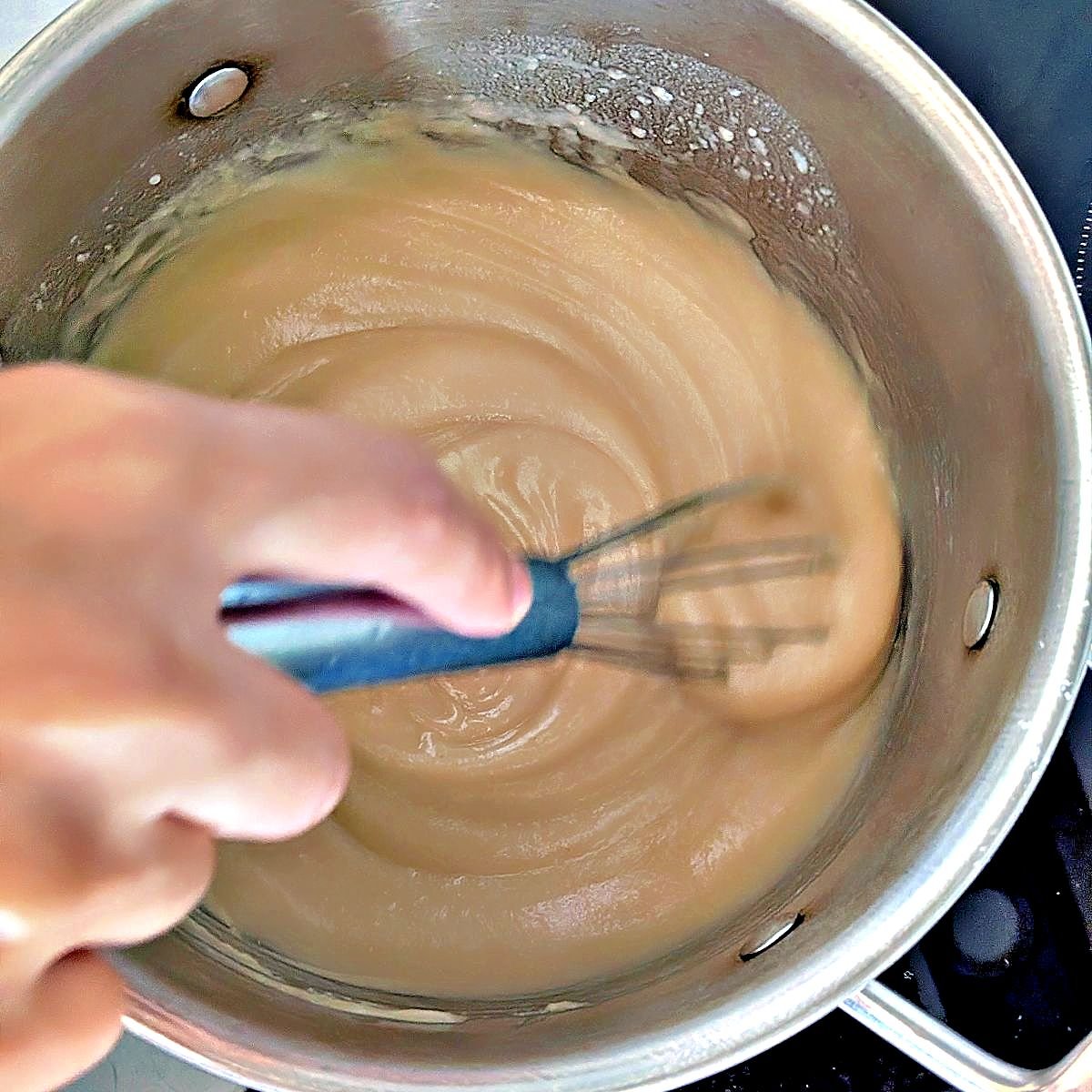
At first, the mixture will be very thick, almost like mashed potatoes—this is normal. Continue adding the stock a little at a time, using the spatula to work out any lumps before adding more. Once the sauce begins to loosen, switch to a whisk for a smoother finish.
When all the stock has been added, the sauce should be velvety and lump-free. If you do happen to have any lumps, don't worry—you can always strain the finished sauce through a fine-mesh sieve.
Step 3: Simmer until thickened
After all the stock has been incorporated, bring the sauce to a gentle simmer over medium-high heat. Let it cook for 5 minutes, stirring often so it doesn’t stick to the bottom of the pan.
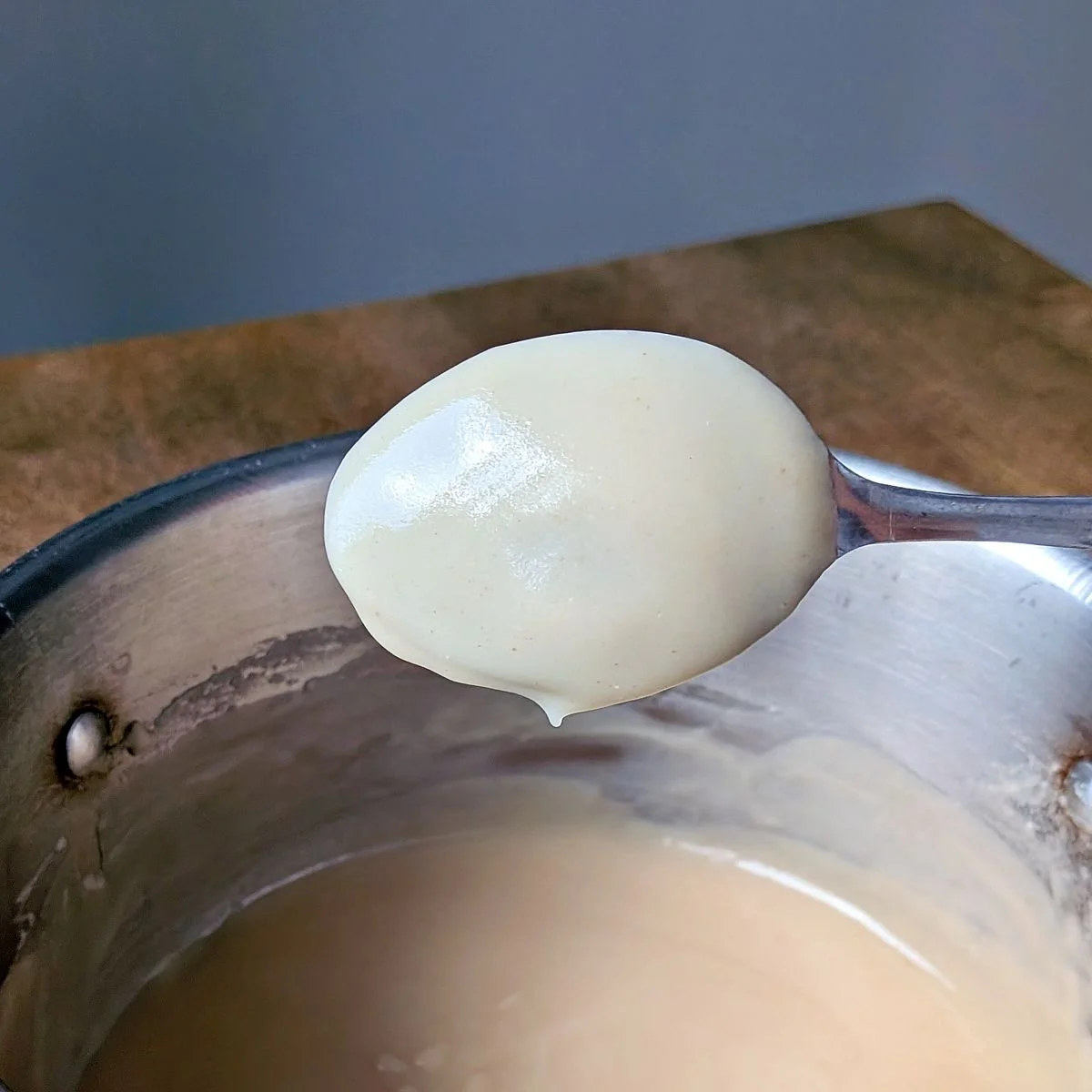
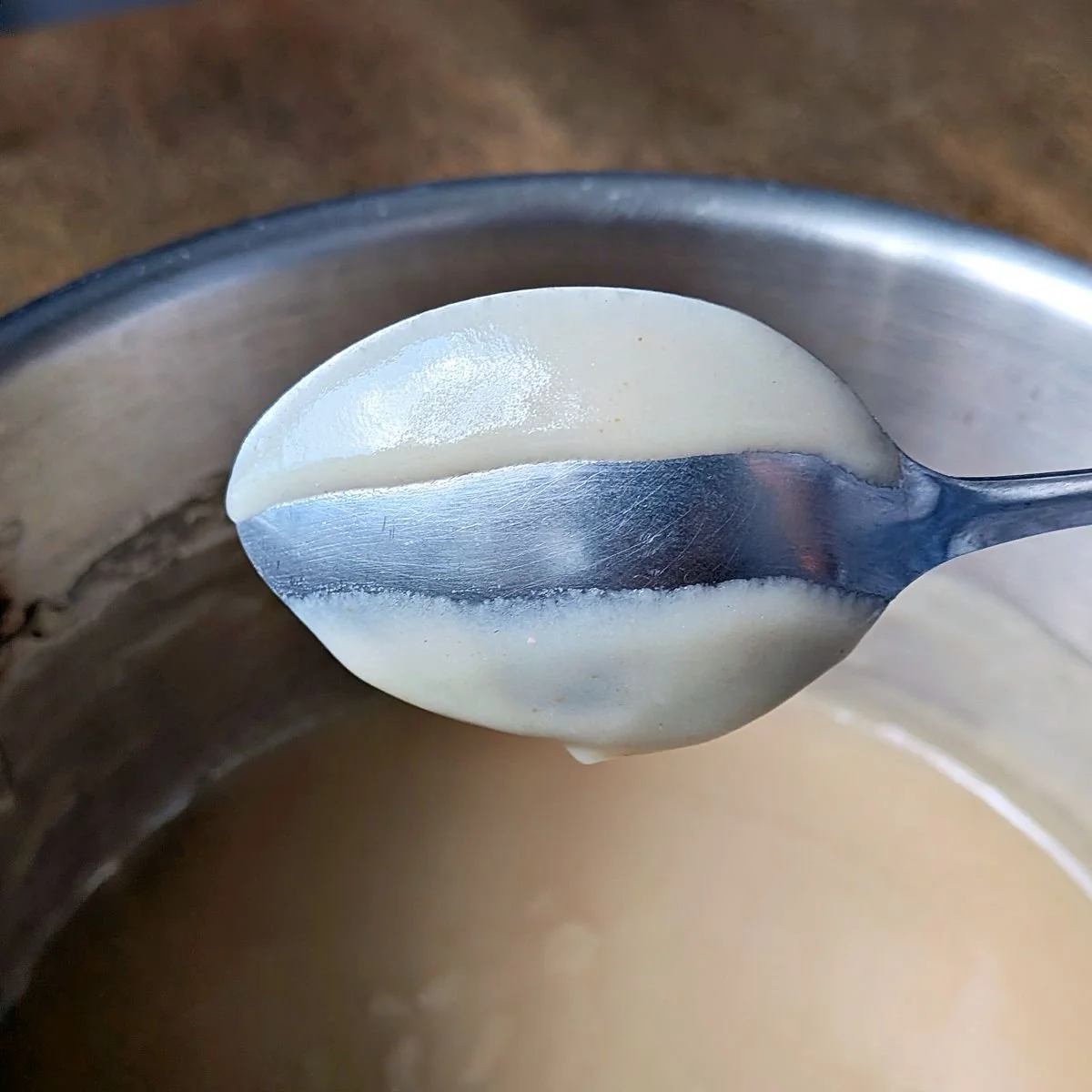
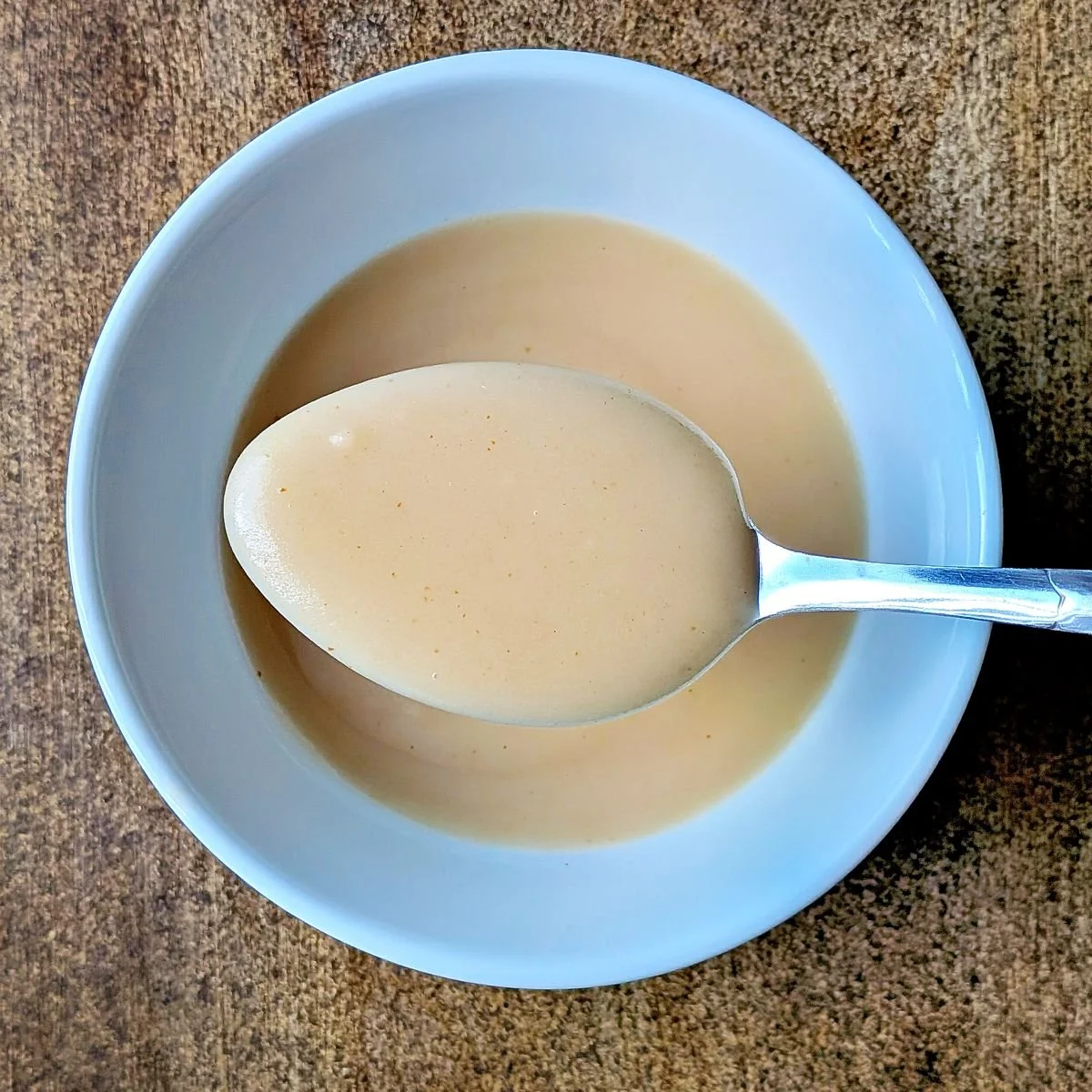
It should have a nappe consistency, meaning it coats the back of a spoon. If you draw a line through it with your finger, the line should hold and not immediately run back together.
If the sauce seems too thick, whisk in a splash of stock or water. If it’s too thin, let it simmer a little longer.
Step 4: Season and serve
Taste the velouté and adjust the seasoning with salt as needed. If you want a brighter flavor, add a small squeeze of lemon juice before serving.
If you're not serving the sauce right away, press a piece of plastic wrap or parchment paper directly onto the surface while it cools to prevent a skin from forming.
This recipe makes about 2 cups of sauce, enough for roughly 4–6 servings when spooned over chicken, fish, or vegetables.

Why Stock Quality Matters Most in Velouté Sauce
Velouté is only as good as the stock it's made with. With so few ingredients, the stock is the biggest flavor component in the sauce apart from the roux. That's why a rich, well-made stock will always make a more flavorful velouté than a weak one.
Classically, velouté is made with white stock, but you don't have to follow that rule at home. White stock is made by simmering raw chicken, veal, or fish bones without roasting them first, creating the lighter color and more delicate flavor that was traditionally intended for this sauce. But I often make velouté with roasted bones for a deeper, more savory flavor.
At home, I usually make stock from rotisserie chicken bones. While it isn't the classical approach, I've found it creates a rich, savory stock from kitchen scraps that would otherwise go to waste. I usually freeze leftover bones until I have enough for a large batch of stock, then use some of it for velouté and the rest for soups.
Don't let homemade stock stop you from making velouté. A good-quality store-bought stock can still make an excellent sauce. I prefer refrigerated or frozen stocks when available, but many shelf-stable options work well too. If possible, look for one with a clean ingredient list and lower sodium levels so you can control the seasoning yourself.
Ways to Use Velouté Sauce
Chicken pot pie and casseroles
One of my favorite ways to use velouté is as the sauce base for chicken pot pie. Simply stir cooked chicken, vegetables, and fresh herbs into the finished sauce, then transfer everything to a baking dish, top with pastry, and bake until golden brown.
It also makes a great binder for baked pasta dishes and casseroles. Mix it with cooked pasta, rice, vegetables, and protein before transferring everything to a baking dish. I often use it in chicken and broccoli pasta bakes because it creates a creamy filling without feeling too rich.
Soups and chowders
For chunky soups or chowders, stir in cooked vegetables, shredded chicken, or seafood and simmer until everything is heated through. If the soup feels too thick, just add a little extra stock until it reaches the consistency you prefer.
For smooth soups, I like to simmer vegetables directly in the velouté with a little extra stock until tender, then blend everything. It works especially well with mushrooms, cauliflower, or butternut squash.
Serve it over chicken, fish, and vegetables
The simplest way to use velouté is as a sauce for cooked proteins and vegetables. I find it particularly useful for proteins that can sometimes feel a little dry on their own, like chicken breast, turkey, or pork loin.
It also pairs beautifully with poached or roasted fish, asparagus, green beans, or anything that benefits from a little extra richness.

Velouté Variations and Derivative Sauces
Ingredient swaps
Stock: Chicken stock is the most common choice, but you can also use fish stock for seafood dishes, veal stock for veal or pork, or vegetable stock for a vegetarian version.
Butter: Clarified butter is sometimes used in professional kitchens, but regular butter works perfectly fine for small-batch home cooking. You can also substitute it with other fats like ghee, chicken fat, or duck fat for different flavor profiles. For a vegetarian or dairy-free version, use vegan butter or a neutral oil like avocado or canola oil.
Flour: For a gluten-free version, substitute an equal amount of your favorite gluten-free flour blend.
Velouté Derivative Sauces
Being one of the 5 French mother sauces, velouté forms the foundation for countless other sauces. Once you're comfortable making the base sauce, a few simple additions can completely change its flavor and purpose.
Two of the most well-known examples are:
Sauce Suprême: Stir heavy cream into chicken velouté for a richer, silkier sauce that's especially good with poultry.
Sauce Allemande: Traditionally made by enriching a veal velouté with egg yolks, cream, and a squeeze of lemon juice. It's a delicate sauce that's often served with veal and other mild proteins.
How to Store, Freeze, and Reheat Velouté Sauce
Fridge: Let the velouté cool completely before transferring it to an airtight container. It will keep in the refrigerator for up to 1 week. To prevent a skin from forming, press a piece of plastic wrap or parchment paper directly onto the surface of the sauce while it cools.
Freezer: Velouté freezes surprisingly well. Store it in freezer-safe containers or freezer bags for up to 6 months, leaving a little room for expansion.
Reheating: Reheat gently over low heat on the stovetop or in the microwave in 30-second intervals, whisking well between each round. The sauce may seem a little lumpy after freezing, but I've found it smooths back out with a good whisking. If needed, pass it through a fine-mesh strainer to restore its silky texture. If the sauce has thickened too much, whisk in a splash of stock or water until it reaches the consistency you are looking for.

Troubleshooting Velouté Sauce
Sauce tastes like flour
Cause: The blond roux wasn't cooked long enough before the stock was added.
How to fix it:
Unfortunately, there's no perfect fix once the sauce is made. Let it simmer for a few more minutes, which may help mellow the raw flour flavor.
Next time, cook the roux until it's light tan and smells slightly nutty before adding the stock.
Sauce is too thick
Cause: The sauce reduced too much or thickened as it cooled.
How to fix it:
Whisk in a splash of warm stock until the sauce reaches the desired consistency. Water also works if you don't have extra stock on hand.
Sauce is too thin
Cause: The sauce wasn't simmered long enough, or there wasn't enough roux to properly thicken the stock.
How to fix it:
Continue simmering the sauce until it thickens naturally.
If it's still too thin, make a fresh blond roux and gradually whisk the sauce into it.
Lumpy sauce
Cause: The stock was added too quickly before the roux had a chance to absorb it evenly.
How to fix it:
Whisk the sauce thoroughly, then strain it through a fine-mesh sieve if any lumps remain.
To help prevent lumps next time, add the stock gradually and whisk well between each addition.
If you're reheating frozen velouté, don't be surprised if it looks a little lumpy at first. A good whisking, and occasionally a quick strain, usually brings it right back to a silky texture.
Pin This Easy Velouté Recipe for Later
Velouté Sauce Recipe
Master velouté sauce with this chef-tested method. Gradually whisking chicken stock into a blond roux creates a smooth, velvety sauce every time.
Makes: about 2 cups sauce (4–6 servings)
Prep: 5 min Cook: 15 min
Velouté Sauce Ingredients
3 tablespoons butter
3 tablespoons all-purpose flour
2 cups chicken stock, warmed
salt, to taste
Quick Instructions for Velouté Sauce
Make the blond roux. Melt the butter in a medium saucepan over medium heat. Stir in the flour and cook for about 5 minutes, stirring constantly with a spatula, until the roux is smooth, glossy, light tan, and smells slightly nutty.
Gradually add the stock. Reduce the heat to medium-low. Add the warmed chicken stock a splash at a time, stirring constantly with a spatula. The mixture will become very thick at first. Continue adding the stock gradually, working out any lumps before adding more. Once the sauce begins to loosen, switch to a whisk and continue adding the remaining stock until fully incorporated.
Simmer until thickened. Bring the sauce to a gentle simmer over medium-high heat and cook for 5 minutes, stirring often. The finished sauce should coat the back of a spoon, and a line drawn through it should hold (nappe consistency). If it's too thick, whisk in a splash of stock or water. If it's too thin, simmer a little longer.
Season and serve. Taste and season with salt, adding a small squeeze of lemon juice if you'd like a brighter flavor. Serve immediately, or press plastic wrap or parchment paper directly onto the surface if not using it right away to prevent a skin from forming.
Helpful Tips for Velouté Sauce
Storage: Store velouté in the refrigerator for up to 1 week or freeze it for up to 6 months. Reheat gently while whisking, adding a splash of stock or water to loosen it if needed.
Stock quality matters: With so few ingredients, the stock provides most of the sauce’s flavor. Homemade stock is ideal, but a good-quality store-bought stock with a clean ingredient list and lower sodium content also works well.
How to fix a lumpy sauce: Even if your sauce isn't perfectly smooth, you can almost always save it by straining it through a fine-mesh sieve before serving.
Did you try this velouté sauce recipe?
I'd love to hear how it turned out! Let me know what you served it with or how you used it, and if you have any questions, leave a comment below. I'm always happy to help.
More French Sauces to Try Next
Béchamel Sauce: Learn how to make the classic white mother sauce that forms the foundation for dishes like lasagna and creamy casseroles.
Mornay Sauce: Turn béchamel into a rich, cheesy French sauce that's perfect for homemade mac and cheese, croque monsieur, and seafood.
Espagnole Sauce: Master the classic brown mother sauce that's the starting point for rich sauces like demi-glace and chasseur.
Hollandaise Sauce: Learn my foolproof immersion blender technique for making this silky French butter sauce every time.